You struggle to choose between the ACS7111 and the ACS7242 for your circuit design. A wrong choice leads to board failures or wasted budget, so I will explain the key differences to help you decide.
The ACS7111 is a cost-effective solution best suited for low-voltage or low-side sensing3 applications where isolation requirements are minimal. In contrast, the ACS7242 is a high-precision, fully isolated sensor4 designed for noisy industrial environments. Choose the ACS7111 for cost savings, but upgrade to the ACS7242 for safety and accuracy.
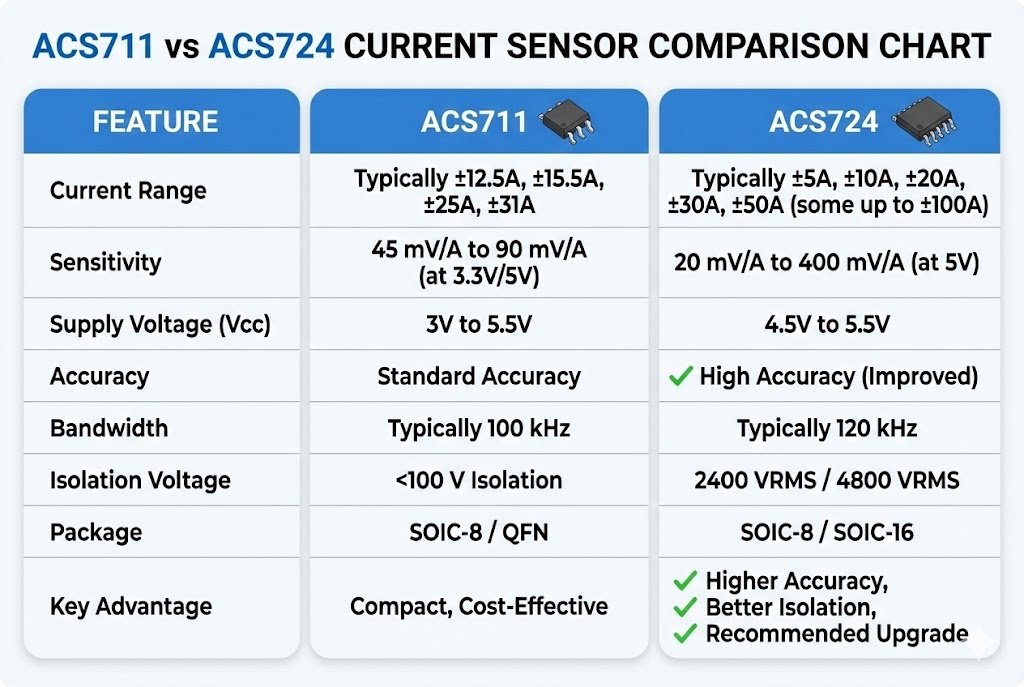
Many engineers confuse these two parts because they look similar on paper. However, their internal structures and best use cases are very different. I want to guide you through the technical details and supply chain realities so you can make the best purchase for your production line.
What are the fundamental technical differences between these sensors?
You might think all Hall-effect sensors perform the same task. However, ignoring the specific architecture differences between the ACS7111 and ACS7242 causes serious signal errors in your final product.
The ACS7111 relies on internal conductor resistance5 for current sensing with limited isolation capabilities. The ACS7242 uses differential sensing technology6, which provides much higher immunity to external magnetic fields and electrical noise.

Understanding the Architecture
I need to break down the technical specifications so you can see why one is an upgrade over the other. The ACS7111 is an older generation device. It measures current by sensing the magnetic field generated around an internal copper conduction path. It is small and effective, but it lacks the robust isolation features found in newer parts. It typically handles voltages up to 100V. This makes it a "low-side" or low-voltage "high-side" solution.
On the other hand, the ACS7242 represents a significant leap forward in technology. It uses differential current sensing. This means it rejects common-mode fields. If your device operates near motors or other magnetic components, the ACS7242 will not read that interference as current. It also offers galvanic isolation ratings7 up to 4800 Vrms. This protects your microcontroller from high-voltage surges.
Here is a simple comparison table to help you visualize the data:
| Feature | ACS7111 | ACS7242 |
|---|---|---|
| Primary Use | Low-voltage / Consumer | High-voltage / Industrial |
| Isolation | Basic (< 100V working) | Reinforced (up to 4800Vrms) |
| Noise Immunity | Standard | High (Differential Sensing) |
| Bandwidth | 100 kHz | 120 kHz |
| Cost | Lower | Higher |
When I look at client designs, I often see the ACS7111 used where safety is not the main concern. The ACS7242 is the default choice for anyone building industrial inverters or solar power systems. The difference is not just about price; it is about the stability of your signal.
When should you stick with the ACS7111 for your design?
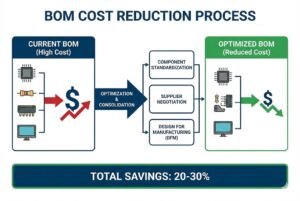
You face pressure to lower the Bill of Materials (BOM) cost8 for a new consumer product. Using an over-specified sensor like the ACS7242 kills your profit margins, so you must know when the cheaper option is safe.
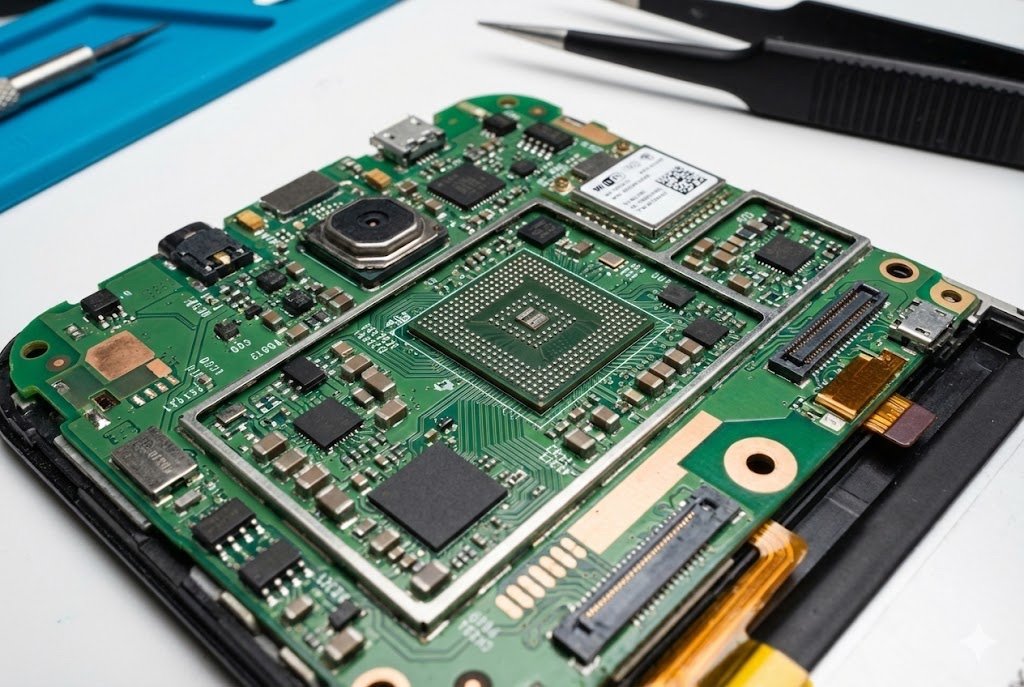
The ACS7111 is the perfect choice for battery-powered applications9, handheld gadgets, and low-voltage motor drivers. It handles continuous currents well and fits into tight budgets where high-voltage isolation10 is not necessary.
The Case for Cost-Effective Sensing
I often advise customers that "newer" does not always mean "necessary." The ACS7111 is still a very capable component. If you are designing a drone, a vacuum robot, or a small battery charger, you do not need 4800V of isolation. You are likely working with 12V or 24V rails. In these scenarios, the ACS7111 provides a linear output voltage proportional to the current. It does the job perfectly.
There is a misconception that you must always use the latest part. This is false. At Nexcir11, we see huge demand for the ACS7111 because it is reliable and affordable. If your ground reference is shared or if the voltage potential is low, this sensor is adequate.
However, you must be careful with the "low-side" vs. "high-side" placement. The ACS7111 can work on the high side (the positive wire), but only if the voltage does not exceed its rating. If you put it on a 400V line, it will fail and potentially damage the low-voltage logic circuits.
I remember a client who made smart home plugs. They wanted to switch to the ACS7242. I looked at their design. They were only measuring 110V AC current and had other isolation layers. I told them to stick with the ACS7111 or a similar low-cost variant. They saved thousands of dollars in production costs. Critical thinking saves money. You should analyze if you really need the extra protection or if you are just paying for specs you will not use.
Why is the ACS7242 considered a necessary upgrade for industrial systems?
You notice erratic current readings in your heavy machinery or automotive projects. This noise usually comes from the environment, and the ACS7111 cannot filter it out effectively.
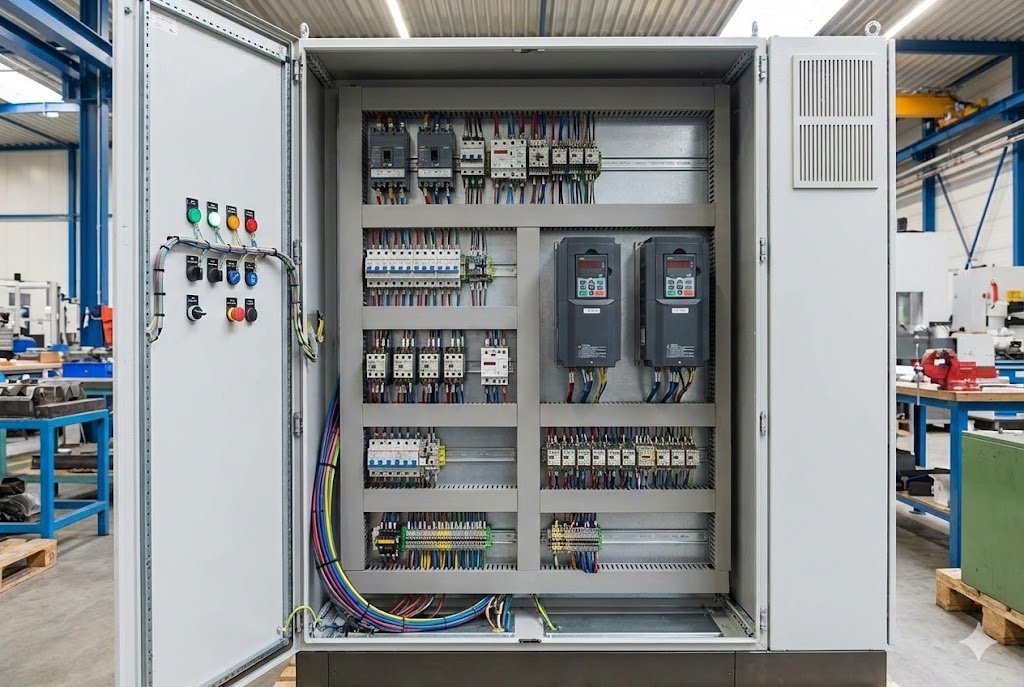
The ACS7242 uses differential sensing to cancel out stray magnetic fields, making it essential for electric vehicle chargers, solar inverters, and industrial motor control. It guarantees signal integrity in harsh electrical environments.
The Power of Differential Sensing
The main reason I recommend upgrading to the ACS7242 is "Common Mode Rejection12." In an industrial factory or inside an electric car, there are magnetic fields everywhere. Large motors create magnetic noise. A standard sensor might read this noise as current. This leads to false triggers. Your system might shut down thinking there is an over-current event when there is not.
The ACS7242 has two sensing elements. It looks at the difference between them. The stray magnetic field affects both elements equally. The sensor subtracts this noise. The result is a clean signal that only shows the actual current flowing through the conductor.
Also, consider the safety factor. The ACS7242 has a very robust isolation barrier. This means the high-voltage side (where the current flows) is physically separated from the low-voltage side (where your processor lives). In systems running at 400V or 800V, this is non-negotiable. If a spike occurs, the sensor protects the expensive brain of your machine.
I often help clients transition from older sensors to the ACS7242 when they start failing compliance tests. They find that their old sensors drift too much with temperature or noise. The ACS7242 is factory-programmed to be stable across a wide temperature range. If you are building for the "Next Future" of automation, you need this level of reliability. It ensures your product works correctly in the field for years, not just in the lab.
How can you secure authentic stock and avoid supply chain risks13?
You worry about counterfeit chips14 and long lead times15 affecting your production schedule. Finding original parts is difficult when the market fluctuates.
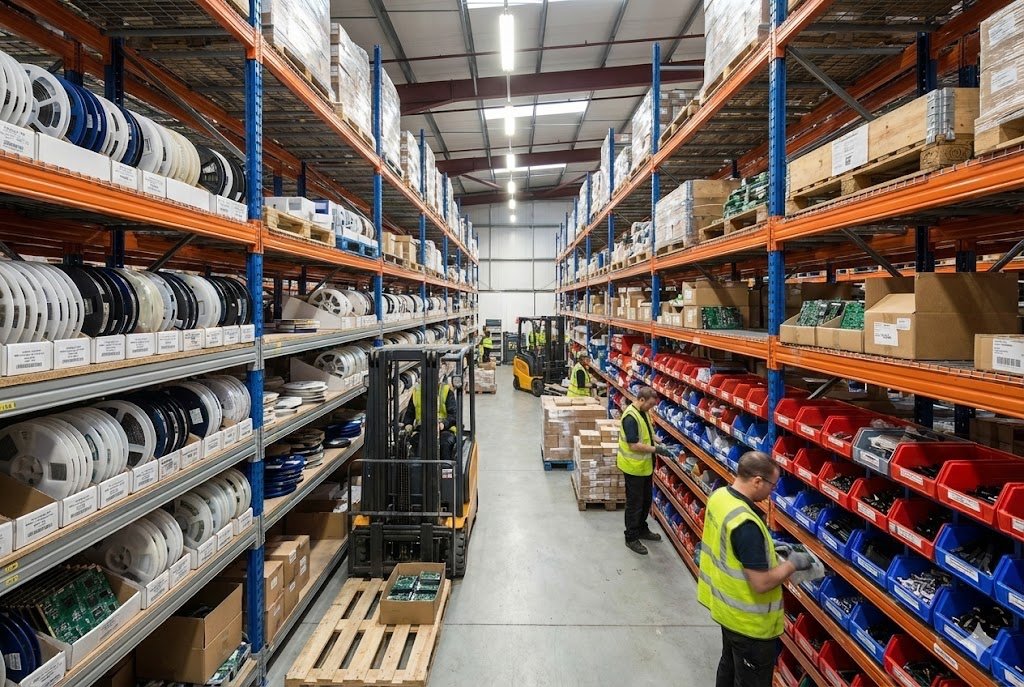
Nexcir11 sources directly from authorized distributors and manufacturers to guarantee 100% authenticity for both ACS7111 and ACS7242. We hold inventory and manage long-term supply schedules to prevent line-down situations.
Navigating the Market with Nexcir11
The market for power management chips is volatile. I have seen many companies stop production because they could not buy a $2 sensor. This is where a partner like Nexcir11 becomes valuable. We do not just sell parts; we manage risk.
For the ACS7111, because it is an older part, some suppliers might push "new old stock" or poorly stored components. We verify every batch. We ensure the leads are not oxidized and the packaging is perfect. If you are a cost-sensitive customer, we can help you buy the ACS7111 in bulk. This locks in a low price and ensures you have stock for months.
For the ACS7242, demand is high because of the Electric Vehicle (EV)16 and green energy boom. Lead times can stretch to 50 weeks. We use our global network in North America, Europe, and Asia to find stock that others miss. We check the traceability17 of every shipment.
I recall a project where a customer bought "cheap" sensors from a broker online. The parts failed after one week of use. They were fakes with no actual Hall sensor inside. The customer lost their reputation. They came to us to fix the mess. We supplied genuine ACS7242 units, and their failure rate dropped to zero.
We also help you plan. If you are upgrading from ACS7111 to ACS7242, we can manage the transition. We can supply the old part while you prototype with the new one. Our team has 20 years of experience. We know when a part is going End-of-Life (EOL)18 before it is announced. We help you stockpile or redesign before it becomes a crisis. Trust is the most important part of the supply chain.
Conclusion
The ACS7111 is your best option for low-cost, low-voltage designs, while the ACS7242 is the superior choice for high-precision, isolated industrial applications. Nexcir11 supplies both with guaranteed authenticity.
Explore the specific use cases and benefits of using the ACS711 sensor in low-voltage applications. ↩
Discover why the ACS724 is essential for high-precision and isolated industrial applications. ↩
Understand the concept of low-voltage or low-side sensing and its importance in circuit design. ↩
Learn about the features that define a high-precision, fully isolated sensor and their advantages. ↩
Explore how internal conductor resistance affects sensor functionality and accuracy. ↩
Gain insights into differential sensing technology and how it improves sensor performance. ↩
Understand the significance of galvanic isolation ratings and their impact on sensor safety. ↩
Discover how BOM cost considerations influence design decisions and product profitability. ↩
Find out why sensors like the ACS711 are ideal for battery-powered devices and their advantages. ↩
Understand the concept of high-voltage isolation and its critical role in sensor safety and performance. ↩
Learn about Nexcir's role in providing authentic electronic components and managing supply chain risks. ↩
Learn about the importance of Common Mode Rejection in reducing noise and improving signal integrity. ↩
Understand the potential risks in the supply chain and how to mitigate them effectively. ↩
Discover strategies to identify counterfeit chips and ensure the authenticity of electronic components. ↩
Understand the impact of lead times on production schedules and how to manage them effectively. ↩
Explore the role of sensors in enhancing the performance and safety of Electric Vehicles. ↩
Explore the importance of traceability in maintaining the quality and authenticity of components. ↩
Learn about the implications of EOL for components and how to plan for it in product design. ↩