Your BOM is a complex list of parts. A single, cheap component can halt production, costing you thousands. A smart sourcing strategy1 can prevent this from ever happening.
The best sourcing strategy1 for a Bill of Materials (BOM)2 involves treating active and passive components3 differently. For active components4 like MCUs, focus on lifecycle management5 and securing alternatives early. For passive components3 like capacitors, prioritize volume forecasting6 and supply chain diversification7 to avoid unexpected shortages.
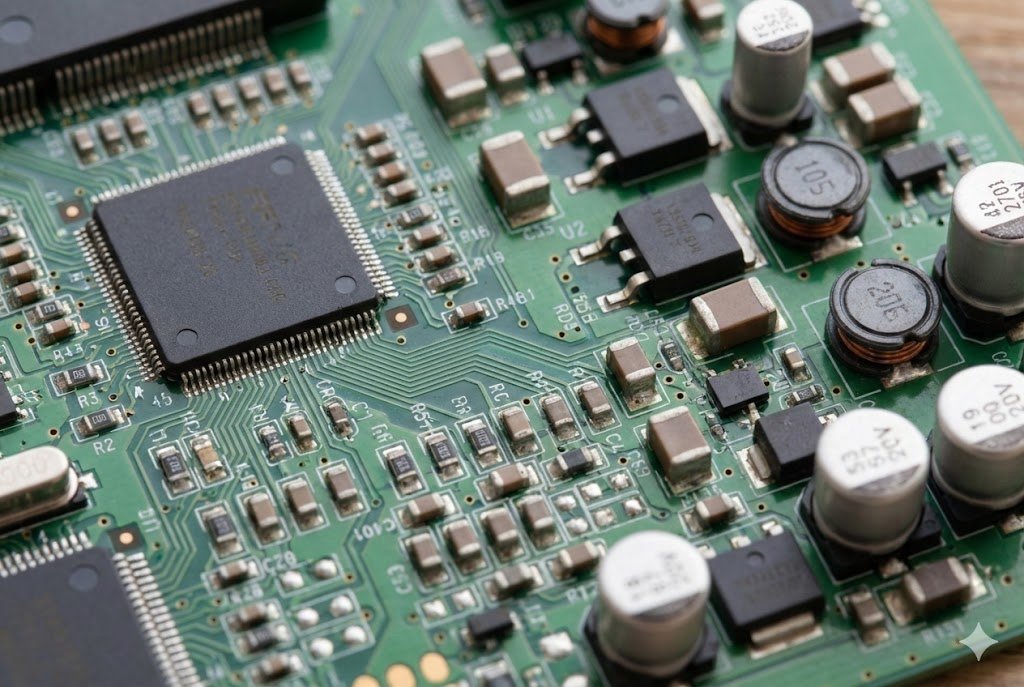
It’s a story I’ve seen play out many times. A company spends months securing a complex processor, celebrating a major sourcing win. Then, silence. The production line stops. The reason? A tiny, one-cent capacitor is out of stock globally, with no alternatives qualified. This small oversight brings the entire operation to a standstill. Understanding the unique challenges of both active and passive components3 is not just an academic exercise; it's fundamental to building a resilient supply chain. Let’s break down how to approach each category so you can avoid these costly surprises.
What Makes Sourcing Active Components So Complex?
Your new product is designed around a powerful MCU. But now it’s on allocation with a 52-week lead time. A proactive sourcing strategy1 for active components4 is non-negotiable.
Sourcing active components4 like MCUs and PMICs is complex due to long manufacturing lead times8, high demand from multiple industries, and a greater risk of counterfeit parts9. A successful strategy requires early engagement with suppliers, continuous lifecycle monitoring, and qualifying alternative parts well before a crisis occurs.

I once worked with a client in the industrial automation space. Their design was locked in with a specific automotive-grade microcontroller. Everything was fine until the automotive sector demand exploded. Suddenly, their "stable" supply vanished, and lead times8 stretched to over a year. They were facing a complete production shutdown10. This is a classic active component problem. These parts are the "brains" of a product and are not easily replaced. Their complexity creates several sourcing risks. We had to work fast to identify and qualify a pin-to-pin compatible alternative11 from a different manufacturer, a process that took weeks of engineering effort12. This could have been avoided with better foresight.
Here’s a deeper look at the challenges:
Key Sourcing Challenges for Active Components
- Long Fabrication Cycles: Unlike simple components, integrated circuits (ICs) take months to produce. The journey from a silicon wafer to a finished, tested chip is long and complex. This means suppliers cannot react quickly to sudden demand spikes, leading to allocations and long lead times8.
- Lifecycle Management: Active components have defined lifecycles (Active, NRND, EOL). A part moving to "Not Recommended for New Designs" (NRND) is an early warning sign. If you miss it, you might be forced into a costly redesign when the part becomes "End of Life" (EOL).
- <strong>High-Value Target for Counterfeits:</strong> Because active components4 are expensive and often in short supply, they are a prime target for counterfeiters. Sourcing from unverified channels puts your product quality and reputation at severe risk.
| Risk Factor | Description | Mitigation Strategy |
|---|---|---|
| Market Volatility | Demand from large sectors (e.g., automotive, consumer electronics) can consume all available supply. | Diversify suppliers and monitor cross-industry demand trends. |
| Lifecycle Status | A component can become obsolete, forcing a redesign. | Use a partner to actively monitor lifecycle status for your entire BOM. |
| Sole Source Risk | Relying on a single manufacturer for a critical part is dangerous. | Proactively identify and qualify second-source or alternative components. |
Why Do Passive Components Silently Disrupt Production Lines?
You focused all your energy on securing the main processor. Now you can't ship a $1000 product because of a missing $0.01 capacitor. Give passive components3 the attention they deserve.
Passive components like capacitors, resistors, and inductors cause disruptions because they are often treated as low-priority commodities. Sudden demand spikes or raw material shortages13 can create widespread scarcity, halting production lines unexpectedly. A good strategy involves buffer stocking14 and monitoring market trends for these high-volume parts.
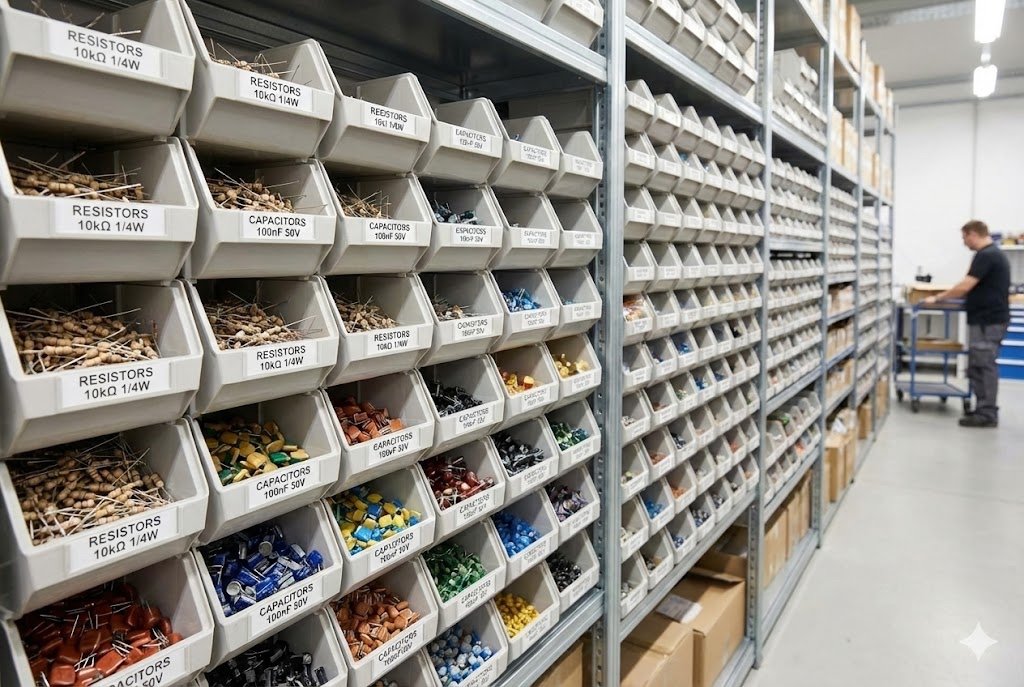
A few years ago, the entire industry was hit by a massive Multi-Layer Ceramic Capacitor (MLCC)15 shortage. Everyone was caught off guard. I had a customer in the consumer electronics space who needed millions of a specific MLCC part number each month. Their purchasing team saw it as a simple "jellybean" part and always ordered it just-in-time. When the shortage hit, the price increased by 10x overnight, and supply dried up. Their production line stopped for three weeks. The cause? New smartphones and electric vehicles were suddenly using thousands of MLCCs per device, sucking up global capacity. It's a painful lesson: the simplest, cheapest part on your BOM can become your biggest problem if you don't have a strategy for it.
The Hidden Risks of Passive Components
- Volume-Driven Scarcity: While one passive component is cheap, a single product might use hundreds or thousands of them. When a new technology trend emerges (like 5G or EVs), the collective demand for these small parts can overwhelm manufacturers.
- Raw Material Dependency: The production of passive components3 depends on specific raw materials like palladium, ceramic powders, and copper foil. Geopolitical issues or mining disruptions can impact the entire supply chain for a specific type of passive component.
- <strong>Overlooked Importance:</strong> Because they are low-cost, engineering and procurement teams often spend little time qualifying multiple sources for passive parts. When the primary source has a problem, there is no backup plan.
| Component Type | Common Risk | Sourcing Tip |
|---|---|---|
| MLCCs (Capacitors) | Raw material shortages and massive demand swings from new technologies. | Maintain a buffer stock and have multiple case sizes/voltages qualified. |
| Thick Film Resistors | Extremely high volume means even small disruptions have a big impact. | Work with a sourcing partner16 who can access global inventory. |
| Inductors | Often more specialized, with fewer direct alternatives. | Qualify a second manufacturing source early in the design process. |
How Can You Optimize Your BOM for Better Sourcing?
Your BOM is just a list of part numbers. This makes it impossible for your procurement team to be proactive about supply chain risks. You need to structure your BOM with sourcing intelligence17.
Optimize your BOM by categorizing parts as "Active" or "Passive" and adding columns for lifecycle status, approved alternatives, and current lead times8. This turns your BOM from a simple list into a powerful strategic sourcing document that helps you prevent future problems.

The traditional BOM I see is just a list: part number, quantity, description. It tells you what to buy, but not how to buy it. This is a huge missed opportunity. I worked with a client to transform their BOM into what we called a "Living BOM." We added key data points that empowered their purchasing team. Instead of just reacting to shortages, they could see them coming. For example, we flagged a power management IC (an active part) that was moving to NRND. This gave their engineers six months to design and test a replacement before the part went obsolete. We also identified a high-volume resistor (a passive part) with only one approved supplier and helped them qualify two more. This simple change in documentation saved them from at least two line-down situations in the first year.
Building a Strategic BOM
A strategic BOM18 is a collaborative document used by both engineering and procurement. It contains not just the part specifications but also the intelligence needed to source it effectively. You should add columns that provide a clear view of supply chain risk.
Here’s a simplified example of what this looks like:
| Part Number | Category | Lifecycle | Approved Alternative(s) | Est. Lead Time (Wks) | Sourcing Note |
|---|---|---|---|---|---|
| STM32F407VGT6 | Active | Active | GD32F407VGT6 | 24-30 | High demand, monitor allocation trends. |
| TPS54331DDA | Active | NRND | TPS54332DDA (check specs) | 40+ | Risk! Part is NRND. Plan migration now. |
| C0603C104K5RACTU | Passive | Active | CL10B104KB8NNNC | 8-12 | High volume MLCC. Maintain 4-week buffer stock. |
| ERJ-3EKF1001V | Passive | Active | RC0603FR-07100KL | 6-10 | Standard resistor. Multiple sources available. |
This format instantly tells you where to focus your attention. You can see the NRND active part is the biggest fire that needs putting out, while the high-volume passive part needs a simple inventory management strategy.
Should You Have Separate Sourcing Strategies for Active and Passive Parts?
Your team is juggling different sourcing methods. One person is chasing active parts while another orders passives. This creates confusion, missed opportunities, and dangerous supply chain gaps.
While the day-to-day tactics for sourcing active and passive components3 differ, they must exist under a single, unified strategy. This provides a complete view of your BOM risk, preventing low-cost passives from being overlooked while you focus on high-value actives. A good sourcing partner16 manages both seamlessly.

Thinking of active and passive sourcing as two separate jobs is a common mistake. It creates silos. The team handling the $50 MCU doesn't talk to the team handling the $0.02 resistor. But in manufacturing, both parts are equally critical to shipping a final product. I’ve seen this firsthand. A company had an excellent strategic sourcing team for their processors and FPGAs. They had forecasts, second sources, everything. But their passives were managed by a junior buyer using an automated ordering system based on historical data. When a sudden shortage hit the resistor market, the system didn't know how to react. The company had millions of dollars of active components4 sitting idle, waiting for a part that cost pennies. A unified strategy, managed by a partner who sees the whole picture, prevents this. It connects the value of the active part to the availability of the passive part.
Creating a Unified, Partner-Led Strategy
A unified strategy doesn't mean you treat a resistor the same as a processor. It means you manage the risk of the entire BOM as one project.
- Holistic Risk Assessment: Instead of looking at parts in isolation, you analyze the entire BOM. You understand that a shortage of a passive part can make your investment in an active part worthless.
- Centralized Intelligence: Your sourcing partner16 acts as a central hub for market information. They track allocation trends for MCUs and, at the same time, monitor raw material prices for capacitors. This gives you a complete threat overview.
- Balanced Focus: A unified strategy ensures that resources are allocated appropriately. It avoids a situation where 100% of your team's effort is spent on 10% of the BOM line items. Your partner helps manage the "long tail" of passive components3 so your team can focus on the most complex engineering and supplier relationships. The goal is to ensure every single part needed for production is available on time, regardless of its cost or complexity.
Conclusion
A successful sourcing strategy1 requires a deep understanding of both active and passive components3. By treating them with the specific attention they need, you build a truly resilient supply chain.
Discover strategies to optimize sourcing and mitigate risks in component procurement. ↩
Understanding BOM is crucial for effective production planning and risk management in supply chains. ↩
Learn about passive components and their essential role in circuit design and functionality. ↩
Explore the role of active components in electronic devices and their impact on performance. ↩
Understand how lifecycle management can prevent costly redesigns and ensure component availability. ↩
Discover how accurate volume forecasting can prevent shortages and optimize inventory. ↩
Explore the benefits of diversifying suppliers to enhance supply chain resilience. ↩
Understanding lead times is essential for effective planning and avoiding production delays. ↩
Learn strategies to protect your products from counterfeit components and ensure quality. ↩
Explore the common causes of production shutdowns and strategies to avoid them. ↩
Understand the importance of finding compatible alternatives to ensure production continuity. ↩
Learn how engineering effort is crucial for qualifying alternatives and ensuring product quality. ↩
Understand the factors leading to raw material shortages and their impact on production. ↩
Learn how buffer stocking can safeguard against unexpected supply chain disruptions. ↩
Explore the significance of MLCCs in modern electronics and their sourcing challenges. ↩
Discover how a sourcing partner can enhance your procurement strategy and reduce risks. ↩
Learn how sourcing intelligence can enhance decision-making and risk management. ↩
Discover how a strategic BOM can transform procurement and enhance supply chain efficiency. ↩