Your product's memory chip is suddenly End-of-Life. Production is at risk. A full redesign is expensive and time-consuming. You feel stuck, but there are smart strategies to move forward.
When a memory chip goes EOL, your best options are a Last Time Buy1 (LTB) from the manufacturer or finding a drop-in replacement2. If you miss the LTB, a trusted distributor can source remaining global stock or find a perfectly compatible alternative to keep your production line running.

That End-of-Life (EOL) notice in your inbox is a feeling I know all too well. It can cause immediate panic, especially when it involves a core component like memory. Fast memory iteration means chips like DDR3 4Gb are constantly being replaced with newer technology. But this doesn't have to mean a crisis for your product. You have options, and understanding them is the key to navigating this challenge smoothly. Let's break down your first and most important line of defense.
What is a Last Time Buy1 and Why is it Your First Line of Defense?
The manufacturer sent a "Last Time Buy1" notice. You have one last chance to order, but how much do you need? Guessing wrong could be a very costly mistake.
A Last Time Buy1 (LTB) is your final opportunity to purchase a component directly from the manufacturer before they stop production. You must forecast your total future need and place a single, non-cancellable order to cover your product's entire remaining lifecycle.

The LTB process starts when a manufacturer sends out a Product Change Notification3, or PCN. This document officially announces that a part is being discontinued. It gives you a final date to place an order. This is your one shot to secure authentic parts directly from the source for the rest of your product's life. I've worked with many clients on this, and the biggest challenge is always forecasting4. You have to predict your sales and service needs for years into the future. It’s a high-stakes decision. You are essentially betting a large amount of capital on that forecast. Overbuy, and you’ve wasted money on inventory that might never be used. Underbuy, and you’ll face a line-down crisis later, which is exactly what you were trying to avoid.
LTB Decision Factors
| Pros of a Last Time Buy1 | Cons of a Last Time Buy1 |
|---|---|
| Guaranteed Authenticity: Parts come directly from the original manufacturer. | High Upfront Cost: Ties up a significant amount of capital in inventory. |
| Supply Certainty: You lock in the supply for your product's lifecycle. | Forecasting Risk: Difficult to predict long-term needs accurately. |
| Stable Pricing: You avoid future price hikes on the open market. | Storage & Handling Costs: Requires long-term, climate-controlled storage5. |
Making the right LTB call is tough. It demands a deep understanding of your market and your product's future.
Missed the LTB Window? What Are Your Options Now?
You missed the LTB deadline for a critical memory chip. Production lines are about to stop. Panic is setting in. Is a costly and time-consuming redesign your only choice?
If you miss an LTB, your best move is to partner with a specialized distributor. We can use our global network to find remaining inventory from other authorized channels or identify a 100% compatible "drop-in replacement2" to avoid any hardware or software changes.

So, the LTB date has passed. Don't worry. This is a situation we handle almost every day. This is where a partner with a global reach becomes your most valuable asset. The original manufacturer may have stopped taking orders, but their authorized distributors around the world might still have stock. We tap into our trusted network across North America, Europe, and Asia to locate this remaining inventory. All our sources are vetted, authorized channels, so you get the same guarantee of authenticity as an LTB.
In many cases, the best long-term solution is a "drop-in replacement2." This is a different component, often from another manufacturer, that is functionally identical to the original. It has the same package, pinout, and electronic characteristics. This means you can use it on your existing circuit board without any changes to hardware or software. I remember a client in the automotive sector who faced this exact problem. Their DDR3 memory went EOL, and they had missed the LTB. We quickly identified a drop-in replacement2 from a different leading brand. Our team helped them verify the datasheets6, and they continued production without a single day of downtime. This saved them from a six-month redesign process and millions in lost revenue.
Sourcing EOL Parts: Your Choices
| Sourcing on the Open Market | Partnering with a Specialist (Nexcir) |
|---|---|
| High risk of counterfeit or refurbished parts. | All parts sourced from authorized channels, guaranteeing 100% authenticity. |
| No quality guarantees or traceability. | Full traceability and quality verification for every component. |
| Volatile pricing and unreliable availability. | Stable pricing and access to a global inventory network7. |
| You handle all technical verification alone. | Expert team helps you verify drop-in replacement2s for full compatibility. |
Choosing the right path after a missed LTB is about managing risk. A trusted partner eliminates the guesswork and protects your production and reputation.
How Do You Verify a Drop-in Replacement is Truly Compatible?
You've found a potential replacement chip. But is it truly compatible? A small mistake could lead to product failure and huge recall costs. The risk feels incredibly high.
To verify a drop-in replacement2, you must meticulously compare datasheets6. Check for identical pinouts, voltage levels8, timing parameters9, and temperature ranges. A trusted partner can perform this technical analysis10 for you and even provide samples for testing to ensure 100% compatibility.

Verification is the most critical step. A part advertised as a "replacement" might not be a true "drop-in replacement2." The consequences of getting this wrong are severe, ranging from intermittent field failures to complete product recalls. That's why a thorough, methodical comparison of the datasheets6 for the original and replacement parts is non-negotiable. This is where our team's 20+ years of experience becomes a huge advantage for our clients. We go beyond just finding a part number; we act as your technical consultants.
We dive deep into the datasheets6 with your engineering team. We scrutinize every detail to ensure the replacement will perform exactly as the original did. Sometimes, the differences are subtle. For example, a timing parameter might be off by a few nanoseconds, or the power-up sequence could be slightly different. These are the kinds of issues that can cause major headaches down the road. We help you spot them before you even order a sample. Providing samples for you to test in your own system is the final, crucial step to confirm 100% compatibility and give you complete peace of mind.
Key Datasheet Parameters to Check
| Category | Critical Parameters to Compare | Why It Matters |
|---|---|---|
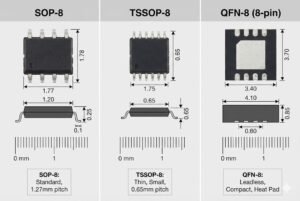
| Physical | Package Type (e.g., BGA, TSOP), Pin Count, Pin Layout | The part must physically fit on your existing PCB without any modifications. |
| Electrical | VDD/VCC Voltage, I/O Voltage Levels, Power Consumption (Active/Standby) | Mismatched voltages can damage the component or other parts of your system. |
| Functional | Memory Density, Organization (e.g., 512Mx8), Speed Grade, Timing (tCK, CL, tRAS) | These define how the chip operates. Any deviation can lead to data corruption or system instability. |
| Environmental | Operating Temperature Range (Commercial, Industrial, Automotive) | The replacement must be rated to perform reliably in your product's intended environment. |
This detailed verification process is what separates a risky purchase from a secure, long-term solution. It’s a core part of the value we provide.
Conclusion
EOL events for memory are a challenge, but they are manageable. Use the LTB when you can, but if you miss it, don't panic. A trusted partner can secure authentic stock or a verified replacement.
Understanding LTB can help you secure essential components before they go EOL. ↩
Learn how drop-in replacements can save your production line from costly redesigns. ↩
Discover the importance of PCNs in managing component lifecycle effectively. ↩
Effective forecasting can prevent costly mistakes in component procurement. ↩
Learn how proper storage can preserve the integrity of your components. ↩
Mastering datasheets is crucial for verifying component compatibility. ↩
A global network can help you find rare components quickly and reliably. ↩
Mismatched voltage levels can lead to component damage; learn how to check them. ↩
Understanding timing parameters can prevent system failures and recalls. ↩
Technical analysis ensures compatibility and reliability in replacements. ↩