Struggling to select the right module for your project? A wrong choice can halt production. We'll break down exactly what you need to know for successful bulk sourcing1.
Yes, understanding key specs like the CPU2, memory3, connectivity4, and power modes5 is vital. For bulk orders, focus on module variants (e.g., ESP32-WROOM-32D6](7D/U">https://arxiv.org/pdf/2302.12994)7D/U) and verify sourcing channels to ensure a stable, long-term supply for your manufacturing line.
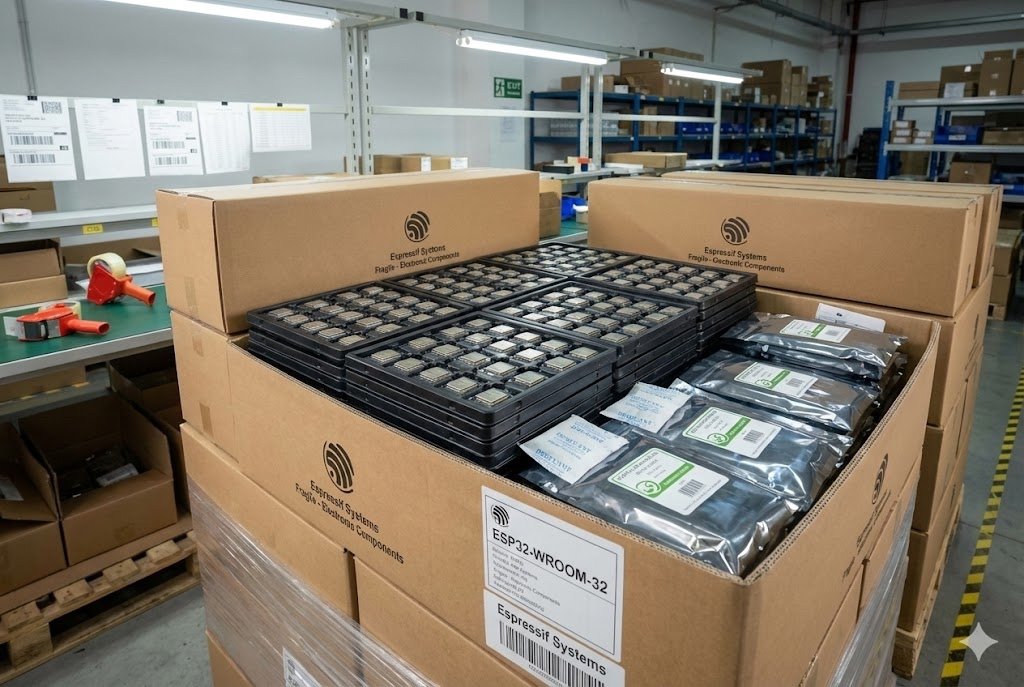
The ESP32-WROOM-327 is a fantastic module, but its popularity makes it a complex component to manage for mass production. A simple datasheet review isn't enough when your factory's output depends on a steady supply. You need a strategy that covers technical selection, variant choice, and procurement risks. Let's start with the datasheet. It's packed with information, but not all of it is equally important for every project. Knowing where to focus saves time and prevents costly mistakes down the line. We'll guide you through what really matters for scaling up.
Which ESP32-WROOM-327 specs really matter for mass production?
Datasheets are overwhelming with technical details. Focusing on the wrong ones wastes valuable engineering time and can increase costs. We pinpoint the specs that directly impact production, cost, and reliability.
For mass production, focus on the core MCU performance, memory3 (Flash/PSRAM8), RF performance9 for certifications10, and power consumption profiles. These directly influence your BOM cost, product reliability, and end-user experience. Always check operating temperature11 ranges for industrial applications.
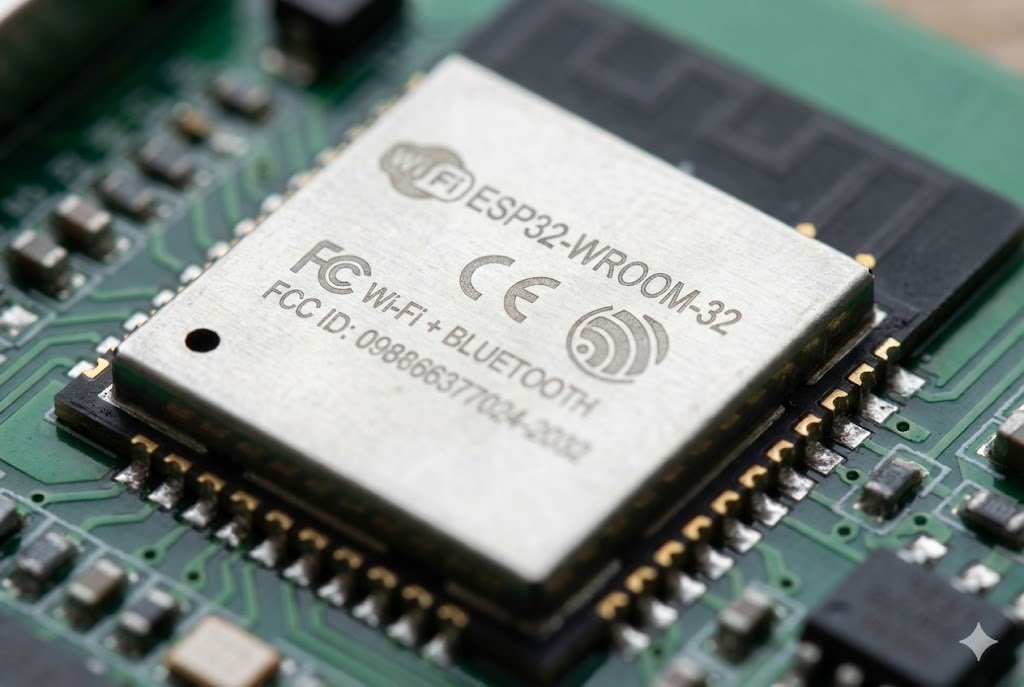
When we help clients evaluate the ESP32-WROOM-327 for a new product, we don't just read the datasheet line by line. We focus on the features that have real-world consequences for manufacturing and the final product's success. It’s about translating those numbers and technical terms into business decisions. For example, the choice of memory3 size isn't just a technical detail; it determines if your product can support future over-the-air (OTA) updates, which is a huge commercial advantage. We look at the datasheet through the lens of a production manager and a product owner, not just an engineer. This approach helps avoid over-engineering the product while ensuring it meets all market and reliability requirements.
Core Processing and Memory
The heart of the ESP32 is its Xtensa dual-core 32-bit LX6 microprocessor. The dual-core design is a major advantage for connected devices. It allows you to run demanding tasks, like the Wi-Fi and Bluetooth stacks, on one core while your main application runs smoothly on the other. This prevents performance bottlenecks. For memory3, the standard ESP32-WROOM-327 module includes 4 MB of SPI flash. This is crucial for storing your application code, data, and enabling OTA updates. If your application is very complex or you plan many large future updates, you might need a module variant with more flash.
RF Performance and Certifications
One of the biggest benefits for manufacturers is that the ESP32-WROOM-327 module comes pre-certified. It has certifications10 for FCC, CE, IC, and others. This saves you an enormous amount of time and money in testing and compliance. Your product still needs final certification, but using a pre-certified module simplifies the process significantly. The module's RF performance9 is robust, but the final implementation in your product, including antenna choice and placement, will determine the final range and reliability of the Wi-Fi and Bluetooth connections.
Power Consumption and Operating Conditions
For any battery-powered device, power consumption is a critical factor. The datasheet details several power modes5 that allow you to optimize battery life.
| Power Mode | Description | Typical Use Case |
|---|---|---|
| Active | Both CPU2 and radio are on. | Transmitting data, active processing. |
| Modem-sleep | CPU2 is on, but radio is off. | Application is running, but no connection needed. |
| Light-sleep | CPU2 is paused, radio is off. | Wakes up periodically to check for events. |
| Deep-sleep | Most of the chip is powered down. | Long periods of inactivity, waking on a timer or external trigger. |
The standard operating temperature11 range of -40°C to +85°C also makes it suitable for most consumer and industrial environments, which is a key requirement for reliable mass-produced goods.
How do you choose the right ESP32-WROOM-327 variant for your product?
Many similar part numbers for the ESP32 exist. Ordering the wrong one can lead to production delays and expensive redesigns. We'll clarify the differences so you can choose confidently.
The main variants are the ESP32-WROOM-32D6](7D">https://arxiv.org/pdf/2302.12994)7D and ESP32-WROOM-327U. The 'D' version has a built-in PCB antenna%3C%22)12, while the 'U' has a U.FL connector13 for an external antenna. Choose 'D' for simplicity and cost-effectiveness, and 'U' for flexible placement or better RF performance9 inside a metal enclosure.
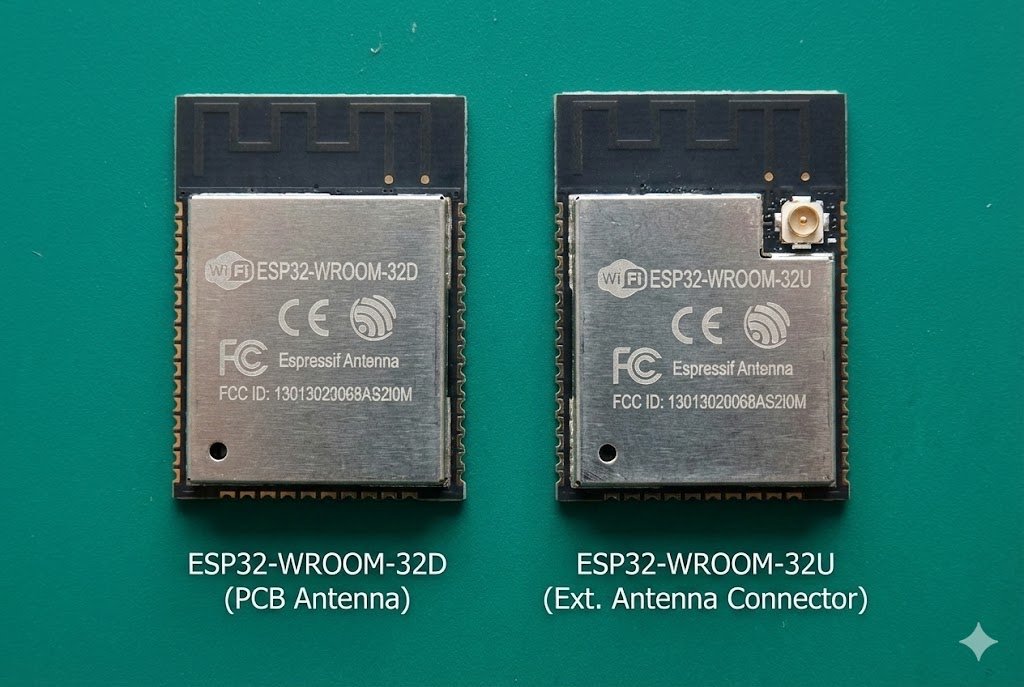
I remember a client who accidentally ordered thousands of the 'U' version when their design specified the 'D' version. Their compact plastic enclosure was designed for the onboard antenna and had no space for a U.FL connector13 or an external antenna wire. This single-letter mistake on the purchase order caused a major production halt and a frantic search for replacement stock. It’s a simple error, but it highlights how crucial it is to understand these subtle differences before placing a large volume order. It’s not just about the datasheet; it’s about how the part fits into your physical product and manufacturing process.
Onboard vs. External Antenna
The choice between the ESP32-WROOM-32D6](7D">https://arxiv.org/pdf/2302.12994)7D (PCB antenna%3C%22)12) and ESP32-WROOM-327U (U.FL connector13) is one of the first decisions to make.
- ESP32-WROOM-32D6](7D">https://arxiv.org/pdf/2302.12994)7D: This is the most common and cost-effective choice. The antenna is integrated directly onto the module's printed circuit board (PCB). This is perfect for projects where the device is in a plastic enclosure and you want a simple, all-in-one solution. There are no extra parts to buy or assemble.
- ESP32-WROOM-327U: This version is for products that need an external antenna. This is necessary if your product has a metal enclosure, which would block the signal from a PCB antenna%3C%22)12. It also gives you the flexibility to place the antenna in the optimal position for the best possible RF signal, potentially increasing range and reliability. However, it adds cost for the connector, the pigtail cable, and the antenna itself.
Flash Size and PSRAM8 Options
While the standard WROOM module is very popular, the ESP32 family includes other variants like the WROVER series. These are important to consider for more demanding applications.
| Part Number Series | Antenna Type(s) | Typical Flash | Integrated PSRAM8 | Key Use Case |
|---|---|---|---|---|
| ESP32-WROOM-327 | PCB or U.FL | 4 MB - 16 MB | No | General-purpose IoT, cost-sensitive projects. |
| ESP32-WROVER | PCB or U.FL | 4 MB - 16 MB | Yes (8 MB) | Applications needing extra RAM, like GUIs, audio processing, or complex data buffering. |
PSRAM8 (Pseudo-static RAM) provides a large amount of extra memory3 for your application. If your product needs to drive a display with a graphical user interface (GUI), process audio streams, or handle large data buffers, a WROVER module with integrated PSRAM8 is a much better choice than a standard WROOM module. Choosing the right one upfront prevents performance issues later.
What are the best strategies for sourcing ESP32-WROOM-327 modules in bulk?
Popular chips like the ESP32 often face shortages and long lead times14. Unstable supply can shut down your entire production line. We'll share professional strategies for securing your supply chain.
The best strategy is to partner with a sourcing specialist15 like us at NexCir. We build long-term supply plans, verify supplier authenticity, and use a global network to find stock even during shortages. Avoid relying on a single spot-buy source for critical components.

Many procurement teams I talk to are used to buying from the spot market when they need parts quickly. This works for small quantities, but it's a dangerous game for mass production. The spot market is filled with price volatility and questionable quality. A few years ago, during a major allocation16, a new client came to us in a panic. Their production line was down because the ESP32 modules they bought from an unknown broker were all failing quality control17. They were poorly stored and had a high defect rate. We were able to leverage our verified network to find a reliable batch, but the experience taught them a valuable lesson about the risks of unmanaged sourcing.
Moving Beyond Spot Buys
For production, you need a sourcing strategy, not just a purchasing habit. Spot buys are reactive; a strategy is proactive. Relying on the spot market exposes you to several risks:
- Counterfeits: Popular components are prime targets for fakes.
- High Prices: During shortages, spot market prices can be 5-10x higher than normal.
- No Traceability: You often don't know the origin or storage history of the parts, leading to quality issues. A managed sourcing approach, like we provide at NexCir, focuses on long-term relationships with verified suppliers. We ensure every component is original and fully traceable.
The Importance of a Diversified Supplier Network
Don't put all your eggs in one basket. Relying on a single authorized distributor is risky. If they run out of stock, you have no other options. At NexCir, we are not tied to a single channel. We maintain a global network of vetted suppliers, including authorized distributors, other OEMs with excess stock, and trusted independent partners. This diversification gives us flexibility. When supply is tight in one region, we can pull from another, ensuring a more stable supply for our clients.
Planning for the Long Term
The best way to secure supply is to plan ahead. We work with our clients to understand their production forecasts. With this information, we can place scheduled orders with suppliers far in advance. This reserves production capacity and locks in better pricing. Our role is also to provide market intelligence. We constantly monitor lead times14, pricing trends, and potential shortages for critical components like the ESP32. We alert our clients to upcoming risks so they can make informed decisions, like placing an order before a predicted price hike or shortage.
How can you manage supply chain risks18 for the ESP32-WROOM-327?
The ESP32 is extremely popular, which makes it a target for supply issues. A single component shortage can derail your product launch and cost you revenue. We outline proactive steps to protect your supply.
Manage risk by verifying component authenticity, planning for long lead times14, and identifying alternative parts19 early. A sourcing partner can help by providing market intelligence, managing buffer stock, and offering pre-vetted cross-references to reduce your design's vulnerability to shortages.

Supply chain risk isn't just about availability; it's about quality. A component that fails in the field can be far more costly than a production delay. We once had a client in the industrial controls sector who was building a critical monitoring device. They couldn't afford any failures. Before we even sourced their first bulk order of ESP32s, we worked with them to establish a strict quality control17 protocol. This included documentation checks, visual inspection, and sample testing. This proactive approach gave them the confidence that every module going into their product was authentic and reliable, protecting their brand's reputation.
Authenticity and Quality Control
Counterfeit and substandard components are a major threat. A fake ESP32 module might work initially but fail under certain temperature conditions or have poor RF performance9. This is why our sourcing process at NexCir is built on a foundation of strict quality control17. We only work with trusted, vetted suppliers. We verify the full traceability of components back to the original manufacturer whenever possible. This ensures that the parts you receive are authentic and meet the datasheet specifications, which is non-negotiable for any commercial or industrial product.
Lead Time and Allocation Awareness
The lead time for the ESP32 can vary dramatically, from a few weeks to over a year during peak demand. When a component is on "allocation16," it means the manufacturer is rationing their output and can't meet all the demand. As your sourcing partner, we keep our ears to the ground. We provide our clients with up-to-date market intelligence on lead times14 and allocation16 situations. This allows you to plan your procurement schedule effectively. Knowing that a lead time is about to stretch from 12 weeks to 40 weeks gives you the chance to place orders early and avoid a production line stoppage.
Identifying and Qualifying Alternatives
A key part of risk management is having a Plan B. While the ESP32-WROOM-327 is often the first choice, it's smart to identify potential alternatives during the design phase. This could be a pin-compatible module from another manufacturer or even a different Espressif module that meets the core requirements. Part of our value-driven service is helping your engineering team with this process. We can use our knowledge of the market to suggest and help source samples of alternative parts19. Having a qualified second source is one of the strongest defenses against a single-component supply chain failure.
Conclusion
In short, mastering the ESP32 for production requires understanding key specs, choosing the right variant, and having a solid sourcing strategy to ensure a stable, reliable supply for your factory.
Learn effective strategies for bulk sourcing to ensure a stable supply chain for your production. ↩
Discover how CPU performance influences your choice of modules and overall product efficiency. ↩
Understand the different memory options available for ESP32 modules to optimize your application. ↩
Find out about the connectivity features of the ESP32-WROOM-32 that enhance its usability. ↩
Explore the various power modes to optimize battery life for your devices. ↩
Compare the two variants to choose the best option for your specific application. ↩
Explore the essential features of the ESP32-WROOM-32 to understand its capabilities for your project. ↩
Understand the advantages of PSRAM for applications requiring additional memory. ↩
Learn about RF performance and its significance in ensuring reliable wireless communication. ↩
Understand the importance of certifications in ensuring compliance and quality for your products. ↩
Check the operating temperature range to ensure the module fits your environmental requirements. ↩
Discover the benefits of PCB antennas for simplifying design and reducing costs. ↩
Learn about U.FL connectors and their role in enhancing RF performance in your designs. ↩
Explore the factors affecting lead times to better manage your procurement schedule. ↩
Find out how partnering with a sourcing specialist can streamline your procurement process. ↩
Understand the concept of allocation and its impact on component availability. ↩
Learn about quality control practices to ensure the reliability of your components. ↩
Identify potential supply chain risks to better prepare your production strategy. ↩
Discover methods for identifying alternative parts to mitigate supply chain disruptions. ↩