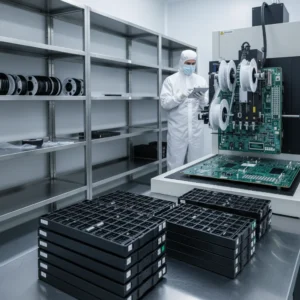
Choosing the right MCU for an industrial product is tough. A consumer-grade module can fail in a factory setting, causing major downtime. Understanding the datasheet1 is your first defense.
Yes, the ESP32-WROOM-32 is an excellent choice for many industrial applications, but only if you select the correct industrial-grade version2. Its powerful dual-core processor, integrated Wi-Fi/Bluetooth3, and wide operating temperature range4 make it robust enough for demanding environments when sourced correctly.
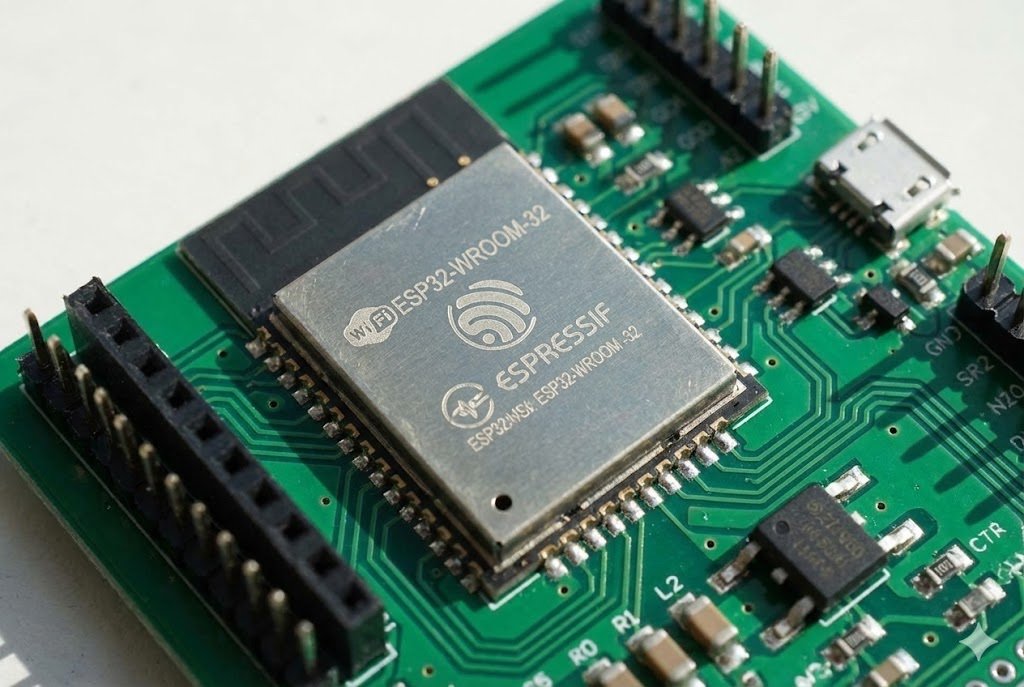
The ESP32-WROOM-32 is famous in the maker community, but its power goes far beyond hobby projects. Many of our OEM clients are surprised when we recommend it for serious industrial systems. The key is to look past the hobbyist-level information and dig into the official datasheet1, focusing on the specifications that matter for reliability and longevity. Let's break down what makes this module a contender for your next industrial design.
What makes the ESP32-WROOM-32's core so powerful for complex tasks?
Your device needs to handle network communication and critical control loops at the same time. A weak, single-core MCU can lag or freeze, risking operational failure. The ESP32's architecture solves this.
The module's strength comes from its dual-core Xtensa LX6 CPU5 and integrated radio. This design allows you to dedicate one core to managing Wi-Fi and Bluetooth stacks, while the other core runs your main application code without interruption. This is perfect for connected industrial devices.
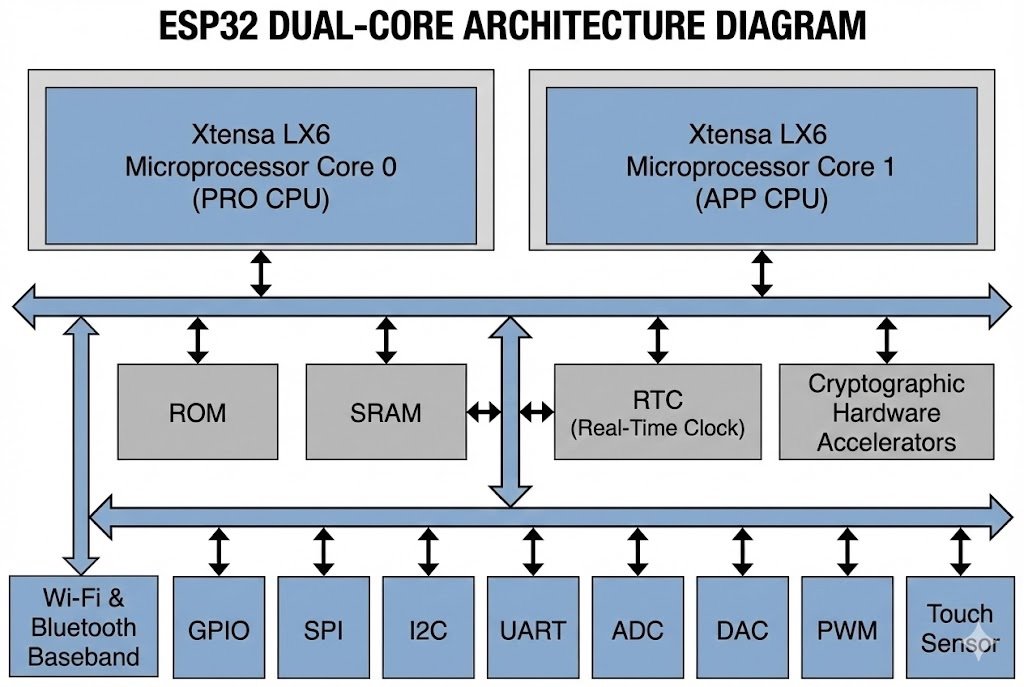
I remember working with a client whose machine controller kept freezing. They were using a single-core MCU that couldn't handle sending sensor data to the cloud while also managing a motor. The network stack would block the main control loop at random times. When we switched their design to an ESP32-WROOM-32, the problem disappeared instantly. They dedicated one core to the network tasks and the other to machine control, giving them the stability they needed. This separation is a game-changer for building reliable connected systems.
Core Processing and Memory
The two cores can run at up to 240 MHz, providing plenty of processing power for tasks like running a local web server, processing sensor data, or driving a display. This power is supported by a solid memory configuration.
| Specification | Detail | Why It Matters for Industry |
|---|---|---|
| CPU | Dual-core Xtensa® 32-bit LX6 | Prevents network tasks from interrupting time-sensitive control loops. |
| SRAM | 520 KB | Enough memory to run complex applications and handle large data buffers. |
| Flash | 4 MB to 16 MB | Provides ample space for firmware, OTA updates, and data logging. |
| Connectivity | Wi-Fi & Bluetooth (Classic/BLE) | Enables wireless monitoring, control, and commissioning without extra modules. |
This combination of processing power and dedicated cores means your industrial device won't compromise on performance or connectivity.
Can the ESP32-WROOM-32 survive harsh industrial environments?
Industrial sites are hot, dusty, and have noisy power lines. A standard component can fail unexpectedly, leading to costly field service. You must check the datasheet1's operating limits carefully.
Yes, the module can perform reliably in these conditions, but you must use an industrial-grade variant. These versions are specifically rated for wider temperature ranges, typically from -40°C to 85°C, and some even up to 105°C, ensuring stability in non-climate-controlled environments.
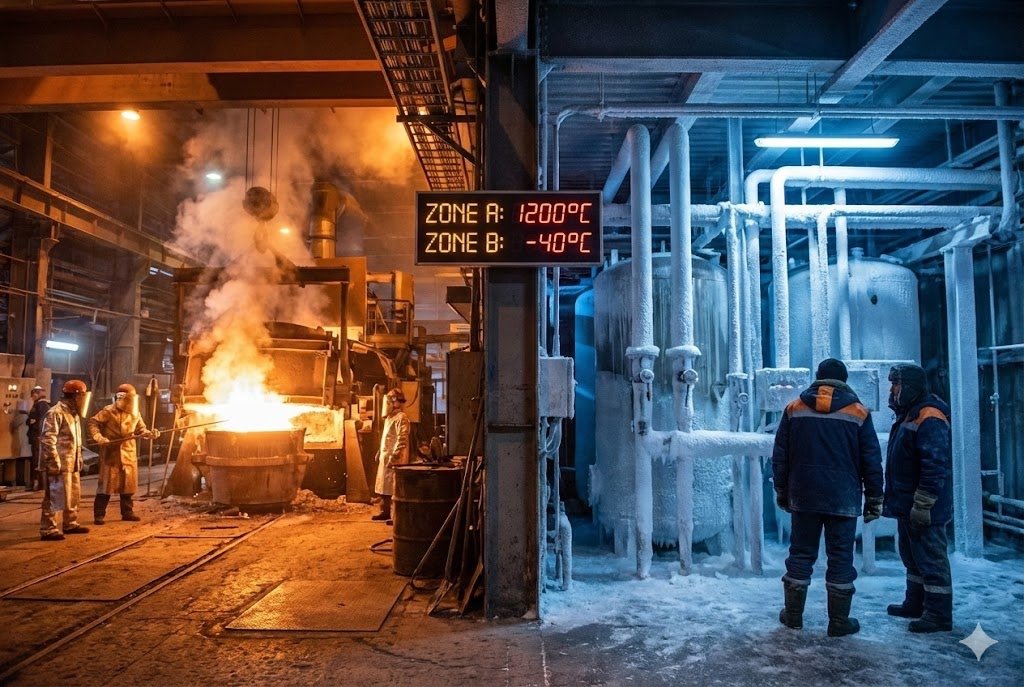
When we source components for our clients' industrial products, the operating temperature range4 is one of the first things we verify. A module rated for 0°C to 70°C might work fine on a lab bench, but it's a ticking time bomb inside a metal enclosure sitting in the sun or in an unheated warehouse in the winter. The datasheet1 specifies several variants of the ESP32-WROOM-32, and choosing the right one is not optional—it's essential for product reliability.
Temperature Range is Critical
The difference between a commercial-grade and an industrial-grade part often comes down to how it was tested and binned at the factory.
| Grade | Temperature Range | Typical Use Case |
|---|---|---|
| Commercial | 0°C to 70°C | Indoor consumer electronics, office environments. |
| Industrial | -40°C to 85°C | Factory automation, outdoor monitoring, automotive cabins. |
| High-Temp | -40°C to 105°C | Engine compartment applications, high-power industrial controls. |
Power Supply and RF Stability
Industrial environments often have "dirty" power with voltage spikes and dips. The ESP32-WROOM-32 datasheet1 specifies an operating voltage of 2.7V to 3.6V. A robust design will include a high-quality Low-Dropout Regulator (LDO)6 and proper decoupling capacitors right at the module's power pins to ensure stability. Furthermore, its RF performance is pre-certified (FCC, CE, etc.), which saves enormous time and money during product certification. This pre-certification ensures the Wi-Fi and Bluetooth radios perform reliably even in electromagnetically noisy factory settings.
Which ESP32-WROOM-32 peripherals are essential for Industrial IoT?
You need to connect to a mix of modern and legacy sensors, actuators, and control systems. Incompatible interfaces can force expensive board redesigns and project delays. The ESP32's rich peripheral set prevents this.
The most useful peripherals for industrial applications are the GPIOs7, ADCs, and communication buses like I2C8, SPI9, and UART10. These allow the module to connect directly to industrial sensors, relays, motor drivers, and other systems without needing much external interface logic.
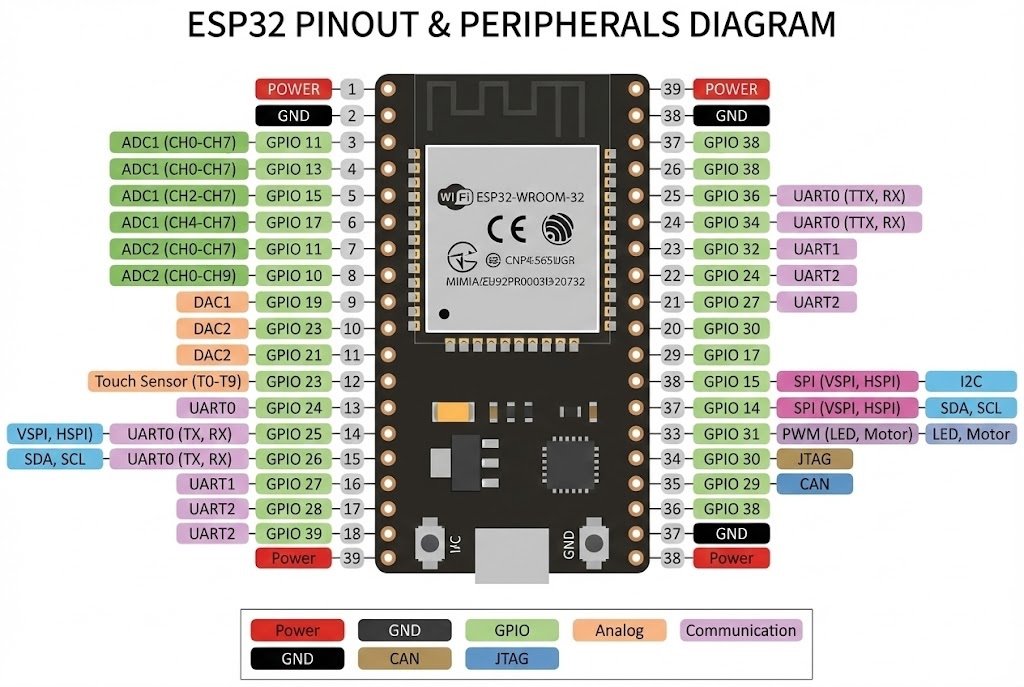
We often help engineers map their system's I/O requirements to the ESP32's capabilities. The flexibility is impressive. You can use the high-resolution ADCs to read from 4-20mA current loop sensors (with a simple conditioning circuit), use I2C8 to talk to temperature and humidity sensors, and use UART10 to interface with a Modbus RTU device. This built-in versatility reduces BOM cost and complexity, which is a huge win for any OEM. The module acts as a powerful bridge, bringing legacy industrial hardware into the modern, connected world of IoT.
A Practical Look at Industrial Interfaces
Let's break down how these peripherals solve real-world industrial challenges.
Interfacing with Sensors and Actuators
- GPIOs7: The General-Purpose Input/Output pins can be used to read the status of limit switches, control indicator lights, or switch relays and small motors.
- ADCs (Analog-to-Digital Converters)11: The ESP32 has two 12-bit SAR ADCs. These are perfect for reading values from analog sensors that measure pressure, flow, or position.
- DACs (Digital-to-Analog Converters): The two 8-bit DACs can generate a simple analog voltage signal to control legacy equipment that requires an analog input.
Communication Buses for System Integration
The ESP32 is a master of communication, which is vital for connecting different parts of a system.
| Interface | Industrial Use Case Example |
|---|---|
| UART10 | Communicating with legacy devices like PLCs, HMIs, or barcode scanners using protocols like Modbus RTU. |
| I2C8 | Reading data from on-board sensors like temperature sensors, pressure sensors, and EEPROMs for configuration data. |
| SPI9 | Interfacing with higher-speed devices like an external flash memory for data logging, an SD card, or a graphical display. |
| CAN Bus12 | With an external transceiver, the ESP32's built-in CAN controller can communicate on industrial and automotive networks. |
Why is sourcing the correct ESP32-WROOM-32 variant so critical for your product's lifecycle?
You find a cheap ESP32 module on a marketplace. But it's the wrong temperature grade or a version that will soon be discontinued. Your production line is now at risk.
Sourcing the correct industrial-grade variant is the only way to guarantee long-term supply stability and performance. Using a hobbyist-grade part in a production environment risks field failures, brand damage, and expensive redesigns when the part becomes unavailable without warning.
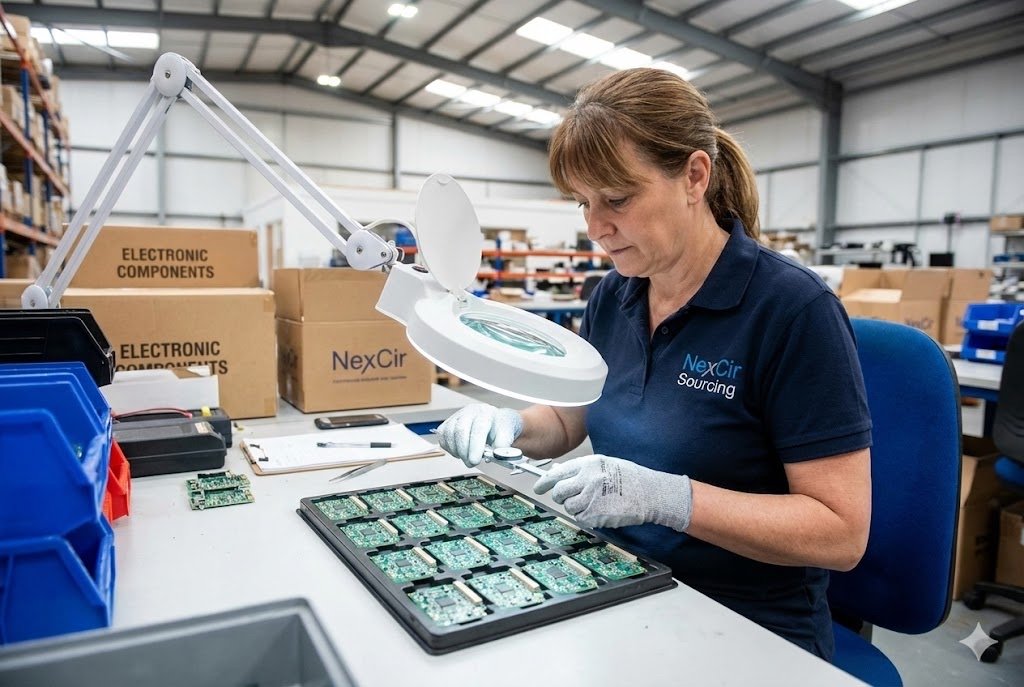
The biggest mistake we see is procurement teams sourcing from unauthorized or hobbyist-focused channels to save a few cents per unit. This is a classic short-term gain for long-term pain. "ESP32-WROOM-32" is not a single part; it's a family. There are different versions (like -32D, -32U, -32E) with different antennas, flash sizes, and, most importantly, temperature ratings. A sourcing partner like us ensures you get the exact part number specified by your engineers, with a traceable supply chain13, for the entire lifecycle of your product.
Beyond the Base Part Number
The "ESP32-WROOM-32" name is just the beginning. The full part number tells the real story. For example, a variant might have a suffix indicating an extended temperature range of -40°C to 105°C, while the base model does not. Another variant might have a U.FL connector for an external antenna, which is crucial for devices inside metal boxes. Sourcing without verifying the full, exact part number is a gamble.
The Dangers of the Grey Market
Sourcing from non-franchised distributors or marketplaces for production runs introduces massive risks:
- Incorrect Specs: You might receive a commercial-grade part sold as an industrial-grade one.
- Counterfeits: Fake components that fail under load are common.
- No Traceability: When a batch fails, you have no way to trace it back to its origin.
- No Lifecycle Support: The seller has no obligation to inform you if the part is going End-of-Life (EOL).
Partnering for Lifecycle Success
As a sourcing partner, our job is to mitigate these risks. We work with verified, authorized channels to procure the exact variant you need. We track the lifecycle status of your critical components, from Active to Not Recommended for New Designs (NRND)14 to EOL. This gives you the foresight to plan for last-time buys or to work with your engineering team on a replacement part, ensuring your production line never stops unexpectedly.
Conclusion
The ESP32-WROOM-32 is a powerful and viable module for industrial use, but success depends on choosing and sourcing the correct industrial-grade variant through a reliable, lifecycle-aware partner.
Mastering the datasheet helps you make informed decisions about component selection and application suitability. ↩
Understanding the industrial-grade version ensures your product can withstand harsh environments, crucial for reliability. ↩
Explore how built-in connectivity simplifies design and reduces costs in industrial IoT applications. ↩
Discover why selecting the right temperature range is vital for product reliability in extreme conditions. ↩
Learn how the dual-core CPU enhances performance by separating network tasks from main application processes. ↩
Ensure power stability in industrial environments with voltage fluctuations by using a quality LDO. ↩
Discover how GPIOs enable direct connection to sensors and actuators, simplifying system integration. ↩
I2C enables efficient communication with sensors, enhancing data collection and system functionality. ↩
SPI supports high-speed communication with external devices, crucial for data logging and display interfaces. ↩
Learn how UART facilitates communication with legacy devices, ensuring seamless integration. ↩
ADCs allow precise sensor data reading, crucial for monitoring and control in industrial systems. ↩
Explore how CAN Bus integration allows communication on industrial and automotive networks, expanding application scope. ↩
A traceable supply chain ensures component authenticity and reliability, reducing risks of counterfeit parts. ↩
Understanding NRND status helps in planning for future component availability and design adjustments. ↩