Are you struggling to choose between LNK3041 and LNK6252 for your power supply design? Making the wrong choice can lead to wasted board space and costly reliability issues later.
LNK3041 is ideal for low-cost, non-isolated Buck topologies in small appliances like coffee machines. LNK6252 utilizes Primary Side Regulation (PSR)3 to eliminate optocouplers, offering superior reliability for high-temperature industrial applications. Your choice depends on whether you prioritize absolute lowest cost or long-term durability.
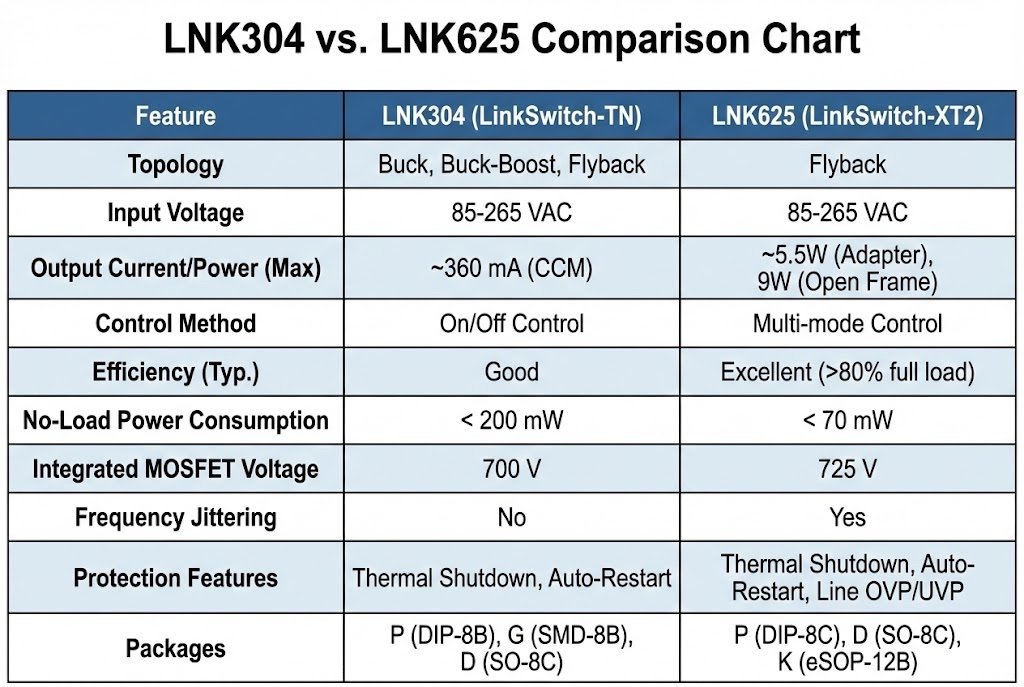
I have seen many engineers confused by these two series during my time at Nexcir. We need to look closely at their internal structures to make the right decision.
Why Is the LNK3041 Considered the King of Cost-Effective Buck Converters?
Do you need to lower the BOM cost for your small home appliance project? Using a complex transformer design often adds unnecessary expense and bulk to simple devices.
The LNK3041 uses a simple Buck topology4 that requires no transformer. This makes it the standard choice for auxiliary power supplies in microwaves and coffee makers, providing a highly efficient non-isolated solution that saves significant board space and money.
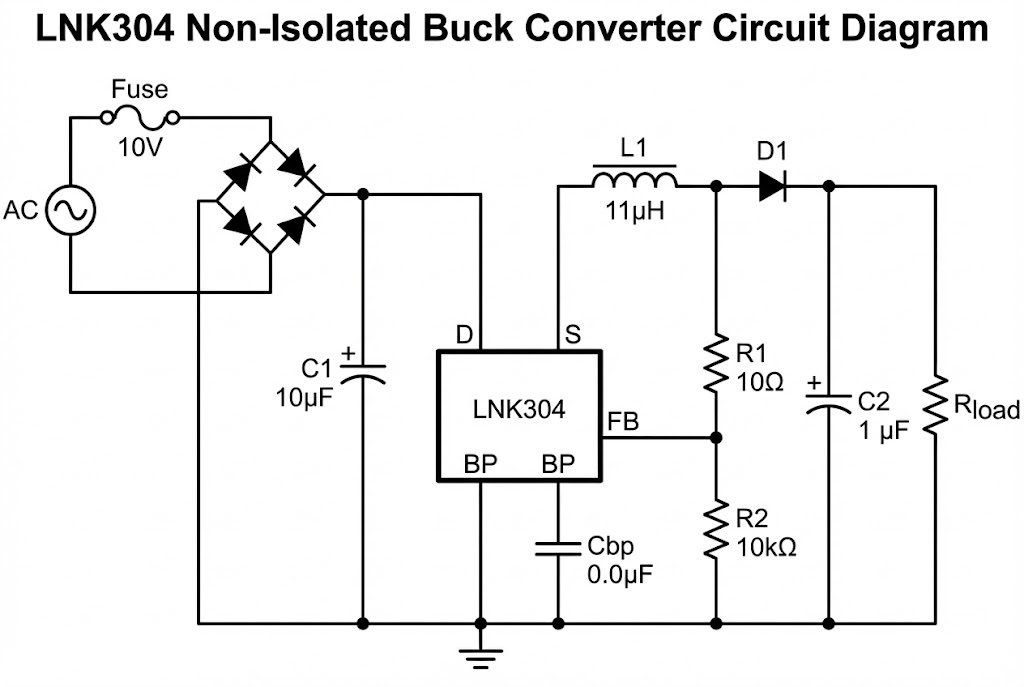
I want to dive deeper into why the LNK3041 is so popular. In the world of power electronics, we often have to trade space for safety. But for many home appliances, you do not always need an isolated transformer.
I remember a project I worked on with a client who manufactures smart rice cookers5. They were using a heavy transformer in their old design. It took up too much space. I suggested they look at the LNK3041. This chip allows for a "Direct-to-Mains" connection. It steps down the high voltage directly.
The core value here is the "Zero Transformer Design6." Transformers are expensive. They are also heavy. By using a Buck topology4, the LNK3041 uses a simple inductor instead. This is much cheaper.
Here is how I break down the advantages for my clients:
The Value of Buck Topology
- Component Count: You remove the transformer. You often remove the feedback optocoupler too.
- Cost: It is the "King of Cost Performance." For items like coffee machines or microwave ovens, every cent counts.
- Simplicity: The circuit is easier to lay out on a PCB.
However, you must be careful. This is a non-isolated design. The output is electrically connected to the mains. You cannot use this if the user can touch the output wires. But for buttons inside a plastic case, it is perfect.
Here is a quick comparison of the Typical Application for LNK3041:
| Feature | Description | Benefit |
|---|---|---|
| Topology | Buck (Step-down) | No transformer needed. |
| Isolation | Non-Isolated | Very low cost and small size. |
| Typical Load | Under 170mA | Perfect for relays and displays. |
| Main Use | Small Appliances | Microwaves, Coffee Makers, Fans. |
At Nexcir, we see huge demand for this chip. It is a workhorse. It does one job, and it does it very cheaply. If your product is a consumer device7 with a plastic shell, this is likely your best starting point.
How Does LNK6252 Solve the Reliability Problems Caused by Optocouplers?
Are your power supplies failing in hot environments after a year or two? Standard feedback circuits rely on components that degrade quickly when the temperature rises inside the case.
The LNK6252 introduces Primary Side Regulation (PSR)3 technology. This removes the need for an optocoupler and TL431 regulator. It solves the issue of Voltage drift caused by CTR aging8 in optocouplers, making it perfect for environments where long-term stability is critical.
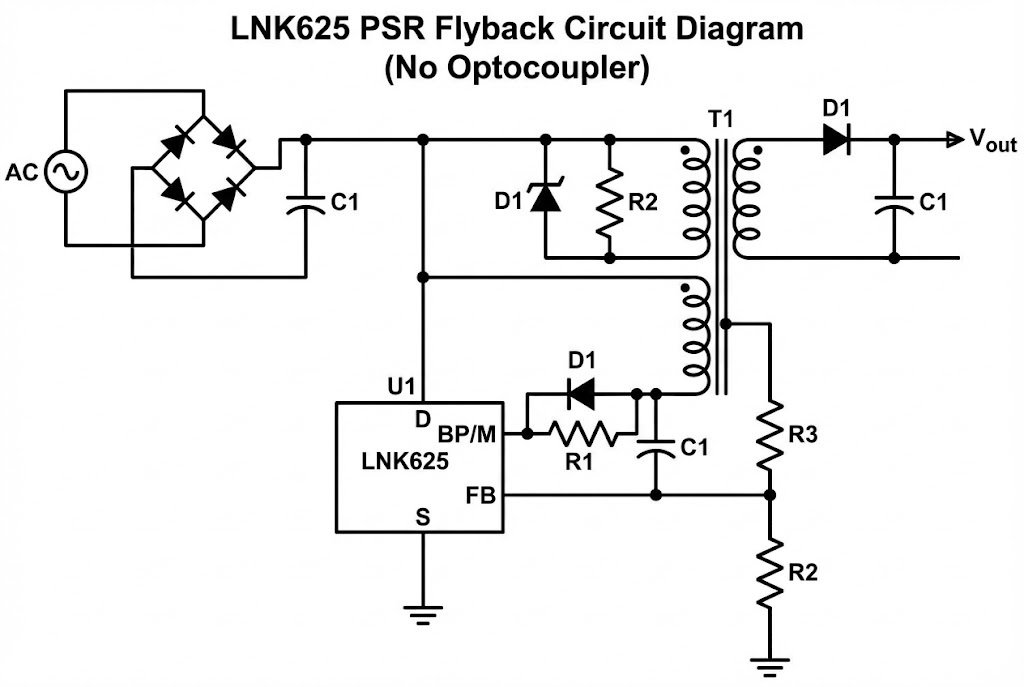
While the LNK3041 is great for cost, the LNK6252 brings a "Technical Premium9." This premium is all about reliability.
I recall a conversation with an engineer designing industrial control units. These units sit inside hot factory cabinets. He told me his previous power supplies were drifting in voltage after two years. The 5V line was dropping to 4.5V. This caused the system to reset randomly.
The culprit was the optocoupler.
In a standard power supply, an optocoupler sends a signal from the output back to the input. It uses light to bridge the gap. But over time, the LED inside the optocoupler gets weak. This is called CTR (Current Transfer Ratio) degradation. High heat makes this happen much faster.
The LNK6252 solves this with Primary Side Regulation (PSR)3.
What is PSR?
PSR means the chip "listens" to the waveform on the primary side. It does not need a feedback wire or an optocoupler from the secondary side.
By removing the optocoupler and the TL431 reference chip, you gain two things:
- Space: You save board space, just like the LNK3041.
- Reliability: You remove the weakest link. A chip does not age like an optocoupler LED does.
The LNK6252 is an upgrade. It is not just about saving money on parts. It is about saving money on warranty claims10. If your product needs to last 5 to 10 years, like a smart meter or an industrial sensor, you cannot risk using an optocoupler in a hot box.
Here is a breakdown of the Technical Premium9:
| Component | Standard Design | LNK6252 Design | Result |
|---|---|---|---|
| Feedback | Optocoupler + TL431 | Internal PSR Logic | No aging drift. |
| Temp Rating | Limited by Optocoupler | High (IC limit) | Better for industry. |
| Complexity | High | Low | Fewer solder joints to fail. |
| Cost | Medium | Low Component Count | Higher chip cost, lower BOM. |
I always tell my clients: If you are building a toaster, use LNK3041. If you are building a smart thermostat11 for a factory, pay the extra for LNK6252. It is the smarter choice for the future.
Which Chip Is the Better Choice for Long-Term Supply Chain Stability?
Are you worried about stock shortages stopping your production line unexpectedly? Relying on a niche part can be dangerous, but sticking to old tech might limit your product's lifespan.
From a distributor's view, LNK3041 is "hard currency" with massive stable volume. However, LNK6252 is the preferred upgrade for Industrial IoT12. It offers a balance of modern features and growing availability for designs requiring a longer lifecycle.
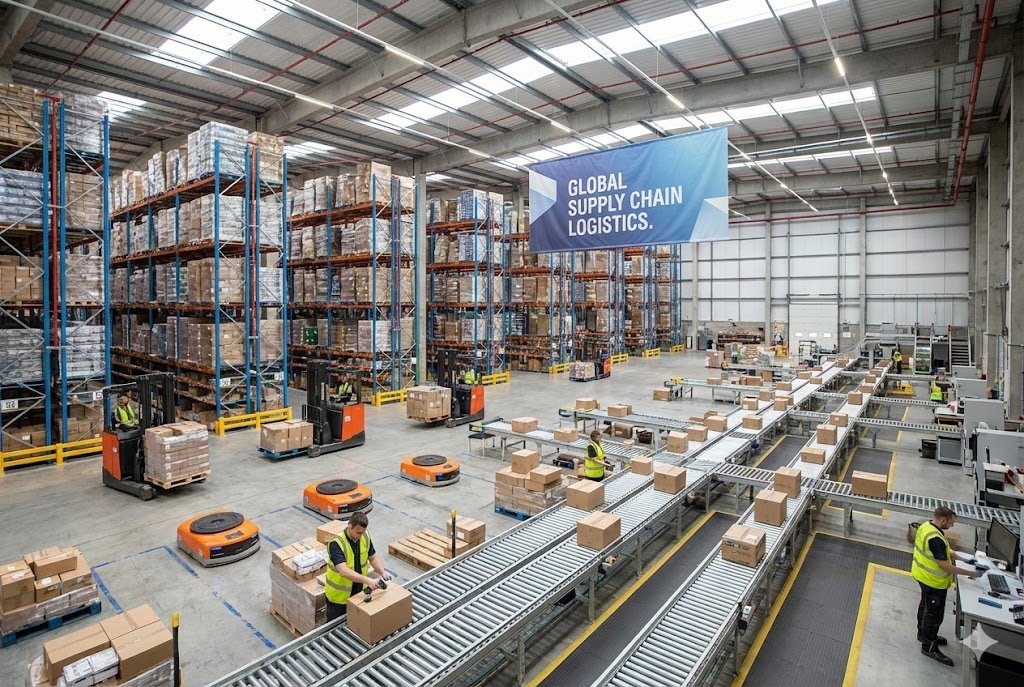
Now, let's put on our business hats. I look at these chips not just as silicon, but as products on a shelf. At Nexcir, we track the flow of these components globally.
The LNK3041 is what we call "Hard Currency13." This means the volume is massive. Millions are used every month. Because it is used in so many cheap appliances, the manufacturers make a lot of them. It is very rare to see a total shortage of LNK3041. Even if one factory stops, another has stock.
If you choose LNK3041, you are choosing safety in numbers. You will likely always find stock, and the price will remain very low.
However, the LNK6252 represents the "Solution Upgrade14." This chip is seeing huge growth in the Industrial IoT12 (Internet of Things) sector. As more devices become "smart," they need better power supplies. The LNK6252 is the darling of this new wave.
I had a client recently who wanted to switch from LNK3041 to LNK6252. They were worried about availability. I told them that while LNK3041 has more volume today, the manufacturers are pushing LNK6252 for new designs. This means the supply chain for LNK6252 is becoming stronger and more robust every day.
The Trade Perspective Breakdown
When I advise procurement managers, I use this framework to help them decide:
1. The "Hard Currency13" Path (LNK3041)
- Pros: extremely stable price, huge stock availability, verified by millions of units.
- Cons: older technology, fewer features.
- Best for: High volume consumer goods where price is the only thing that matters.
2. The "Future Proof" Path (LNK6252)
- Pros: growing market share, manufacturers prioritize it for new fabs, long lifecycle ahead.
- Cons: slightly higher unit price than LNK3041.
- Best for: Industrial goods, smart home devices15, and products with a 5+ year lifecycle.
Critical Thinking for Procurement
You need to align your chip choice with your product lifecycle.
- If your product will be sold for 1 year and then replaced (like a cheap toy), go with the LNK3041.
- If your product is a smart switch that sits in a wall for 10 years, the LNK6252 is the safer bet for supply continuity over that decade.
At Nexcir, we help clients manage this transition. We hold stock of both. But we see the trend moving toward PSR devices like the LNK6252 for anything that requires "smart" features. It is not just a chip; it is an investment in the quality of your brand.
Conclusion
LNK3041 wins on cost and availability for simple appliances, while LNK6252 wins on reliability and longevity for industrial use. Nexcir supplies both to match your specific engineering needs.
Explore why LNK304 is a cost-effective choice for small appliances, saving space and money with its Buck topology. ↩
Discover how LNK625's Primary Side Regulation enhances reliability in high-temperature industrial applications. ↩
Learn how PSR technology in LNK625 eliminates the need for optocouplers, improving long-term stability. ↩
Understand the advantages of Buck topology in reducing component count and cost in power supplies. ↩
See how LNK304's Buck topology can reduce space and cost in smart rice cooker designs. ↩
Find out how Zero Transformer Design in LNK304 reduces cost and weight by using a simple inductor. ↩
Understand why LNK304's cost-effectiveness and availability make it ideal for consumer electronics. ↩
Explore the impact of CTR aging on optocouplers and how LNK625 addresses this issue. ↩
Discover the benefits of LNK625's reliability and reduced complexity in industrial applications. ↩
Learn how LNK625's reliability and PSR technology minimize failures and warranty issues. ↩
Learn why LNK625's reliability makes it ideal for long-lasting smart thermostat applications. ↩
Understand why LNK625 is favored for its reliability and modern features in Industrial IoT. ↩
Explore why LNK304 is considered 'Hard Currency' due to its massive stable volume and availability. ↩
Find out how LNK625 represents a 'Solution Upgrade' with its advanced features and growing market share. ↩
Explore how LNK625's features support the longevity and reliability of smart home devices. ↩