leading paragraph: You are designing a smart light bulb1, but the PCB space is tiny. You worry about fitting a standard Wi-Fi module inside. The Espressif MINI series solves this exact problem.
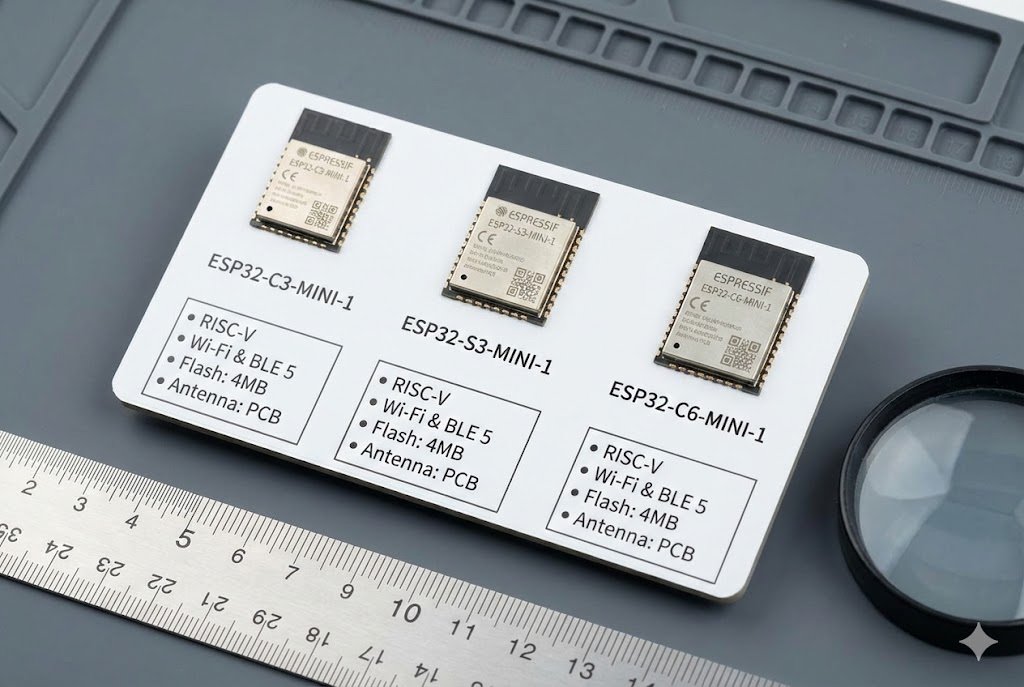
snippet paragraph: The ESP32-C3-MINI-12 and S3-MINI-13 are significantly smaller than the standard WROOM modules, specifically designed for space-constrained IoT applications4 like smart switches and lighting. They offer the same powerful performance but require careful thermal design5 and proactive supply chain management6 to ensure steady production.
Transition Paragraph: I see many engineers struggle with space limitations in their modern designs. Consumers want smaller devices, and this puts pressure on the hardware team. The MINI series is a great solution, but it comes with its own set of rules. Let me explain why these modules are special, how to handle the heat, and how to make sure you can actually buy them when you need them.
LOOP START
Why Is the ESP32 MINI Series the Best Choice for Compact Devices?
leading paragraph: Big modules kill sleek product designs. If your smart plug looks bulky, customers will not buy it. You need a solution that fits tight spaces without losing power.
snippet paragraph: The MINI series reduces the footprint by roughly 40-50% compared to WROOM modules. This allows fitment into standard electrical boxes, light bulb bases, and slim wearables where every millimeter counts.
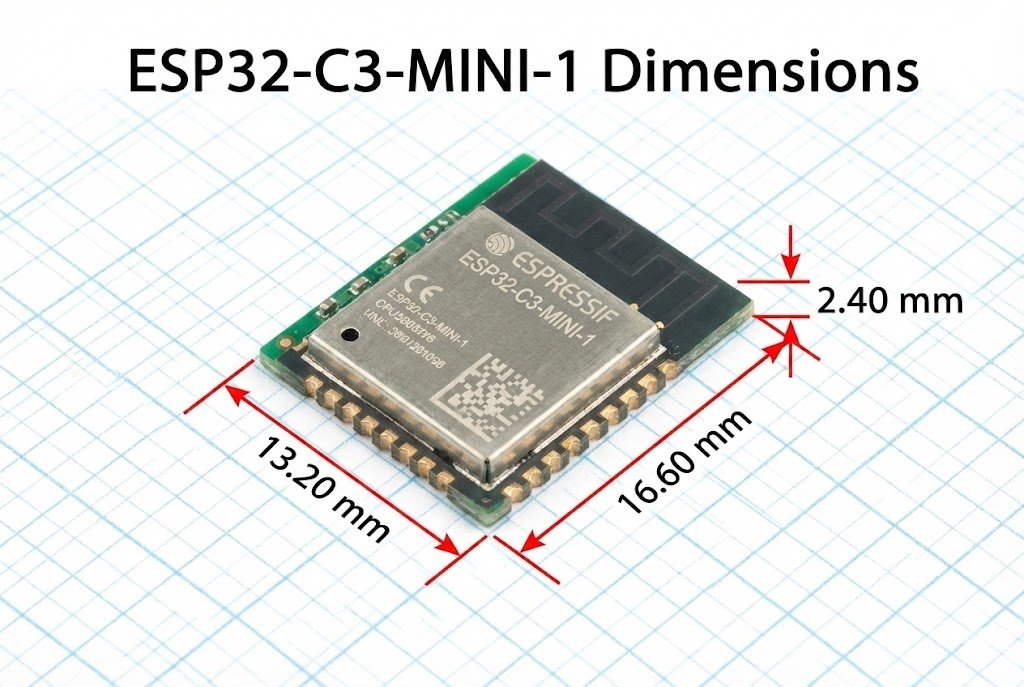
Dive deeper Paragraph: I have worked with many OEM clients who switch to the MINI series for one reason: volume. When we look at the standard ESP32-WROOM modules7, they are reliable, but they are also quite large. In products like LED drivers, smart sockets, or wall switches, the PCB is often shaped oddly to fit inside a plastic housing. Every millimeter you save on the module allows you to place a larger capacitor or a better connector. The ESP32-C3-MINI-12 and ESP32-S3-MINI-13 are built for this exact scenario.
The C3-MINI-1 is based on the RISC-V architecture. It is a cost-effective replacement for the older ESP8266 but with better security and Bluetooth LE. The S3-MINI-13 is more powerful. It supports AI acceleration8 and has more I/O pins. However, both share the "MINI" DNA. They remove the large PCB antenna area found on WROOM modules and use a more compact layout. This reduction allows you to design products that look modern and sleek.
Here is a simple breakdown of the size differences to help you visualize the saving:
| Module Type | Approximate Dimensions | Target Application | Key Advantage |
|---|---|---|---|
| ESP32-WROOM-32 | 18mm x 25.5mm | Gateways, Large Controllers | Easy to solder, large antenna |
| ESP32-C3-MINI-12 | 13.2mm x 16.6mm | Smart Bulbs, Switches | Very low cost, tiny footprint |
| ESP32-S3-MINI-13 | 15.4mm x 23.5mm | AI Cameras, Displays | High power in a small package |
As you can see, the width reduction is the most important factor. In a smart bulb, the board is often circular or narrow. A wide module simply will not fit. By choosing the MINI series, you solve the mechanical conflict immediately. At NexCir9, we help customers verify these dimensions early in the design phase so they do not face surprises later.
LOOP END
LOOP START
Does the Smaller Size of MINI Modules Cause Overheating Issues?
leading paragraph: A small chip usually means high heat. If you ignore this, your device might fail in the field. You must plan for heat before you start mass production.
snippet paragraph: Yes, smaller modules have less surface area to dissipate heat. When the ESP32-C3 or S3 runs at full power, the internal temperature rises faster than in larger modules, requiring specific PCB layout strategies10 to keep the device cool.
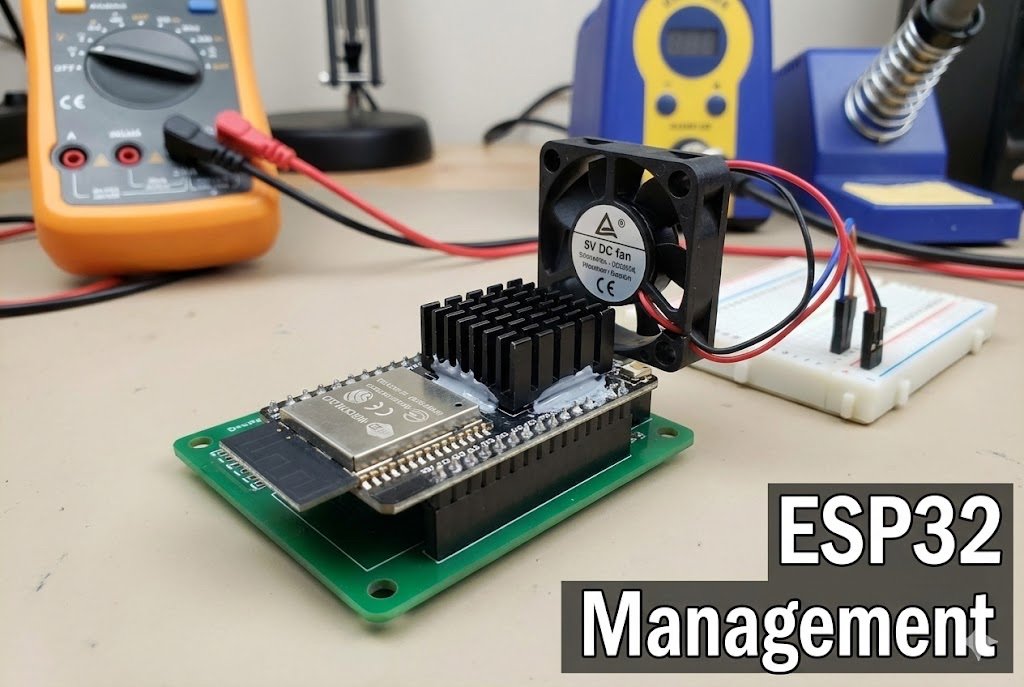
Dive deeper Paragraph: This is a critical point that I always emphasize to our engineering clients. When you shrink a module, you lose thermal mass. The ESP32-S3, in particular, is a powerful dual-core chip. When it is processing AI tasks or transmitting Wi-Fi data at high power, it generates heat. In a large WROOM module, the heat spreads out over a larger PCB area. In a MINI module, that heat is concentrated in a very small spot. If your product is a smart light bulb1, the environment is already hot. The LED generates heat, and the plastic housing traps it. Adding a hot Wi-Fi module to this mix can be dangerous if you are not careful.
We advise our customers to pay close attention to the ground pad (EPAD)11 on the bottom of the module. This pad is not just for electrical grounding; it is the primary path for heat to escape. You must design your main PCB with enough thermal vias12 under this pad to transfer the heat to a ground plane. If you skip this step, the module might overheat, reset itself, or degrade over time.
I have created a checklist of things you should consider when designing with these small modules:
| Thermal Factor | Why It Matters | Recommendation |
|---|---|---|
| Ground Vias | Transfers heat away from the chip | Place at least 9-12 vias under the central pad. |
| PCB Copper | Acts as a heatsink | Use 2oz copper if possible, with large ground planes. |
| Component Placement | Avoids "hot spots" | Do not place the module near power regulators or LEDs. |
| Enclosure Airflow | Removes hot air | Add vents if the IP rating allows it. |
At NexCir9, we do not just sell parts. We look at your application. If we see you are putting a high-power S3-MINI into a sealed, unventilated box, we will warn you. We want your product to last for years, not just pass the initial test. Thermal design is not an afterthought; it is a requirement for the MINI series.
LOOP END
LOOP START
How Can You Secure Stock for ESP32 MINI Modules During Shortages?
leading paragraph: You finish your design, but then you cannot buy the parts. The factory stops, and you lose money. Sourcing niche modules like the MINI series is risky without a plan.
snippet paragraph: Unlike the common WROOM series, MINI modules are often produced in smaller batches. To avoid line-down situations, you must forecast demand early and work with a partner like NexCir9 to lock in inventory before shortages occur.

Dive deeper Paragraph: This is where the business reality meets engineering. The standard ESP32-WROOM-32E is one of the most popular Wi-Fi modules in the world. Distributors everywhere keep it in stock. The MINI series is different. It is popular, but it is more specialized. Manufacturers often produce the MINI series in batches based on forecasted demand. If a large smart home company buys all the available stock, the market can dry up instantly. I have seen this happen. A client designs a great product using the C3-MINI-1, gets ready for production, and then finds out the lead time is 20 weeks.
This is why NexCir9 operates differently. We are not just a web store where you click and buy. We act as a supply chain partner. For components like the MINI series, we encourage our OEM customers to share their production schedules13 with us. If we know you need 50,000 units in six months, we can secure that stock now. We can hold the inventory in our warehouse and ship it to you exactly when your factory needs it.
Here is how we compare to a standard spot-buy approach:
| Feature | Standard Online Buy | NexCir9 Strategic Sourcing |
|---|---|---|
| Stock Availability | First come, first served | Reserved specifically for your project |
| Pricing Stability | Fluctuates with market demand | Locked price for long-term orders |
| Risk Management | You are on your own | We monitor EOL and allocation risks |
| Market Insight | None | We warn you about upcoming shortages |
The MINI series is excellent for product differentiation, but it requires a stable supply chain. Do not treat these modules like generic resistors. They are the brain of your device. If you cannot get them, you cannot ship. We help you bridge the gap between your design needs and the reality of the global semiconductor market.
LOOP END
Conclusion
The MINI series saves space but demands better heat management and planned sourcing. We help you master these challenges to keep your production running smoothly.
Find out how to design a smart light bulb using compact components for better aesthetics. ↩
Explore the features of the ESP32-C3-MINI-1 to understand its advantages for compact IoT designs. ↩
Discover the various applications of the S3-MINI-1 and how it can enhance your projects. ↩
Learn about space-constrained IoT applications and how they influence module design. ↩
Understand the importance of thermal design in electronics to ensure device reliability. ↩
Gain insights into effective supply chain management strategies for electronic components. ↩
Compare ESP32-WROOM modules with MINI modules to understand their unique benefits. ↩
Learn about AI acceleration in microcontrollers and its impact on device performance. ↩
Explore the services offered by NexCir to support your electronic component sourcing needs. ↩
Explore PCB layout strategies that help manage heat dissipation in compact modules. ↩
Discover the function of a ground pad (EPAD) and its significance in PCB design. ↩
Learn about thermal vias and their critical role in heat management for electronics. ↩
Understand how to create effective production schedules to ensure timely component availability. ↩