leading paragraph: You built a working prototype using an Arduino Uno, but using full development boards for mass production destroys your profit margins. You need a scalable, cost-effective chip solution immediately.
snippet paragraph: To transition to mass production, you must replace Arduino boards with standalone ATmega328P microcontrollers1. You need to handle bulk sourcing2 of original chips, design a custom PCB3 with a minimal circuit, and arrange for efficient bootloader burning4 or pre-programming services5 to reduce unit costs and ensure long-term reliability.
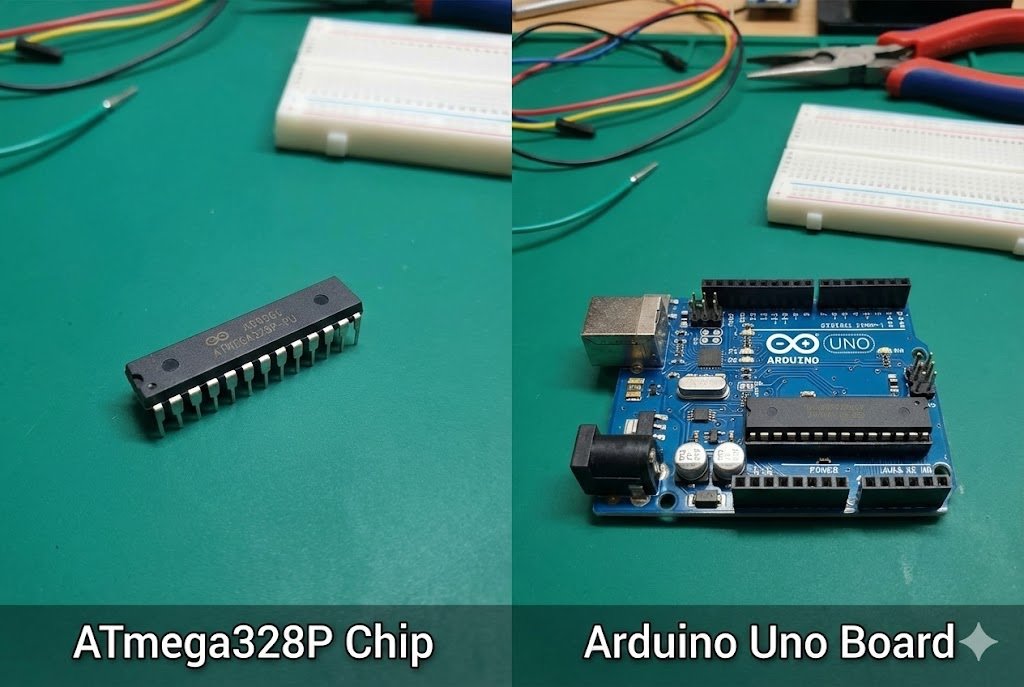
Transition Paragraph: Many engineers get stuck at this specific stage. They know their code works perfectly, but the hardware supply chain is a completely different challenge. I see this often with our clients at NexCir. You move from buying one board online to needing thousands of chips, and the logistics can be overwhelming. I will walk you through the technical specs, safe alternatives, and sourcing strategies to make this shift smooth and profitable.
LOOP START
What Are the Key Technical Specifications of the ATmega328P You Must Know?
leading paragraph: You cannot just buy any chip with a similar name; you need to understand the exact datasheets to avoid costly production errors6 that could stall your factory line.
snippet paragraph: The ATmega328P is an 8-bit AVR microcontroller featuring 32KB flash memory, 2KB SRAM, and 1KB EEPROM. It operates between 1.8V and 5.5V, offering 23 I/O lines and robust performance for industrial and consumer embedded applications, making it the standard choice for Arduino-compatible designs.
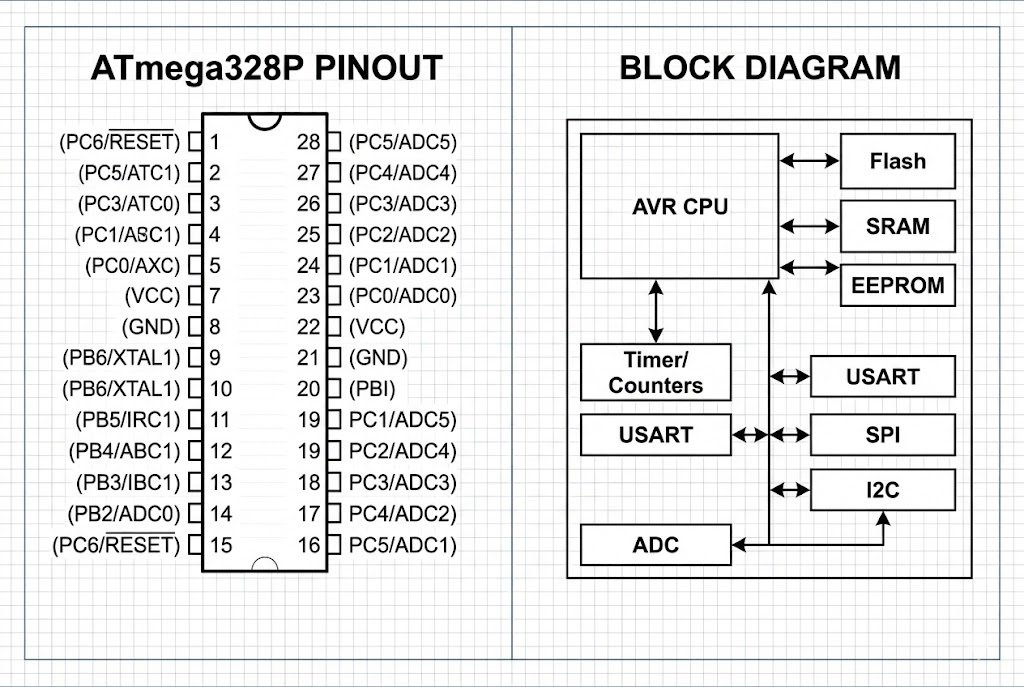
Dive deeper Paragraph: When you move from a development board to a raw chip, the specifications on the datasheet become your bible. I always tell my clients to look beyond just the memory size. The ATmega328P is popular because it balances performance and power, but you must pay attention to the operating conditions.
Core Architecture and Memory
The chip uses a high-performance, low-power AVR 8-bit RISC architecture. For most projects moving from Arduino, the memory limits are the first thing to check.
- Flash Memory: 32KB (Note that the bootloader uses 0.5KB to 2KB of this).
- SRAM: 2KB (This is for your variables; running out of this causes crashes).
- EEPROM: 1KB (Great for storing settings that survive a power cut).
Power and Speed Relationship
| This is where many designers fail. The speed of the chip depends on the voltage you supply. | Supply Voltage | Max Frequency | Typical Use Case |
|---|---|---|---|
| 1.8V - 2.7V | 4 MHz | Battery-powered sensors | |
| 2.7V - 4.5V | 10 MHz | Low-power industrial controllers | |
| 4.5V - 5.5V | 20 MHz | Standard "Arduino" style applications |
If you try to run the chip at 16MHz (standard Arduino speed) but only give it 3V, it might work on your desk but will fail in the field. At NexCir, we help you verify that the specific variant you order matches your power design. We focus on the industrial grade7 (-40°C to +85°C) to ensure your product survives real-world environments.
LOOP END
LOOP START
Which ATmega328P Alternatives Can Save Your Production Line During Shortages?
leading paragraph: Supply chain disruptions happen, and relying on a single part number is a recipe for disaster when lead times suddenly extend to 50 weeks without warning.
snippet paragraph: When the ATmega328P is unavailable, consider the ATmega328PB8 for added functionality or the ATmega168P9 for lower-cost, lower-memory applications. Always check pin compatibility and code portability before committing to a substitute to avoid major redesigns of your printed circuit board.
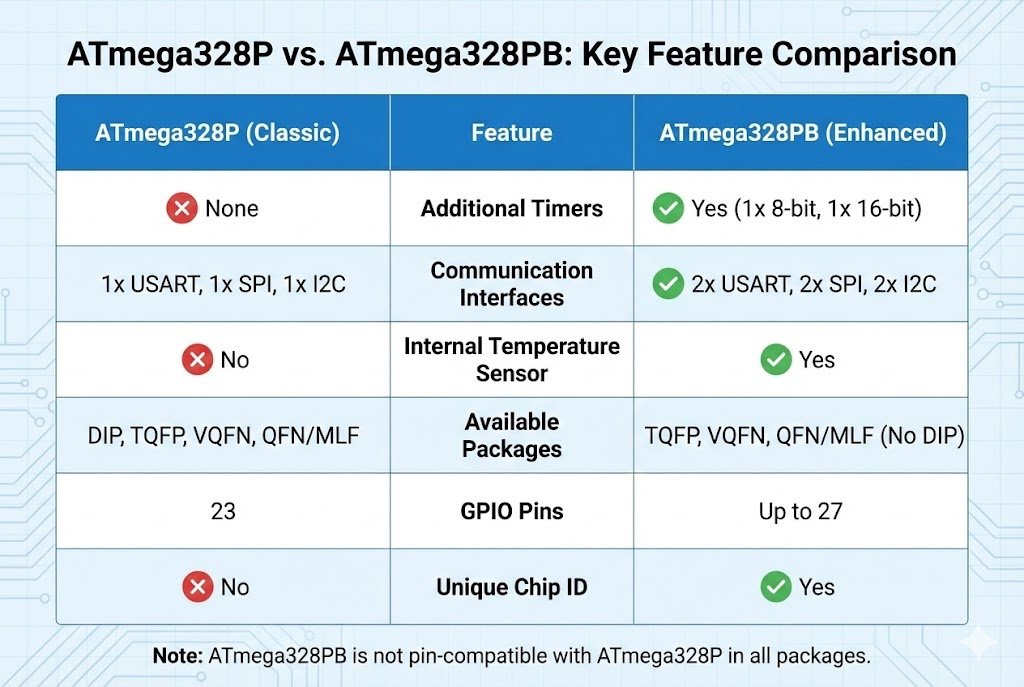
Dive deeper Paragraph: In the world of electronic components, availability is king. At NexCir, we constantly monitor the market, and we saw how hard the shortages hit the ATmega328P recently. You need a "Plan B" before you start mass production. We recommend looking at the following alternatives, but you must understand the differences.
The ATmega328PB8 (The Modern Upgrade)
This is often the best alternative. It is newer, cheaper, and has more features. However, it is not a 100% drop-in replacement for the firmware.
- Pros: It has two UARTs, two I2C buses, and two SPI buses. It is usually cheaper than the classic 'P' version.
- Cons: It removes a few power pins to make room for I/O. Your code might need small changes because the register definitions are slightly different.
The ATmega168P9 (The Cost-Down Option)
If your code is small, you might be paying for memory you do not use.
- Pros: Pin-compatible with the 328P. Usually lower cost.
- Cons: Only 16KB of Flash and 1KB of SRAM. You must compile your code and check the size.
Comparison Table
| Feature | ATmega328P | ATmega328PB8 | ATmega168P9 |
|---|---|---|---|
| Flash | 32KB | 32KB | 16KB |
| SRAM | 2KB | 2KB | 1KB |
| UART | 1 | 2 | 1 |
| Status | Active | Active | Active |
| Migration Risk | None | Low (Code/Pin check) | Low (Memory check) |
We help our OEM customers identify these risks early. We do not just sell you a part; we ensure it fits your lifecycle plan.
LOOP END
LOOP START
How Do You Design a Minimal Circuit for the ATmega328P Outside the Arduino Board?
leading paragraph: An Arduino board hides the complexity of oscillators and power regulation, but your custom PCB3 requires you to build these foundational circuits yourself to ensure stability.
snippet paragraph: A minimal setup requires a 16MHz crystal oscillator10 with capacitors, a 10kΩ pull-up resistor on the reset pin, and decoupling capacitors11 near the power pins. This ensures the chip runs your Arduino code stably on a custom PCB3 without the bulk of a development board.
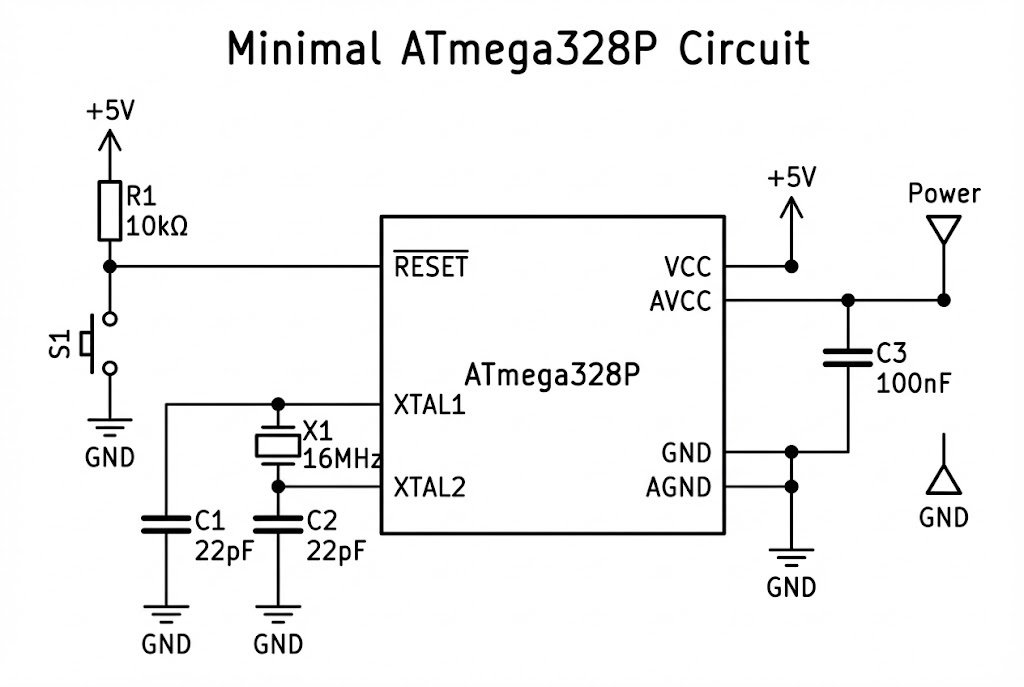
Dive deeper Paragraph: Moving to a bare chip means you are responsible for the "support system" of the microcontroller. On a development board, this is done for you. On your own PCB, you must get three main areas right: the Clock, the Power, and the Reset.
1. The Clock System
The ATmega328P has an internal 8MHz oscillator, but most Arduino code expects an external 16MHz crystal.
- Component: 16MHz Crystal or Resonator.
- Capacitors: Two 22pF ceramic capacitors connected to ground.
- Placement: Put these as close to the chip pins (XTAL1 and XTAL2) as possible to reduce noise.
2. Power Stability
Digital chips are noisy. When they switch states, they pull current quickly.
- Decoupling: You need a 100nF (0.1uF) ceramic capacitor between VCC and GND.
- Location: This must be physically close to the power pin. Without it, your chip might reset randomly.
3. The Reset Logic
To prevent the chip from floating into a reset state, you need to pull the Reset pin high.
- Resistor: A 10kΩ resistor connecting the Reset pin to VCC.
- Programming: If you plan to program the chip on the board, you might need a capacitor in series with the DTR line from your USB-to-Serial converter.
At NexCir, we supply not just the MCU, but also the full BOM (Bill of Materials). We can source the specific crystals and high-quality capacitors you need to match the industrial standards of the ATmega328P.
LOOP END
LOOP START
How Do You Handle Bulk Sourcing and Bootloader Burning Efficiently?
leading paragraph: Buying chips is one thing, but getting firmware onto thousands of blank units manually is a nightmare that slows down your factory and kills efficiency.
snippet paragraph: Do not burn chips manually. Utilize a sourcing partner12 like NexCir that offers value-added pre-programming services5. We source original chips and handle the firmware upload13 before shipping, streamlining your manufacturing process and eliminating the need for in-circuit programming14 on the assembly line.
Dive deeper Paragraph: This is the final hurdle. You have the design, and you have the specs. Now, how do you build 5,000 units? If you buy blank chips, your factory has to program each one. This takes time, requires special headers on the PCB, and adds labor cost.
The Problem with "Blank" Chips
Factory-fresh ATmega328P chips do not have the Arduino bootloader. They run at 1MHz on the internal clock. If you solder them onto your board, your Arduino code will not upload via USB. You would need an ISP (In-System Programmer) to burn the bootloader first.
The NexCir Solution: Pre-Programming
We offer a Value-Added Service (VAS) that solves this.
- Sourcing: We procure original chips from our global network. We verify they are authentic.
- Programming: You send us your
.hexfile (Bootloader + Application). We use automated gang programmers15 to burn the code into the chips. - Delivery: You receive chips that are ready to run. Your factory just solders them on, and the device works immediately.
Packaging Options
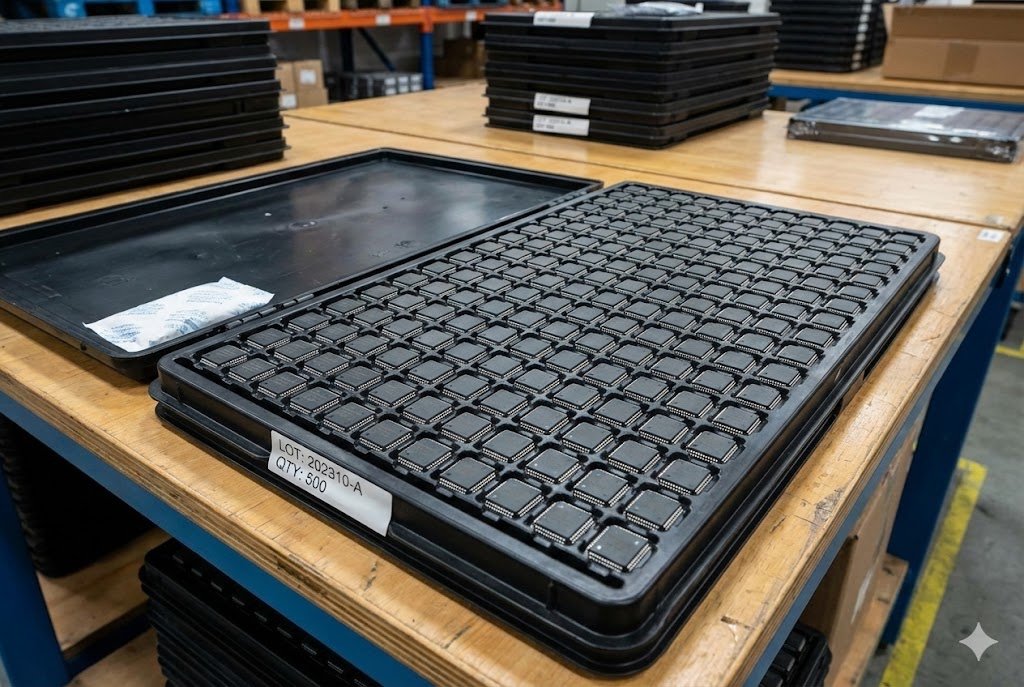
- Tray: Best for automated Pick-and-Place machines16.
- Tube: Okay for smaller runs or manual assembly.
- Tape & Reel: The standard for high-volume automated manufacturing.
By combining sourcing with programming, we save you weeks of production time. We support you from the initial sample run all the way to high-volume delivery.
LOOP END
Conclusion
Moving from Arduino to mass production requires strategy. NexCir provides original ATmega328P chips, alternatives, and programming services to secure your supply chain. Contact us to optimize your BOM today.
Explore how ATmega328P microcontrollers can enhance your production efficiency and reduce costs. ↩
Learn strategies for bulk sourcing to ensure a steady supply of components for your production. ↩
Discover essential tips for designing a custom PCB that meets your project requirements. ↩
Understand the significance of bootloader burning in ensuring your microcontroller functions correctly. ↩
Discover how pre-programming services can save time and improve production efficiency. ↩
Understand common pitfalls in electronics manufacturing and how to prevent them. ↩
Learn about the significance of industrial grade components in ensuring reliability in harsh environments. ↩
Find out how the ATmega328PB can offer enhanced features for your projects. ↩
Explore the differences to determine if the ATmega168P is a suitable alternative for your needs. ↩
Learn how to choose the right crystal oscillator to ensure stable operation of your microcontroller. ↩
Understand the importance of decoupling capacitors in maintaining circuit stability. ↩
Get insights on selecting a reliable sourcing partner to streamline your component procurement. ↩
Explore the steps involved in uploading firmware to ensure your microcontroller operates as intended. ↩
Explore the concept of in-circuit programming and its applications in microcontroller projects. ↩
Find out how automated gang programmers can streamline the programming process for microcontrollers. ↩
Learn about the role of Pick-and-Place machines in efficient PCB assembly. ↩