
Struggling with automotive connector failures1? A bad choice leads to costly recalls and safety risks. Let's ensure you select the right part for lasting performance and reliability.
To choose the right automotive electrical connector2, you must first identify its type—such as wire-to-wire3, wire-to-board4, or board-to-board5. Then, evaluate key criteria like sealing (IP rating6), vibration resistance7, temperature range8, and current capacity9 to match the specific application and ensure long-term durability.
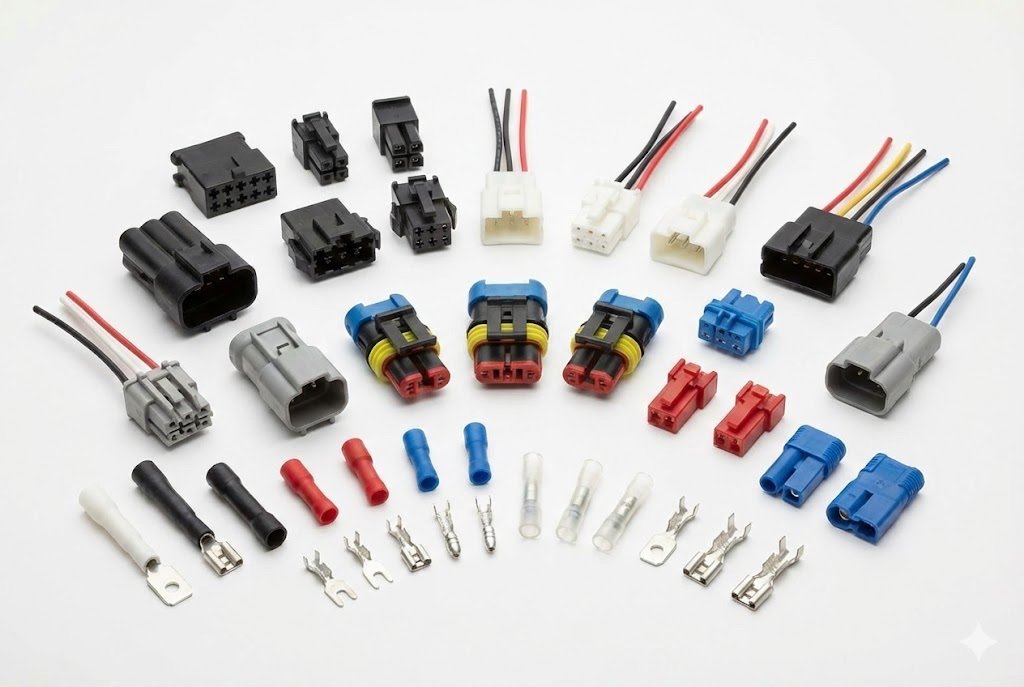
I've seen firsthand how a single, tiny connector can bring a massive production line to a halt. It’s a component that’s often overlooked during the initial design phase, but its failure can have huge consequences. The key is to treat connector selection with the same seriousness as choosing a microcontroller or a power management IC. It’s not just a piece of plastic and metal; it’s the critical link that keeps a vehicle's electronic systems running.
Let's break down what you really need to know. We’ll start by looking at the different families of connectors and where they fit inside a car.
What Are the Main Types of Automotive Electrical Connectors?
Your design has a specific need, but the wrong connector type can cause connection issues. This leads to intermittent faults that are a nightmare to diagnose and fix later.
The main types of automotive electrical connector2s are categorized by what they connect: Wire-to-Wire for joining harnesses, Wire-to-Board for linking harnesses to PCBs, and Board-to-Board for stacking or connecting multiple circuit boards directly. Each is designed for different mechanical and environmental stresses.
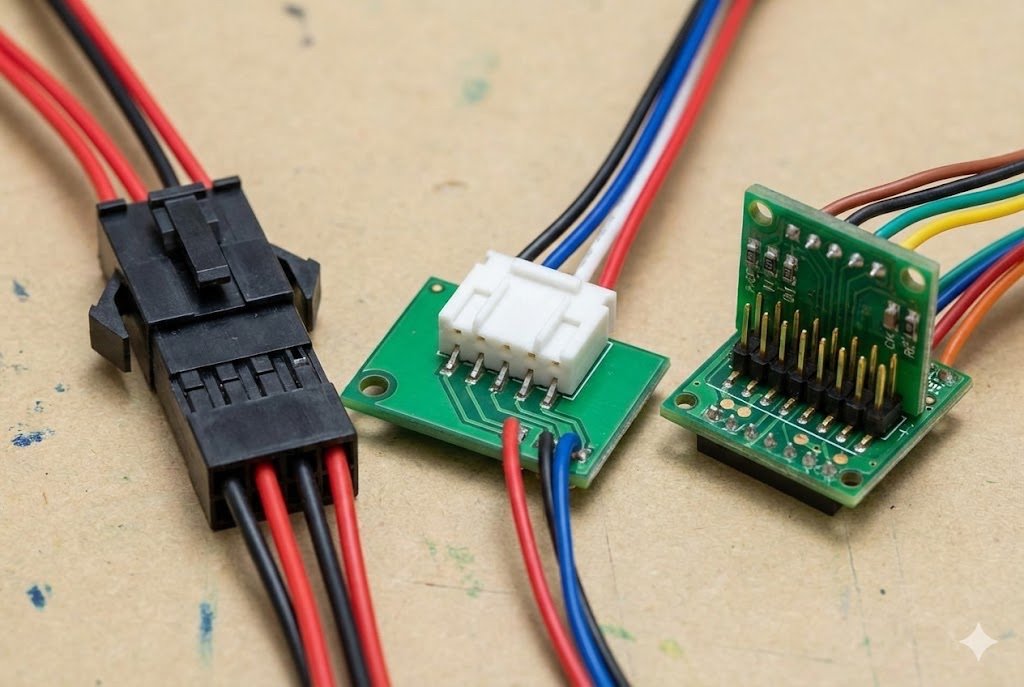
When I work with hardware engineers, the first question I always ask is, "What are you connecting, and where will it live?" The answer determines which family of connectors we even start to look at. A connector designed for the controlled environment of an infotainment unit in the dashboard will fail almost immediately if it's used near the engine block. Understanding these fundamental categories is the first step in sourcing a reliable part. It's about matching the connector's purpose to its placement in the vehicle.
Wire-to-Wire Connectors
These are the workhorses for connecting different wiring harnesses throughout the vehicle. Think of the main harness from the dashboard connecting to the rear harness for the taillights. These connections often need to be robust and are frequently sealed to protect against moisture and dirt, especially if they are located outside the passenger cabin.
Wire-to-Board Connectors
This type is essential for linking the vehicle’s wiring harness to an electronic control unit10 (ECU) or sensor module. For example, the connector that plugs into your engine management ECU is a wire-to-board4 type. These often feature high pin counts11, secure locking mechanisms, and sometimes press-fit or through-hole pins for a permanent connection to the printed circuit board (PCB).
Board-to-Board Connectors
These are used inside electronic modules to connect two or more PCBs together. You might find them in a complex infotainment system or a body control module where stacking boards saves space. They are typically unsealed as they reside within a protected enclosure.
| Connector Type | Primary Function | Common Locations | Key Features to Consider |
|---|---|---|---|
| Wire-to-Wire | Connects two separate wiring harnesses | Engine bay, chassis, door panels | Sealing (IP rating6), locking mechanism, high vibration resistance7 |
| Wire-to-Board | Connects a wiring harness to a PCB | ECUs, sensor modules, lighting units | High pin density, secure latching, terminal retention, temperature rating |
| Board-to-Board | Connects multiple PCBs within one module | Infotainment systems, body control modules | Stacking height, pitch, mating cycles12, current rating per pin |
How Do You Choose the Right Connector for Your Automotive Design?
Feeling overwhelmed by datasheets? Picking a connector based on pin count alone can lead to failures from vibration, heat, or moisture, forcing expensive late-stage redesigns.
To choose the right connector, you must analyze the application's environmental, electrical, and mechanical demands. This means checking temperature ratings, sealing requirements (IP rating6), vibration and shock resistance, current capacity9, and required mating cycles12 to ensure long-term reliability in the vehicle.
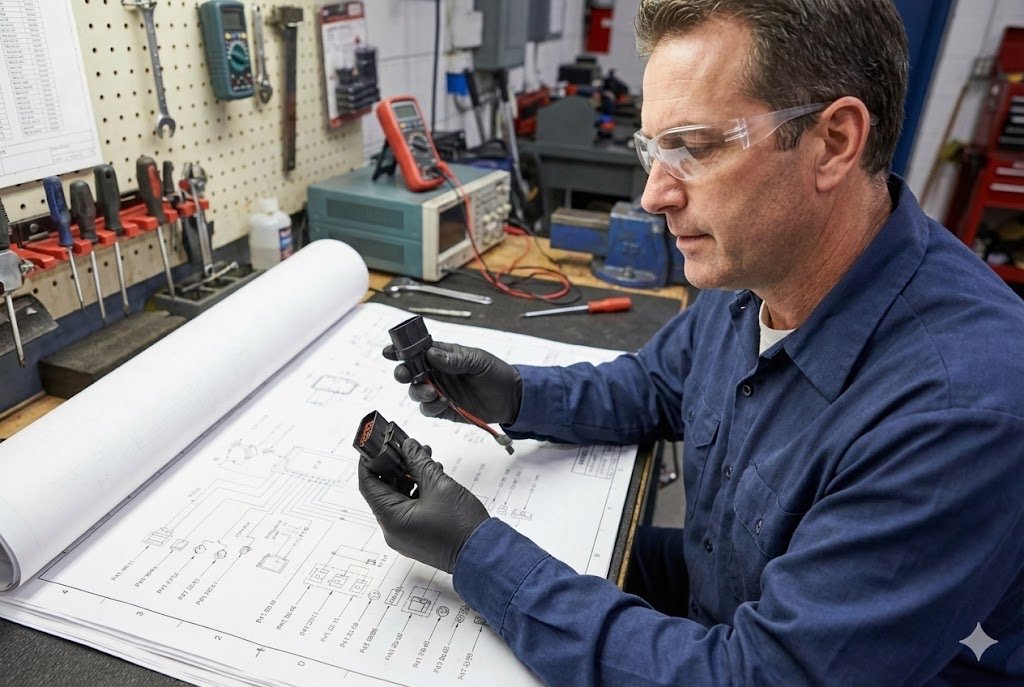
A few years ago, a client came to us with a problem. Their sensor module was failing field tests, but the electronics were fine. The issue was the connector. They chose a part rated for the passenger cabin, but the module was mounted near the transmission. The constant vibration and higher temperatures were causing the terminals to lose contact. We helped them source a connector with a higher temperature rating and a more robust terminal locking system, which solved the problem completely. This experience taught me that the "details" are everything in connector selection. It's a process of matching the component's specifications to the harsh reality of its environment.
Environmental Factors
The location of the connector is the most critical factor. A connector in the engine compartment must withstand extreme temperatures (often -40°C to +125°C or higher), exposure to fluids like oil and coolant, and high-pressure water spray. In contrast, a connector inside the passenger cabin has much less demanding requirements.
Electrical Requirements
You must consider the voltage and current that will pass through the connector. The size of the terminals and the material they are made from will determine the current-carrying capacity. Using an underrated connector can lead to overheating and is a serious fire risk. You also need to think about signal integrity for high-speed data lines, which might require shielded connectors.
Mechanical Stress
Automotive environments involve constant vibration and potential shock. The connector's design must prevent it from coming loose. Look for features like Terminal Position Assurance13 (TPA) and Connector Position Assurance14 (CPA). These are secondary locking mechanisms that ensure terminals are fully seated and the connector halves won't separate. The number of times a connector needs to be connected and disconnected (mating cycles12) is also important, especially for service points.
| Selection Factor | Key Consideration | Why It Matters for Reliability |
|---|---|---|
| Temperature Range | Does the operating range match the location (e.g., engine vs. cabin)? | Prevents plastic from becoming brittle or melting, ensuring mechanical integrity. |
| Sealing (IP Rating) | Is it protected from dust, moisture, or high-pressure spray? | Prevents corrosion and short circuits, which is a leading cause of electrical failure15. |
| Vibration/Shock | Does it have a robust locking mechanism (CPA, TPA)? | Prevents intermittent connections and fretting corrosion caused by micro-movements. |
| Current Rating | Can the terminals handle the maximum expected current without overheating? | Avoids voltage drops, component damage, and potential fire hazards. |
| Mating Cycles | How many times will it be connected/disconnected during its life? | Ensures reliability for serviceable parts without wearing out the contacts. |
What Key Standards Should Your Automotive Connectors Meet?
Worried about component compliance? Using non-certified connectors can block you from major markets and lead to immediate rejection by OEM customers, wasting time and money.
Your automotive connectors must meet industry and OEM-specific standards16. Key global standards include USCAR for performance and validation, IP rating6s for sealing, and regional standards like LV 21417. Compliance ensures interoperability, safety, and reliability, and is non-negotiable for most OEMs.
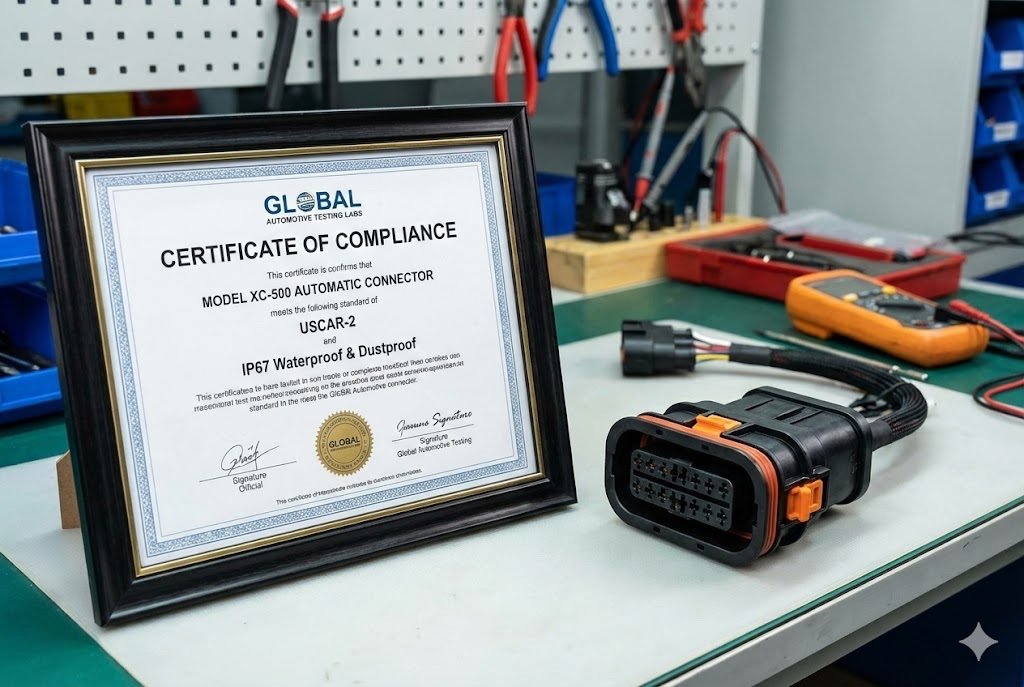
I remember working with a startup that had developed an innovative aftermarket lighting system18. They had a great product, but they couldn't sell it to any major distributors. The problem? They had used generic connectors without any automotive-grade certification. We had to help them re-source every connector to meet USCAR-2 and IP67 standards, which delayed their launch by months. This is a common pitfall. Standards aren't just paperwork; they are a baseline for quality and safety that the entire industry relies on. Sourcing parts that already meet these standards from the beginning is one of the most important decisions you can make.
Understanding USCAR
The United States Council for Automotive Research (USCAR) sets some of the most widely recognized performance standards for automotive components. For connectors, USCAR-2 is the key specification. It defines a series of tests for temperature, vibration, sealing, and more that a connector must pass to be considered "automotive-grade." If you are designing for the North American market, compliance with USCAR standards19 is a virtual requirement.
The Importance of IP Ratings
The Ingress Protection (IP) rating defines how well a connector is sealed against dust and water. The first digit represents protection against solids (like dust), and the second digit represents protection against liquids. For example, a connector with an IP67 rating is completely dust-tight and can be submerged in 1 meter of water for 30 minutes. For harsh environments like the engine bay or chassis, look for high IP rating6s like IP67, IP68, or IP6K9K (which indicates protection against high-pressure, high-temperature spray).
Other Regional and OEM Standards
While USCAR is dominant in the US, other regions and manufacturers have their own standards. German automakers, for example, often require compliance with LV 21417, which is a joint standard developed by companies like VW, Audi, and Porsche. It's crucial to know the requirements of your target market and end customer. As a sourcing partner, part of our job is to navigate this complex landscape and ensure the components we find meet all necessary specifications, whether it's for a German OEM or a North American tier-1 supplier.
| Standard | What It Covers | Why It's Critical |
|---|---|---|
| USCAR-2 | Performance specifications for electrical terminals, connectors, and components. | The benchmark for automotive-grade quality in North America. Ensures reliability under stress. |
| IP Rating (e.g., IP67) | Sealing effectiveness against dust and water ingress. | Essential for preventing corrosion and electrical failure15 in exposed locations. |
| LV 21417 | A testing standard for motor vehicle connectors developed by German OEMs. | A requirement for supplying parts to many major European car manufacturers. |
| OEM-Specific | Unique requirements set by individual car manufacturers (e.g., Ford, GM). | You must meet these specific standards to be a supplier for that OEM. |
Conclusion
Choosing the right automotive connector means matching its type, durability, and standards to the application. A strategic sourcing partner ensures you get reliable, compliant parts for long-term success.
Understanding the causes of connector failures can help you avoid costly mistakes in your designs. ↩
Explore best practices to ensure you choose connectors that enhance performance and reliability. ↩
Learn about wire-to-wire connectors and how they are used in automotive applications. ↩
Discover the advantages of wire-to-board connectors for linking harnesses to PCBs. ↩
Find out how board-to-board connectors facilitate connections within electronic modules. ↩
Understanding IP ratings is crucial for selecting connectors that withstand environmental challenges. ↩
Explore the importance of vibration resistance in ensuring connector reliability in vehicles. ↩
Learn why matching temperature ratings to application environments is vital for connector performance. ↩
Understanding current capacity helps prevent overheating and ensures safe operation of connectors. ↩
Discover the role of ECUs and how connectors link them to the vehicle's wiring harness. ↩
Learn about the significance of high pin counts for complex automotive electronic systems. ↩
Understanding mating cycles is essential for ensuring long-term reliability in serviceable parts. ↩
Discover how TPA enhances connector reliability by ensuring secure terminal seating. ↩
Learn about CPA and how it prevents connector separation in automotive applications. ↩
Understanding causes of electrical failure can help you select more reliable connectors. ↩
Understanding OEM-specific standards is crucial for becoming a supplier to major automotive brands. ↩
Learn about LV 214 compliance for connectors used by major European car manufacturers. ↩
Learn about the specific connector requirements for aftermarket automotive lighting solutions. ↩
Explore USCAR standards to ensure your connectors meet industry performance requirements. ↩