Dishwashers and washing machines face a hidden danger: water vapor1. If your control board fails2 due to moisture, it ruins your brand reputation. You need a better power solution.
The LNK304GN surface mount package optimizes safety by increasing the physical distance between high-voltage pins. This design prevents electrical leakage and PCB carbonization3 in humid environments. It ensures your kitchen appliances pass strict safety certifications and operate reliably for years.
I often see engineers worry about "creepage4" during the design phase. It is a real problem. When you design for a kitchen environment, you are designing for the worst-case scenario. Let me explain why this specific chip changes the game for your designs and why the source of your components matters just as much as the spec sheet.
Why is Moisture the Biggest Enemy of Kitchen Appliance Power Supplies?
You design a perfect board, but the harsh environment destroys it. High humidity in kitchens creates invisible conductive paths on your PCB. This is a nightmare for long-term reliability.
The mixture of moisture and dust forms a conductive layer. This leads to "tracking5," where electricity jumps across the board surface. It causes short circuits, component failure, and even fire hazards in high-voltage areas of the power supply.
Understanding the Risk of High Voltage and Humidity
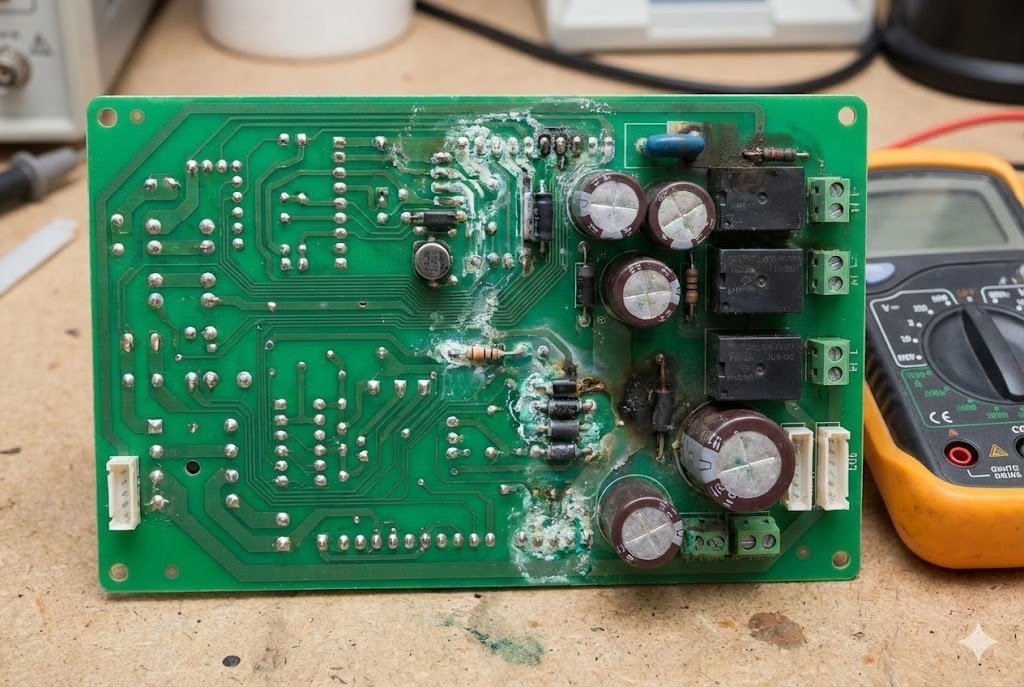
When we talk about kitchen appliances, we are talking about machines that live with water. A dishwasher fills with hot steam. A washing machine vibrates in a damp laundry room. As a distributor with over 20 years of experience, I have seen many returned boards. The damage often looks like a burn mark. This is not a simple short circuit. It is a slow process called carbonization3.
Here is what happens inside your machine:
- Condensation Forms6: When a hot cycle ends and the machine cools down, water droplets form on the PCB.
- Contamination Accumulates: Dust and detergent residue mix with this water.
- Leakage Begins: This mixture is not pure water; it conducts electricity. A small current starts to flow between high-voltage pins.
- Carbon Tracks Form7: The heat from this leakage burns the PCB material slightly. This creates a carbon track. Carbon conducts electricity very well.
- Failure: eventually, a high-current arc occurs, blowing the fuse or starting a fire.
The Cost of Moisture Failure
| Impact Area | Consequence |
|---|---|
| Safety | Risk of fire or electric shock to the user. |
| Brand | High return rates damage your reputation. |
| Cost | Warranty repairs cost 10x more than the component. |
| Certification | Failure to pass UL/IEC humidity tests. |
You cannot stop humidity. You must design around it. This is where the choice of the power converter becomes critical. Standard packages often do not have enough space between pins to stop this process.
How Does the LNK304GN Package Design Prevent Electrical Leakage?
Standard chips often fail when pins are too close together. The LNK304GN uses a clever layout to stop high voltage from jumping to low voltage pins.
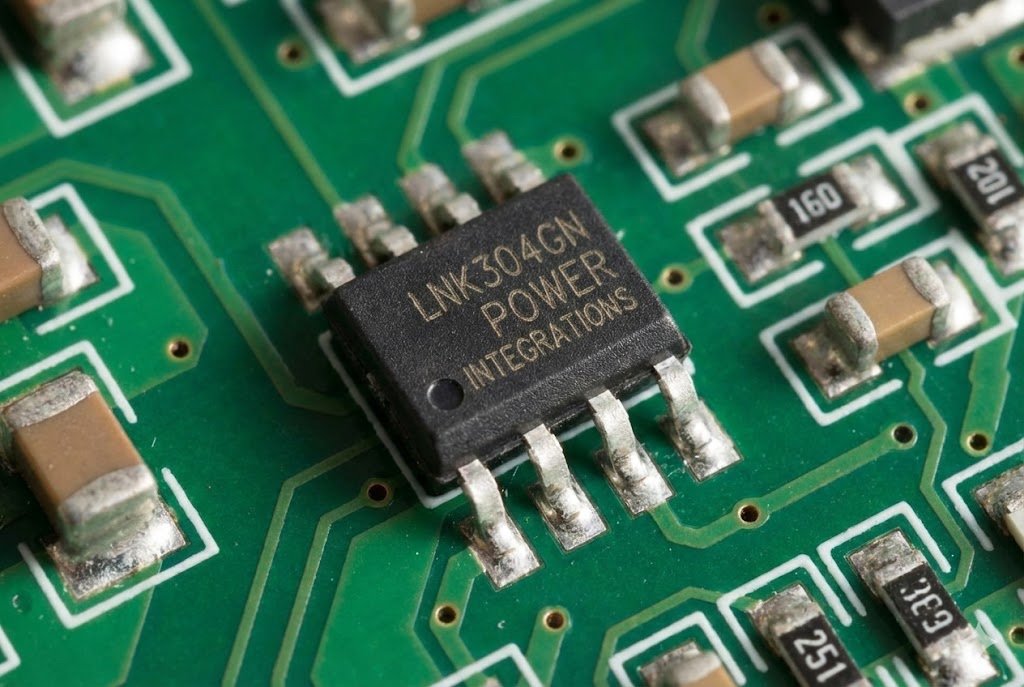
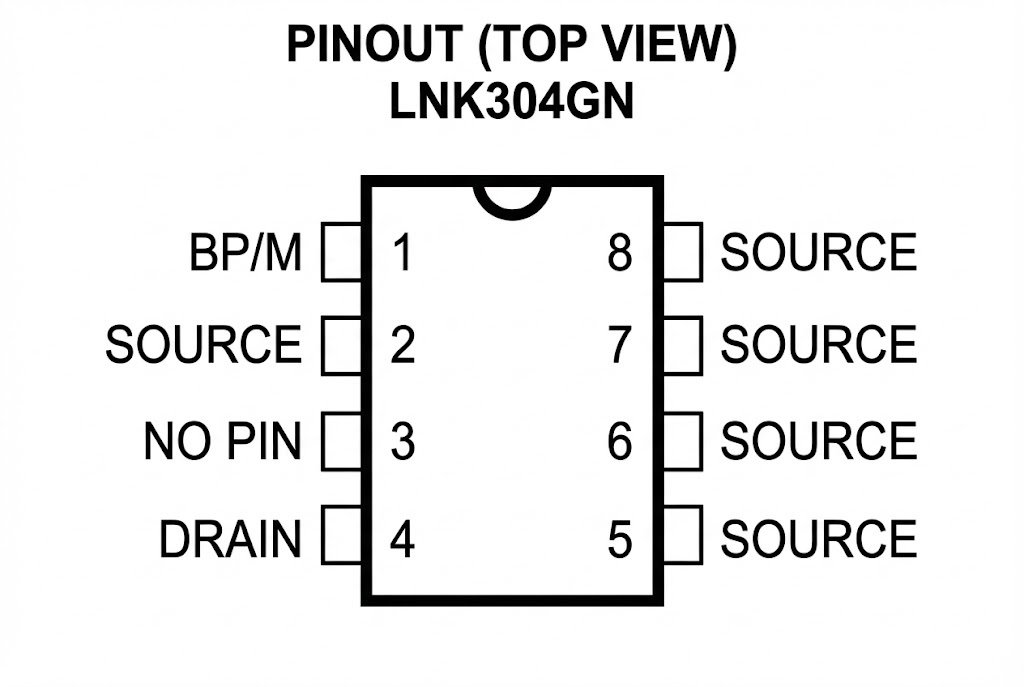
Power Integrations designed this chip with missing pins. This increases the "creepage distance8//nexcir.com/is-tny287pg-the-ultimate-solution-for-the-2026-erp-low-standby-power-directive/)4 distance" between the high-voltage Drain pin and the low-voltage Source/Feedback pins. It physically blocks the path for leakage current, even when the board is damp.
The Magic of the SMD-8B Package
I want to dive deep into why this specific package is a favorite for our high-end clients. The LNK304GN usually comes in an SMD-8B package. If you look at it, it looks like an 8-pin chip, but it is missing pins. This is not an accident. It is a deliberate safety feature.
In a non-isolated buck converter, which is very common in dishwashers, you have high voltage (up to 375V DC or more) right next to low voltage logic signals. If these touch, the microcontroller dies.
Optimizing the Leakage Path:
- Increased Creepage: Creepage is the shortest distance along the surface of the package between two conductive parts. By removing a pin between the high-voltage Drain (D) and the Source (S) pins, the distance increases significantly.
- Preventing Arcing9: In high humidity, an arc needs a short path to jump. By making the path longer, the LNK304GN makes it much harder for an arc to form.
- Reducing Carbonization10: Because the leakage current is minimized, the heat generation is lower. This prevents the PCB material from turning into conductive carbon.
Meeting Safety Standards: This design helps you meet strict standards like IEC 6095011 and IEC 60335. These standards require specific distances for high-voltage circuits. Using a standard 8-pin package often forces you to put slots in the PCB or add coating. This adds cost. The LNK304GN solves this inside the component itself. It simplifies your layout and improves safety without extra manufacturing steps.
Why Must You Choose Original PI Parts for Safety Certification?
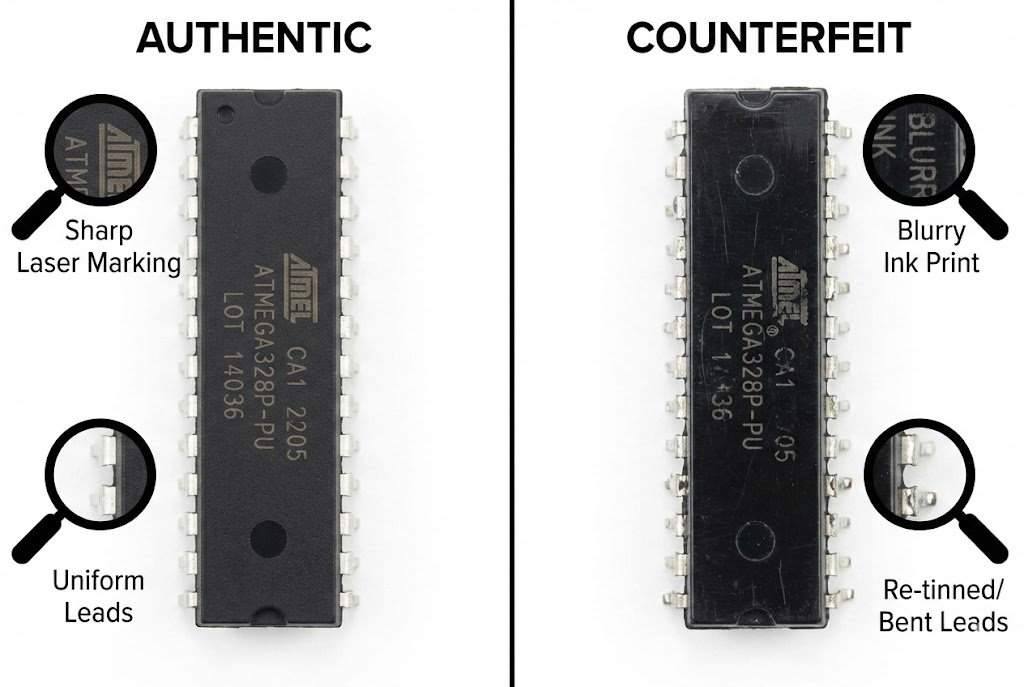
A fake chip looks the same but lacks the internal safety gaps. Using counterfeit parts risks failing safety tests and endangering your customers.
Original Power Integrations parts use specific molding compounds that resist moisture absorption. Counterfeit chips use cheap plastic that cracks and conducts electricity. Only authentic parts guarantee the isolation needed for UL and CE safety certifications.
The Hidden Danger of Counterfeit Materials
At Nexcir, we have a strict rule: we only source from authorized channels. Why? Because I have seen the inside of fake chips. The external dimensions might match the datasheet, but the internal construction is dangerous.
Material Science Matters: The plastic body of a chip is called the molding compound.
- Original PI Parts: They use high-grade, low-hygroscopic (does not absorb water) compounds. They are free of voids (air bubbles). This ensures high dielectric strength.
- Counterfeit Parts: They use cheap, recycled plastic. This material absorbs moisture like a sponge. When the chip heats up, the moisture expands and causes "popcorning12" or micro-cracks.
Internal Spacing: The LNK304GN relies on internal distance too. Inside the black plastic, the wire bonds must be far apart. In fake chips, the internal layout is often sloppy. The high-voltage wire might be dangerously close to the low-voltage silicon.
The Certification Trap: Imagine you send your new dishwasher to the lab for UL certification. They put it in a humidity chamber.
- Scenario A (Original LNK304GN): The chip repels moisture. The leakage current stays low. You pass.
- Scenario B (Fake Chip): The chip absorbs moisture. The leakage current rises. The device fails the dielectric withstand test13.
Your Supply Chain is Your Safety Net: We help our clients avoid this risk. We provide full traceability. When you buy from Nexcir, you are buying the assurance that the safety gap designed by Power Integrations is actually there. We understand that for an OEM, a safety recall is the worst possible outcome. We act as your gatekeeper, ensuring that every LNK304GN you put on your board is genuine and safe.
Conclusion
LNK304GN handles moisture through smart packaging design. However, this design only works if the part is genuine. Partnering with Nexcir ensures you get authentic, safe components for your appliances.
Understanding the impact of water vapor on electronics can help you prevent damage and improve the longevity of your appliances. ↩
Learn about common reasons for control board failures to enhance your appliance design and avoid costly repairs. ↩
Learn about carbonization to prevent damage and ensure the safety of your electronic devices. ↩
Exploring creepage can help you design safer electronic components, especially in humid environments. ↩
Understanding tracking can help prevent short circuits and improve the reliability of your electronic designs. ↩
Discover how condensation can lead to electronic failures and learn strategies to mitigate its effects. ↩
Understanding carbon tracks can help you prevent electrical failures and improve the safety of your designs. ↩
Learn about the significance of creepage distance to enhance the safety and reliability of your electronic components. ↩
Explore methods to prevent arcing and ensure the safety and longevity of your electronic devices. ↩
Learn strategies to reduce carbonization and improve the reliability of your electronic designs. ↩
Understanding IEC 60950 can help you design components that meet international safety standards. ↩
Discover the effects of popcorning to prevent damage and improve the durability of your electronic designs. ↩
Understanding dielectric withstand tests can help you ensure the safety and compliance of your electronic components. ↩