
leading paragraph: Battery drain1 is the biggest fear for any IoT engineer. You design a great device, but it dies too fast. How do you keep it asleep yet ready to wake instantly?
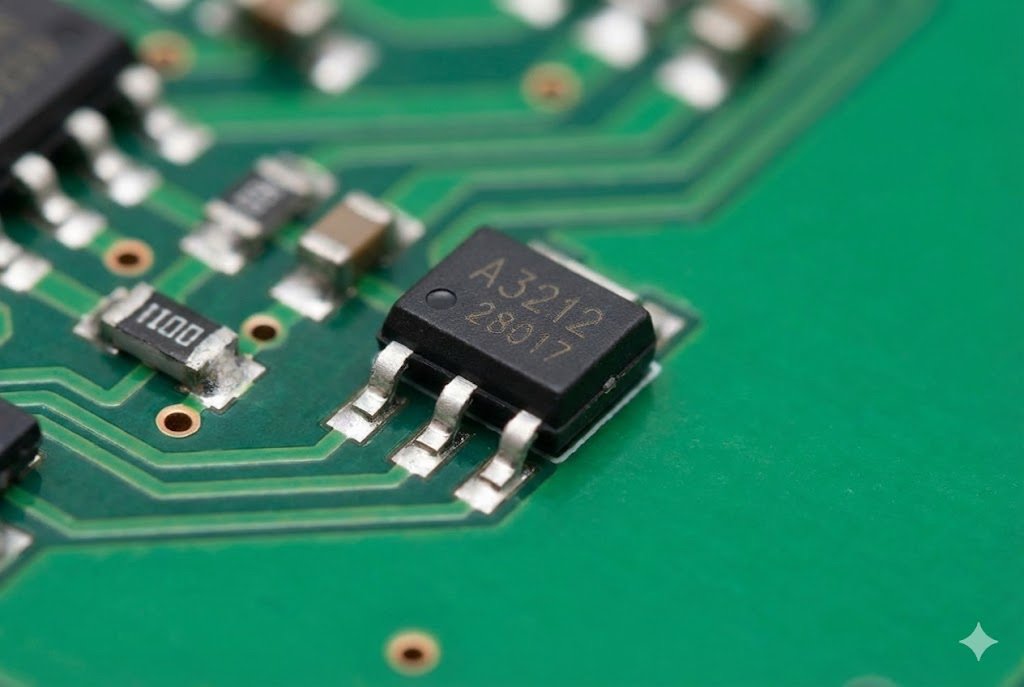
snippet paragraph: The A3212 Micropower Hall Switch2 uses a clocking scheme3 to cycle between "awake" and "sleep" modes. This reduces power consumption to mere microamps. It allows devices like TWS cases4 to detect lid openings instantly without draining the battery, effectively extending the operational life of portable electronics.
Transition Paragraph: I have seen many product launches fail because the standby current5 was too high. Users hate charging their devices every day. If you want to build a successful wearable or smart home device, you must master the wake-up circuit6. Let me explain why this specific component changes the game for your power budget.
LOOP START
Why is the A3212 considered a star component for TWS and Smart Locks?
leading paragraph: Portable devices have very limited space for batteries. TWS earbuds and smart locks need to last months, not hours. This creates a massive challenge for power management design.
snippet paragraph: The A3212 is ideal because it operates on low voltage (2.5V to 3.5V) and consumes less than 15 µW average power. It provides reliable magnetic sensing7 to detect open/close states, making it the industry standard for lid detection in earbuds and tamper switches in security devices.
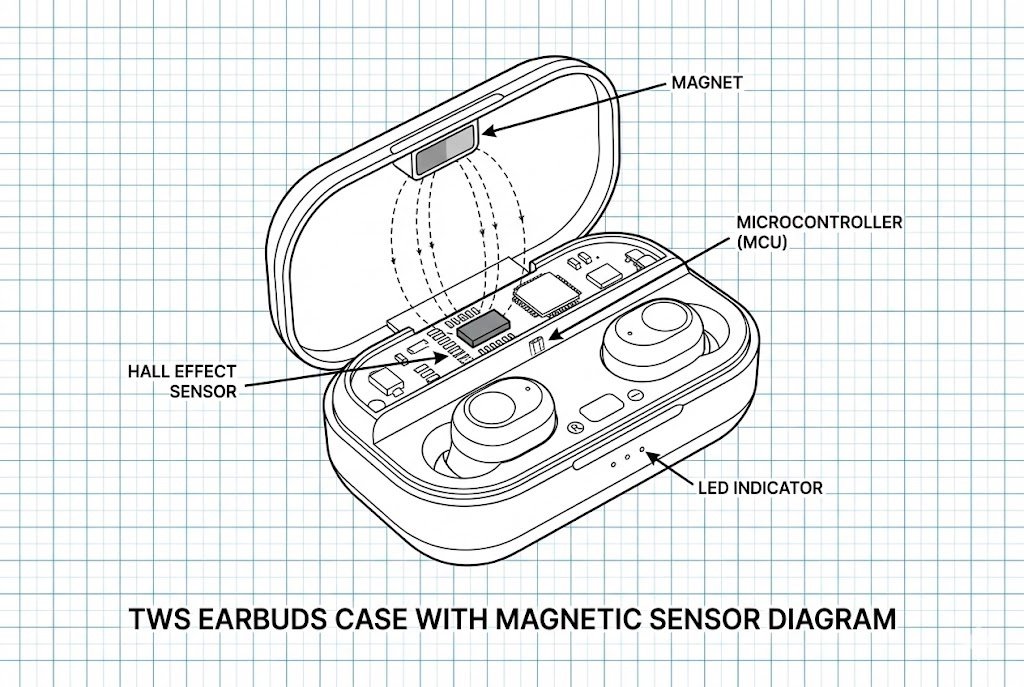
Dive deeper Paragraph: I have worked with many procurement managers who ask why they cannot use a simple mechanical switch. The answer lies in reliability and size. The A3212 is a solid-state device8. This means it has no moving parts to wear out. In a TWS (True Wireless Stereo) earbud case, the magnet in the lid triggers the A3212. This signal wakes up the microcontroller to show the battery status or start pairing.
For smart locks, the application is similar but focuses on security. If someone tries to pry the lock off the door, the magnet moves away. The A3212 detects this change and triggers an alarm. This function must be active 24/7. If the sensor uses too much power, the lock batteries will die in a few weeks. The A3212 solves this.
Here is a simple breakdown of why A3212 wins against older technologies:
| Feature | A3212 Hall Switch | Reed Switch | Mechanical Switch |
|---|---|---|---|
| Durability | High (Solid State) | Medium (Glass breaks) | Low (Contacts wear) |
| Size | Very Small (SOT-23) | Large | Medium |
| Debouncing | Not Required | Required | Required |
| Power Use | Ultra Low (Micropower) | Zero (Passive) | Zero (Passive) |
| Reliability | Excellent | Prone to vibration | Prone to dirt/dust |
While Reed switches use zero power, they break easily if the device drops. The A3212 offers the best balance of toughness and low power. It ensures your product feels premium and works every time the user opens the lid.
LOOP END
LOOP START
How does the micropower architecture9 actually work to save energy?
leading paragraph: Continuous sensing usually burns a lot of power. If a sensor stays "on" all the time, your small battery will run dry very quickly. We need a smarter way to sense.
snippet paragraph: The A3212 uses a timing scheme. It turns on for a short time to sample the magnetic field, then sleeps for the rest of the cycle. This duty cycle10 reduces average current consumption significantly compared to continuous-time Hall sensors that are always active.
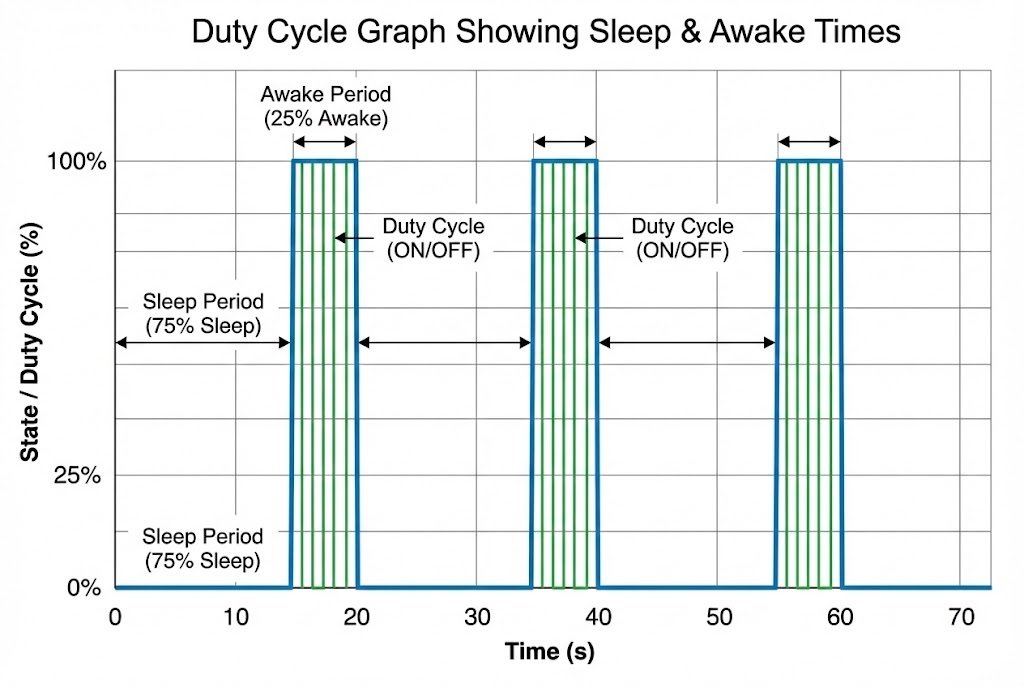
Dive deeper Paragraph: Let us look at the math inside the chip. Standard Hall sensors might draw 3mA to 5mA continuously. This is too much for a coin cell battery. The A3212 acts differently. It has an internal clock. This clock manages a "Sleep" period and an "Awake" period.
The "Awake" time is very short, usually about 45 to 60 microseconds. During this time, the chip powers up the Hall element, measures the magnetic field, and updates the output latch. Once this is done, it immediately turns off the power-hungry parts and goes into "Sleep" mode. The sleep time is much longer, roughly 45 milliseconds.
This means the sensor is only fully active for about 0.1% of the time. The rest of the time, it sits in a low-power state. Because of this 0.1% duty cycle10, the average current drops to around 6 µA (microamps) at 3V.
When I advise engineers on battery life, I tell them to look at the "Average Current" specification, not the "Peak Current." The A3212 allows a battery that would normally last one month to last for years. This architecture is vital for IoT devices that sit idle for long periods but must react instantly when a user interacts with them.
LOOP END
LOOP START
What are the specific design considerations for implementing A3212 in wake-up circuit6s?
leading paragraph: Choosing the part is step one. Designing the circuit correctly is step two. Many engineers make simple mistakes with pull-up resistors or magnet placement that ruin the design.
snippet paragraph: You must select the correct pull-up resistor value11 to balance speed and power. Also, the magnet's polarity and distance are crucial. The A3212 is omnipolar, meaning it detects either North or South poles, which simplifies the manufacturing and assembly process.
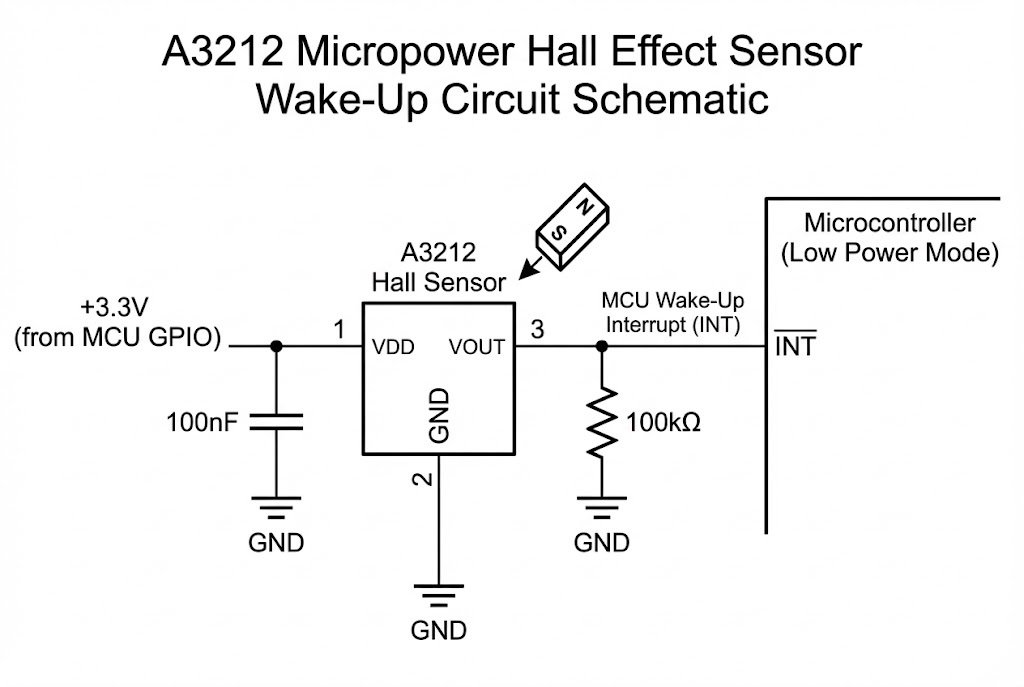
Dive deeper Paragraph: When you design the PCB for the A3212, you need to focus on the output pin. The A3212 usually has an open-drain output. This means it acts like a switch to ground. You need a pull-up resistor connected to the supply voltage. If this resistor is too small (like 1kΩ), you will waste current when the switch is active. If it is too large (like 1MΩ), the signal might be weak or slow. A value around 10kΩ to 100kΩ is usually a good sweet spot for low-power circuits.
Another critical factor is the magnet. Since the A3212 is omnipolar, you do not need to worry if the North or South pole faces the chip. This saves time on the assembly line. However, the distance is key. You must calculate the "Operating Point" (B_OP) and "Release Point" (B_RP).
I often see designs where the magnet is too weak or placed too far away. This causes the device to "flutter" or not wake up at all. You should use a high-quality Neodymium magnet if space is tight. Also, remember to place a bypass capacitor (usually 0.1µF) close to the supply pin. This filters out noise and prevents the chip from triggering falsely due to voltage spikes. Good layout practice ensures your wake-up signal is clean and reliable.
LOOP END
LOOP START
How does Nexcir ensure the authenticity and supply stability of such critical components?
leading paragraph: The market is flooded with fake chips. Using a counterfeit A3212 can lead to dead-on-arrival products. This destroys your brand reputation and costs a fortune to fix.
snippet paragraph: Nexcir sources exclusively from authorized distributors and original manufacturers. We verify the traceability of every A3212 shipment. Our global network ensures you get genuine parts even during shortages, protecting your production line from costly stoppages and quality issues.
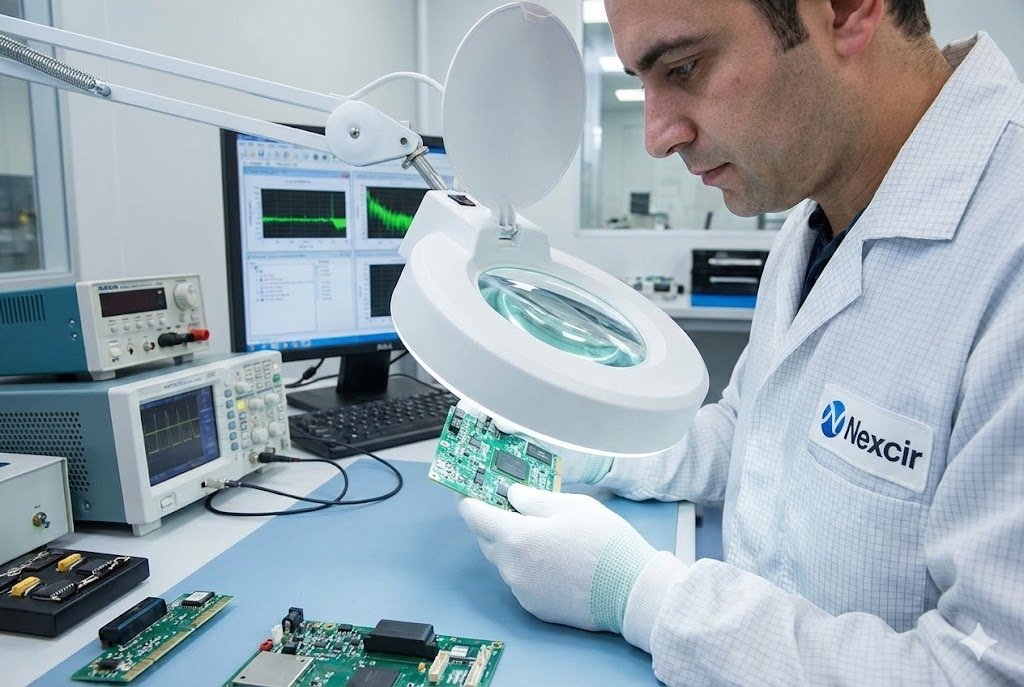
Dive deeper Paragraph: At Nexcir, we treat component authenticity12 as the most critical part of our business. The A3212 is a popular chip, which unfortunately makes it a target for counterfeiters. I have seen "remarked" chips where someone takes a cheap, standard Hall sensor and paints the A3212 label on it. These fakes do not have the micropower sleep function. If you use them, your customer's battery will die in days instead of months.
Our team has over 20 years of experience. We know how to spot these fakes. We only buy from trusted sources in North America, Europe, and Asia. We do not gamble with the spot market unless we can verify the source 100%.
Furthermore, we help you plan ahead. The electronics market is volatile. Lead times can stretch to 50 weeks. Nexcir uses a global supply network13 to find stock when others cannot. We also help you manage your Bill of Materials (BOM). If the A3212 becomes obsolete or impossible to find, our engineers can suggest valid alternatives that fit your footprint and power requirements. We are not just selling a part; we are protecting your supply chain.
LOOP END
Conclusion
The A3212 is essential for extending battery life in modern IoT devices. Nexcir guarantees authentic components and expert support to keep your production running smoothly and your products reliable.
Understanding battery drain is crucial for IoT engineers to ensure devices last longer and perform efficiently. ↩
The A3212 Micropower Hall Switch is vital for reducing power consumption and extending device life, making it a key component in modern electronics. ↩
Exploring the clocking scheme helps understand how the A3212 efficiently manages power, crucial for designing energy-saving devices. ↩
The A3212's ability to detect lid openings without draining the battery is essential for enhancing the functionality of TWS cases. ↩
High standby current can lead to frequent charging, affecting user experience and device reliability, making it a critical design consideration. ↩
A well-designed wake-up circuit ensures devices respond instantly while conserving power, crucial for user satisfaction and device longevity. ↩
Magnetic sensing provides reliable detection of open/close states, essential for security and user interaction in modern devices. ↩
Solid-state devices offer durability and reliability, crucial for maintaining device performance over time without mechanical wear. ↩
Micropower architecture significantly reduces energy consumption, extending battery life and enhancing device efficiency. ↩
Understanding duty cycle helps in grasping how the A3212 minimizes power usage while maintaining functionality, vital for energy-efficient design. ↩
Choosing the correct pull-up resistor value is essential for balancing speed and power, impacting overall circuit efficiency. ↩
Ensuring component authenticity protects against counterfeit parts, safeguarding device performance and brand reputation. ↩
Nexcir's global supply network ensures reliable access to genuine components, crucial for uninterrupted production and quality assurance. ↩