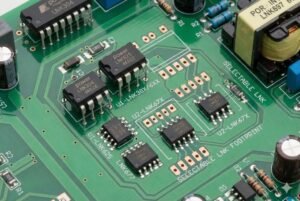
Are your multi-port charger designs struggling with overheating and bulky discrete components1? You need a solution that simplifies circuit design while boosting efficiency for next-gen fast charging.
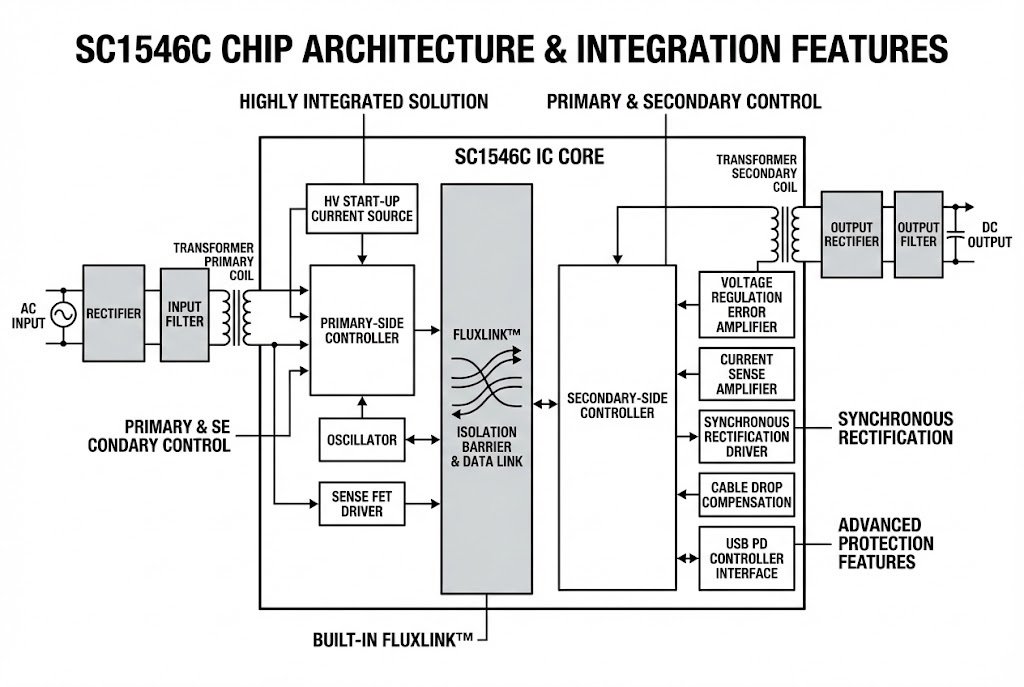
The SC1546C series2 integrates USB-C PD controllers3 and buck-boost converters4 with built-in MOSFETs5. It optimizes power distribution between ports using internal communication protocol6ls](https://www.einfochips.com/blog/deep-dive-into-ev-infrastructure-communication-protocols-and-standards/)%%%FOOTNOTE_REF_7%%%. This single-chip solution reduces board space, lowers thermal generation, and streamlines the creation of 65W-100W GaN charging stations8.
I have seen many engineers struggle with complex PCB layouts9 when trying to build compact chargers. They fight for every millimeter of space. The SC1546C changes this dynamic completely.
Why Is the Highly Integrated Design of SC1546C a Game Changer?
Traditional charger designs use too many parts, causing assembly headaches and reliability issues. You want a cleaner, smaller board layout that does not sacrifice power or safety.
The SC1546C combines the PD controller, protocol handling, and buck-boost MOSFETs into one package. This integration removes the need for external switches and complex wiring, allowing manufacturers to build smaller, denser GaN chargers without the usual thermal penalties.
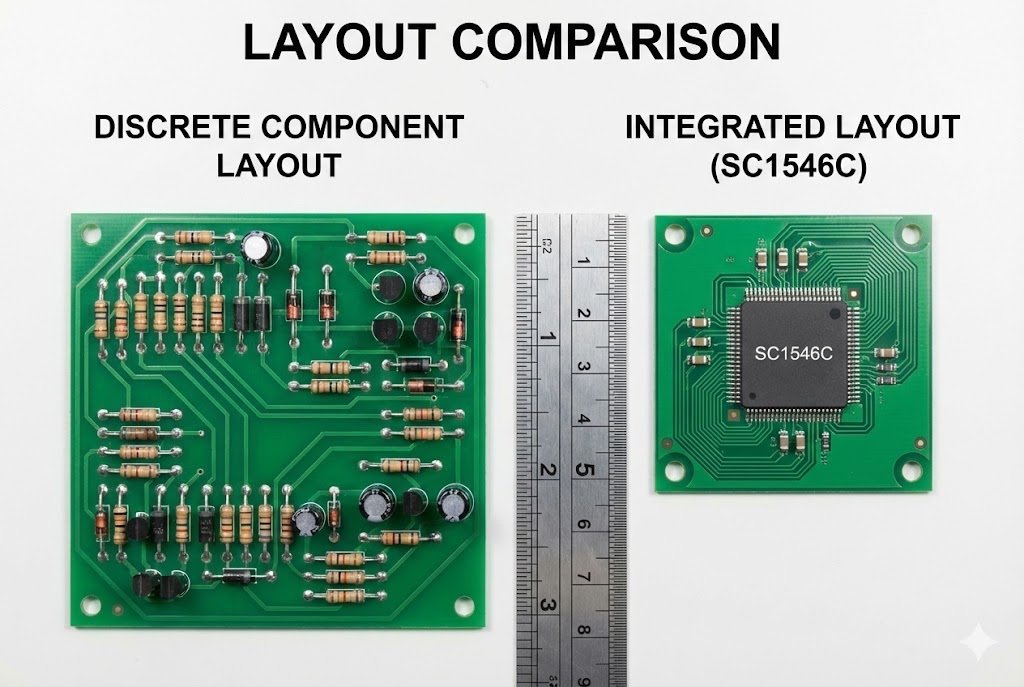
I recall a project last year where a client wanted to shrink their 65W charger by 30%. They were using discrete MOSFETs and a separate controller. The board was crowded. Heat dissipation was a nightmare. We suggested they look at highly integrated solutions10 like the SC1546C. The difference was immediate.
When you look at the "dimensional strike" this chip offers, it is about integration. In the past, you needed a controller, two to four external MOSFETs, and a gate driver. Now, the SC1546C puts this all inside one chip. This is not just about saving space. It is about parasitic inductance11. When components are far apart, you get resistance and interference. When they are in one package, the circuit runs cleaner.
This integration allows for higher switching frequencies12. GaN (Gallium Nitride) technology thrives on speed. If your controller cannot keep up or if your layout is too messy, you lose the benefits of GaN. The SC1546C is designed to sit right next to the GaN power stage. It creates a compact "power island" on the PCB. This reduces the loop area. A smaller loop area means less electromagnetic interference (EMI)13.
Here is a breakdown of the benefits of this integrated architecture:
| Feature | Traditional Discrete Solution | SC1546C Integrated Solution |
|---|---|---|
| Component Count | High (Controller + EXT MOS + Drivers) | Low (Single Chip) |
| PCB Space | Large area required | Minimal footprint |
| Design Complexity | High (Complex routing) | Low (Simplified layout) |
| Thermal Management | Heat spreads across board | Centralized, easier to cool |
| EMI Performance | Hard to control | Optimized internal loops |
For engineers, this means less time fixing bugs and more time innovating. You do not have to worry about the gate drive signals ringing. The chip handles it. This is the definition of a "turnkey" solution for hardware design.
How Does Internal Communication Optimize Multi-Port Power Allocation?
Users hate it when plugging in a second device causes the first one to stop charging or reset. You need intelligent power management that handles multiple devices smoothly and logically.
The SC1546C uses a proprietary internal communication protocol6 to manage power distribution logic dynamically. Unlike traditional MCUs that require complex coding, this chip automatically adjusts voltage and current across ports, ensuring seamless transitions when devices are added or removed.
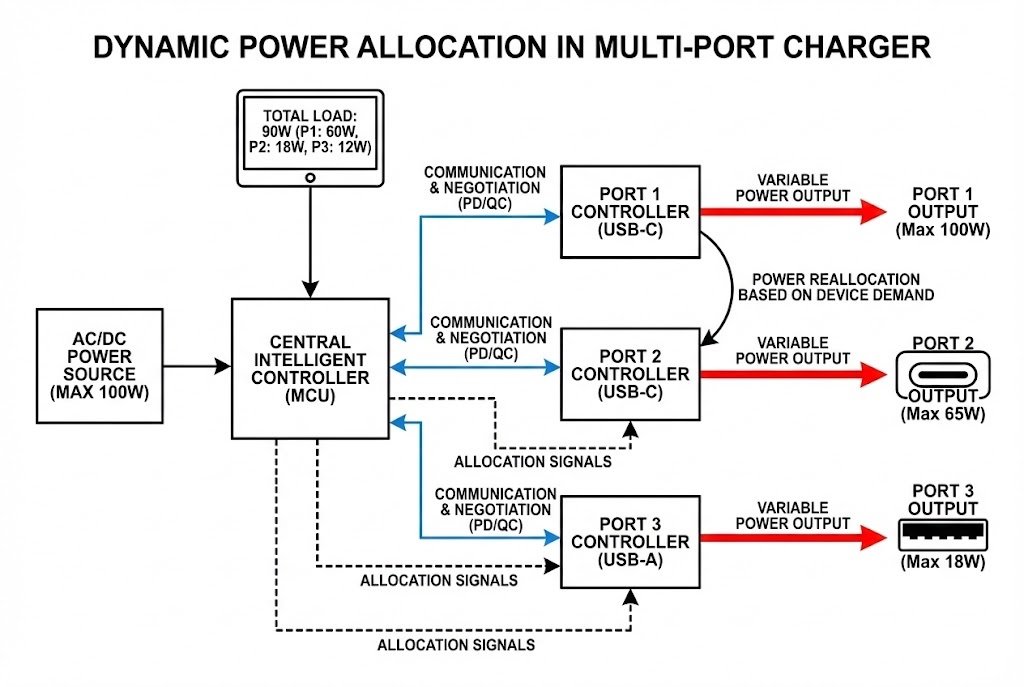
The biggest headache in multi-port chargers is the logic. I have seen firmware engineers spend weeks writing code just to decide what happens when a phone and a laptop are plugged in at the same time. The SC1546C solves this with hardware-based intelligence.
The chip features an internal communication protocol6. This is a specific set of rules built into the silicon. It allows two SC1546C chips (or one chip and a master MCU) to talk to each other instantly. They share information about the load. If Port A is drawing 60W and Port B is empty, the system gives full power to Port A. If you plug a phone into Port B, the chips communicate. They negotiate a new power split. Maybe it becomes 45W for the laptop and 20W for the phone.
This happens very fast. The user barely notices. In older designs, the power would cut off completely for a second. The charger would "reboot" to assess the new load. That is annoying. The SC1546C enables "seamless" power allocation. The internal logic handles the current sensing and the PWM (Pulse Width Modulation) adjustments in real-time.
This approach also reduces the burden on the main MCU. In many designs, you can even remove the external MCU entirely if the logic is simple enough. The SC1546C acts as the brain and the muscle. This is a critical insight for cost reduction. You are not just removing MOSFETs; you are removing the need for complex software development.
Let’s look at how this logic improves the user experience:
| Scenario | Old MCU-Based Logic | SC1546C Smart Allocation |
|---|---|---|
| Single Port Usage | Delivers full power | Delivers full power |
| Second Device Plug-in | Hard reset (charging stops briefly) | Smooth transition (smart re-negotiation) |
| Thermal Throttling | Often reactive and slow | Proactive adjustment based on internal sensors |
| Development Time | Weeks of coding | Configuration via resistors/I2C |
This internal protocol is the secret sauce. It makes the charger feel "premium" to the end user.
Will Integrated Single-Chip Solutions Dominate the Future of PD3.1?
The fast-charging market moves quickly, and sticking to old standards leaves you behind. You must adopt technologies that support higher power levels and new protocols like PD3.1.
As the industry moves toward PD3.1 standards14, the SC1546C positions itself as the future mainstream solution for the sub-100W market. Its ability to handle higher power density with integrated MOSFETs makes it superior to bulky discrete solutions for modern electronics.
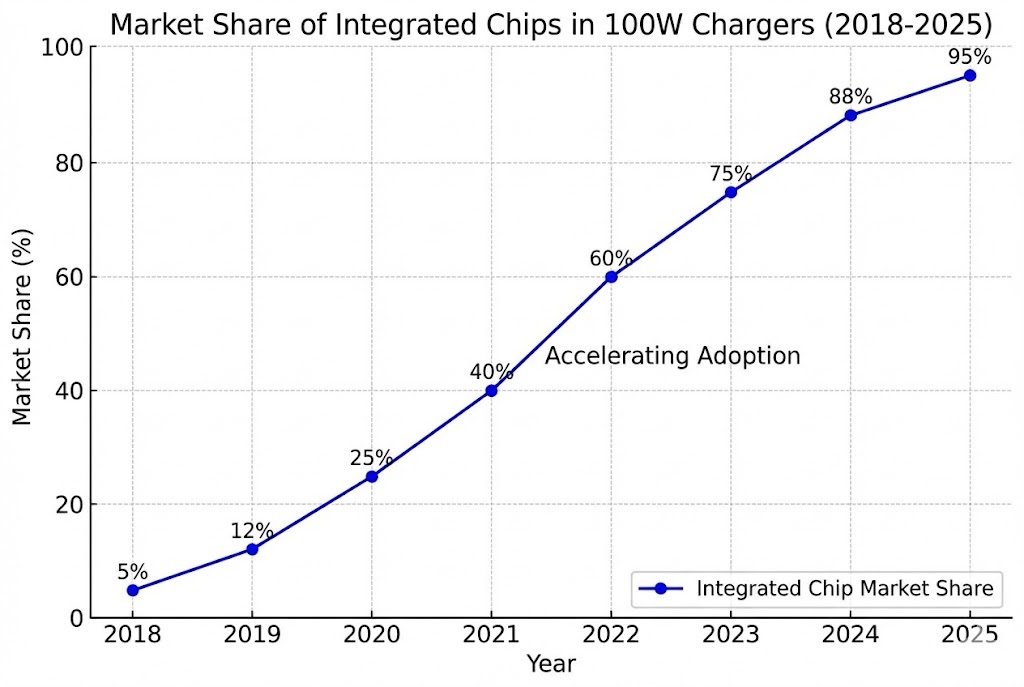
We are standing at a turning point in the industry. The USB PD3.1 standard is pushing power limits higher. While PD3.1 allows for up to 240W, the "sweet spot" for most consumer electronics is still under 100W. This covers almost all ultrabooks, tablets, and phones. This is exactly where the SC1546C targets.
My insight is that discrete solutions will vanish from this segment. They are too expensive to assemble. They take up too much room. The SC1546C represents the "Mainstream Future." Why? Because it brings high-end performance to a price point that mass production can accept.
As we move to 100W, efficiency becomes critical. A 90% efficient charger at 100W wastes 10W of heat. That is a lot of heat in a small plastic case. The SC1546C, with its integrated low Rds(on) MOSFETs15, pushes efficiency higher. It minimizes that waste heat. This allows you to build smaller cases. Smaller cases mean lower plastic costs and lower shipping costs.
We also need to consider the "Universal" aspect. The market demands chargers that work with everything. The SC1546C supports multiple protocols, not just PD. It handles UFCS (Universal Fast Charging Specification) and others. This makes it a global solution.
Here is why the single-chip solution will win the sub-100W battle:
The Shift to Integration
- Cost Efficiency: Buying one chip is often cheaper than buying a controller + 4 MOSFETs + Drivers + passive components. The BOM (Bill of Materials) cost drops.
- Manufacturing Yield: Fewer solder joints mean fewer points of failure. Production lines run faster.
- Performance Density: To get 100W into a credit-card-sized charger, you cannot use discrete parts. You physically run out of room.
The market trend is clear. We saw this in the PC industry years ago. Sound cards and network cards got integrated into the motherboard CPU or chipset. The same is happening in power electronics. The SC1546C is the chipset for the modern charger. It is a dimensional strike against the old way of building things.
How Can You Secure Authentic SC1546C Components for Mass Production?
Designing a great charger means nothing if you cannot get the chips when you need them. You face risks of fake parts and delayed shipments in the volatile semiconductor market.
Sourcing SC1546C chips requires a partner with direct lines to authorized distributors. Nexcir16 ensures 100% authenticity and stable supply chains, helping OEMs avoid counterfeit risks17 and maintain strict production schedules for their high-performance charging products.
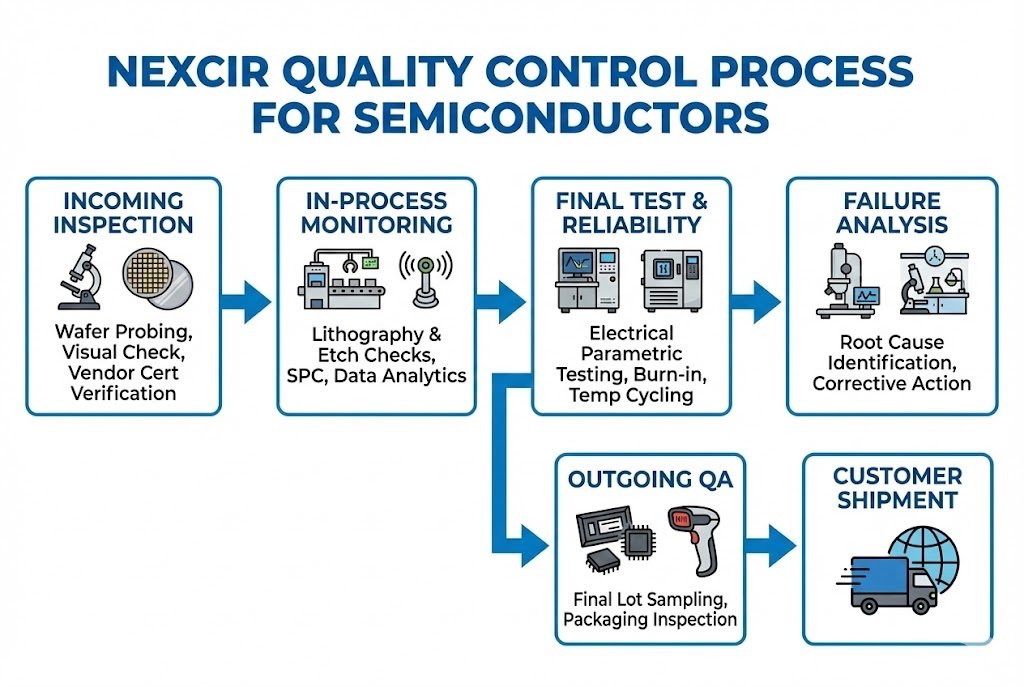
I talk to procurement managers every day. Their biggest fear is not a bad design. It is a line-down situation. It is stopping the factory because a specific chip is missing. Or worse, buying a chip from a broker that turns out to be fake.
The SC1546C is a popular chip. Popular chips attract counterfeiters. Fake chips might look the same, but they explode under load. They destroy your brand reputation instantly. At Nexcir16, we understand this risk. We have spent 20 years building a network that only touches authorized sources.
When you source a high-tech component like the SC1546C, you need more than just a price. You need technical backing. We act as the bridge. If your engineering team has questions about the thermal pad layout for the SC1546C, we can help find the answers. We do not just move boxes. We understand what is inside the box.
We also help with "End of Life" (EOL) planning and long-term stock. The electronics market is cyclical. Shortages happen. We help our clients plan ahead. We secure stock for their long-term projects. This stability is what allows you to sign contracts with your own customers confidently.
Here is how Nexcir16 protects your production:
| Risk Factor | The Nexcir16 Solution |
|---|---|
| Counterfeit Parts | 100% Traceability to authorized sources |
| Market Volatility | Buffer stock and long-term supply agreements |
| Technical Issues | Expert support team with 20+ years experience |
| Logistics Delays | Global warehouse network for fast shipping |
Building the next generation of chargers requires a stable foundation. We provide that foundation.
Conclusion
The SC1546C series2 simplifies multi-port charger design, boosts efficiency, and secures your place in the PD3.1 market through unmatched integration and smart logic.
Explore solutions to common issues in charger designs, such as overheating and bulky components, to improve efficiency and compactness. ↩
Learn about the SC1546C series and how it integrates USB-C PD controllers and buck-boost converters for efficient power distribution. ↩
Understand the role of USB-C PD controllers in modern charging solutions and their impact on power management. ↩
Discover how buck-boost converters optimize power distribution and contribute to efficient charging solutions. ↩
Explore the benefits of integrating MOSFETs into charger designs for reduced board space and improved thermal management. ↩
Explore the role of internal communication protocols in managing power distribution and improving user experience. ↩
Learn how internal communication protocols optimize power distribution between ports in multi-port chargers. ↩
Understand the efficiency and space-saving benefits of GaN technology in high-power charging stations. ↩
Find strategies to simplify PCB layouts, reducing complexity and improving reliability in charger designs. ↩
Explore how highly integrated solutions reduce component count and improve efficiency in electronic designs. ↩
Learn about the impact of parasitic inductance on circuit performance and how integration can mitigate these effects. ↩
Discover the advantages of higher switching frequencies in GaN technology for faster and more efficient power conversion. ↩
Find methods to minimize EMI in electronic designs, enhancing performance and compliance with standards. ↩
Learn about PD3.1 standards and their role in advancing fast-charging technology for modern devices. ↩
Discover the advantages of low Rds(on) MOSFETs in reducing heat and improving efficiency in charger designs. ↩
Discover how Nexcir ensures authenticity and stable supply chains for semiconductor components, supporting OEMs. ↩
Learn how to mitigate counterfeit risks in semiconductor sourcing to ensure product quality and reliability. ↩