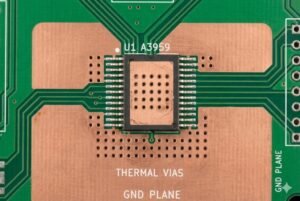
leading paragraph: Industrial power supplies fail too often due to heat and vibration. You worry about expensive downtime and repair costs. You need a chip that handles harsh conditions without breaking a sweat.
snippet paragraph: The TOP266VG uses multi-mode control logic1 to maintain high efficiency from full load to standby, reducing heat generation. Its eDIP-12 packaging2 utilizes pin-cooling technology, eliminating heavy heat sinks. This design lowers physical stress during vibrations and significantly increases the Mean Time Between Failures (MTBF)3 in harsh industrial settings.
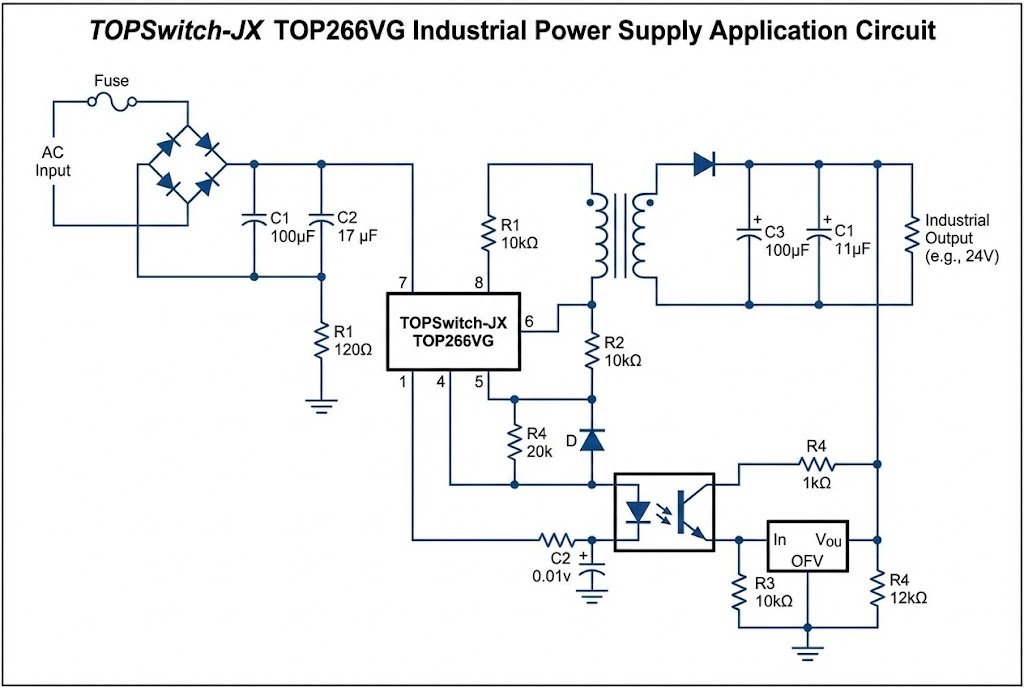
Transition Paragraph: I have seen many engineers struggle with power designs that fail in the field. Let me explain why this specific chip changes the game for industrial applications and keeps your machines running.
LOOP START
How Does the Multi-Mode Control Logic Actually Work?
leading paragraph: Standard PWM controllers waste energy when your machine sits idle. This creates unnecessary heat inside the case. You want a smarter way to manage power across all load levels.
snippet paragraph: The TOP266VG switches modes automatically based on the load. It uses frequency modulation4 at full load to lower EMI and cycle skipping5 at light load. This keeps the system cool and efficient even during standby monitoring.
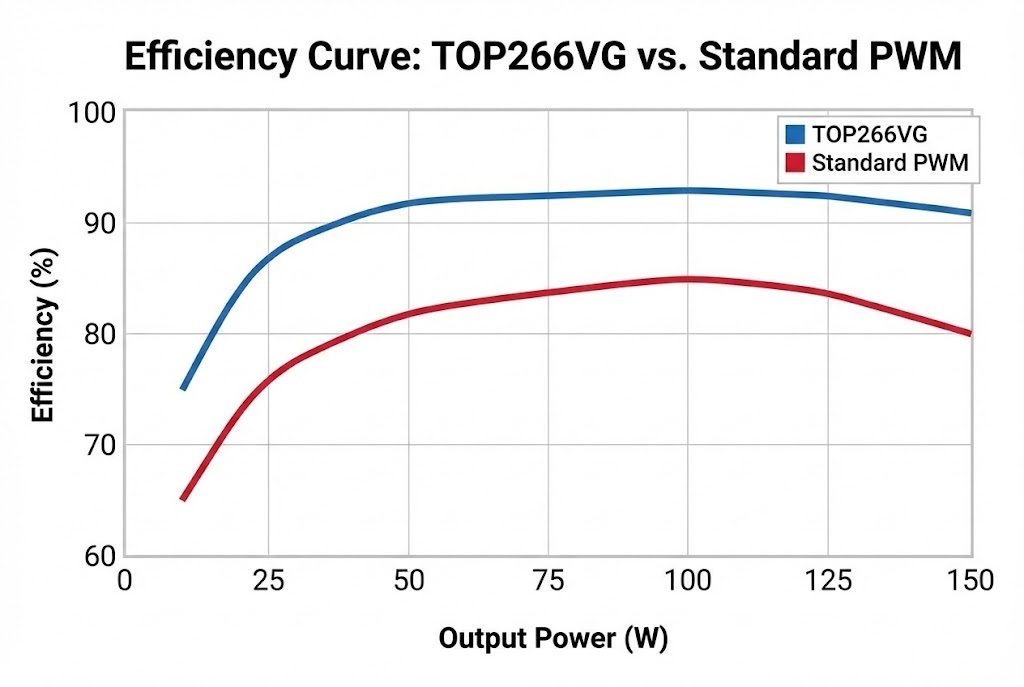
Dive deeper Paragraph: I want to look closer at the "brain" inside this chip. Most power chips just turn on and off at a set speed. The TOP266VG is different. It thinks about the load. When your industrial machine is working hard, the chip runs at full speed. But it does a clever trick here. It uses frequency jittering6. This means it changes the switching speed slightly. This spreads out the electrical noise. It makes it much easier to pass strict industrial EMI (Electromagnetic Interference) tests. You do not need big, expensive filters.
Then, consider the "standby" mode. Industrial computers often sit idle, just monitoring sensors. A normal chip keeps switching fast and gets hot. The TOP266VG switches to a "cycle skipping5" mode. It waits. It only switches when it needs to. This drops the energy use drastically. I have seen systems where this feature alone reduced the internal cabinet temperature by 5 to 10 degrees. Heat is the enemy of electronics. By staying cool in standby, the chip protects itself and the components around it.
Here is a breakdown of how the logic changes based on the situation:
| Load Condition | Control Mode | Main Benefit |
|---|---|---|
| Full Load | PWM with Frequency Jitter | Lowers EMI noise, easier compliance. |
| Medium Load | Variable Frequency | Maintains high efficiency, reduces switching loss. |
| Light/Standby | Cycle Skipping | Extremely low power consumption, minimal heat. |
This multi-mode approach is not just a feature. It is a necessity for modern industrial efficiency standards7. It ensures the power supply is not the weak link in your system.
LOOP END
LOOP START
Why Is the eDIP-12 Packaging Crucial for High Vibration Environments?
leading paragraph: Big heat sinks are heavy and dangerous in vibrating machines. They can rip components off the board. You need a solution that stays cool without adding dangerous weight to the PCB.
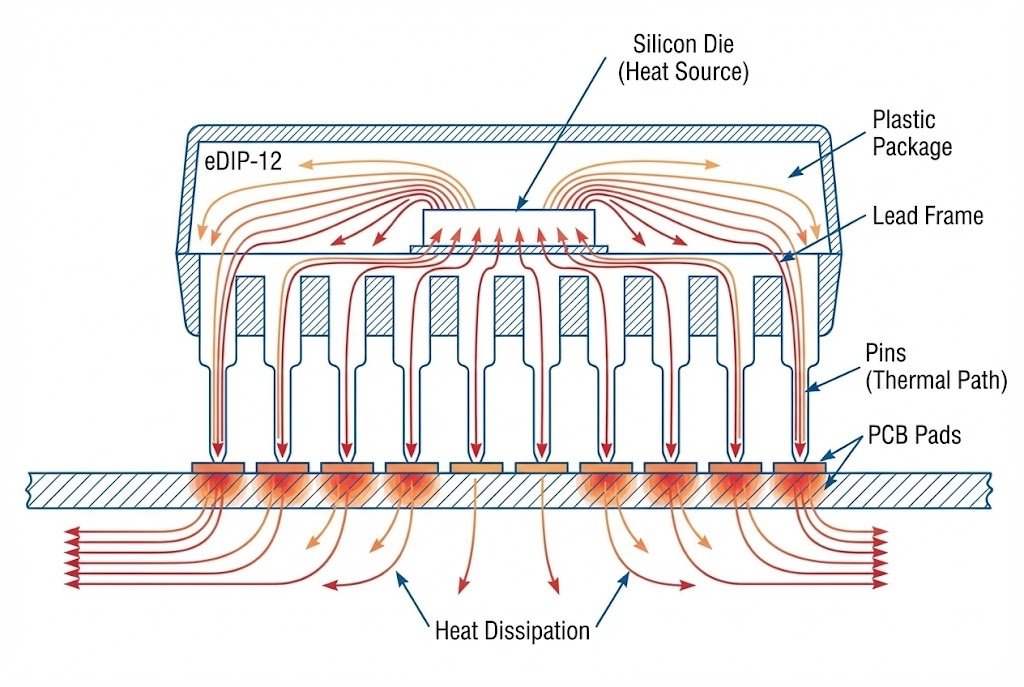
snippet paragraph: The eDIP-12 (VG) package uses the pins themselves to transfer heat to the PCB. This removes the need for bulky metal radiators. It lowers stress on solder joints and improves the system's lifespan in shaking environments.
Dive deeper Paragraph: Let's talk about the physical design. In my early days, I worked on a project for a textile factory. The machines vibrated constantly. We used standard power transistors with big aluminum heat sinks screwed onto them. After six months, the legs of the transistors snapped. The heavy heat sink acted like a hammer every time the machine shook. The vibration caused metal fatigue. The system failed, and production stopped.
The TOP266VG in the eDIP-12 package solves this problem elegantly. It does not need a separate heat sink. Instead, it uses its own pins. Specifically, the pins connected to the SOURCE tab8 are designed to conduct heat. You solder these pins to a large area of copper on your printed circuit board (PCB). The copper on the board becomes the heat sink.
This is a "heat dissipation philosophy9." It changes the mechanical structure. The chip lies flat and low to the board. It is light. When the machine vibrates, there is no heavy mass pulling on the solder joints. This reduces mechanical stress.
Also, consider enclosed spaces. Industrial control cabinets are tight. There is often no room for tall heat sinks. This low-profile package fits anywhere. It allows air to flow better inside the case. This leads to a higher MTBF (Mean Time Between Failures). You get a robust power supply that survives the physical abuse of an industrial floor.
Comparison of Cooling Methods
| Feature | Traditional TO-220 + Heatsink | TOP266VG (eDIP-12) |
|---|---|---|
| Weight | Heavy (Chip + Metal) | Light (Chip only) |
| Vibration Risk | High (Leverage effect) | Very Low (Low profile) |
| Space Required | Large vertical space | Minimal vertical space |
| Assembly | Complex (Screws/Clips) | Simple (Standard Soldering) |
LOOP END
LOOP START
Why Is Sourcing Authentic TOP266VG Components Critical for Safety?
leading paragraph: Fake chips look real but fail under pressure. This ruins your reputation and endangers equipment. You must ensure every component comes from a trusted source to guarantee these safety features work.
snippet paragraph: Counterfeit TOP266VG chips often lack the correct thermal protection and overload logic. Using them causes fires or total system failure. Sourcing from authorized distributors like Nexcir guarantees the specifications match the datasheet and ensures long-term reliability.
Dive deeper Paragraph: We have discussed the smart logic and the thermal design. But these features only exist if the silicon inside is real. The industrial market is full of "refurbished" or fake chips. I have seen counterfeit TOP266VG chips that look perfect on the outside. The text on the package is correct. The pins look shiny. But inside, the die is much smaller. It lacks the multi-mode control logic1. It lacks the thermal shutdown safety10.
When you put a fake chip in a factory machine, you are taking a massive risk. The fake chip might work for a few minutes. But when the machine goes to standby, the fake chip does not skip cycles. It gets hot. It overheats. It burns out. In a worst-case scenario, it causes a fire in the control cabinet.
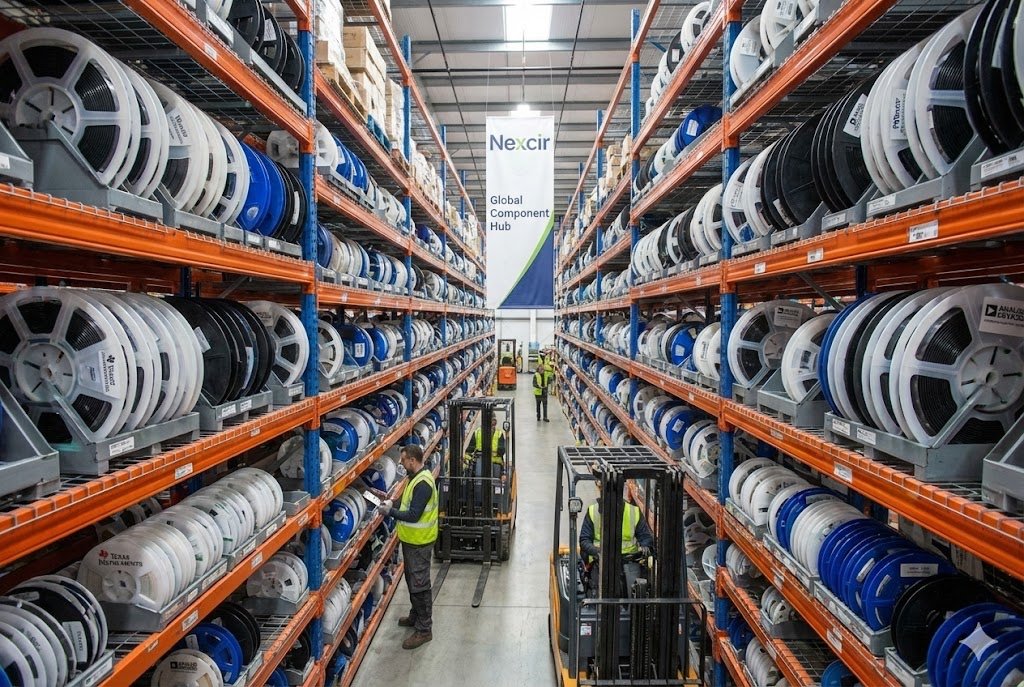
At Nexcir, we understand this pain point. Our team has over 20 years of experience. We know that reliability starts with the supply chain. We only source from authorized channels and original manufacturers. We ensure traceability. This means we can track the part back to the factory it came from.
For an OEM manager11, the cost of a legitimate chip is tiny compared to the cost of a recall. If you build a thousand machines and they all fail because of a $1 fake part, your business is in trouble. Using verified, authentic parts acts as insurance. It ensures that the engineering "moat" we discussed—the control logic and the thermal design—is actually there protecting your product.
The Risks of Gray Market Sourcing12
- Missing Features: Fakes often lack the frequency jittering6, causing you to fail EMI tests.
- Lower Safety: Fakes may not have over-temperature protection.
- Short Lifespan: Refurbished parts have already been used and may fail quickly.
- Inconsistent Quality: One batch might work, the next batch might fail.
LOOP END
Conclusion
The TOP266VG ensures industrial reliability through smart multi-mode control and robust eDIP-12 packaging2. These features manage heat and vibration effectively. Always choose authentic components to guarantee these critical protections work.
Understanding multi-mode control logic can help you optimize power supply efficiency, reducing heat and improving system reliability. ↩
Exploring eDIP-12 packaging benefits can reveal how it enhances durability and heat management in vibrating industrial environments. ↩
Increasing MTBF is crucial for reducing downtime and repair costs, ensuring continuous industrial operations. ↩
Frequency modulation helps lower EMI, making it easier to comply with industrial standards and avoid costly filters. ↩
Cycle skipping drastically cuts energy use, keeping systems cool and extending the lifespan of electronic components. ↩
Frequency jittering spreads electrical noise, aiding in passing strict EMI tests without expensive filters. ↩
Meeting efficiency standards ensures the power supply is reliable and not a weak link in industrial systems. ↩
These pins conduct heat to the PCB, eliminating the need for bulky heat sinks and reducing mechanical stress. ↩
Understanding this philosophy can help design more robust systems that withstand industrial vibrations. ↩
Thermal shutdown safety prevents overheating, protecting both the chip and surrounding components. ↩
Authentic components prevent costly recalls and ensure product reliability, safeguarding business reputation. ↩
Gray market sourcing can lead to inconsistent quality and missing features, risking system reliability. ↩