
How Can You Evaluate Counterfeit Risk in Electronic Component Procurement?
Worried about fake parts damaging your products? Counterfeits cause costly recalls and ruin your reputation. We can help you build a secure and reliable electronic component supply chain1.
To evaluate counterfeit risk, you must vet your suppliers and inspect the components. Focus on sourcing from authorized or certified distributors2. Also, use inspection methods like visual checks3, X-ray analysis4, and functional testing5. A trusted supply channel is your best defense against fakes.

Counterfeit electronic components are a huge problem in our industry. They can cause equipment failures, lead to massive product recalls, and create safety hazards. I've seen firsthand how a single batch of fake parts can bring an entire production line to a halt, costing a company millions. The financial loss6 is bad, but the damage to customer trust can be even worse. That’s why knowing how to spot and avoid these risks is not just a good practice; it’s essential for survival. So, let's break down how you can protect your projects and your business.
How can you vet suppliers to avoid fakes?
Your supplier list is your first line of defense. A cheap offer from an unknown source can be tempting. But the risk is rarely worth the savings.
The best way to vet suppliers is to verify their credentials. Prioritize authorized distributors, check for quality certifications like ISO 90017, and see if they are members of industry organizations like ERAI. These steps confirm their commitment to quality and authenticity.
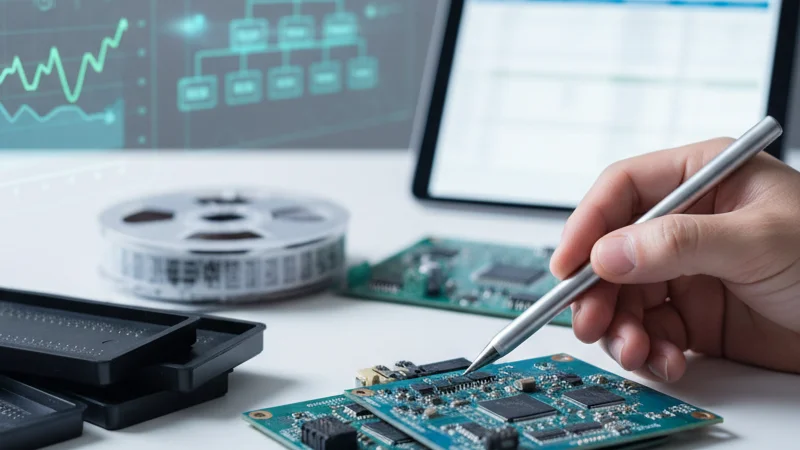
Choosing the right supplier is the most critical decision you will make in your procurement process. A reliable partner saves you time, money, and headaches down the line. An unreliable one introduces massive risk. I remember a project early in my career where we sourced from a new, unvetted supplier8 to save a few dollars. The components failed during testing, and we later discovered they were remarked, low-grade parts. That small saving cost us weeks of delays and the trust of our client. This taught me a valuable lesson: your sourcing strategy must be built on trust and verification. You need to look at three key areas when evaluating a potential partner.
Authorized and Certified Channels
The safest source is always an authorized distributor. These companies have a direct relationship with the original component manufacturer (OCM). This means the parts come straight from the factory, with a clear chain of custody and full traceability9. There is virtually no risk of counterfeits. Next, look for certified independent distributors. These suppliers should have certifications like ISO 90017, which shows they have a robust quality management system in place.
Industry Association Membership
Another strong indicator of a supplier's reliability is their membership in professional associations. An organization like ERAI10 (Electronic Resellers Association International) requires its members to adhere to strict ethical and quality standards. Membership shows a supplier is serious about combating counterfeit parts and is actively participating in the industry's efforts to create a safer supply chain.
Here is a simple table to compare these supplier types:
| Supplier Type | Counterfeit Risk | Traceability | Cost |
|---|---|---|---|
| Authorized Distributor | Very Low | Full (to OCM) | Standard |
| Certified Distributor | Low | High (Internal QMS) | Competitive |
| ERAI10 Member | Low | High (Industry Standards) | Competitive |
| Unvetted Broker | Very High | None | Varies (Often low) |
What visual signs expose counterfeit components?
You received a shipment of components. They look okay at first glance. But are they real? A careful visual inspection can often reveal fakes before they ever enter your inventory.
Counterfeits often have subtle visual flaws. Look for inconsistent markings11, unusual surface textures, or bent pins. These small details can be the first sign that something is wrong with the parts.
A visual inspection is your first and most important physical check. You should examine the component's markings, body, and leads for any inconsistencies. Pay close attention to the font, logo, date codes, and country of origin. Any sign of sanding or blacktopping12 is a major red flag.
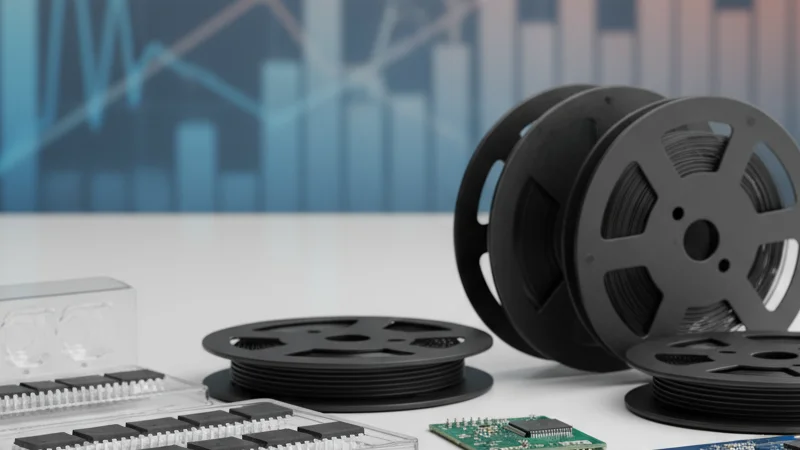
You don't always need expensive equipment to spot a fake. Many counterfeit components can be identified with a good magnifying glass and a trained eye. Counterfeiters often try to make old or different parts look like new, high-demand ones. This process, known as remarking, almost always leaves behind evidence. I once had a team lead who could spot a remarked chip from across the room. He taught me to always trust my instincts. If a component feels or looks "off," it probably is. You should build a systematic checklist for your receiving department to follow for every incoming shipment, especially from a new supplier. This simple process can save you from major problems later.
Check the Markings
First, look at the text and logos on the component. Are they sharp and clear? Counterfeiters often use cheap laser etching that results in blurry or inconsistent fonts. Compare the markings to a known-good part from an authorized source or the manufacturer's datasheet. Check for spelling errors. Also, verify that the date codes and lot numbers are consistent across all the parts on a reel or in a tray.
Examine the Body and Surface
Next, inspect the physical body of the component. Run your finger over the surface. Does it feel uniform, or can you feel rough patches? Counterfeiters often sand off the original markings and apply a new coating, a process called "blacktopping12." This can leave a slightly uneven or dull texture. You can sometimes detect this with an acetone swab test13, as the new coating may wipe away.
Inspect the Pins and Leads
Finally, look at the pins or leads. They should be straight, uniform, and free of oxidation. On new components, the leads often have a bright, shiny finish. If the leads look dull, scratched, or have been re-tinned, it's a warning sign. This could mean the parts are used, pulled from old boards, and repackaged as new.
What advanced tests confirm a component's authenticity?
Sometimes, a visual inspection is not enough. Sophisticated counterfeiters can create fakes that look perfect on the outside. This is when you need to use advanced testing methods.
When visual checks3 are inconclusive, you need advanced testing. Methods like X-ray inspection, decapsulation14, and electrical testing15 provide definitive proof of a component's authenticity by examining its internal structure and performance.
Advanced testing gives you certainty. X-ray analysis4 reveals the internal die size and wire bonding. Decapsulation exposes the die for direct inspection. Functional testing verifies that the component performs exactly according to its datasheet specifications. These tests are essential for critical applications.

When you are dealing with high-value components or parts for a critical application like medical or automotive systems, you cannot afford to take any chances. While these advanced tests cost more, the cost is nothing compared to the cost of a product failure. We once had a customer who was building a life-support system. They received a batch of power regulators that passed all visual checks3. But during our routine X-ray inspection, we found that the die inside was much smaller than it should have been. The parts were fakes that would have failed under load. That discovery reinforced our belief that for certain applications, advanced testing is not optional—it is a requirement.
X-Ray Inspection
An X-ray inspection is a non-destructive way to look inside a component. It allows you to see the internal lead frame, the wire bonds, and the die. You can compare the X-ray image to an image of a known-good part. You should look for inconsistencies in the die size, the layout of the lead frame, and the pattern of the wire bonds. Missing or broken wire bonds are an immediate red flag.
Decapsulation (Decap) Analysis
Decapsulation is a destructive test where chemicals are used to remove the plastic or ceramic packaging of the component. This exposes the silicon die inside. Once the die is exposed, you can examine it under a high-powered microscope. You can read the manufacturer's name, the part number, and the copyright information directly from the die. If this information does not match the markings on the outside of the component, you have found a counterfeit.
Electrical and Functional Testing
The ultimate test is to see if the component works as it should. Electrical testing involves checking basic parameters like resistance and capacitance. A full functional test, however, puts the component through its paces to ensure it meets every specification in the manufacturer's datasheet. This can include testing at different temperatures and voltages to simulate real-world operating conditions. A part that fails to perform to spec is, by definition, not authentic.
Why is a strong supplier partnership the ultimate solution?
You can spend a lot of time and money on testing every component. Or, you can focus on building a supply chain that you can trust from the very beginning.
Constantly testing parts is expensive and reactive. A better strategy is to build a proactive partnership with a supplier who guarantees authenticity. This moves the responsibility for quality from you to your partner.
A strong supplier partnership is your best long-term strategy. It saves you the cost and time of extensive testing. A trusted partner like Nexcir16 provides fully traceable, authentic components, so you can focus on innovation instead of worrying about counterfeit risks.
All the testing methods we've discussed are important tools. But they are reactive. They help you catch fakes that have already entered your supply chain. The best approach is a proactive one. It is about preventing counterfeit parts from ever reaching your door in the first place. This is where a true partnership with your supplier becomes so valuable. A good supplier is more than just a vendor who sells you parts. They are an extension of your own team, a partner who is just as invested in the quality and success of your final product as you are. They do the hard work of vetting sources, managing logistics, and ensuring authenticity for you. This is the philosophy we built Nexcir16 on. Our goal is not just to sell components; it is to provide our clients with peace of mind.
The True Cost of a Bad Part
The price of a counterfeit component is not what you paid for it. The true cost includes the time your team spends testing and replacing it, the production delays17 it causes, the cost of a product recall, and the damage to your brand's reputation. When you add all of this up, the cheap price of a questionable part suddenly looks very expensive. A reliable supplier helps you avoid all these hidden costs.
Building a Foundation of Trust
At Nexcir16, we build trust by ensuring every component we ship is 100% authentic and fully traceable. Our founding team has over 20 years of experience, and we have built a global network of proven supply channels. We only source from original manufacturers and their authorized distributors. This strict sourcing policy is our guarantee to you. By partnering with us, you eliminate the risk of counterfeits and simplify your procurement process, allowing your team to focus on what they do best: designing and building great products.
Conclusion
Evaluating counterfeit risk requires a two-part strategy: carefully vet your suppliers and thoroughly inspect your components. A trusted supply partner is your best defense against the dangers of fake parts.
Understanding how to establish a secure and reliable supply chain can protect your business from counterfeit risks and ensure product quality. ↩
Sourcing from authorized distributors ensures authenticity and traceability, reducing the risk of counterfeit components in your supply chain. ↩
Visual checks can help identify counterfeit components early, saving time and resources by preventing fake parts from entering your inventory. ↩
X-ray analysis provides a non-destructive way to verify the internal structure of components, ensuring authenticity and preventing failures. ↩
Functional testing ensures components meet specifications, preventing counterfeit parts from causing failures in critical applications. ↩
Counterfeit components can cause equipment failures and recalls, leading to significant financial losses and damage to brand reputation. ↩
ISO 9001 certification indicates a supplier's commitment to quality management, reducing the risk of counterfeit components. ↩
Sourcing from unvetted suppliers increases the risk of counterfeit components, leading to potential failures and financial losses. ↩
Traceability ensures components are sourced from legitimate channels, reducing the risk of counterfeits and ensuring quality. ↩
ERAI membership shows a supplier's dedication to ethical standards and quality, helping to prevent counterfeit risks. ↩
Inconsistent markings are a common sign of counterfeit components, helping to identify fakes before they enter your supply chain. ↩
Blacktopping is a method used by counterfeiters to alter component markings, which can be detected through careful inspection. ↩
An acetone swab test can reveal blacktopping, a sign of counterfeit components, by removing altered surface coatings. ↩
Decapsulation exposes the internal die of a component, allowing for direct inspection to confirm authenticity. ↩
Electrical testing checks if components meet specifications, ensuring they are genuine and reliable for use. ↩
Nexcir's commitment to authenticity and traceability makes them a trusted partner, reducing counterfeit risks and simplifying procurement. ↩
Counterfeit components can fail during testing or use, leading to production delays and increased costs. ↩