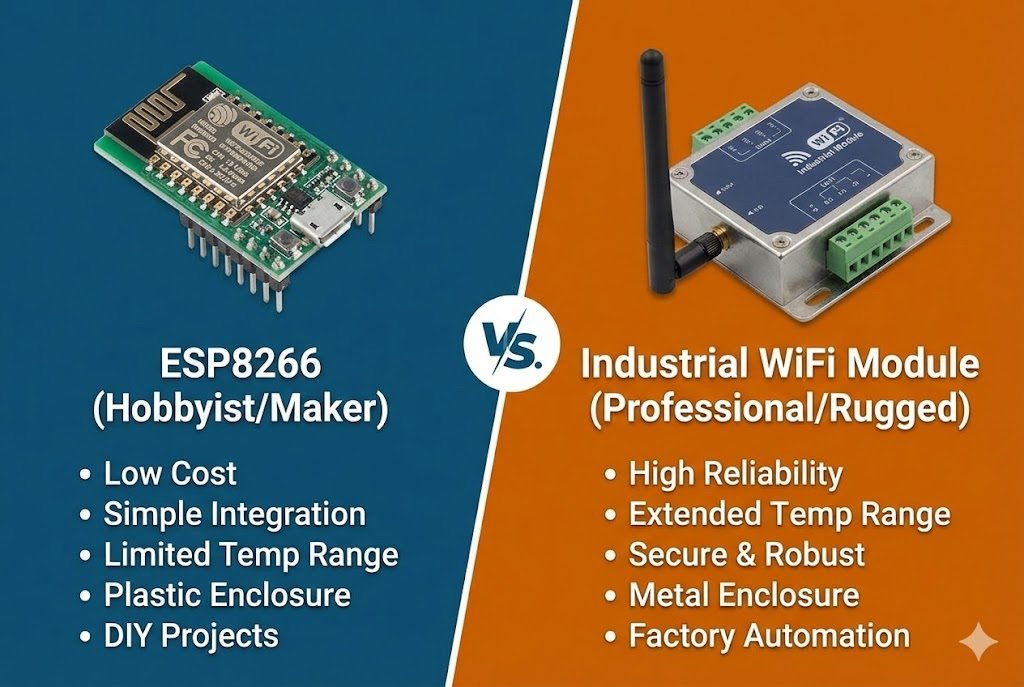
You might love the ESP82661 for home projects, but using it in a factory is risky. Connection drops and temperature failures can ruin your production line. You need a stronger solution.
The ESP82661 is excellent for prototyping, but industrial environments2 require higher interference immunity3, wider temperature ranges4, and dual-core processing5. For professional manufacturing, upgrading to industrial-grade modules like the ESP32 series6 or Realtek RTL chips ensures stable connectivity and long-term reliability.
I have seen many engineers try to save money with cheap chips. It usually ends badly. Let me explain why you must upgrade.
Why is the ESP82661 Risky for Industrial Applications?
Your prototype works on the bench, but the factory floor is full of noise. Relying on a hobbyist chip can lead to expensive downtime and angry clients.
Industrial environments have heavy electrical noise and extreme temperatures that the basic ESP82661 cannot handle well. It lacks the processing power for complex security protocols required in modern IoT, making it a liability for commercial products.
When I first started in the electronics industry over 20 years ago, connectivity was simple. Today, it is complex. Many engineers start with the ESP82661 because it is cheap and easy to find. It has a huge community. However, there is a big difference between a smart light bulb in your bedroom and a sensor on a vibrating machine in a hot factory.
The ESP82661 is a single-core processor. It runs at 80MHz. This is fine for sending a small packet of data every hour. But in an industrial setting, you often need to handle TLS encryption7 for security. You need to manage a TCP/IP stack. You need to read data from sensors at the same time. The ESP82661 often crashes when doing all this at once.
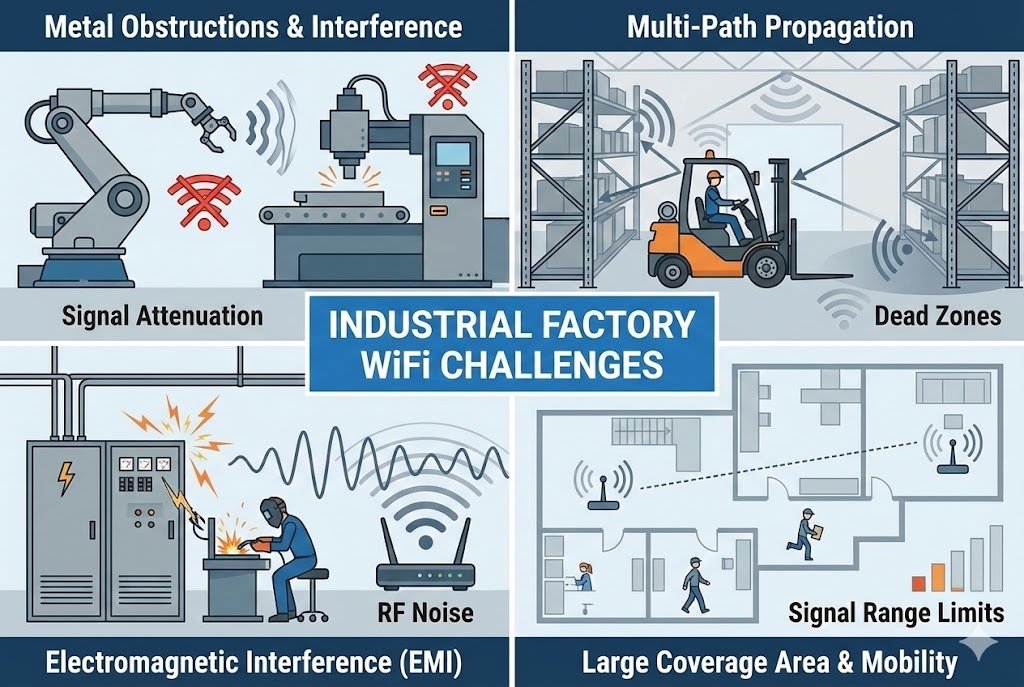
Also, consider the environment. Factories are dirty and noisy. There are motors and welders creating electromagnetic interference (EMI8). The radio frequency (RF) performance of a cheap ESP82661 module is often weak. It cannot filter out this noise. This leads to packet loss9. In my business at Nexcir, we see clients who fail certification because their module is not shielded enough.
Finally, think about temperature. A standard commercial chip works from 0°C to 70°C. An industrial chip must work from -40°C to +85°C. If you put an ESP82661 in an outdoor enclosure or near a hot motor, it will stop working. You cannot risk a product recall just to save fifty cents on a module.
Comparison of Requirements
| Feature | Hobbyist Projects (ESP82661) | Industrial Projects (Target) |
|---|---|---|
| Temperature | 0°C to 60°C is usually fine. | Must handle -40°C to +85°C or higher. |
| Security | WPA2 Personal is enough. | WPA3 Enterprise10 and TLS 1.2/1.3 are required. |
| Reliability | A reboot once a week is okay. | Must run 24/7 for years without resetting. |
| Interfaces | Simple GPIO and UART. | Need CAN bus, Ethernet MAC, and fast SPI. |
Is the ESP32 the Best Upgrade for Stability?
You need a chip that balances cost with high performance. The ESP32 is the logical next step, but do you know which specific version fits your needs?
The ESP32 series6 offers dual-core processing5, Bluetooth integration, and robust industrial temperature support. It is the standard upgrade for engineers who need reliability without reinventing their entire code base, making it perfect for smart manufacturing11.
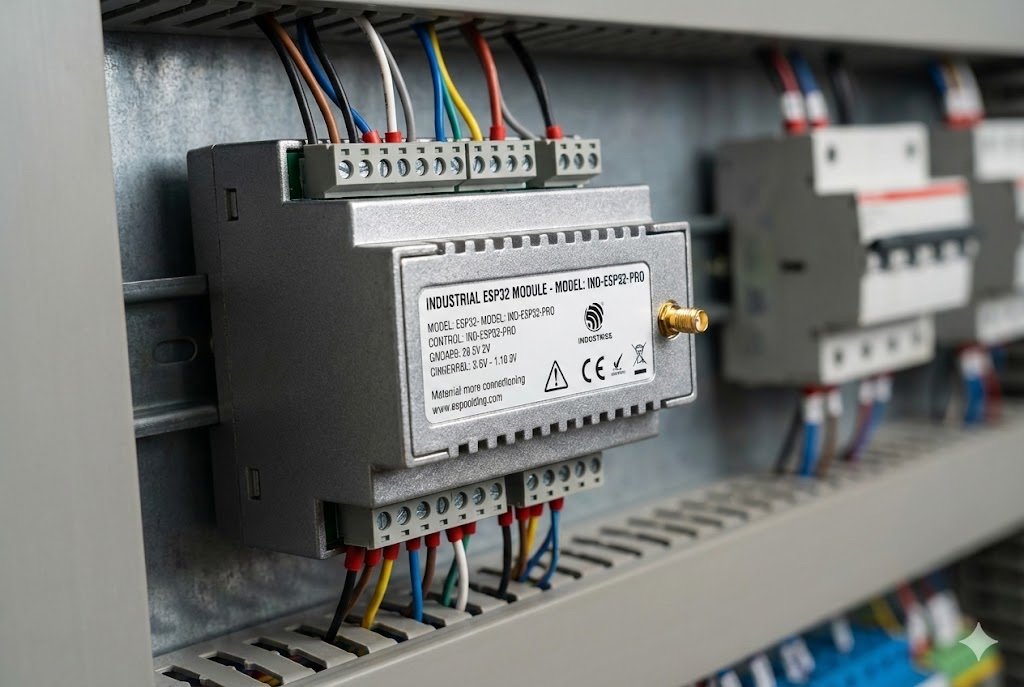
If you are used to the ESP82661, the ESP32 is the most natural upgrade. It is made by the same company, Espressif. The software environment is very similar. But the hardware is much stronger. This is why many of our OEM customers at Nexcir switch to it.
The biggest change is the dual-core processor. One core can handle the WiFi connection. The other core can handle your application code. This means your sensor readings12 will not stop just because the WiFi is reconnecting. This is vital for real-time monitoring in a factory. If you are building a device that tracks machine health, you cannot afford to lose data.
The ESP32 also adds Bluetooth (Classic and BLE). In an industrial setting, this is very useful. You can use Bluetooth to configure the device from a phone app. Then, the device uses WiFi to send data to the cloud. This makes installation much easier for your technicians.
There are many versions of the ESP32 now. You have the original ESP32, the S-series (like S3 for AI), and the C-series (like C3 which is a RISC-V replacement for ESP82661). For industrial use, you should look for the WROOM or WROVER modules. These are pre-certified. This saves you money on FCC and CE testing13.
We also need to talk about longevity. In the consumer world, products change every year. in the industrial world, a machine might run for ten years. Espressif has a longevity commitment for the ESP32 series6. This means they promise to keep making the chip for many years. This is crucial for supply chain planning. You do not want to redesign your board every two years because a chip went "End of Life" (EOL).
ESP32 Variants for Industry
- ESP32-WROOM-32E14: The workhorse. Good for general gateways.
- ESP32-C3: The low-cost upgrade. Good for simple smart switches.
- ESP32-S3: High performance. Good for HMI (screens) and voice control.
When Should You Choose Realtek Over Espressif?
Sometimes the popular choice isn't the right one. Realtek offers specific advantages in audio and routing that Espressif might miss. Are you overlooking this powerful option?
Realtek WiFi modules15, such as the RTL8720 or RTL8195, provide exceptional stability and are often preferred in high-traffic data transmission scenarios. They offer distinct architecture advantages for specific industrial gateways and audio-visual applications where consistent throughput is critical.
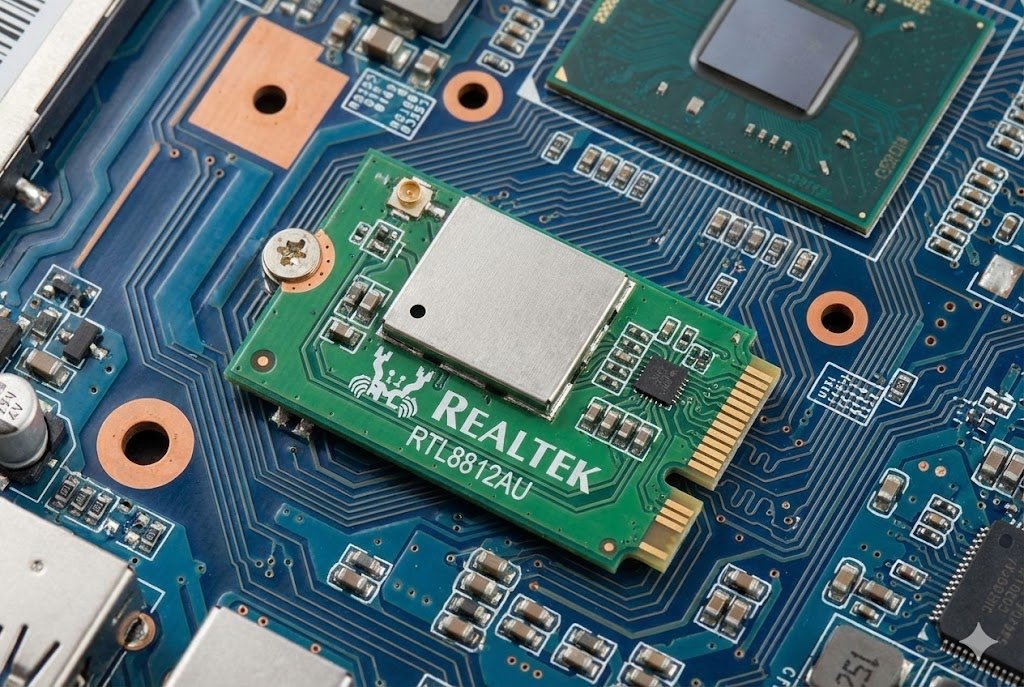
While everyone talks about ESP32, Realtek is a giant in the networking world. You probably have a Realtek audio or network chip in your laptop right now. In the industrial IoT space, Realtek modules (like the Ameba series) are a strong competitor.
I often recommend Realtek to clients who have specific needs regarding data throughput. Realtek chips often have better integration with standard operating systems. If you are running a more complex system that looks like a router or a bridge, Realtek often performs better. Their background is in PC and router networking. This DNA is in their IoT chips too.
For example, the RTL8720DN supports dual-band WiFi (2.4GHz and 5GHz). The standard ESP32 only supports 2.4GHz (though newer ESP versions are changing this). In a factory, the 2.4GHz band is very crowded. It is full of Bluetooth, Zigbee, and old WiFi signals. Being able to use 5GHz is a huge advantage. It is less crowded. Your data moves faster and more reliably.
Another point is the ecosystem. Espressif uses its own IDF (IoT Development Framework). Realtek supports Arduino, but they also have strong support for standard C/C++ environments used in larger embedded systems. If your team is used to traditional embedded development, they might find Realtek's libraries very robust.
However, sourcing Realtek modules can sometimes be harder for small buyers. They often focus on very large volume orders. This is where a distributor like Nexcir helps. We can get these "hard to get" industrial modules for you. We help you compare the datasheet of an RTL8722 against an ESP32-S3 to see which one really fits your power budget and speed needs.
Key Realtek Advantages
- 5GHz Support16: Essential for avoiding interference in crowded factories.
- Audio/Video: Better hardware support for streaming data.
- Networking Stack: proven stability from a major networking company.
How Do You Ensure Supply Chain Security for Industrial Modules?
Picking the right chip is useless if you cannot buy it. Fake chips and stock shortages are killing production schedules everywhere. How do you stay safe?
Securing genuine industrial modules requires a distributor with authorized channels and testing capabilities. Relying on the open market risks counterfeit parts17, whereas a partner like Nexcir ensures traceability and safeguards your long-term production supply.

I have been in this industry for two decades. I have seen the supply chain break many times. The recent chip shortage was a wake-up call for everyone. But there is a silent killer that is even worse: counterfeit parts17.
When you decide to use an ESP32 or a Realtek module in an industrial product, you are buying a promise of quality. But if you buy from a random broker online because the price is 10% lower, you are taking a huge risk. We have seen "ESP32" chips that are actually empty plastic shells. We have seen chips that are rejected units from the factory, sold as new. These chips might work for an hour and then die.
At Nexcir, we focus on security. We source from authorized distributors and original manufacturers. We do this because we know that one bad batch of chips can destroy your company's reputation. If you ship 1,000 sensors to a client and they all fail, you might lose that client forever.
We also help with "End of Life" (EOL) planning. Chips do not last forever. Manufacturers stop making old versions. A good partner will warn you months or years in advance. We help you buy stock to last until you can redesign your board. We hold inventory for our long-term partners.
Another aspect is price stability. The spot market is crazy. Prices go up and down every week. For a hobbyist, paying $5 instead of $3 is annoying. for a factory buying 10,000 units, it is a disaster. We use our global network to find stable pricing. We lock in prices for our clients.
If you are moving from a student project to a real product, you need to stop buying like a hobbyist. You need a supply chain strategy. You need to know that the module you put in your design today will be available to buy next year.
Conclusion
Do not let a cheap hobby chip ruin your industrial product. Whether you choose the versatile ESP32 or the robust Realtek, ensure you buy genuine parts. Contact Nexcir today to secure your long-term supply.
Explore the risks associated with using ESP8266 in industrial settings to understand its limitations. ↩
Learn about the unique challenges faced by IoT devices in industrial environments. ↩
Discover why interference immunity is crucial for reliable industrial WiFi connectivity. ↩
Explore the importance of temperature ranges for industrial WiFi modules. ↩
Understand the advantages of dual-core processing for handling complex tasks in IoT. ↩
Find out how the ESP32 series can enhance performance and reliability in industrial applications. ↩
Learn about the significance of TLS encryption for securing industrial IoT communications. ↩
Discover how EMI impacts WiFi performance in industrial settings. ↩
Investigate the factors contributing to packet loss in industrial WiFi networks. ↩
Understand the importance of WPA3 Enterprise for securing industrial IoT networks. ↩
Explore the role of IoT in transforming traditional manufacturing into smart manufacturing. ↩
Learn about the critical role of sensor readings in industrial IoT systems. ↩
Explore the importance of FCC and CE testing for ensuring compliance in industrial products. ↩
Get detailed insights into the capabilities of the ESP32-WROOM-32E for industrial use. ↩
Explore the benefits of using Realtek WiFi modules in industrial IoT solutions. ↩
Learn how 5GHz support can enhance data transmission in crowded industrial environments. ↩
Explore the dangers of counterfeit parts and how to avoid them in industrial applications. ↩