You hear about delivery drones everywhere, but battery failures and lost signals still crash them. This holds back the whole industry. How do we fix this massive problem?
The low-altitude economy1 will explode in 2026, creating a trillion-dollar market2. To succeed, drones need specialized power management ICs (PMICs)3 for high energy efficiency and communication chips for strong anti-interference4. These components ensure safe, long-distance flights and open up massive opportunities for hardware engineers and buyers.
Let me tell you a quick story. Last month, an engineer friend showed me a drone prototype that fell from the sky because a standard chip failed under heavy wind. That crash cost his team months of hard work. To stop this from happening to your projects, we need to look at the exact chips driving this new era.
Why is 2026 the true starting point for the low-altitude economy1?
Many companies launch drone projects now, but they face endless delays. Without clear standards, you waste money on parts that become useless. When will this chaos actually end?
2026 marks the first real year of the low-altitude economy1. By then, global aviation rules5 will align, and battery technology will reach commercial goals. This timing will trigger a massive surge in demand for specialized drone chips6 across industrial and delivery sectors.

I have worked in the electronic components industry for over 20 years. I have seen many tech trends come and go. The low-altitude economy1 is different. It is not just a trend. It is a complete shift in how we move goods and people. But why is 2026 the magic number?
The Alignment of Rules and Technology
Right now, drone makers struggle a lot. They build custom boards, but local laws keep changing. By 2026, major governments will finalize urban air mobility (UAM) rules7. This means OEMs can finally mass-produce standard designs without fear of sudden bans.
The Surge in Specialized Chip Demand
When mass production starts, the need for chips will skyrocket. Standard consumer chips will not work for this. Drones need parts that can handle harsh weather and constant vibration.
| Factor | Current State (2024) | Future State (2026) | Impact on Procurement |
|---|---|---|---|
| Regulations | Fragmented and unclear | Standardized globally | Stable long-term buying |
| Chip Type | Consumer-grade parts | Specialized drone chips | Need for trusted suppliers |
| Market Size | Testing and small runs | Trillion-dollar boom | High risk of shortages |
Procurement managers must prepare right now. Waiting until 2026 means facing huge supply chain risks. You will fight for the same parts everyone else wants.
How do power management chips solve drone battery life problems?
Short battery life grounds your drones too soon. You lose money on every flight that falls short of its target. How can you squeeze more power from the battery?
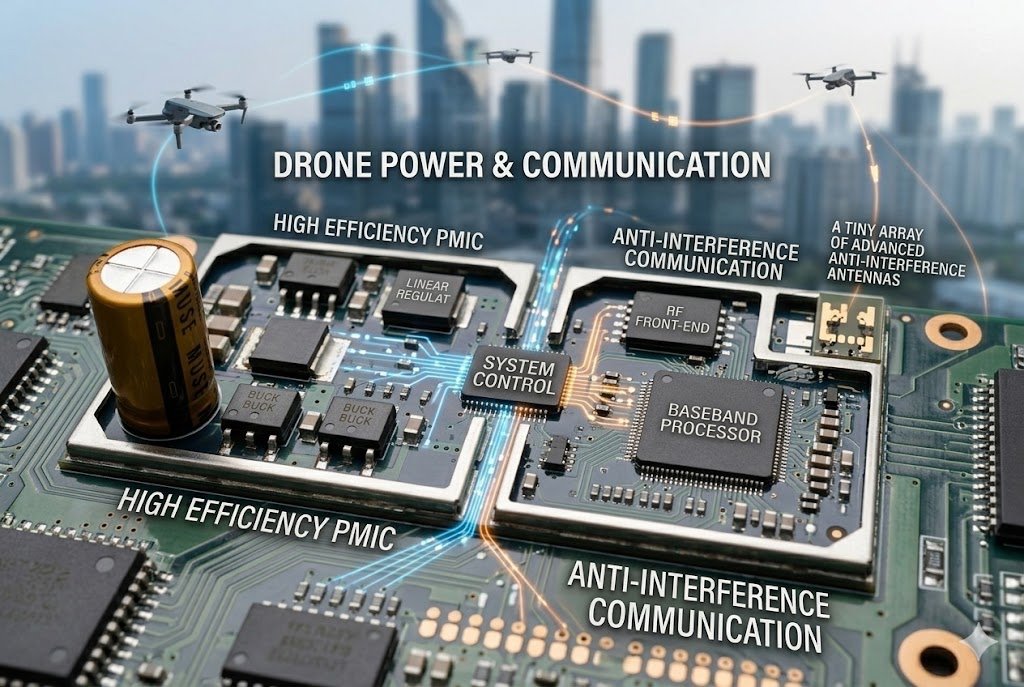
Power management ICs (PMICs)8 solve drone battery issues by offering ultra-high energy efficiency. They control voltage perfectly and reduce power loss as heat. This extends flight time, keeps motors running smoothly, and ensures the drone returns home safely without sudden power drops.
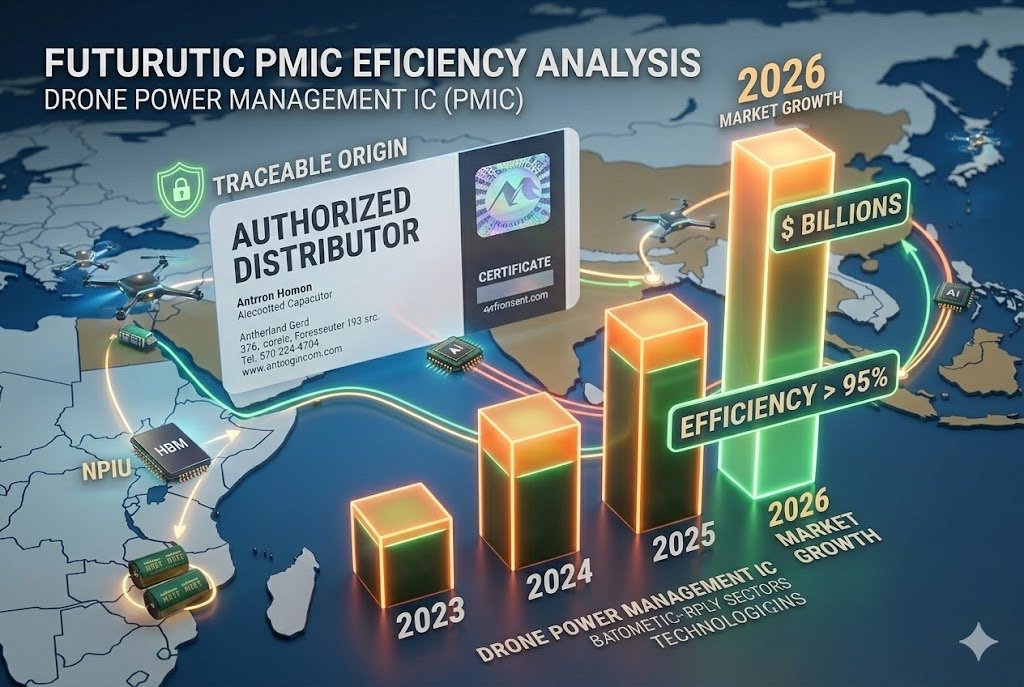
I remember a client who built agricultural drones. They used standard PMICs to save money. During a hot summer day, the chips overheated. The drones shut down in mid-air and crashed into the fields. They lost thousands of dollars in hardware in just one afternoon.
The Need for High Energy Efficiency
Drones carry heavy loads. They drain batteries very fast. A specialized PMIC changes everything. It converts battery power to motor power with very little waste. Less waste means less heat. Less heat means the drone can fly longer and carry more weight safely.
Breaking Down the PMIC Choice
Hardware engineers must look at specific traits when choosing a PMIC for drones. You cannot just pick the cheapest option.
| PMIC Feature | Why It Matters for Drones | Risk of Using Cheap Parts |
|---|---|---|
| High Efficiency9 | Longer flight time | Drones fall out of the sky |
| Thermal Control10 | Stops overheating | Chips burn out in summer |
| Voltage Stability | Smooth motor control | Shaky flights and bad video |
At Nexcir, we always tell our clients to never cut corners on power chips. We source 100% authentic PMICs from top brands. This guarantees your drones will fly exactly as your engineers planned.
Why are communication chips critical for anti-interference in drones?
City skies are full of radio noise. Your drone loses its signal and flies blind, putting people at risk. How do you keep a strong link in crowded areas?
Specialized communication chips use advanced anti-interference technology to maintain a strong signal. They constantly switch frequencies to avoid crowded radio bands. This ensures the drone receives every command clearly and sends high-quality video back to the pilot, even in dense cities.
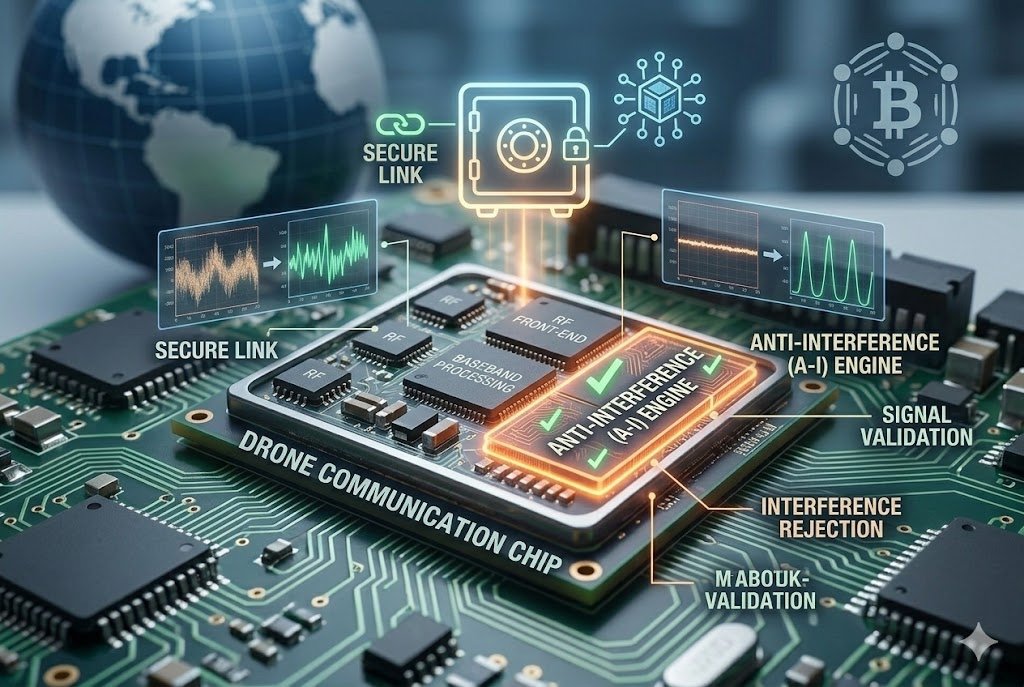
A few years ago, I watched a drone delivery test in a busy city center. The drone was supposed to drop a package on a roof. Suddenly, the video feed died. The local Wi-Fi and cell towers blocked the drone's signal. The test failed completely.
The Threat of Signal Jamming
In a low-altitude economy1, thousands of drones will fly at the same time. They will all talk to their bases. The air will be full of radio waves. If a drone uses a weak communication chip, it will get confused. It might lose its GPS or drop its control link.
The Anti-Interference Solution
Hardware teams must buy chips built for this exact problem. Standard radio chips fail in cities.
| Chip Requirement | Function | Real-World Benefit |
|---|---|---|
| Frequency Hopping11 | Changes channels fast | Avoids crowded radio spaces |
| High Sensitivity12 | Picks up weak signals | Keeps control at long ranges |
| Low Latency | Sends data instantly | Prevents crashes near buildings |
Procurement managers must find these specific parts. Because these chips are complex, counterfeiters try to copy them. At Nexcir, our global supply network ensures you only get original, factory-sealed communication chips. This protects your brand and keeps the skies safe.
How can buyers secure stable pricing for these high-demand chips?
Chip prices jump up and down every month. You blow your budget and delay production because you cannot find parts. How do you stop this supply chain nightmare?
Buyers can secure stable pricing by partnering with an experienced, global distributor. A trusted partner uses long-term supply programs and bulk sourcing to lock in prices. This protects your budget from market shocks and guarantees you have the chips ready when production starts.
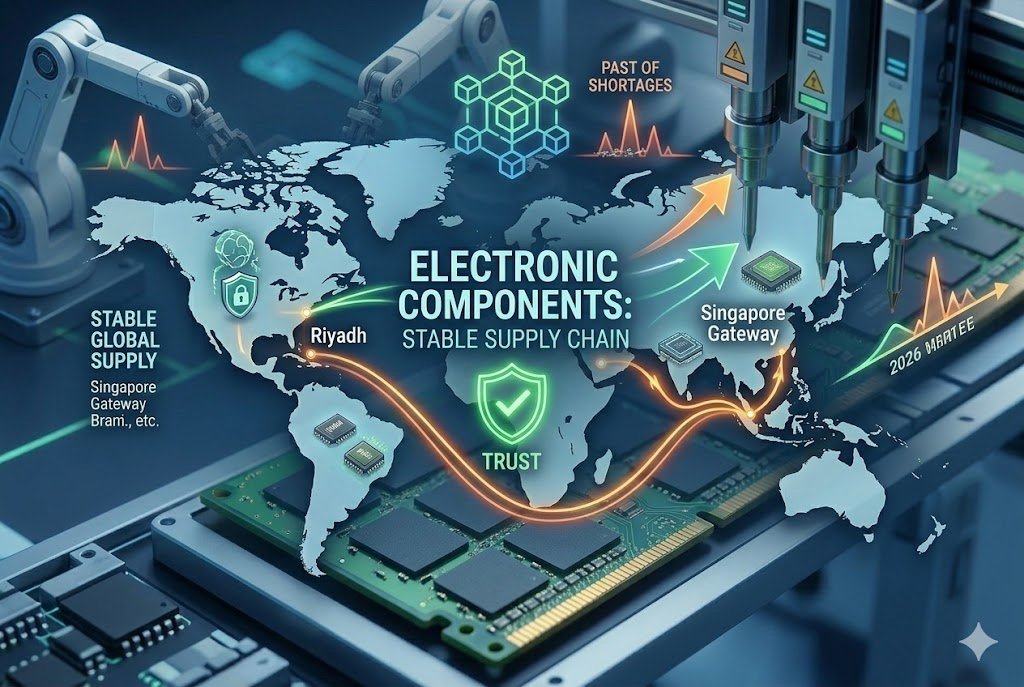
I talk to purchasing managers every day. Their biggest fear is the allocation phase. This is when chip makers cannot produce enough parts. Prices go up by huge amounts overnight. When the drone boom hits in 2026, this will happen to PMICs and communication chips.
The Risk of the Spot Market
If you wait until you need the parts, you will buy from the spot market. The spot market is dangerous. You will pay too much. You might also buy fake parts from bad sellers. Fake chips will destroy your drones and ruin your company name.
A Better Procurement Strategy
You need a clear plan to beat the rush. You must act before the market gets crazy.
| Procurement Strategy | Action to Take | Result for Your Company |
|---|---|---|
| Long-Term Planning13 | Share forecasts with Nexcir | We secure stock early |
| Global Sourcing14 | Use our worldwide network | Find parts others cannot |
| Quality Control15 | Buy only authorized parts | Zero risk of fake chips |
Our core team at Nexcir has over 20 years of experience. We know how to track market changes. We help you find alternative parts if your main choice is gone. We give you stable prices and real parts.
Conclusion
The low-altitude economy1 brings a trillion-dollar chance by 2026. Secure your high-efficiency PMICs and anti-interference communication chips now with a trusted partner to ensure safe, profitable drone flights.
Understanding the low-altitude economy is crucial for grasping the future of drone technology and its economic impact. ↩
Exploring the market potential reveals opportunities for growth and investment in drone technology. ↩
Exploring PMICs can reveal how they enhance drone performance and battery life, essential for long-distance flights. ↩
Learn how communication chips prevent signal loss, ensuring safe and reliable drone operations in crowded areas. ↩
Discover how standardized aviation rules will enable mass production and reduce regulatory hurdles for drone manufacturers. ↩
Specialized chips are designed to withstand harsh conditions, crucial for reliable drone operations. ↩
Understanding UAM rules is key to predicting how drones will integrate into urban environments and airspace. ↩
PMICs are vital for maximizing battery efficiency, extending flight times, and ensuring safe drone operations. ↩
High efficiency in PMICs reduces energy waste, allowing drones to fly longer and carry heavier loads. ↩
Thermal control prevents overheating, ensuring drones operate safely even in extreme temperatures. ↩
Frequency hopping avoids crowded radio bands, maintaining strong communication links in busy environments. ↩
High sensitivity ensures drones can pick up weak signals, maintaining control over long distances. ↩
Long-term planning with distributors can lock in prices, protecting budgets from market fluctuations. ↩
Global sourcing provides access to a wider range of parts, reducing the risk of shortages and counterfeit products. ↩
Quality control ensures authenticity, preventing the use of fake chips that could compromise drone safety. ↩