Street lights fail unexpectedly, causing safety issues and high repair costs for municipalities. You need a driver solution that withstands harsh outdoor conditions while keeping design simple.
The LNK413EG through LNK420EG series1s://www.digikey.com/en/products/detail/power-integrations/LNK420EG/4172044)2 series integrates a 725V power MOSFET3 with a controller. This design improves reliability by reducing component count, enhancing surge protection against lightning4, and allowing a single PCB layout to cover power ranges from 10W to 80W.
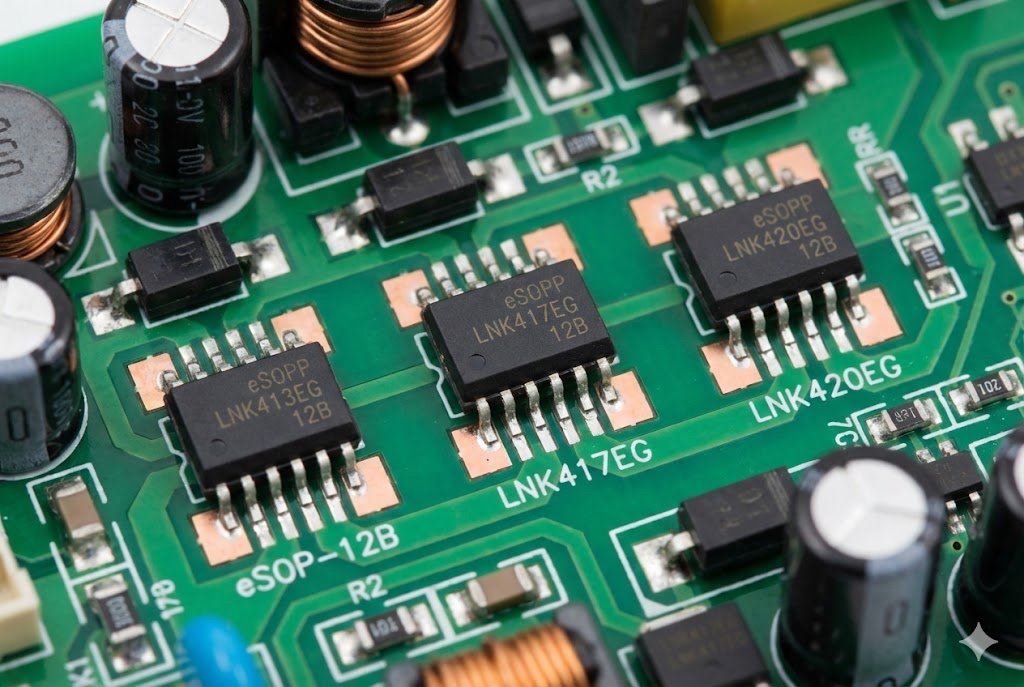
Many engineers stick to old designs because they fear change. They think separate components offer more control. But this mindset leads to higher costs and more points of failure. I have seen projects fail because the design was too complex for the real world. You want to know why the top manufacturers are switching to integrated solutions5 like the LinkSwitch-PH family. Read on to see how this specific series solves your biggest headaches.
LOOP START
How does the integrated 725V MOSFET improve surge protection?
Lightning strikes destroy sensitive electronics instantly. Replacing fried drivers is a logistical nightmare. You need built-in toughness to survive voltage spikes without adding expensive external filters.
The 725V MOSFET inside the LNK413-420 series works with internal self-biasing circuits6 to handle high-voltage transients. It reacts faster than external setups, protecting the driver from 2kV surges common in outdoor environments.
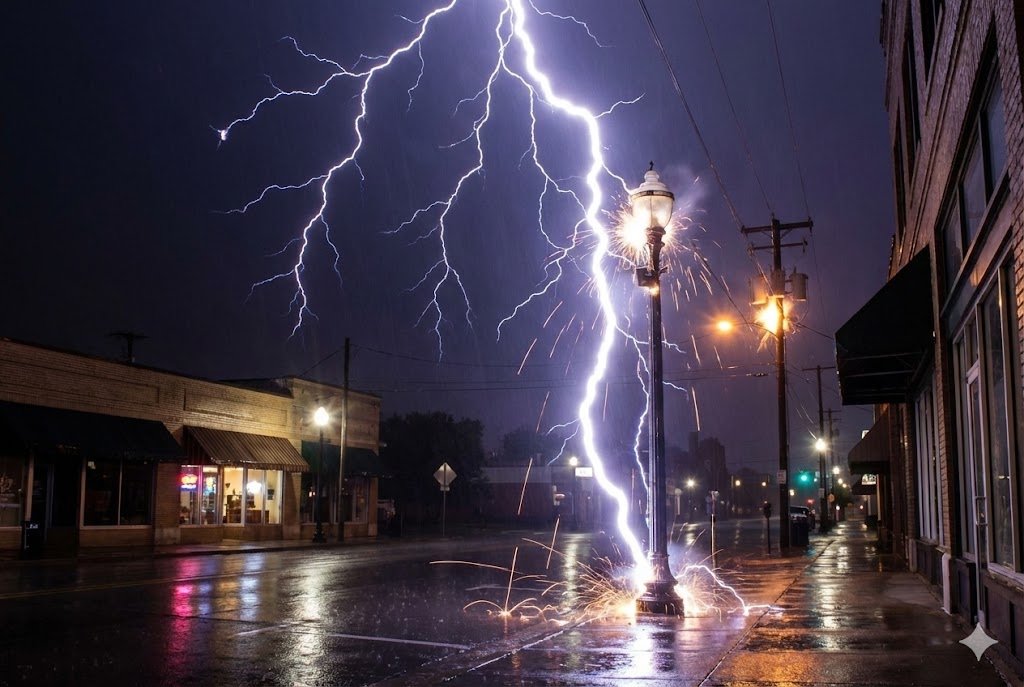
I want to talk about a specific problem we see at Nexcir7. Outdoor street lights face a huge risk from lightning and grid instability. A standard driver design uses a controller chip connected to a separate, external MOSFET. This sounds fine on paper. But in reality, the connection between those two parts is a weak point.
The LNK413-420 series changes this game. It puts the 725V power MOSFET3 and the controller in the same package. This is not just about saving space. It is about speed. When a lightning strike hits near a street light, a massive voltage spike travels down the wire. This can easily reach 2kV or more.
In the old "Controller + External MOS" design, the signal has to travel across the board traces to tell the MOSFET to shut down or clamp the voltage. That tiny delay is enough to kill the driver. The LNK series has a synergy between the MOSFET and the internal self-powered circuit. They are on the same piece of silicon. The reaction is almost instant.
I often explain this to our clients using a simple comparison.
Surge Response Comparison
| Feature | Integrated Solution (LNK413-420) | Discrete Solution (Controller + Ext. MOS) |
|---|---|---|
| Reaction Time | Instant (Internal logic) | Delayed (Trace inductance & capacitance) |
| Voltage Rating | 725V Breakdown Voltage | Varies (Often lower to save cost) |
| Protection Mode | Auto-restart & Hysteretic Thermal Shutdown | Often requires fuse replacement or full failure |
| Circuit Complexity | Low (Fewer parts to fail) | High (More solder joints, more risk) |
| Reliability | High (Tested as a single unit) | Moderate (Dependent on assembly quality) |
You can see the difference. The integrated solution handles the 2kV transient voltage much better. It enters protection mode immediately. This prevents the "thermal runaway8" that causes street lights to burn out. For a procurement manager, this means fewer warranty claims. For an engineer, it means passing safety certifications9 is much easier. We always recommend this integrated approach for outdoor applications where maintenance is difficult.
LOOP END
LOOP START
Can one PCB layout really cover 10W to 80W power ranges?
Designing a new board for every wattage is a waste of money. It slows down your time to market. There is a smarter way to handle diverse product lines.
Yes, because the EG package pins are consistent across the LNK413-420 series. You can use one standard PCB design and simply swap the chip to adjust power output, saving significant R&D time and inventory costs.
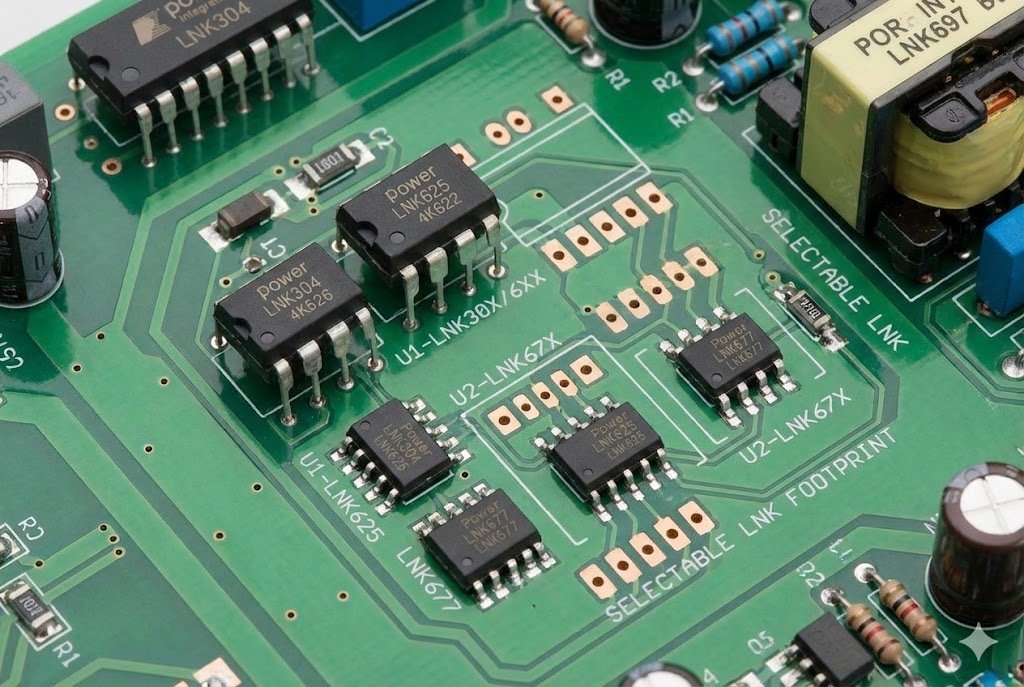
I work with many trading partners and OEM factories. Their biggest complaint is inventory management. They have a 20W light, a 50W light, and an 80W light. Usually, this means three different driver boards. That means three different Bills of Materials (BOM). That means three times the R&D testing.
The LNK413EG to LNK420EG2 series solves this with "Power Density Balance10." This is a massive advantage that some engineers overlook. All these chips share the same "EG" package type. The pin configuration is identical.
You can design one single printed circuit board (PCB). When you need to build a 15W driver, you place the LNK415EG. When you need a 35W driver, you place the LNK417EG on the exact same board. You might need to change a transformer winding or a capacitor value, but the core layout remains the same.
This concept is "One circuit, full power range coverage11." It drastically lowers your development costs. You only need to pay for safety certification on one base design.
Here is how the power scales across the family in a typical high-line voltage application:
Power Output Capability (Typical)
| Part Number | Output Power (Open Frame) | Typical Application |
|---|---|---|
| LNK413EG | 12 W | Pathway Lighting / Bollards |
| LNK416EG | 26 W | Residential Street Light |
| LNK417EG | 37 W | Parking Lot Lighting |
| LNK419EG | 62 W | Highway Lighting |
| LNK420EG2 | 78 W | High-Mast Area Lighting |
Note: Actual power depends on thermal management and input voltage.
At Nexcir7, we advise our clients to stock the PCB and the passive components as a standard set. Then, they buy the specific LNK chip based on the order they receive from their customer. This flexibility is crucial in today's market where lead times fluctuate. You do not get stuck with 5,000 boards that only work for 10W lights when the market suddenly wants 50W. You just swap the chip. This is strategic supply chain optimization12.
LOOP END
LOOP START
Why is sourcing original LNK series chips critical for long-term reliability?
Counterfeit chips13 are flooding the market. They explode after a few months. You risk your reputation and safety if you buy from unverified sources.
Only authorized distributors14 guarantee the specific breakdown voltage and thermal performance required. Fake chips often fail the 725V test, leading to catastrophic failure in street lights.
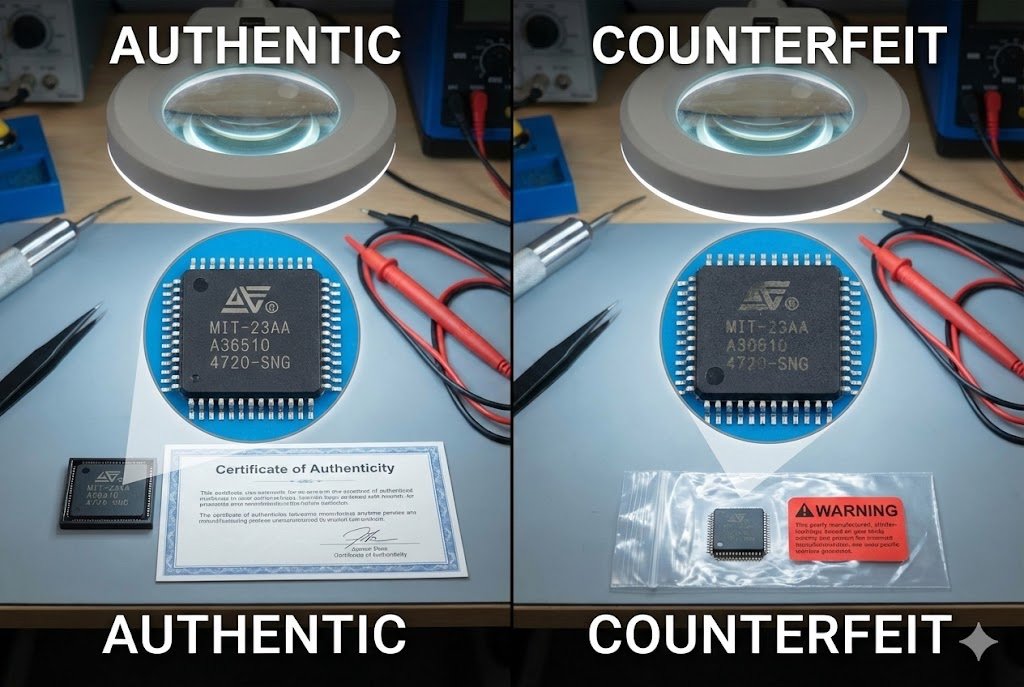
We talk about specs and design, but none of it matters if the chip is fake. In the semiconductor market, popular chips like the LNK series are often copied. These copies look the same on the outside. But inside, they are dangerous.
I have seen "refurbished" chips sold as new. These are pulled from old electronics. They have been stressed by heat for years. Putting them into a new street light is a recipe for disaster. The 725V MOSFET inside a real Power Integrations chip is a precise piece of engineering. A fake chip might only handle 500V.
When that lightning surge hits, the fake chip does not protect the circuit. It explodes. This causes a fire risk. It also means the street light goes dark. If that light is on a busy highway, it creates a traffic hazard.
At Nexcir7, we only source from authorized channels. We ensure that the LNK420EG2 you buy is actually an LNK420EG2, not a smaller LNK413EG that someone relabeled to sell for a higher price. This "remarking" is a common scam. A smaller chip cannot handle the heat of a high-power application. It will burn out in days.
The Risks of Non-Original Components
| Risk Factor | Original Component | Counterfeit/Remarked Component |
|---|---|---|
| MOSFET Rating | Guaranteed 725V | Unknown (Often <500V) |
| Thermal Protection | Precise shutdown at limit | Often missing or inaccurate |
| Lifecycle | 50,000+ hours | Unpredictable (can fail in <100 hours) |
| Traceability | Full lot tracking | None |
We help our clients avoid these traps. We check the packaging. We check the die. We ensure the provenance. Your business relies on trust. Delivering a product that fails in three months destroys that trust. Spending a few cents less on a grey-market chip is never worth the cost of a recall. We stand by the quality of every component we ship to ensure your production schedule remains stable and your final product is safe.
LOOP END
Conclusion
The LNK413-420 series offers superior surge protection and flexible design options for street lights. Sourcing authentic parts ensures these benefits actually work in the field.
Explore the features of this series to understand how it enhances reliability and reduces component count in street light drivers. ↩
Explore the specifications of the LNK420EG chip to understand its applications in high-power electronic devices. ↩
Learn how a 725V power MOSFET provides superior surge protection, crucial for outdoor electronics like street lights. ↩
Understand the mechanisms that protect electronics from lightning-induced surges, ensuring longevity and reliability. ↩
Discover why integrated solutions reduce failure points and costs, offering a more reliable design for electronic devices. ↩
Explore how internal self-biasing circuits enhance the response time and protection of electronic components. ↩
Learn about Nexcir's contributions to the electronics industry, particularly in providing reliable components and solutions. ↩
Understand the concept of thermal runaway and how integrated solutions help prevent it in electronic devices. ↩
Discover the role of safety certifications in ensuring the reliability and compliance of electronic devices. ↩
Learn about Power Density Balance and how it allows for flexible power output in electronic devices. ↩
Discover the benefits of using a single circuit design to accommodate various power outputs, saving time and costs. ↩
Explore strategies for optimizing supply chains to reduce costs and improve efficiency in electronics production. ↩
Learn about the dangers of using counterfeit chips, which can lead to failures and safety hazards in electronic devices. ↩
Understand the importance of sourcing components from authorized distributors to ensure quality and reliability. ↩