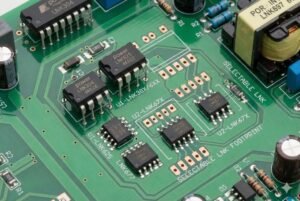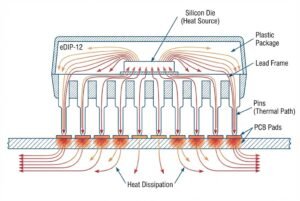
Do your mixed-voltage circuits1 fail randomly? Ignoring logic levels breaks your hard work and delays production. You must learn digital logic rules2 to fix these bad errors quickly.
Mastering T-Logic means you must understand how Transistor-Transistor Logic3 and CMOS gates4 read digital signals. The main rule is matching input and output voltage limits5. This match creates clear 1s and 0s. Proper matching stops signal loss when you connect different logic families in your modern electronic boards.
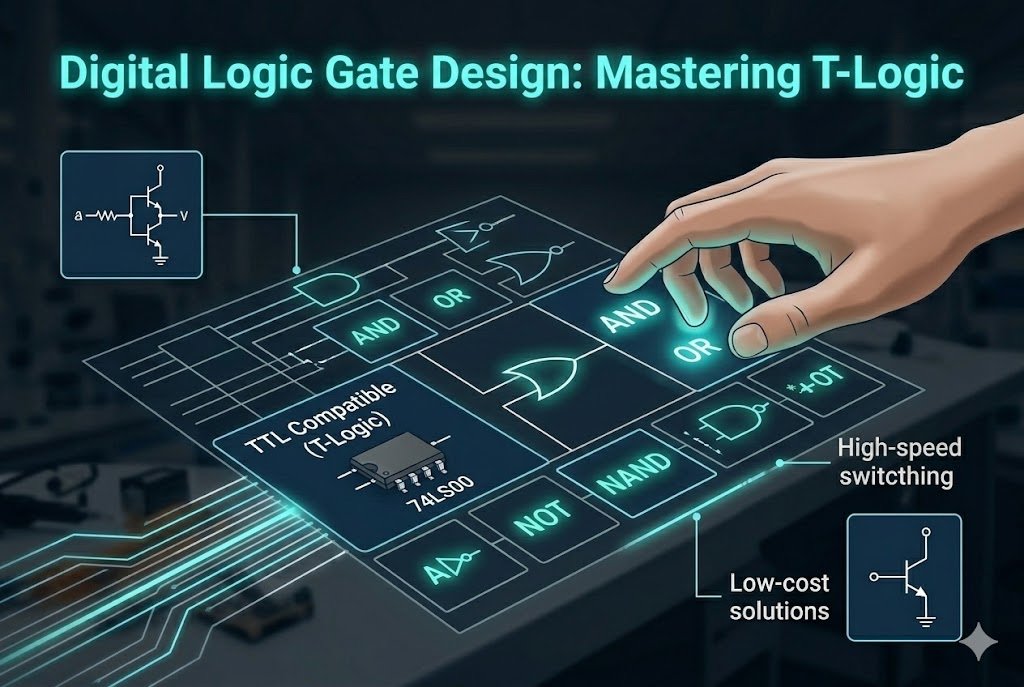
I want to share how we handle these logic problems at Nexcir6. Last month, a hardware engineer called me. His new IoT board kept crashing. I looked at his board plan. He connected an old 5V sensor directly to a modern 3.3V chip. The logic levels did not match. I helped him pick the right level shifter7. His board worked perfectly after that. You need to know these rules to avoid bad designs. Keep reading to learn how to build stable circuits.
What is T-Logic and why is mastering-t-logic important for engineers?
Do your new microchips fail to talk to old sensors? This silent gap breaks your system. Knowing the basics of TTL saves your board from permanent damage.
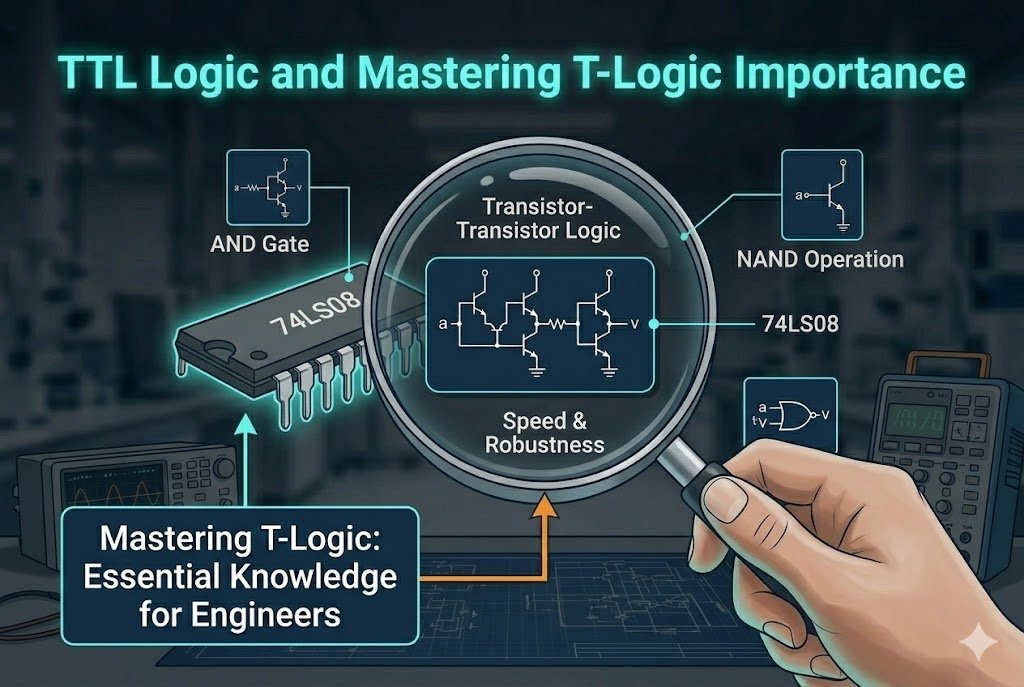
Mastering-t-logic requires you to know Transistor-Transistor Logic3. TTL is a classic digital circuit design. It uses bipolar transistors. It created the standard for 5V systems8. Knowing this helps you connect old sensors to modern low-voltage processors safely. You will not burn your expensive chips.
The Core Functions of T-Logic
I often see engineers struggle with old parts. You must understand how TTL works inside. TTL uses bipolar junction transistors9 to switch states. These transistors need a steady flow of current. This is very different from modern chips. Modern chips use voltage to switch. I remember a project last year. A client needed thousands of old 7400 series logic gates. They used them for a factory machine. The original parts were hard to find. At Nexcir6, our team used our 20 years of experience. We found 100% original parts from our global network.
Why Old Logic Still Matters
Many factory machines still run on 5V TTL. You cannot just throw them away. You must design new boards that can talk to these old machines. This is why mastering-t-logic is a great skill. You must know the exact voltage rules. I made a table to show the basic features of standard TTL.
| Feature | Description | Importance for Design |
|---|---|---|
| Power Supply | Usually 5V | Sets the base for your power lines |
| Switch Speed | Fast | Good for quick signal changes |
| Power Use | High | Needs good heat cooling on your board |
| Drive Type | Current-driven | You must count the load carefully |
You must follow these rules. If you ignore them, your parts will overheat. We always remind our OEM clients to check their power needs. We want your production to run smoothly.
How do TTL and CMOS logic levels compare in real designs?
Do you mix old and new chips without reading the data sheets? This bad habit creates hidden errors. Let us look at the real differences.
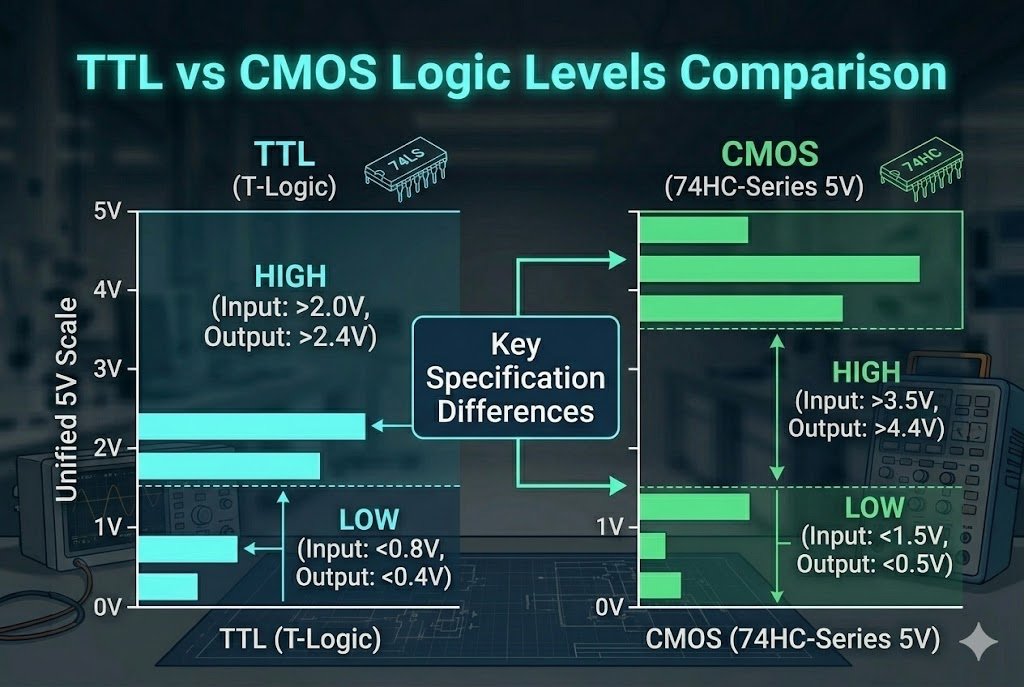
TTL uses current-driven bipolar transistors. CMOS uses voltage-driven MOSFETs. TTL uses more power but switches fast. CMOS uses almost zero power when it rests. Their high and low voltage rules are very different. This difference is the main cause of connection errors in mixed systems.
Understanding the Voltage Rules
I always tell hardware engineers to read the data sheets. You must look at V_IH, V_IL, V_OH, and V_OL. V_IH is the lowest input voltage for a high signal. V_IL is the highest input voltage for a low signal. V_OH is the lowest output voltage for a high signal. V_OL is the highest output voltage for a low signal. I helped a client last year. Their production line stopped. Their TTL chip sent a 2.4V high signal. Their CMOS chip needed 3.5V to see a high signal. The CMOS chip saw nothing. The system failed.
The Danger of Direct Wires
You cannot just connect a wire between them. You must check the numbers. If you do not check, you face big buying risks later. You might buy the wrong parts. Here is a simple table to compare standard 5V TTL and 5V CMOS levels.
| Logic Family | Max Low In | Min High In | Max Low Out | Min High Out |
|---|---|---|---|---|
| 5V TTL | 0.8V | 2.0V | 0.4V | 2.4V |
| 5V CMOS | 1.5V | 3.5V | 0.1V | 4.9V |
Look at the table. The TTL high output is 2.4V. The CMOS high input needs 3.5V. The TTL chip cannot drive the CMOS chip. I always check these numbers when I buy parts for Nexcir6 customers. We make sure you get the right chips for your exact needs.
How do you fix TTL and CMOS compatibility in mixed-voltage systems?
Is your 3.3V processor failing to read a 5V sensor? Direct connections will drop signals or burn your pins. You need the right fix to protect your board.
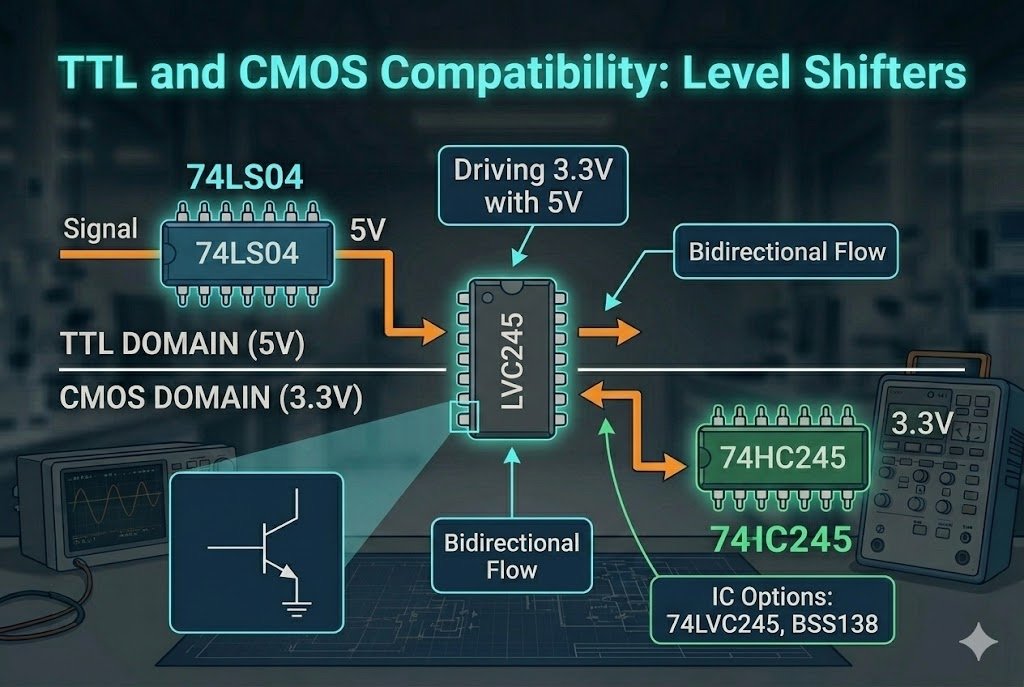
To connect TTL and CMOS safely, you must use level shifter7s or logic buffer chips10. A 5V TTL signal often fails to trigger a 5V CMOS input. Using a special level translator chip11 makes a clean signal. This chip protects your system and stops random data errors.
Using Level Shifter Chips
Mastering-t-logic means knowing how to fix the gap. I strongly suggest using special level shifter7 chips. These chips sit between your TTL and CMOS parts. They take the 2.4V signal from the TTL chip. They boost it to the 5V signal the CMOS chip needs. I buy many of these chips for car and IoT clients. They need fast global shipping to get these parts. We provide that at Nexcir6. We make sure they get 100% original chips. Fake level shifter7s will fail under high heat. You do not want a fake chip in a car.
Pull-Up Resistors and Fast Gates
Sometimes you can use a simple pull-up resistor12. You connect it to the 5V power line. This pulls the TTL high signal up to 5V. But this is slow. It wastes power. A better way is using a logic family like HCT. HCT means High-Speed CMOS with TTL inputs.
| Fix Type | Speed | Cost | Best Use Case |
|---|---|---|---|
| Pull-up Resistor | Slow | Very Low | Simple and slow sensor reading |
| HCT Logic Gate | Fast | Low | Changing old TTL chips directly |
| Two-Power Shifter | Very Fast | Medium | Hard mixed-voltage boards |
I always ask my clients about their speed needs. If they need high speed, I suggest the two-power shifter. We help lower buying costs by finding the best price for these real chips. We want your supply chain13 to be very fast.
Why does sourcing authentic logic ICs matter for your production?
Are fake logic chips14 causing your assembly line to stop? Fake parts break under high heat. Buying real chips keeps your production moving and saves your money.
Buying original logic chips makes sure you get exact voltage limits5 and safe speeds. Real parts stop sudden system crashes. Fake parts have weak metal inside. At Nexcir6, we supply only real parts from trusted makers. This makes sure your designs work exactly as you planned.
The Hidden Costs of Fake Parts
I see many companies try to save a few cents. They buy chips from unknown sellers. This is a huge mistake. Fake logic gates look real on the outside. But inside, the metal is wrong. The voltage rules are not stable. A fake TTL chip might send 1.5V instead of 2.4V. Your system will fail. You will spend weeks trying to find the problem. You will lose money. Production will stop. I hate seeing this happen. This is why Nexcir6 focuses on real parts. All our channels come from real makers.
Building a Safe Supply Chain
You need a partner you can trust. Our core team has over 20 years of experience. We know the electronic parts market deeply. We know how to spot bad sellers. We provide clear service. We give you full truth.
| Buying Risk | Bad Result | The Nexcir6 Fix |
|---|---|---|
| Fake Chips | System crashes | 100% real parts promise |
| Price Jumps | High costs | Stable and low prices |
| Late Boxes | Production stops | Fast global shipping network |
I always work hard to lower your buying costs. I want to make your business stronger. When you master your logic designs, we master your supply chain13. We grow together. Next Circuit, Next Future.
Conclusion
Mastering-t-logic and knowing TTL-CMOS rules makes stable mixed-voltage designs. Always check voltage limits5. Buy real chips from trusted partners like Nexcir6 to build safe and lasting electronic systems.
Understanding mixed-voltage circuits helps prevent random failures and ensures stable electronic designs. ↩
Learning digital logic rules is crucial for fixing errors and ensuring smooth production in electronic systems. ↩
Transistor-Transistor Logic is essential for understanding how digital signals are read and processed in electronic circuits. ↩
CMOS gates are vital for modern electronic designs, and understanding them helps in creating efficient circuits. ↩
Checking voltage limits prevents mismatches and ensures stable operation of mixed-voltage electronic systems. ↩
Nexcir provides authentic electronic components and reliable supply chain solutions, ensuring smooth production. ↩
Using the right level shifter can prevent mismatched logic levels and ensure proper functioning of mixed-voltage systems. ↩
5V systems set the standard for power supply in digital circuits, ensuring compatibility and stability. ↩
Bipolar junction transistors are key components in TTL circuits, and understanding them aids in effective circuit design. ↩
Logic buffer chips are crucial for safely connecting TTL and CMOS components, preventing signal loss and errors. ↩
Level translator chips ensure clean signal transmission between different logic families, preventing data errors. ↩
Pull-up resistors can help adjust signal levels, but understanding their limitations is important for efficient design. ↩
A trustworthy supply chain ensures timely delivery of authentic parts, preventing production delays and failures. ↩
Using fake logic chips can lead to system failures and increased costs, making sourcing authentic parts crucial. ↩