
leading paragraph: You might ignore a simple diode on your list. But using the wrong rectifier in your power supply will burn your board and stop your production line.
snippet paragraph: The main difference is current capacity1 and heat handling2. The 1N40073 is rated for 1A and fits low-power logic circuits. The 1N54084 handles 3A and suits main power inputs. The 1N54084 has a larger body to dissipate heat better. You must match the rating to your load.
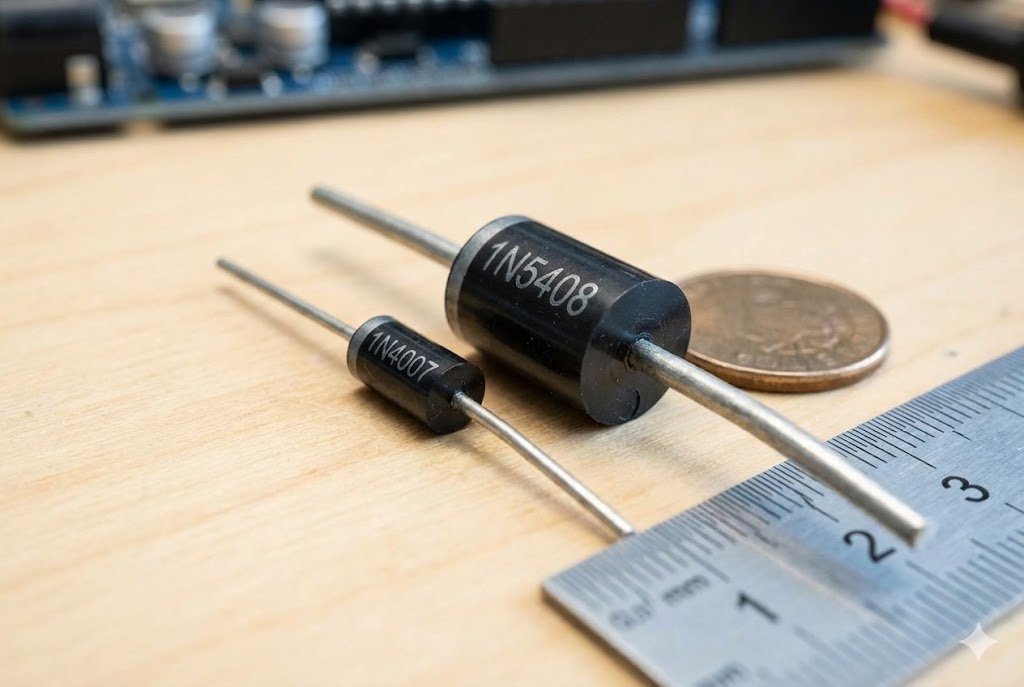
Transition Paragraph: I see many engineers make simple mistakes with these parts. We will look at the data, the alternatives, and the best ways to use them in your design.
LOOP START
What Are the Critical Technical Spec Differences?
leading paragraph: Datasheets are often long and hard to read quickly. If you miss one thermal number, your product might fail in the field after a few months.
snippet paragraph: The 1N40073 is a 1A, 1000V diode in a small DO-41 package. The 1N54084 is a 3A, 1000V diode in a larger DO-201AD package. The voltage is the same, but the 1N54084 handles three times the current and manages surge currents much better.
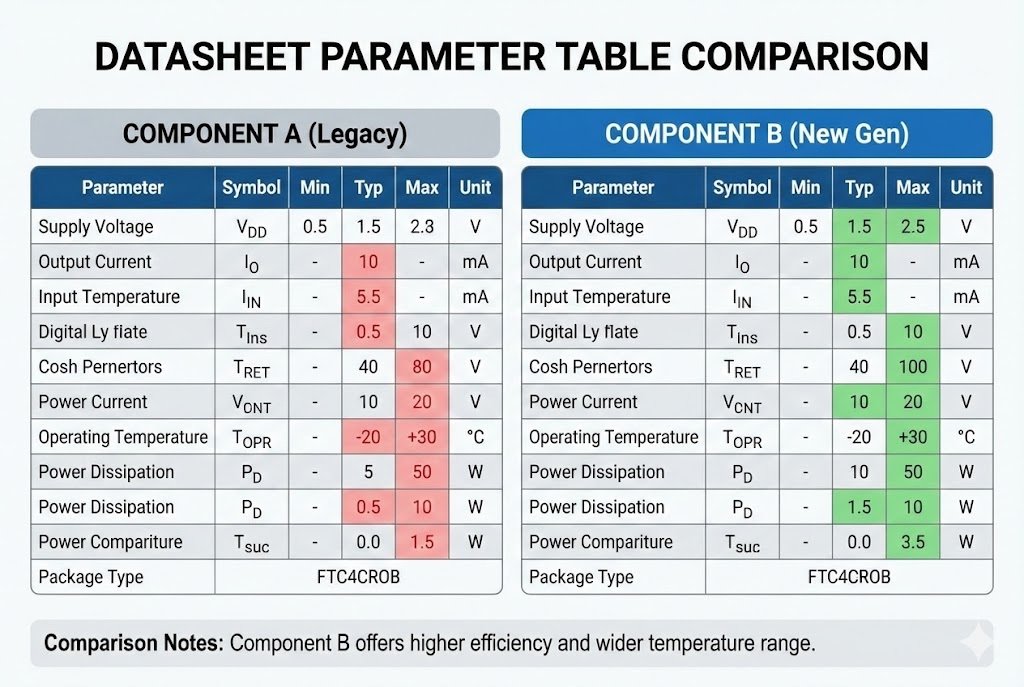
Dive deeper Paragraph: I want to break down the numbers so you can see why they matter. We see these two parts on almost every Bill of Materials (BOM)5 at NexCir. They look similar on paper, but they act differently in real life. The most important numbers are the Average Rectified Forward Current%%%FOOTNOTE_REF6%%% ($I{F(AV)}$) and the Surge Current%%%FOOTNOTE_REF7%%% ($I{FSM}$).
Here is a simple breakdown of the key data:
| Feature | 1N40073 | 1N54084 | Why it Matters |
|---|---|---|---|
| Max Current | 1.0 Amps | 3.0 Amps | Determines the load you can power. |
| Voltage | 1000 Volts | 1000 Volts | Both handle high voltage spikes. |
| Surge Current7 | 30 Amps | 200 Amps | Critical for startup "inrush" current. |
| Package | DO-41 (Small) | DO-201AD (Large) | Larger size cools down faster. |
| Lead Diameter | ~0.8 mm | ~1.2 mm | Thicker leads carry more current safely. |
You can see that the 1N54084 is much stronger. The Surge Current7 is a big deal. When you turn on a power supply, the capacitors suck in a lot of power very fast. This is called inrush current8. The 1N40073 can only take a 30A hit. The 1N54084 can take 200A. If your design has big capacitors, a 1N40073 might pop immediately. Also, the physical size matters. The 1N54084 has a fat body and thick wire leads. These leads help pull heat away from the chip inside. If you try to push 1.5A through a 1N40073, it will get very hot and fail. The 1N54084 will stay cool at that level.
LOOP END
LOOP START
Which Alternatives Can You Use When Parts Are Missing?
leading paragraph: Supply chains break when you least expect it. You need to know your backup options right now so you do not have to redesign your board later.
snippet paragraph: For the 1N40073, you can use the M7 (SMD version) or 1N4004 through 1N4006 if the voltage is lower. For the 1N54084, use the 1N5400 series or the 6A10 for more power. Always check the Reverse Voltage9 (VRRM) before you swap them.
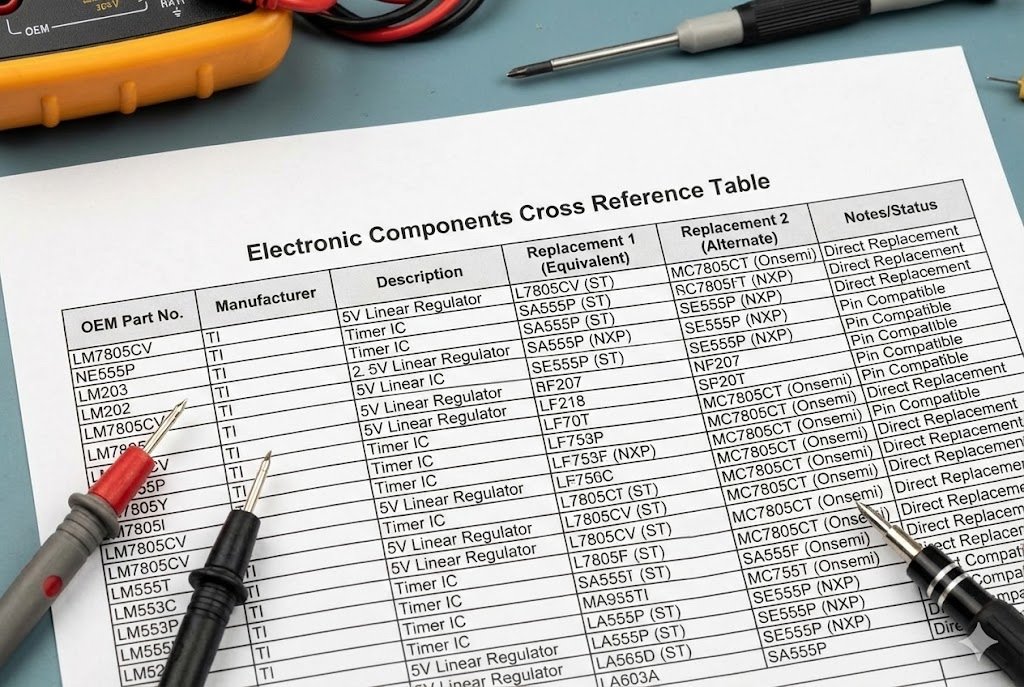
Dive deeper Paragraph: We often see customers panic when a simple part goes out of stock. It is a low-cost item, but it stops the whole factory. At NexCir, we help you plan for this. You should list approved alternatives on your BOM before you start buying. This is called "second sourcing10."
Here are the common swap options we recommend to our clients:
- M7: This is the exact same chip but in an SMA surface-mount package. If you can change your PCB layout, use this. It is cheaper and easier to assemble.
- 1N4005 / 1N4006: These are the same size but have lower voltage ratings (600V or 800V). If your circuit only runs at 24V or 110V, these work perfectly fine.
- UF4007: This is the "Ultra Fast" version. It works the same but switches faster. It is usually more expensive, but it works as a drop-in replacement in an emergency.
- RL207: A slightly smaller 2A diode. Only use this if your current is low.
- 6A10: This is a beast. It handles 6A. It is physically bigger, but if you have room on the board, it is a great safety upgrade.
- 1N5404: Same 3A current, but 400V max. Good for low-voltage lines.
A Special Note on SS34: I see many people ask about the SS34. This is a Schottky Diode11, not a standard rectifier. It has a low voltage drop (saves energy) but a low breakdown voltage (only 40V!). Do not replace a 1N40073 (1000V) with an SS34 (40V) in a high-voltage circuit. It will explode. However, for low-voltage DC outputs (like 5V or 12V), the SS34 is actually a better choice than the 1N series because it wastes less heat.
LOOP END
LOOP START
Where Should You Place Each Diode in Your Circuit?
leading paragraph: Placing a weak part in a high-stress spot is dangerous. But using a huge part for a small signal is a waste of money and board space.
snippet paragraph: Use the 1N40073 for relay flyback diodes12, auxiliary power rails, and voltage doublers. Use the 1N54084 for the main AC input bridge, battery charging paths, and anywhere the continuous current is over 1A. Keep the 1N54084 away from heat-sensitive parts.
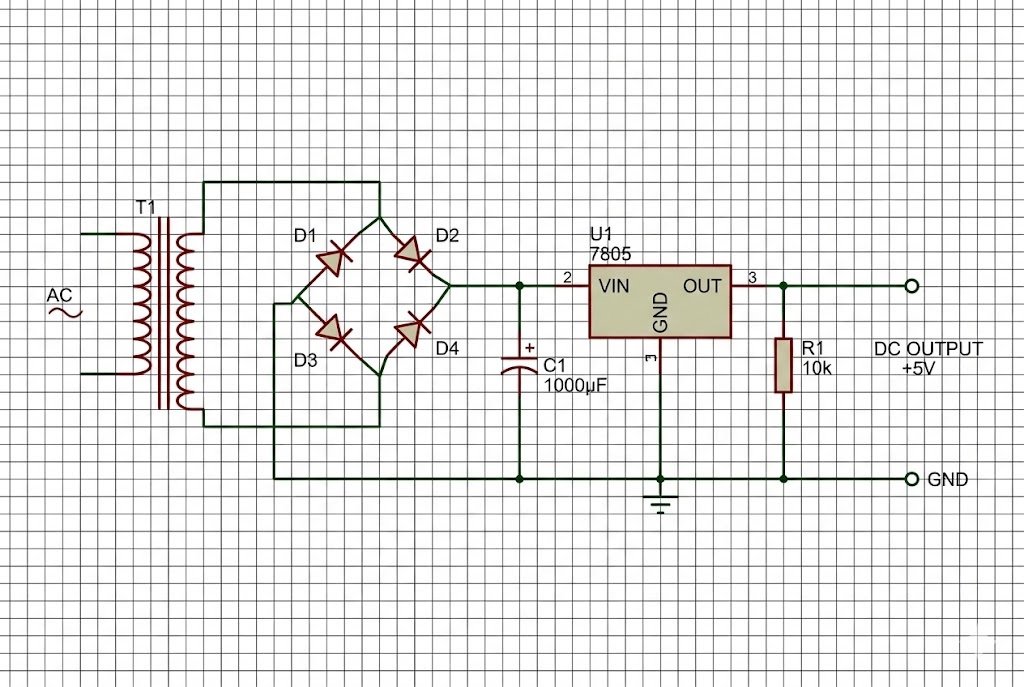
Dive deeper Paragraph: I want to share how we see these used in real designs from our OEM customers. Understanding the "job" of the diode helps you pick the right one. You do not want to just guess.
Scenario 1: Input Rectification (The Front Door) This is where power comes from the wall or a battery. The current is high here. You should use the 1N54084. If you use four of them, you make a "Bridge Rectifier13." The high surge rating of the 1N54084 is vital here because when you plug the device in, the spark is big. A 1N40073 will likely burn out after a few weeks of use in this spot.
Scenario 2: Flyback Protection (The Bodyguard) When you have a relay or a motor, it kicks back energy when you turn it off. This spike can kill your microcontroller. You need a diode across the coil to eat this energy. The current is usually small, and it happens rarely. The 1N40073 is perfect here. It is cheap, small, and tough enough for the short spike. You do not need the big 1N54084 for this.
Scenario 3: Bootstrapping and Snubbers (The Helper) In switching power supplies, you need small diodes to help move charge around or clip voltage spikes. The 1N40073 (or the faster UF4007) is the standard choice. It fits in tight spaces.
Scenario 4: Reverse Polarity Protection14 (The Gatekeeper) This protects the device if a user puts the batteries in backward. If the device uses less than 1A, use 1N40073. If it uses 2A or 3A, use 1N54084. But remember, standard diodes drop about 0.7V to 1V. This wastes power. In battery devices, we often suggest switching to the SS34 (Schottky) here because it only drops about 0.4V, so your battery lasts longer.
LOOP END
Conclusion
The 1N40073 and 1N54084 are basic but vital. NexCir stocks these globally to help you complete your full BOM. Upload your list today to secure your supply.
Understanding current capacity is crucial for selecting the right diode for your circuit design. ↩
Explore the significance of heat handling in diodes to ensure reliability in your electronic designs. ↩
Explore the 1N4007 diode's applications and specifications to understand its role in low-power circuits. ↩
Learn about the 1N5408 diode's capabilities and why it's essential for high-power applications. ↩
Learn about the significance of a BOM in managing electronic components and supply chains. ↩
Discover how Average Rectified Forward Current impacts diode performance in various applications. ↩
Learn about Surge Current and its critical role in protecting your circuits during power surges. ↩
Understanding inrush current is vital for designing reliable power supply circuits. ↩
Understanding Reverse Voltage is essential for ensuring diode compatibility in your designs. ↩
Explore the concept of second sourcing to mitigate supply chain risks in your electronic projects. ↩
Explore the benefits of Schottky Diodes for low-voltage applications and energy efficiency. ↩
Learn about the role of flyback diodes in protecting circuits from voltage spikes. ↩
Discover how a Bridge Rectifier functions and its importance in converting AC to DC. ↩
Understand the importance of Reverse Polarity Protection to prevent damage in electronic devices. ↩