Are you worried about the high cost of product certification1? Failing FCC or CE tests can destroy your budget and delay your launch.
Using pre-certified ESP32 modules2 allows you to reuse the manufacturer's FCC ID3, which saves you thousands of dollars in lab fees and months of testing time. This is the smartest choice for any project with an annual production volume under 100,000 units.
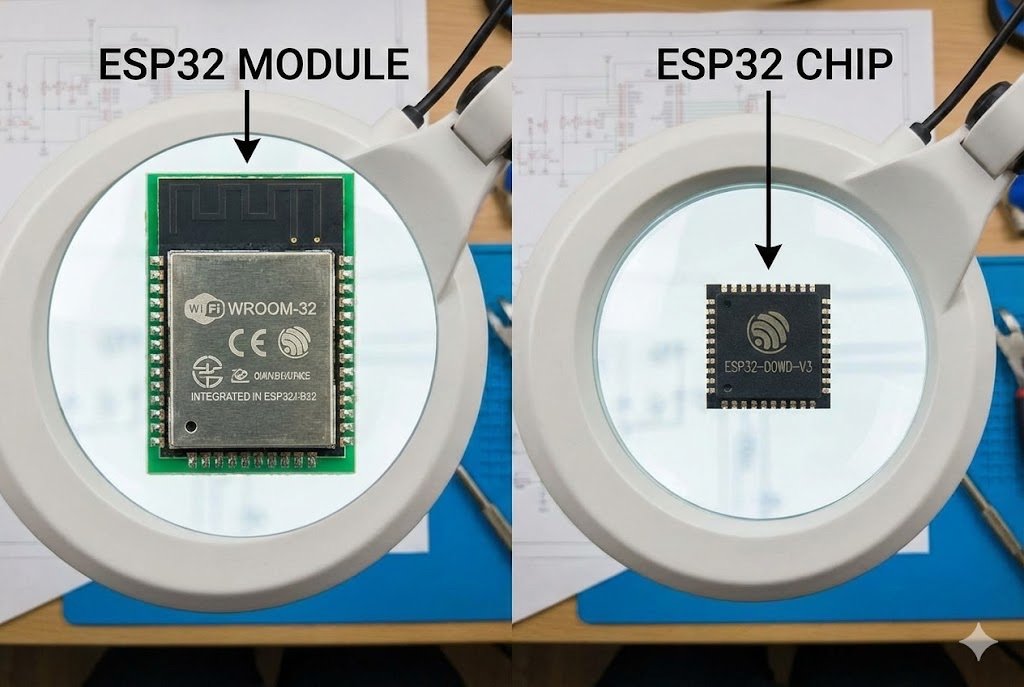
Many hardware engineers ignore this advice. They think they can save money by buying the raw chip instead of the module. They design their own antenna and circuit. Then, they go to the test lab. They fail. They spend money to fix it. They fail again. I want to stop you from making this mistake. Let us look at the real costs and why modules are the better business decision.
How much does custom RF certification4 really cost?
Certification is expensive. If you design a product with a wireless chip, you must prove it is safe. You must prove it does not interfere with other devices. This is the law.
A full FCC ID3 certification for a custom chip5-down design typically costs between $5,000 and $20,000, depending on the complexity and the number of re-tests required. This does not include the cost of your engineering time6 or the delay in sales.
I need to explain where this money goes. When you design a custom board with an ESP32 chip, you are creating an "intentional radiator7." This means your device sends out radio waves on purpose. The rules for this are very strict. You cannot just guess. You have to pay a certified laboratory to test your device.
Here is a breakdown of the typical costs I see in the industry:
| Expense Item | Estimated Cost (USD) | Notes |
|---|---|---|
| Lab Setup Fee | $1,000 - $2,000 | Just to book the room. |
| RF Testing (FCC/CE) | $3,000 - $8,000 | The actual radio tests. |
| Safety Testing | $2,000 - $5,000 | Battery, heat, and electrical safety. |
| Failure & Re-test | $2,000+ per round | Most custom designs fail the first time. |
| Engineering Salary | $5,000+ | Time spent debugging RF issues. |
The biggest problem is not the first bill. The biggest problem is failure. RF design is like black magic. You have to match the impedance perfectly. You have to shield the components. If you place a capacitor one millimeter to the left, it might change the radio frequency performance. I have seen experienced engineers struggle with this. If your design fails the test, you have to pay the lab again. You also have to redesign your board. This takes weeks. During those weeks, you cannot sell your product. That is lost revenue. At Nexcir, we often see customers rush to us after failing these tests. They realize too late that the "cheaper" chip was actually very expensive.
How do Espressif WROOM8 and WROVER modules solve this?
You do not need to do all that testing. Espressif has already done it for you. This is the beauty of "Modular Approval9."
Espressif WROOM8 and WROVER modules come with a pre-certified FCC ID3, meaning the radio performance is already verified and you do not need to repeat the expensive intentional radiator7 testing. You simply place the module on your board and list their ID.
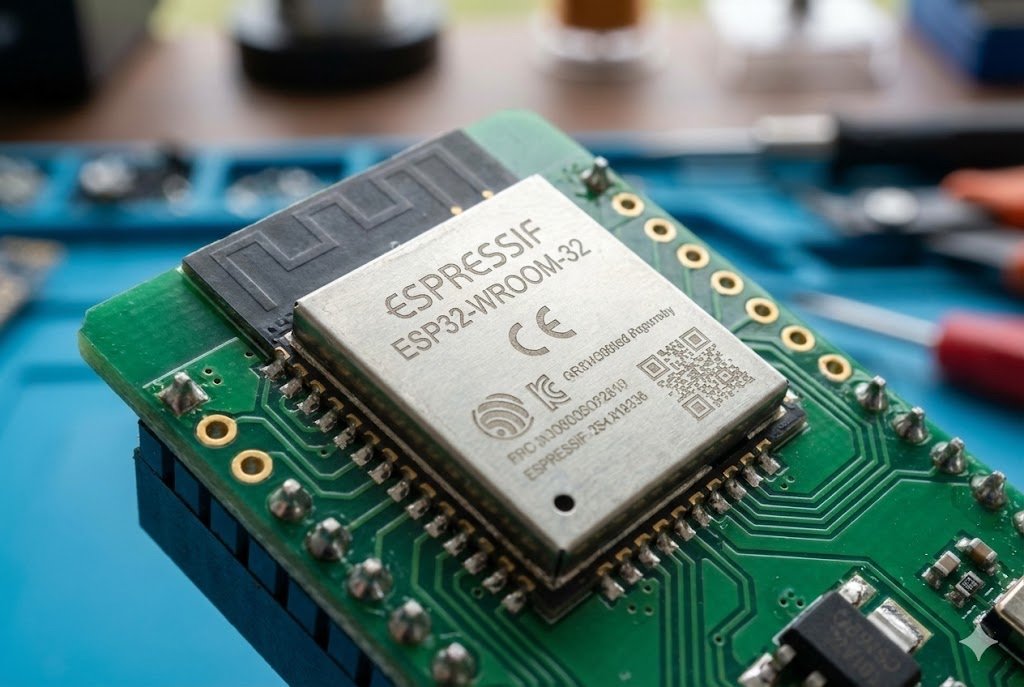
Let me explain how this works legally and technically. A module like the ESP32-WROOM-32E includes the chip, the flash memory, the crystal oscillator, and the antenna. It also includes a metal shield can. This shield is important. It stops radio noise from getting out. Because Espressif sells this as a complete package, they paid the lab fees. They paid for the FCC, CE, TELEC, and IC certifications.
When you use this module, you are "reusing" their work. You do not need to test the radio part again. You only need to test your final product for basic "unintentional radiation." This is much cheaper. It usually costs less than $1,000. It is a simple scan to make sure your other parts (like screens or buttons) are not making noise.
Here is why this is better for you:
1. No RF Expertise Needed
You do not need to hire an expensive RF consultant. The antenna is already tuned. The impedance is already matched. You just treat the module like a black box component.
2. Global Compliance
These modules usually carry certifications for many regions:
- FCC: USA
- CE: Europe
- TELEC (MIC): Japan
- IC: Canada
- KCC: Korea
- SRRC: China
If you tried to get all these certifications yourself, it would cost over $50,000. With the module, you get them for "free" as part of the purchase price.
3. Reliability
Espressif produces millions of these. The quality control is very high. At Nexcir, we source these directly from authorized channels. We know that every module performs exactly the same. If you build it yourself, you might have manufacturing variations that cause radio failure.
At what volume should you switch from modules to chips?
There is a specific number where buying chips becomes cheaper than modules. You need to do the math carefully.
For most companies, the break-even point10 is around 100,000 units per year; below this volume, the savings on the Bill of Materials (BOM) for a chip-down design are not enough to cover the high certification and engineering costs.
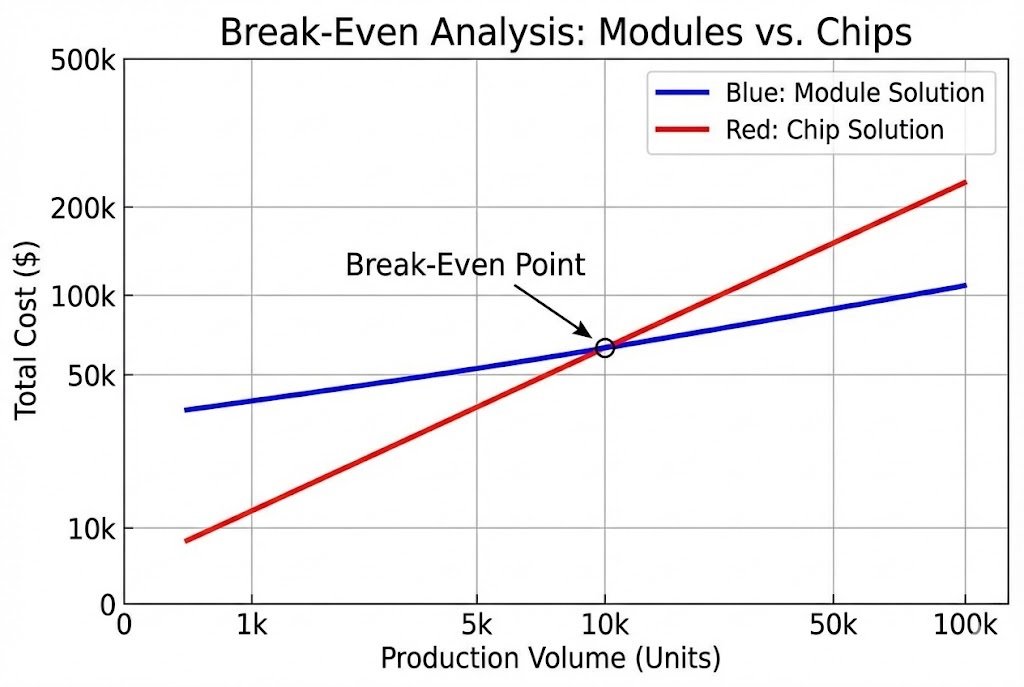
I like to use a simple calculation with my clients. Let us assume a price difference.
- Module Price: $2.50
- Chip + Parts Price: $1.50
- Savings per unit: $1.00
It looks like you save $1.00 on every unit if you build it yourself. But wait. You have fixed costs.
- Certification Cost: $15,000 (average for FCC + CE)
- RF Engineering Time: $10,000
- Antenna Design & Tuning: $5,000
- Total Fixed Cost: $30,000
Now, divide the fixed cost by the savings per unit. $30,000 / $1.00 = 30,000 units.
So, you need to sell 30,000 units just to break even. But this is a perfect scenario. In the real world, things go wrong. Production yields are lower for chip-down designs. You might have 5% of your boards fail because of bad soldering on the tiny chip pins. Modules are pre-tested, so your yield is nearly 100%.
Also, you must consider inventory management. If you build it yourself, you have to buy the chip, the flash, the crystal, the capacitors, and the inductor. That is 10 or 20 different line items to manage. If one part is out of stock, you cannot build. If you buy a module, it is just one line item.
At Nexcir, we specialize in supply chain. We know that managing fewer parts reduces risk. For volumes under 100k, the complexity of managing the RF supply chain and the risk of certification failure makes the "chip-down" approach a bad investment. Stick to the module. It keeps your cash flow safe.
Can certified modules speed up your product launch?
Time is money. If you miss your market window, it does not matter how cheap your product is.
Using a pre-certified module can shave three to six months off your development cycle, allowing you to start selling and generating revenue much sooner than if you attempted a custom chip5 design.

Let us talk about "Opportunity Cost." This is the money you lose by not selling. Imagine you have a product that will make $10,000 in profit per month. If you choose a chip-down design, you spend 3 months designing the RF section. Then you spend 2 months in certification testing. That is 5 months total. If you use a module, you drop it in. You spend 1 week verifying it. You are ready.
The difference is almost 5 months. 5 months x $10,000 = $50,000. You lost $50,000 in profit because you were waiting for a lab result.
This is why "Time-to-Market" is the most critical factor for startups and new projects. Your competitors are not waiting. If they launch first, they get the customers.
The Nexcir Advantage
This is where we help. We keep stock of popular modules like the ESP32-WROOM-32E and ESP32-S3-WROOM. We can ship them to you immediately. We also help you avoid fake parts. Because these modules are so popular, there are many fakes in the market. A fake module will not pass certification. It might not even work. It will ruin your reputation. Our team has 20 years of experience. We only buy from authorized sources. When you buy from Nexcir, you get the paperwork that proves the module is real. You can show this paperwork to the test lab. It makes the final check very smooth.
We also help with lifecycle management11. If a module is going "End of Life" (EOL), we warn you. We help you find a pin-compatible replacement. This keeps your production line running without interruption.
Summary of Time Savings
- Design Phase: Skip antenna design and matching (Save 4-8 weeks).
- Prototyping: Modules are easier to solder by hand (Save 1-2 weeks).
- Testing: Skip intentional radiator7 testing (Save 4-8 weeks).
- Sourcing: Buy 1 part instead of 20 (Save 1-2 weeks).
Do not let certification delays12 kill your business. Speed is your best weapon.
Conclusion
Certification is costly and risky. By using Espressif modules, you save money, reduce risk, and launch months faster. Contact Nexcir today to secure your authentic modules13.
Understanding the costs of product certification can help you budget effectively and avoid unexpected expenses. ↩
Exploring the advantages of pre-certified modules can save you time and money in product development. ↩
Learn about the significance of FCC IDs in product compliance and how they can impact your project. ↩
Discover the importance of RF certification in ensuring product safety and compliance. ↩
Understanding the risks can help you make informed decisions about your product design strategy. ↩
Understanding the impact of engineering time can help you manage your project budget more effectively. ↩
Gain insights into the concept of intentional radiators and their regulatory requirements. ↩
Explore the features of the Espressif WROOM module to see how it can benefit your project. ↩
Learn about Modular Approval and how it simplifies the certification process for manufacturers. ↩
Learn how to calculate the break-even point to make informed financial decisions for your project. ↩
Learn about lifecycle management and its importance in maintaining product availability and compliance. ↩
Understanding the effects of certification delays can help you plan better and avoid potential losses. ↩
Learn how to verify the authenticity of modules to avoid counterfeit products that can jeopardize your project. ↩