leading paragraph: You see a part number like SC1546C-HC15-TL1 on your Bill of Materials. You cannot find it in stock anywhere. This missing part threatens to stop your whole production line.
snippet paragraph: The SC1546C is a semi-custom power management IC2, often based on the Power Integrations InnoSwitch family3. The "H-Code" suffix indicates specific factory-set parameters, such as current limits4 or frequency compensation5, tailored for a specific large customer. Understanding this code is vital for finding the right replacement.
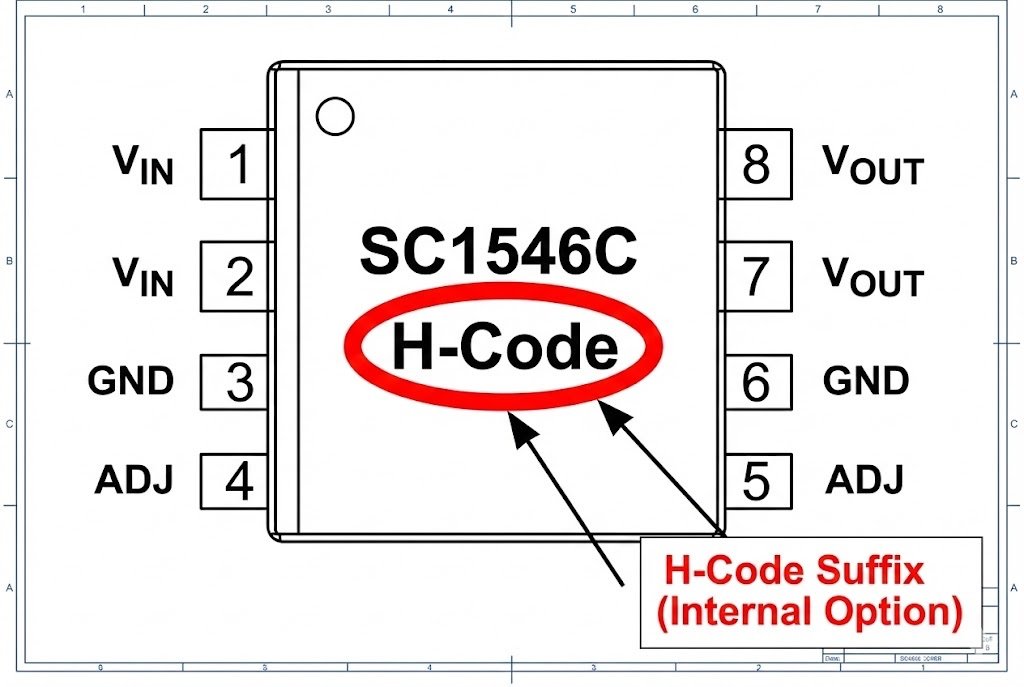
Transition Paragraph: Many engineers and buyers ignore these suffixes. They think close enough is good enough. This is a mistake. Let me explain why this specific code matters so much to your business and how it affects your supply chain.
LOOP START
What exactly makes the SC1546C-HC15-TL1 different from standard parts?
leading paragraph: Standard power chips work for most people. But big companies want better performance. They ask manufacturers to tweak the chips just for them to get maximum efficiency.
snippet paragraph: The H-Code changes the internal settings of the chip. It is not just a package difference. It defines how the chip handles power, heat, and safety limits for a specific device.
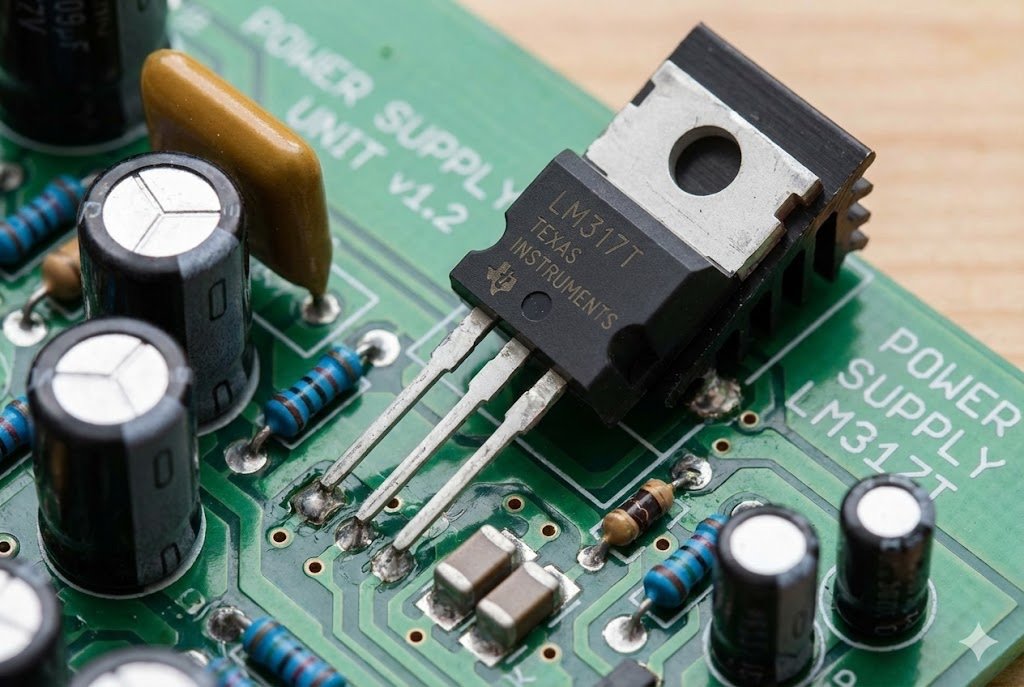
Dive deeper Paragraph: I want to take you inside the mind of a hardware engineer for a moment. When a large company designs a power supply, they want it to be perfect. They might use a standard Power Integrations (PI) chip, like the InnoSwitch series. But maybe the standard current limit is too high for their transformer. Or maybe the switching frequency interferes with a touch screen. They cannot change the laws of physics. So, they ask the chip maker to change the chip.
This is where the "SC" prefix comes in. It usually stands for "Semi-Custom" or "Strategic Custom." The part number SC1546C-HC15-TL1 is a great example. The "HC15" is the key. It tells the factory how to trim the internal references during manufacturing. It is not a software setting you can change later. It is hard-wired into the silicon.
Here is a breakdown of what often changes in these custom versions:
| Parameter | Standard Part | Custom H-Code Part |
|---|---|---|
| Current Limit | Fixed standard values | Tuned to protect specific components |
| Frequency | Standard jitter profile | Adjusted to pass specific EMI tests |
| Over-Voltage | Standard trigger point | Tightened for sensitive loads |
| Availability | Catalog item | Restricted to specific customers |
I recall a project where a client tried to replace an SC part with a standard part that looked the same. The system powered on, but it failed the electromagnetic interference (EMI) test6. The H-Code version had a special frequency spread to reduce noise. Without that custom feature, the device was illegal to sell. This shows why you must understand the technical depth of these part numbers. It is not just about fit and form; it is about the hidden function inside the silicon.
LOOP END
LOOP START
Why is buying these custom parts so hard in the open market?
leading paragraph: You go to a major distributor website. You search for the part. You see "0 Stock" and "Call for Quote." This is frustrating when you have orders to fill.
snippet paragraph: Custom parts do not have general market circulation. Manufacturers only build them when the specific OEM places an order. There is no excess inventory sitting on shelves for the general public to buy.
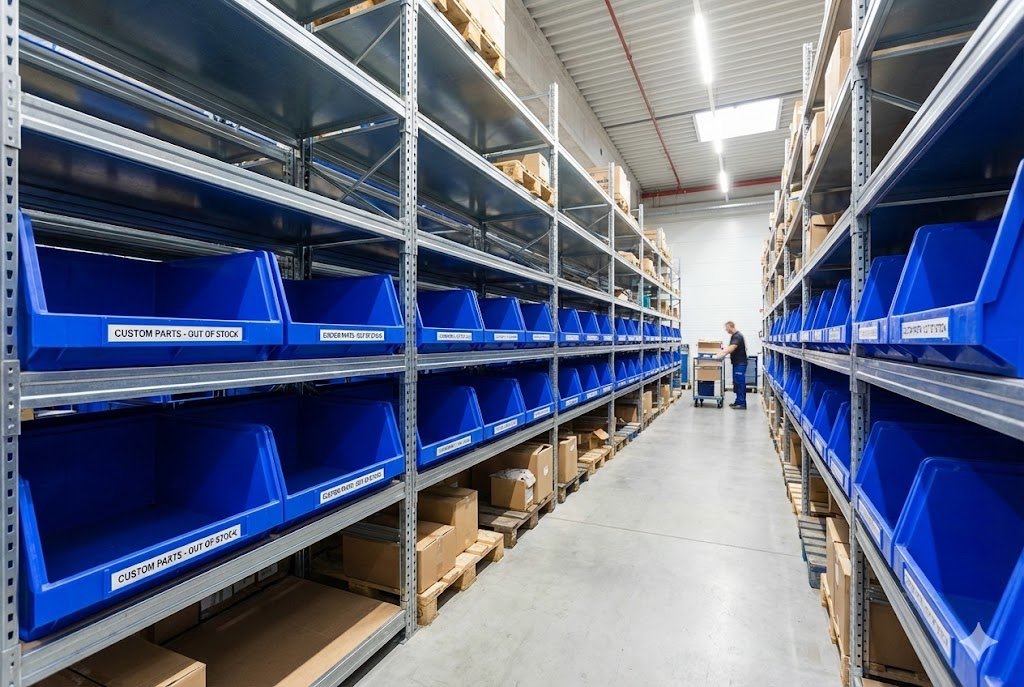
Dive deeper Paragraph: At Nexcir, we deal with this supply chain reality every day. The market for "SC" parts is very different from standard "off-the-shelf" components. When Power Integrations or another manufacturer makes an SC1546C, they make it for one specific customer. Let's say it is for a big phone charger maker. That maker orders 1 million units. The factory builds 1 million units. They do not build extra for Digi-Key or Mouser.
This creates a "closed loop" supply chain. If you are a repair center, or a smaller factory trying to copy a design, you are locked out. You cannot just buy 500 pieces. The Minimum Order Quantity (MOQ)7 might be 50,000 pieces because it requires a custom production run.
Furthermore, the circulation of these parts is very poor. The only time they appear in the spot market is if that big customer cancels an order or has leftover stock. This makes the supply unstable. We call this "allocation risk8." If you design your product around an SC1546C-HC15-TL1, you are putting "golden handcuffs" on your procurement team. You are relying on a part that does not officially exist for the public.
I have seen companies stop production for weeks because they were waiting for a custom driver IC. They assumed they could buy it later. But when the original big customer stopped buying it, the chip manufacturer stopped making it. The part went End of Life (EOL)9 instantly, with no last-time buy warning for the general market. This is the danger of relying on H-Code parts without a contract.
LOOP END
LOOP START
How can you mitigate the risks associated with custom power ICs?
leading paragraph: You cannot change the past design. But you must protect your future production. You need a strategy to handle these hard-to-find parts before they become a crisis.
snippet paragraph: You must evaluate how dependent your circuit is on that specific H-Code. You should look for standard InnoSwitch alternatives10 or partner with a capable distributor to find verified stock.

Dive deeper Paragraph: So, what can you do? If you are stuck with a BOM that lists SC1546C, you need a plan. The first step is technical assessment. You need to ask your engineering team: "Do we really need the HC15 parameters?" Sometimes, the customization was for a very specific edge case that does not apply to your current version. If you can use a standard InnoSwitch part (like the INN3x series) with a small circuit change, do it. This opens up the whole global market to you.
If you must use the custom part, you need a sourcing partner11 like Nexcir. We specialize in navigating these gray areas. We do not just look at websites. We talk to the factories and the surplus hubs of other OEMs. We verify the authenticity of every chip because custom parts are often targets for counterfeiters12 who relabel standard parts.
Here is a simple decision matrix I use with my clients:
| Scenario | Recommended Action |
|---|---|
| New Design | Avoid "SC" parts. Use standard catalog parts. |
| Existing Production | Buy buffer stock for 6-12 months. |
| Repair/Service | Harvest from donor boards or redesign the power stage. |
| Shortage | Contact a specialized distributor for global sourcing. |
We recently helped a client who needed the SC1546C. We could not find the exact H-Code in stock. However, our team analyzed the datasheet and found a newer standard version that offered the same protection features. We helped them test it, and they switched their production. This saved them from a 40-week lead time. You must be proactive. Do not wait for the line to stop. Evaluate your dependency on these custom codes today.
LOOP END
Conclusion
Custom chips offer high performance but bring high supply risks. You must balance your technical needs with procurement safety to ensure your production never stops.
Understanding the specific part number SC1546C-HC15-TL is crucial for ensuring compatibility and performance in your production line. ↩
Learn about semi-custom power management ICs to understand how they can be tailored to meet specific performance requirements. ↩
Explore the InnoSwitch family to see how these chips provide efficient power management solutions for various applications. ↩
Current limits are critical for protecting components and ensuring the safe operation of power ICs in electronic devices. ↩
Frequency compensation is essential for maintaining stability and performance in power management circuits. ↩
Passing an EMI test is vital for legal compliance and ensuring that electronic devices do not interfere with other equipment. ↩
Understanding MOQ helps in planning procurement strategies, especially for custom parts with limited availability. ↩
Allocation risk can disrupt production if not managed properly, especially when dealing with custom components. ↩
Knowing when a component is EOL helps in planning for replacements and avoiding production delays. ↩
Exploring alternatives to InnoSwitch can provide more options for sourcing and reduce dependency on custom parts. ↩
A reliable sourcing partner can help navigate supply chain challenges and ensure the authenticity of components. ↩
Counterfeit components can lead to failures and legal issues, so it's crucial to know how to identify them. ↩