
Struggling with electronics jargon? Using "semiconductor1," "IC," and "chip2" interchangeably can lead to costly sourcing errors. Let's clarify these terms once and for all.
A semiconductor1 is the base material, like silicon. An Integrated Circuit (IC)3 is a functional device with many transistors built on that material. A "chip2" is the common name for the final, packaged IC that you solder onto a circuit board.
Understanding this hierarchy is more than just a language lesson. It directly impacts how you specify, source, and manage your electronic components. It affects your BOM, your communication with suppliers, and ultimately, your product's success. Let's break it down, starting with the material that makes everything possible.
What Exactly Is a Semiconductor Material?
You know semiconductor1s are the foundation of modern electronics. But this knowledge gap can cause confusion when sourcing basic parts. Let's explore what makes this material so special.
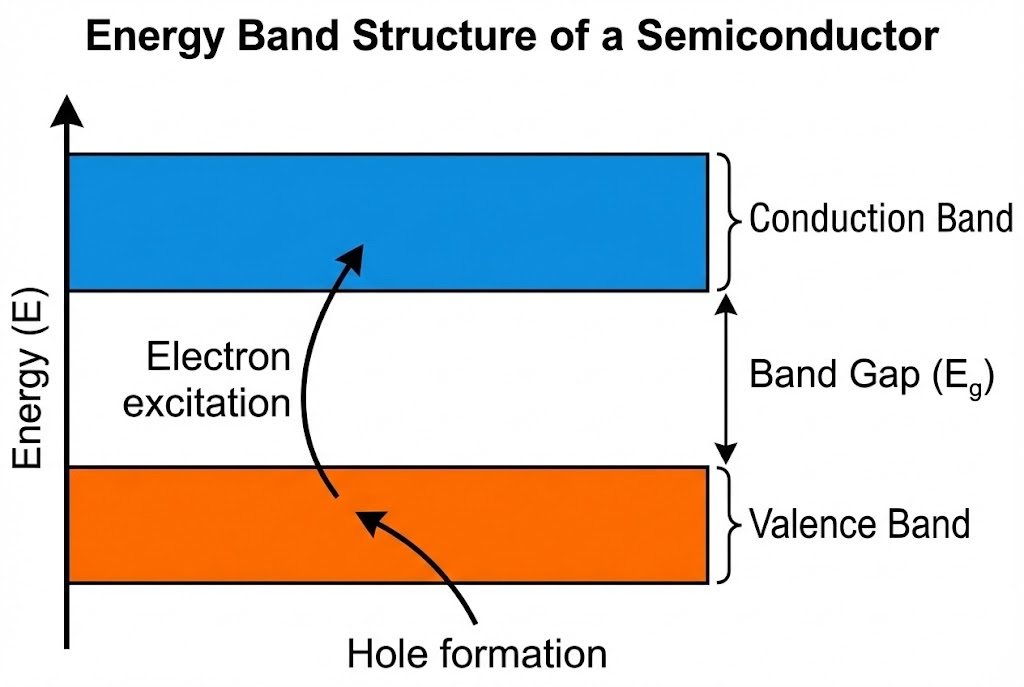
A semiconductor1 is a material, most often silicon, with electrical conductivity between a conductor (like copper) and an insulator (like glass). This unique property allows us to precisely control the flow of electricity, which is the fundamental principle behind electronic components.
From Sand to Silicon Wafer
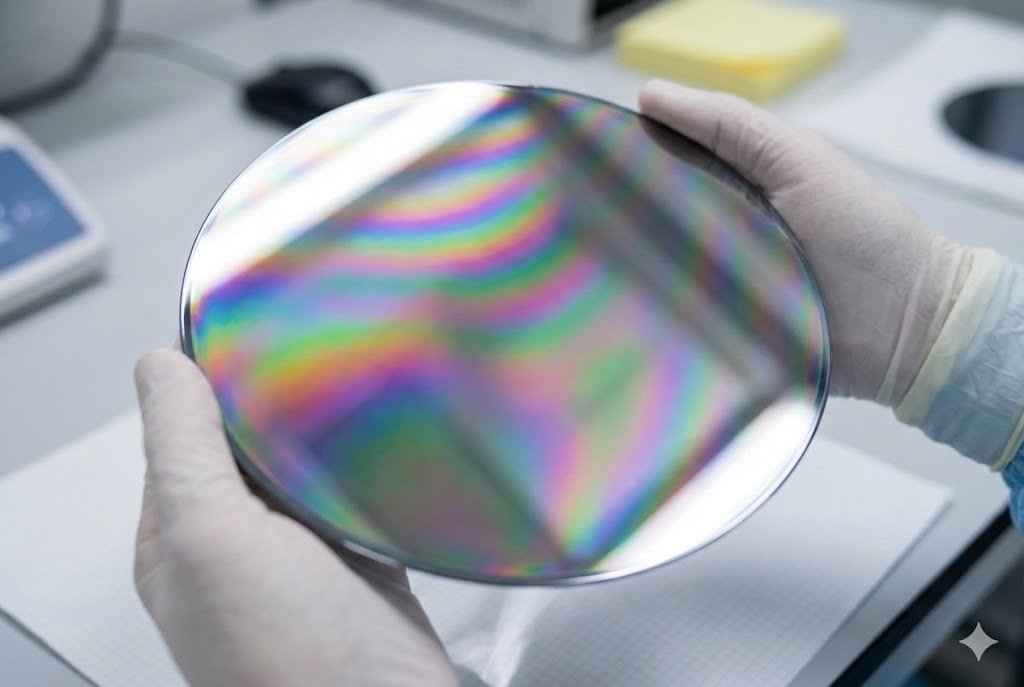
At its core, a semiconductor1 is a pure element, most commonly silicon, which is refined from sand. This silicon is grown into large, cylindrical crystals called ingots, which are then sliced into very thin, perfectly polished discs known as silicon wafers4. These wafers are the sterile canvas on which all modern electronics are built. The magic of a semiconductor1 lies in its ability to be "doped5." By introducing tiny, controlled amounts of impurities, we can change its electrical behavior, allowing it to either conduct electricity or block it. This on/off switching capability is the essence of digital logic. Before complex circuits, this property was used to create individual, or discrete components6. Think of basic diodes, which allow current to flow in only one direction, or transistors, which act as tiny electronic switches or amplifiers. These are the simplest form of semiconductor1 devices and are still essential building blocks in many power supplies and analog circuits today.
How Does a Semiconductor Become an Integrated Circuit (IC)3?
You have a pile of individual transistors. Building a modern computer with them would be impossible—it would be the size of a building. The solution is integration.
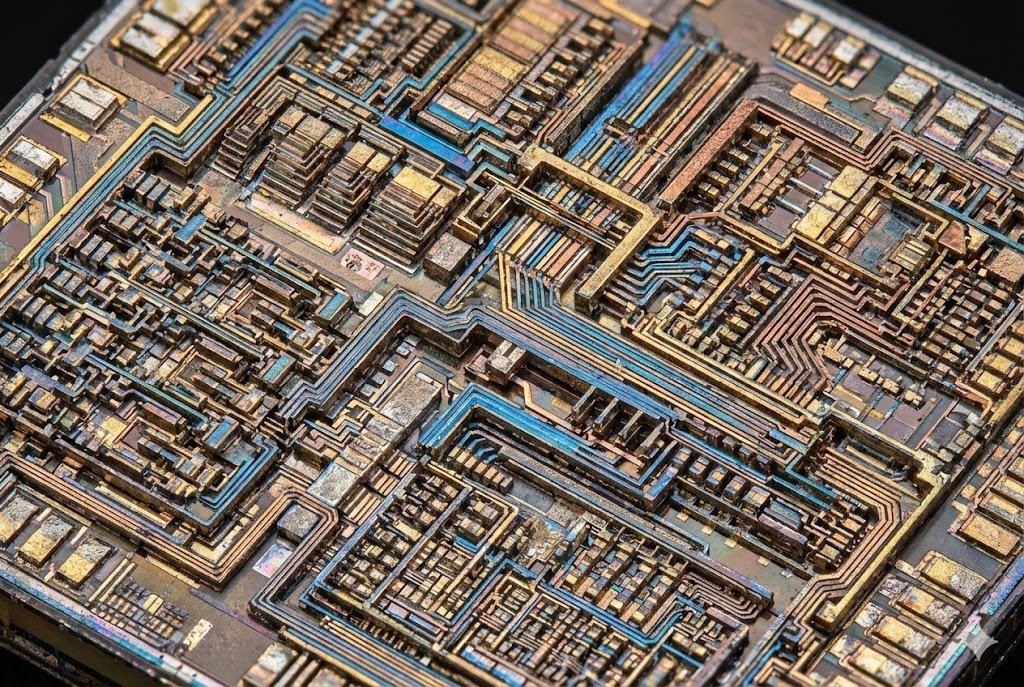
An Integrated Circuit (IC)3 is made by fabricating thousands or even billions of microscopic components, mainly transistors, onto a single piece of semiconductor1 material. This process, microfabrication7, creates a complete electronic circuit in a tiny, unpackaged square called a "die."
The Power of "Integration"
The key word here is "integrated." I once worked with a new engineer who specified a list of hundreds of discrete transistors for a new product design. While technically functional, the resulting board would have been huge, expensive, and unreliable. We helped him find a single IC that performed the same function in a space smaller than a fingernail. That's the power of integration.
This is achieved through a process called microfabrication7, which is like an incredibly precise printing process.
- Layering: Thin layers of different materials are deposited onto the silicon wafer.
- Patterning: A process called photolithography patterns the layers, defining where the circuit components will be.
- Etching: Unwanted material is etched away, leaving behind the microscopic transistors, resistors, and capacitors.
This process is repeated dozens of times to build up the complex, multi-layered structure of a modern IC. The result is a single piece of silicon containing a fully functional circuit. These ICs are broadly classified into two types:
- Digital ICs8: These work with binary on/off signals. Examples include microcontrollers (MCUs), processors (CPUs), and memory. They are the brains of most devices.
- Analog ICs9: These process continuous, real-world signals like sound, temperature, or voltage. Examples include operational amplifiers (op-amps), power management ICs (PMICs), and sensors.
So, Where Does the 'Chip' Fit into This Picture?
You now have a powerful but incredibly fragile IC die. You can't solder this tiny square of silicon directly to your circuit board. It needs protection and a way to connect.
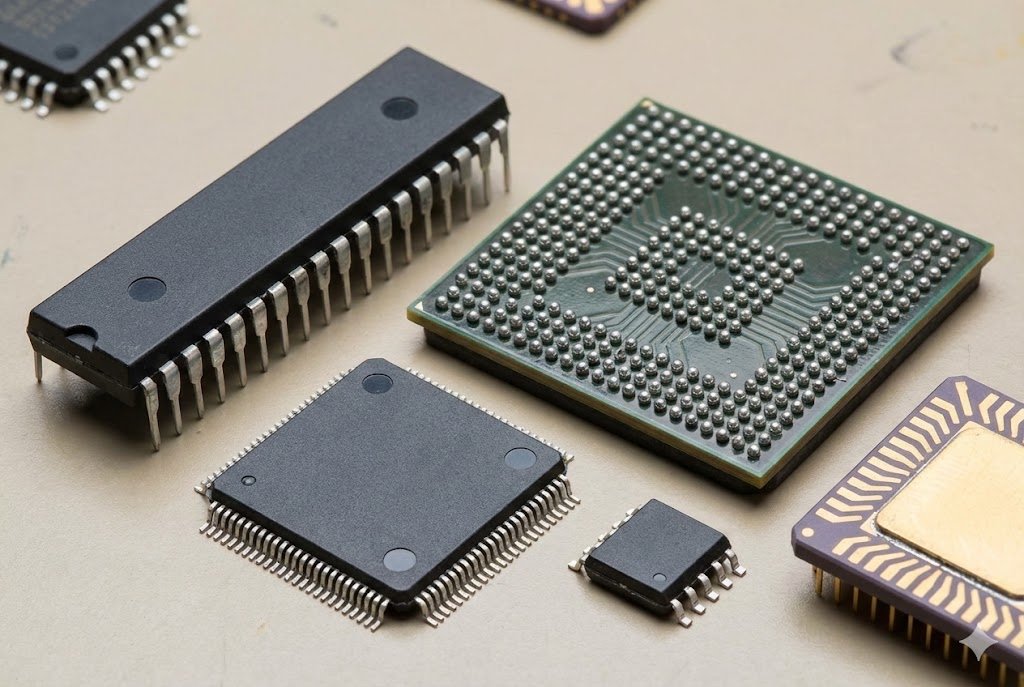
A "chip2" is the common industry term for a finished Integrated Circuit that has been placed in a protective package. This package shields the delicate internal die and provides the metal pins or pads needed to connect it to a Printed Circuit Board (PCB).
Why the Package Matters in Sourcing
The IC die is the engine, but the package is the chassis. It's what makes the IC usable in the real world. For procurement teams and manufacturing engineers, the package type is just as important as the function of the IC itself. Ordering the right part number but in the wrong package can halt a production line. A client once urgently needed a specific MCU, but the BGA package they ordered was incompatible with their assembly line, which was set up for QFP packages. We had to quickly source the correct version to prevent a major delay.
Here are some common package types you'll encounter:
- DIP (Dual In-line Package)10: The classic rectangular chip2 with two rows of pins. Easy to handle but takes up space.
- SOP (Small Outline Package): A smaller, surface-mount version of the DIP.
- QFP (Quad Flat Package)11: A square package with pins on all four sides, allowing for more connections.
- BGA (Ball Grid Array)12: Uses an array of solder balls on the underside instead of pins, enabling a very high number of connections in a small footprint.
Here is a table to help you remember the differences:
| Feature | Semiconductor | Integrated Circuit (IC)3 | Chip |
|---|---|---|---|
| What it is | The raw material (e.g., Silicon). | A complex circuit on an unpackaged die. | The final, packaged, ready-to-use product. |
| Analogy | Flour and sugar. | The raw, unbaked cake batter. | The finished, decorated, and boxed cake. |
| Form | Polished wafers or discrete components6. | A tiny, fragile square of silicon (a "die"). | A black plastic or ceramic component with pins. |
| Sourcing Term | Discrete components, Diodes, Transistors. | Bare die, a specific IC function (e.g., MCU). | A full part number (e.g., STM32F407VGT613). |
Conclusion
From materials to finished chip2s, authenticity is key. If you're sourcing hard-to-find ICs, contact us. We help you secure the genuine components your project needs.
Understanding semiconductors is crucial as they are the foundation of modern electronics, affecting how you specify and source components. ↩
Knowing the distinction between a chip and an IC helps in proper sourcing and application in electronic projects. ↩
ICs are essential for creating compact and efficient electronic devices, making them vital for modern technology. ↩
Silicon wafers are the base for all modern electronics, understanding their production is key to grasping semiconductor technology. ↩
Doping is a critical process that alters a semiconductor's properties, enabling the creation of electronic components. ↩
Discrete components like diodes and transistors are fundamental building blocks in electronics, essential for various circuits. ↩
Microfabrication is the process that allows the creation of complex ICs, crucial for miniaturizing electronic devices. ↩
Digital ICs are the brains of electronic devices, handling binary signals and essential for computing and processing tasks. ↩
Analog ICs process real-world signals, making them vital for applications like audio processing and sensor interfacing. ↩
DIP packages are easy to handle and widely used in prototyping and educational projects, making them a staple in electronics. ↩
QFP packages allow for more connections in a compact form, ideal for complex circuits in limited space. ↩
BGA packages offer high connection density, making them suitable for advanced applications like processors and memory. ↩
The STM32F407VGT6 is a popular microcontroller with versatile applications, understanding its features aids in selecting the right component. ↩
