Product launches are exciting, but high production costs can kill a startup. You love the ESP32 module1 for prototyping, but at scale, those costs eat your profit.
Switching from pre-certified modules to discrete ESP32 chips2 (SoCs) significantly reduces Bill of Materials (BOM)3 costs in mass production. While modules offer convenience, sourcing the chip and peripheral components separately through a partner like NexCir4 unlocks long-term savings.
I see this situation all the time with my clients. They start with a development board, move to a module, and then get stuck. They are afraid to change the design. But if you want to grow, you must look at the numbers. Let's look at how to make this transition safely and cheaply.
What Are the Technical Differences Between an ESP32 WROOM Module5 and the SoC?
You see the metal shield on the board and know it works. But do you understand exactly what components are hiding inside that small metal can?
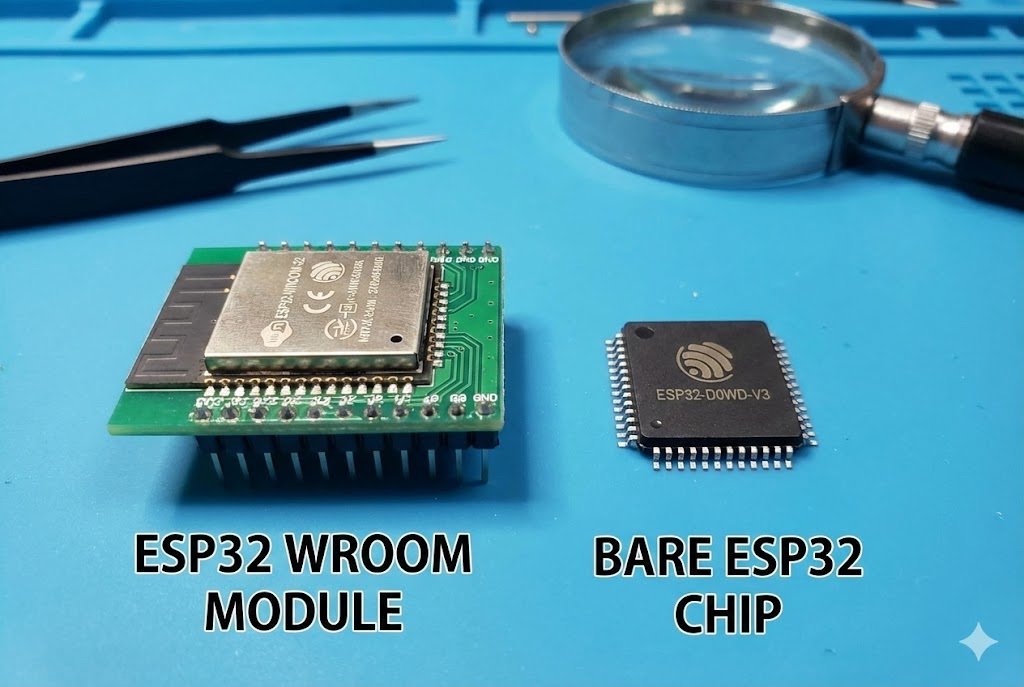
The module integrates the ESP32 chip, SPI flash memory, a crystal oscillator, and an antenna matching circuit. The SoC is just the bare silicon brain, which requires you to design and source these supporting parts yourself.
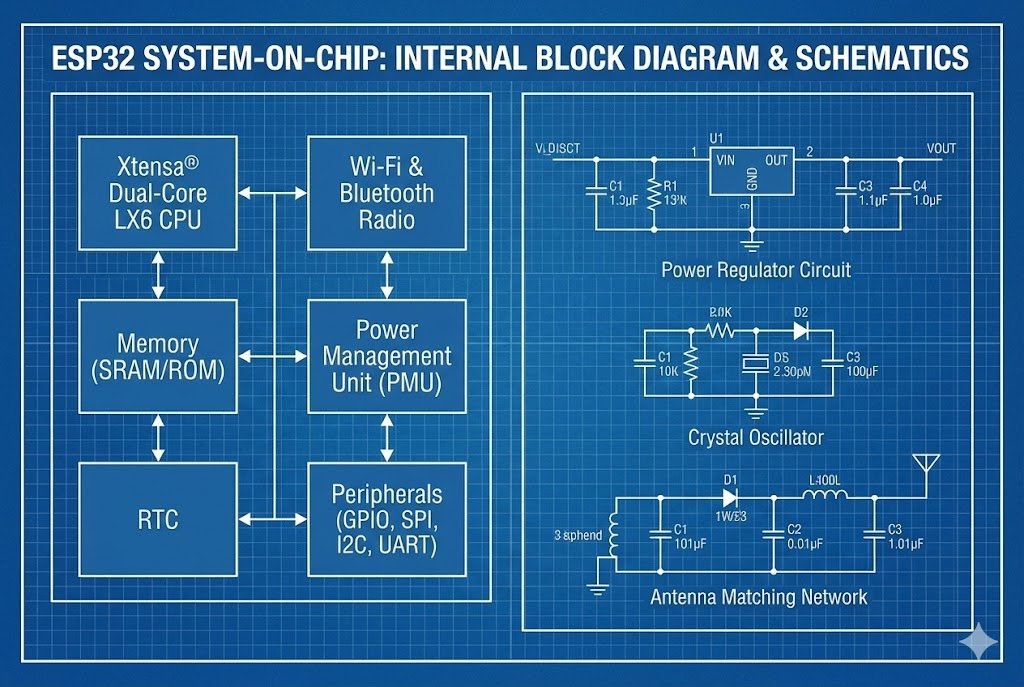
To make the right choice, you must understand what you are buying. When you buy an ESP32-WROOM-32E, you are paying for a finished sub-assembly. The manufacturer, Espressif, has done the hard work for you. They placed the crystal oscillator. They tuned the antenna. They shielded the RF section. This is great for small batches.
However, when you buy the bare chip, like the ESP32-D0WD-V36, you only get the dual-core processor. You must add the rest. This requires hardware design skills7. You need to select the right flash memory. You need to route the PCB trace antenna8 or add a connector.
Here is a breakdown of the differences to help you see the complexity:
| Feature | ESP32 Module (e.g., WROOM) | Discrete SoC Design |
|---|---|---|
| Core Component | Included | Buy Separately |
| Flash Memory | Included (usually 4MB) | Buy Separately (Flexible size) |
| Crystal Oscillator | Included (40MHz) | Buy Separately |
| RF Design | Done & Certified | Requires RF Engineering |
| PCB Space | Large, Fixed Shape | Small, Flexible Layout |
| Assembly | Hand Solder or SMT | SMT Only |
At NexCir4, we help engineers understand this datasheet. The pinout changes when you move from a module to a chip. You gain flexibility, but you take on design responsibility. If you have a good hardware team, the chip is the better technical choice for custom shapes and sizes.
How Much Money Can You Actually Save by Switching to the Chip?
Every cent counts when you manufacture ten thousand units. The price gap between a finished module and a bag of parts is bigger than you think.
A standard module might cost around $2.50 in mid-volume. The standalone chip plus the crystal, flash, and passive components often totals less than $1.40. Sourcing these parts separately saves over 40% per unit.
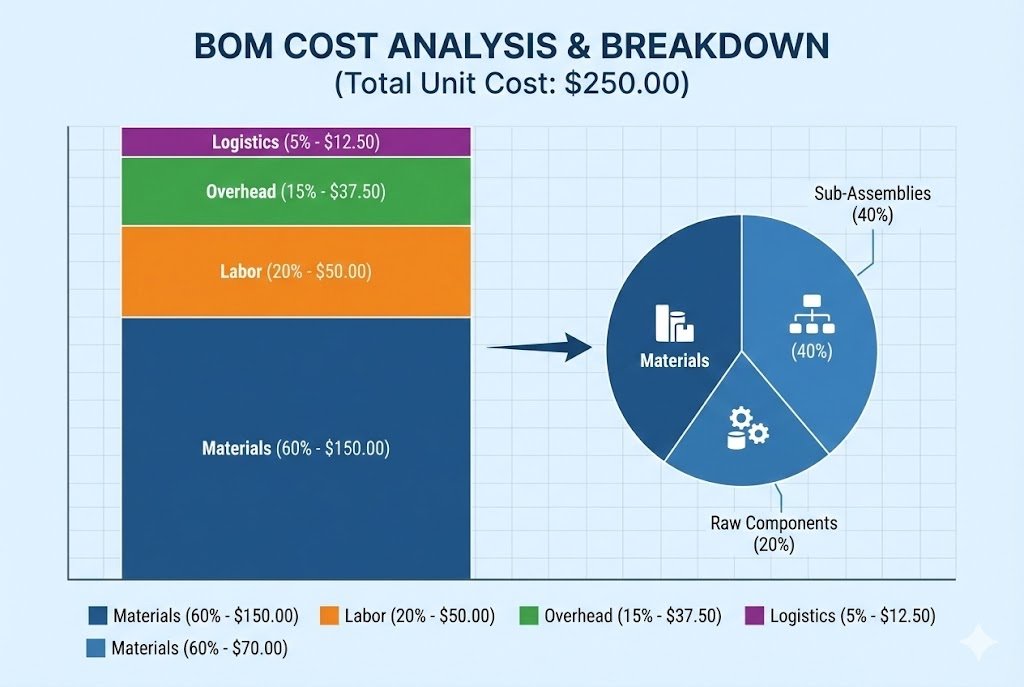
Let's do the math. This is where I help my clients the most. We need to look at the "Total Landed Cost9." Many people think the chip is the only cost. That is wrong. You need the supporting cast.
Here is a hypothetical BOM calculation for 10,000 units:
Option A: Using ESP32-WROOM-32E Module
- Unit Price: ~$2.30 - $2.50
- Total for 10k units: $23,000 - $25,000
Option B: Discrete Design (Sourced by NexCir4)
- ESP32-D0WD-V36 (SoC): ~$0.95
- 32Mbit SPI Flash (Winbond/GigaDevice): ~$0.25
- 40MHz Crystal: ~$0.10
- Antenna & Passives (Caps, Resistors, Inductors): ~$0.10
- Total Unit Cost: ~$1.40
- Total for 10k units: $14,000
You save roughly $9,000 to $11,000 on one production run.
However, you must use critical thinking here. There is a hidden cost. If you design your own RF circuit, you might need to pay for FCC/CE certification10 again. That can cost $3,000 to $5,000. But even with that one-time fee, the savings on the BOM are permanent. For your second and third batch, the profit is pure. This is why we tell OEM factories: if you plan to sell more than 5,000 units, stop using modules. Let us source the kit for you.
What Are the Supply Chain Risks When Sourcing Discrete Components?
Buying one part is easy. Buying five different parts to replace one module creates more complexity and potential points of failure.
Sourcing chips, flash memory, and crystals separately increases the risk of shortages. If one small capacitor or the specific flash memory is missing, your whole production line stops completely.

This is the main reason people are scared to switch. They prefer the safety of the module. If you buy a module, you have one SKU to manage. If you do a discrete design, you have five or six critical SKUs. This is called the "Golden Screw" problem. You have the expensive processor, but you lack the cheap crystal. You cannot ship.
This is where NexCir4 adds value. We are not just selling you a part. We manage the BOM.
- Flash Memory Availability: The flash market fluctuates. Sometimes Winbond is expensive. Sometimes XMC or GigaDevice is better. We monitor this. If one brand is short, we suggest a compatible alternative immediately.
- Lifecycle Management: Modules go End-of-Life (EOL) too. But individual crystals and resistors rarely do. The SoC has a long life. By controlling the parts, you control the destiny of your product.
- Matching Services: We can kit these parts. We send your factory the SoC, the Flash, and the Crystal together. This mimics the convenience of the module but keeps the low cost of the discrete parts.
Below is how we mitigate risks for you:
| Risk Factor | Module Strategy | Discrete Strategy (with NexCir4) |
|---|---|---|
| Shortage Risk | High (Single Vendor) | Low (Multiple Brands for Flash/Passives) |
| Price Volatility | Fixed by Manufacturer | Flexible (Can swap brands) |
| Obsolescence | High Risk | Manageable |
| Logistics | Simple | Managed by NexCir4 Kitting |
Which ESP32 Alternative or Equivalent Should You Choose for Your Project?
The standard ESP32 is great, but newer versions might be cheaper or better for your specific needs.
Newer variants like the ESP32-C311 or ESP32-S312 offer different features. The C3 is a low-cost RISC-V alternative, while the S3 handles AI workloads better than the original.
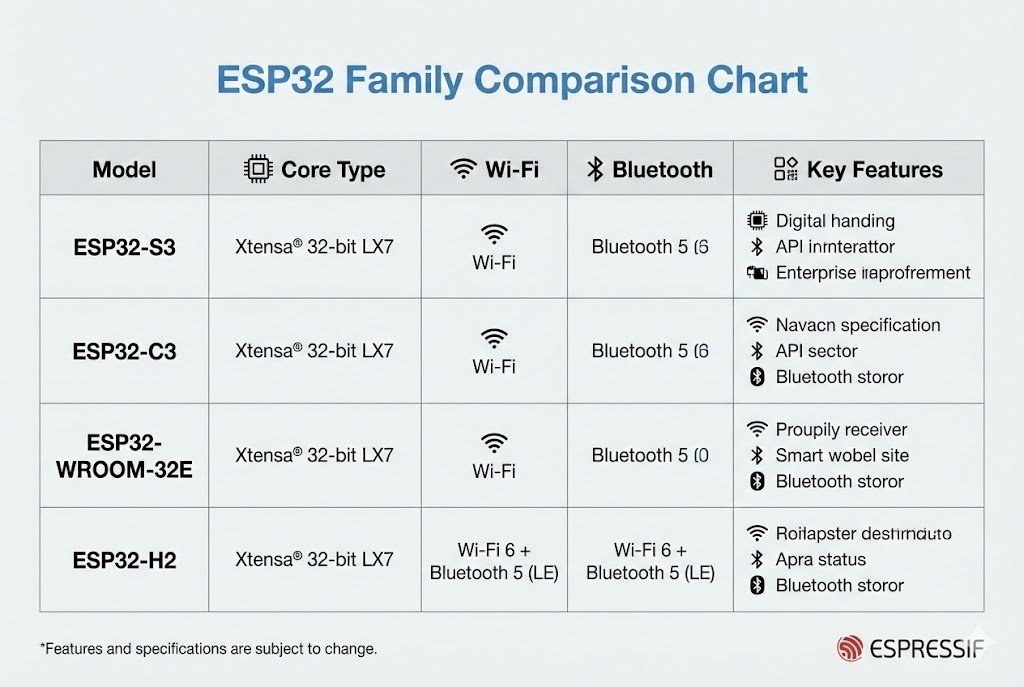
Selection is critical for cost. The original ESP32 is old now. It is still good, but it might be overkill. Or, it might be too expensive. Espressif has released new chips that target specific needs.
If your product is a smart light bulb13, you do not need dual cores. You need cheap connectivity. If your product is a smart display14, you need more pins and AI instructions.
Here is a guide to help you choose the right chip to source:
1. ESP32-C311 (The Cost Killer)
This is a RISC-V MCU. It is pin-compatible with the ESP8266 in some ways but much better.
- Best for: Simple IoT devices, smart plugs, sensors.
- Cost: Cheaper than the original ESP32.
- Why choose it: If you want the absolute lowest BOM cost and only need Wi-Fi + BLE.
2. ESP32-S312 (The AI Powerhouse)
This has vector instructions for AI acceleration. It has more pins for screens.
- Best for: Smart screens, voice recognition, cameras.
- Cost: More expensive, but replaces other chips.
- Why choose it: If you need high performance.
3. ESP32-D0WD-V36 (The Classic)
The reliable workhorse.
- Best for: Legacy designs, general purpose.
- Why choose it: You already have the software written and don't want to change code.
We help you navigate these choices. We don't just take your order number. We ask: "Why are you using this chip?" Maybe we can find you a cheaper one that does the same job.
Conclusion
Modules are for speed, but chips are for profit. If you are scaling production, let NexCir4 source the complete BOM to lower your costs and secure your supply chain.
Explore the advantages of ESP32 modules for rapid prototyping and development. ↩
Discover the cost-saving benefits of switching to discrete ESP32 chips. ↩
Learn how to effectively calculate BOM to optimize production costs. ↩
Find out how NexCir can streamline your component sourcing and reduce costs. ↩
Get detailed insights into the features and applications of the ESP32 WROOM Module. ↩
Explore the specifications and capabilities of the ESP32-D0WD-V3 for your projects. ↩
Understand the essential skills required for effective hardware design. ↩
Learn how to design an efficient PCB trace antenna for your ESP32 projects. ↩
Understand how to calculate Total Landed Cost to make informed production decisions. ↩
Learn about the importance of FCC/CE certification for electronic products. ↩
Discover the features and benefits of the ESP32-C3 for cost-effective designs. ↩
Learn about the unique features of the ESP32-S3 and its applications. ↩
Find out which microcontrollers are ideal for developing smart light bulbs. ↩
Explore the best microcontrollers for smart display projects and their features. ↩