Finding reliable, small MCUs for mass production is hard. Counterfeits and old stock can derail your project. We can help you secure fresh, genuine parts directly from the source.
Sourcing PIC12F and PIC18F MCUs1 successfully means partnering with an independent distributor2. This partner must have access to authorized channels to procure 100% original, factory-new parts in volume, especially for automotive-grade components3 like the PIC18F which demand strict traceability and quality control.
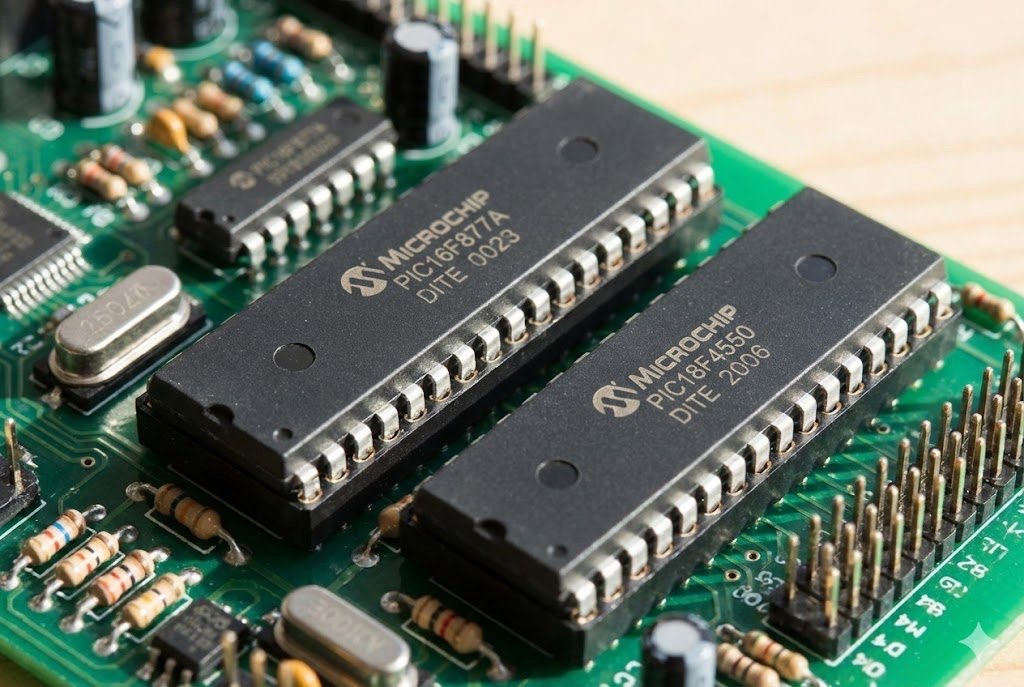
I have been in the electronics supply chain for over 20 years. In that time, I have seen many projects succeed or fail based on one thing: component sourcing. Microchip's PIC microcontrollers4 are a perfect example. They are workhorses in our industry. But getting the right ones, in the right quantity, and with the right quality is a real challenge for many procurement managers. You need a strategy that goes beyond just looking for the lowest price. It's about securing your production line's future5. Let’s look at two popular families, the PIC12F and PIC18F, and how to source them correctly for manufacturing.
Why Are PIC12F MCUs Perfect for Simple Control Tasks?
Your design has a simple job, but you are looking at complex MCUs. This wastes money and adds unnecessary development time. The PIC12F series offers just enough power in a tiny package.
PIC12F MCUs, like the PIC12F5096 and PIC12F615, are ideal for simple control tasks7. They are very cost-effective and have a small footprint. They also use very little power and are easy to program. They have the right features for basic jobs.
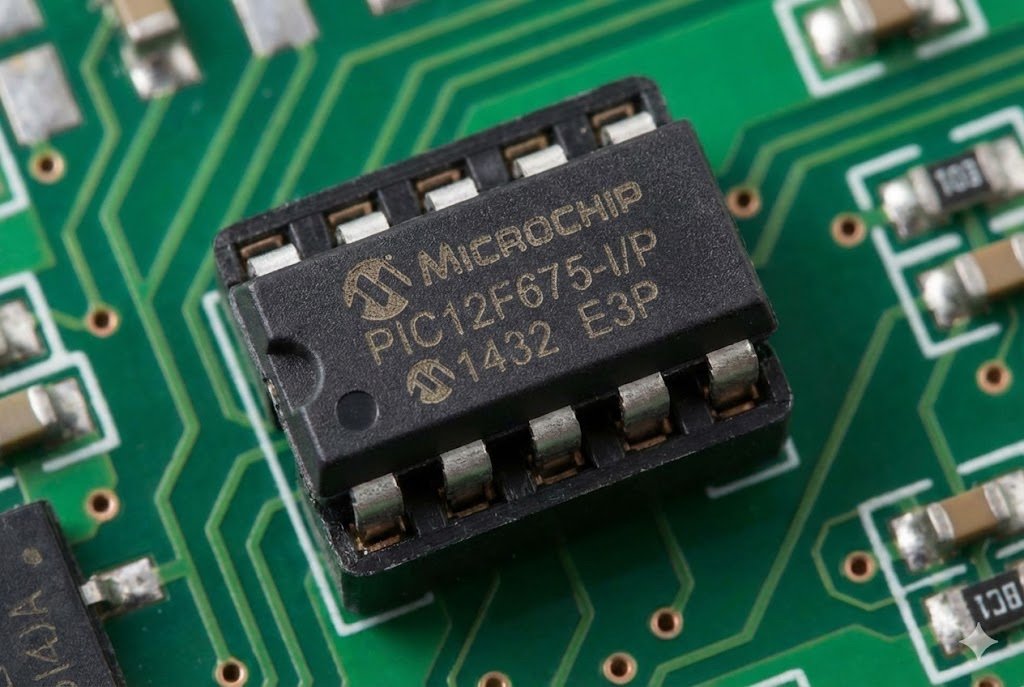
The beauty of the PIC12F series is its simplicity. I remember a client who was designing a small consumer gadget. They needed to control a few LEDs and read a single button. Initially, their engineers chose a more powerful 32-bit MCU. The cost per unit was higher than their target. The development was also taking longer than expected. We suggested they look at the PIC12F series. They were skeptical at first. But after a quick prototype, they saw it was a perfect fit. They saved on cost and finished their design ahead of schedule. This is a common story. Engineers often over-spec their components. The PIC12F family is the answer for those "just enough" situations. It forces a focus on efficiency, which is great for high-volume manufacturing8.
The Case for the PIC12F5096-I/P
The PIC12F5096-I/P is a classic choice for a reason. It is an 8-pin microcontroller that gets the job done with no fuss. It's perfect for tasks that don't need a lot of processing power. Think about things like simple timer functions, driving a status LED, or debouncing a mechanical switch. Its small PDIP package makes it easy for manual assembly or prototyping, but we supply it in tubes for volume production. The "I" in the part number means it has an industrial temperature range9 (-40°C to 85°C), making it reliable for many products. It has a simple instruction set, so your firmware team10 can get it running very quickly.
| Feature | Specification | Benefit for Manufacturing |
|---|---|---|
| Package | 8-Pin PDIP | Versatile for different assembly processes. |
| Program Memory | 768 Words | Enough for simple logic and control sequences. |
| I/O Pins | 6 | Sufficient for basic input/output tasks. |
| Oscillator | 4 MHz Internal | Reduces external component count and saves board space. |
| Operating Voltage | 2.0V to 5.5V | Flexible for different power supply designs. |
When to Choose the PIC12F615-I/SN
Sometimes, you need a little more capability than the PIC12F5096 can offer. That is where the PIC12F615-I/SN comes in. It is still an 8-pin device, but it adds some important features. The biggest additions are a 10-bit Analog-to-Digital Converter (ADC)11 and an analog comparator. This means it can read analog sensors, like a thermistor or a light sensor, without needing extra external chips. This is huge for saving cost and board space in high-volume products. The PIC12F615 also has more program memory12 and data RAM. This lets you write more complex firmware. We typically supply this model in the SN package (SOIC) on reels, which is perfect for automated pick-and-place assembly13 lines. It's the right choice when your "simple" task involves a bit of analog intelligence.
| Feature | Specification | Benefit for Manufacturing |
|---|---|---|
| Package | 8-Pin SOIC | Ideal for surface-mount technology (SMT) assembly. |
| Program Memory | 1.75 KB | Supports more complex firmware and logic. |
| Key Peripherals | 10-bit ADC, Comparator | Enables direct connection to analog sensors. |
| PWM | 10-bit PWM module | Good for motor control, dimming LEDs, or power supplies. |
| Temperature Range | Industrial (-40°C to 85°C) | Ensures reliability in tough environments. |
How Does the PIC18F25K80-I/SS Enhance Automotive Communication?
Automotive systems need communication you can trust. A faulty CAN bus controller can lead to critical failures and expensive recalls. The PIC18F25K80 has a built-in ECAN module for robust and reliable performance.
The PIC18F25K80-I/SS is vital for automotive communication. It has an integrated ECAN™ module that supports the CAN 2.0B standard. This allows it to reliably manage data exchange between vehicle systems like the engine control unit and anti-lock brakes.
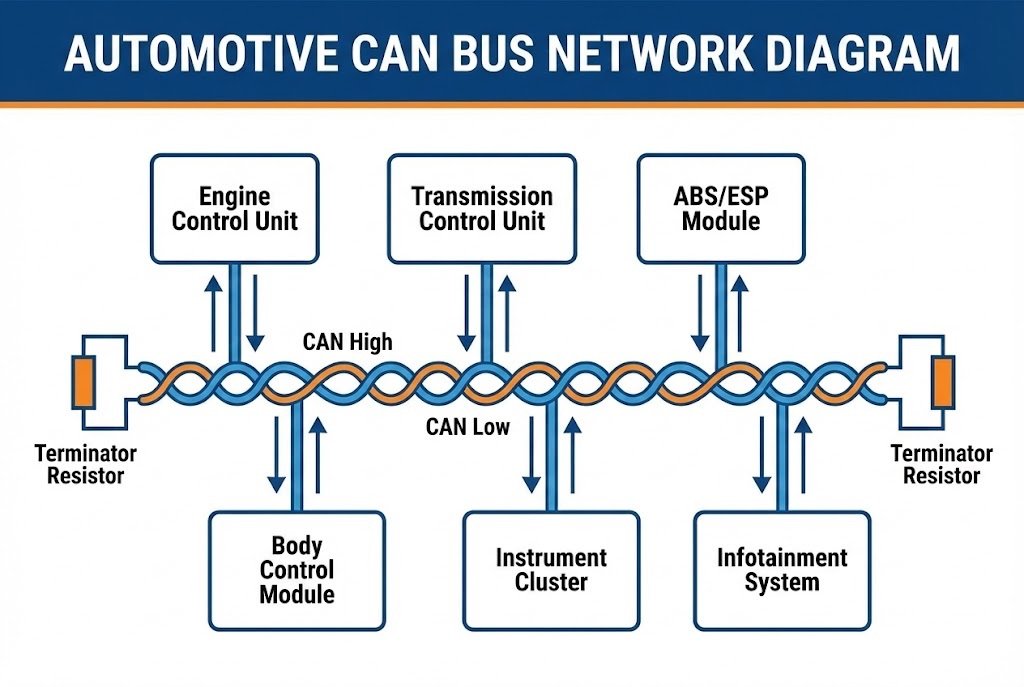
The Controller Area Network, or CAN bus, is the nervous system of a modern vehicle. It lets dozens of microcontrollers talk to each other. The PIC18F family, especially models with the ECAN module, are designed for this world. I've worked with many automotive clients who rely on this specific part, the PIC18F25K80. They use it in everything from dashboard clusters to climate control modules. The reason is simple: reliability. When a component is going into a car, it has to work every time, for years, in extreme heat and cold. This is why sourcing these parts correctly is not just a good idea, it is a requirement. You cannot afford to take risks with parts that might be counterfeit, old, or from an unverified source.
The Importance of Automotive-Grade Sourcing
The term "Automotive Grade" is more than just a marketing label. It represents a strict standard of quality and reliability. For a component like the PIC18F25K80-I/SS, this means it has passed rigorous testing. It is guaranteed to operate over a wider temperature range9, typically -40°C to 125°C. Most importantly, it requires full traceability. You must be able to trace the part all the way back to the original wafer lot from the manufacturer. This is impossible if you buy from unverified brokers or sources selling old stock. We only source these components directly from authorized channels when an order is placed. This guarantees that you receive 100% original, authentic parts. They come with a fresh date code14, not something that has been sitting in a warehouse for five years. This is the only way to ensure the quality required for automotive applications.
Understanding the Integrated ECAN Module
The ECAN module in the PIC18F25K80 is what makes it so powerful for automotive use. It is not just a simple CAN controller. It is an "Enhanced" controller. This means it has features that make the network more robust and efficient. For example, it has hardware-level message filtering. This allows the MCU to automatically ignore messages that are not relevant to its function, which frees up the CPU to do other important tasks. It also has multiple buffers for sending and receiving messages. This prevents data loss when the bus is very busy. For a procurement manager, this means you are sourcing a component that reduces development complexity for your engineers and increases the final product's reliability. It is a smart choice for any design that needs to communicate on a CAN bus.
| Feature | Specification | Benefit for Automotive Applications |
|---|---|---|
| Package | 28-Pin SSOP | Compact size for space-constrained modules. |
| Core Feature | Integrated ECAN™ Module (CAN 2.0B) | Ensures reliable, high-speed in-vehicle communication. |
| Performance | Up to 16 MIPS @ 64 MHz | Powerful enough to handle CAN traffic and application code. |
| Temperature Range | Automotive (-40°C to 125°C) | Guarantees performance in extreme vehicle environments. |
| Supply | Sourced in Reels for Volume | Perfect for automated SMT assembly lines. |
Volume Procurement for the PIC18F25K80-I/SS
When you are building thousands of automotive modules, you need a supply chain partner15 who understands volume. We do not sell single pieces. Our business is built around supplying components in their Standard Pack Quantity (SPQ), such as full reels or tubes. For the PIC18F25K80-I/SS, this typically means a reel of 2,000 pieces. Sourcing in this way has major advantages. First, it ensures all the parts in a reel are from the same batch, providing consistency on your production line. Second, it keeps the components protected in factory-sealed packaging, which is critical for moisture-sensitive devices. Most importantly, our model means we place your volume order directly with our authorized sources. We don't hold stock. This is how we ensure you get brand new parts with a fresh date code14, not old inventory. This direct sourcing approach gives you faster lead times than standard factory allocation and eliminates the risk of counterfeit parts16.
Conclusion
PIC12F MCUs are great for simple, cost-sensitive controls. PIC18F MCUs are essential for robust automotive communication. Sourcing them correctly requires a partner who provides fresh, original parts in volume.
Explore the advantages of these microcontrollers for efficient and reliable production. ↩
Learn how to select a trustworthy distributor to ensure quality and authenticity in your components. ↩
Understand the standards and importance of automotive-grade components for safety and reliability. ↩
Get insights into the capabilities and applications of Microchip's PIC microcontrollers. ↩
Understand the long-term implications of sourcing decisions on production efficiency. ↩
Explore the detailed specifications and applications of the PIC12F509 for your projects. ↩
Find out which microcontrollers excel in handling basic control functions efficiently. ↩
Understand the unique challenges faced in high-volume electronics manufacturing. ↩
Learn how temperature range affects the performance and reliability of microcontrollers. ↩
Learn about the critical functions of a firmware team in product development. ↩
Learn about the functionality and importance of ADCs in microcontroller applications. ↩
Understand the significance of program memory in developing firmware for microcontrollers. ↩
Discover how automated assembly improves efficiency and accuracy in electronics manufacturing. ↩
Explore the importance of fresh date codes in ensuring component reliability and performance. ↩
Get tips on selecting a reliable supply chain partner for your electronic component needs. ↩
Learn strategies to ensure you are sourcing genuine components and avoiding counterfeits. ↩