Heat is the enemy of electronics. You design a power supply for 5V/5A output, but the temperature rises too fast. Do you struggle to keep your components cool?
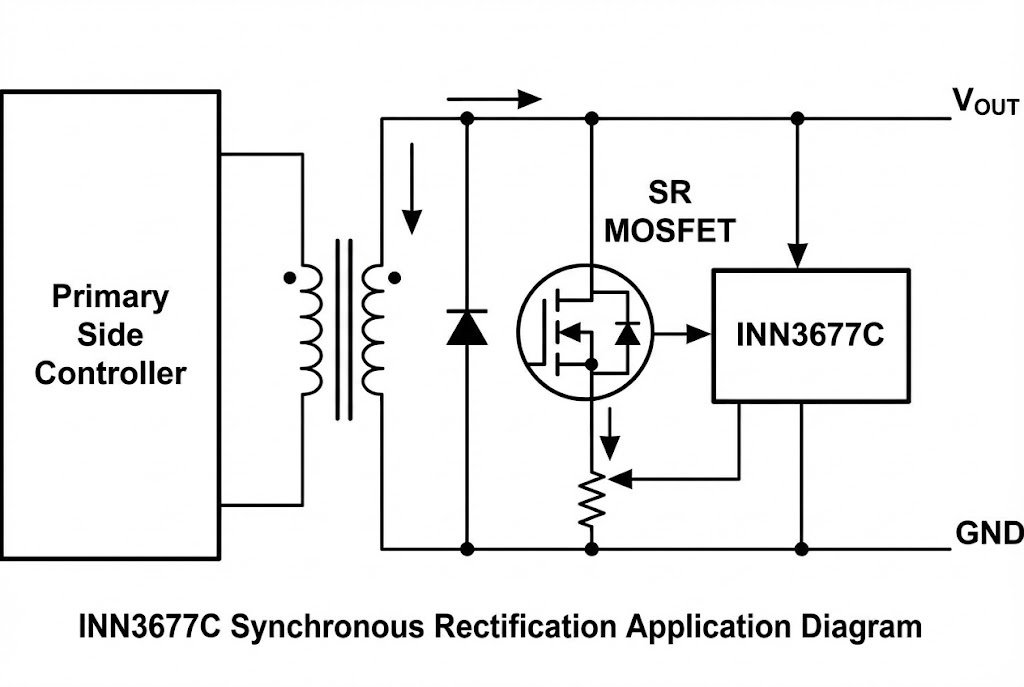
The INN3677C solves thermal issues by replacing hot diodes with Synchronous Rectification (SR)1. It uses an integrated controller2 to drive secondary MOSFETs with high precision. This eliminates the voltage drop of older components and allows power supplies to run cool, even at high currents.
I see many engineers fight with heat sinks. I want to show you a better way to manage power.
Why do traditional Schottky diodes3 fail in high-current scenarios?
You use a Schottky diode because it is cheap and simple. But when you push 5 Amps through it, the board gets extremely hot. This heat damages nearby parts.
Schottky diodes3 have a fixed forward voltage drop4, usually around 0.5V. At high currents like 5A, this drop creates significant power loss in the form of heat. This limits the total efficiency of your system and forces you to use large cooling solutions that waste valuable space.
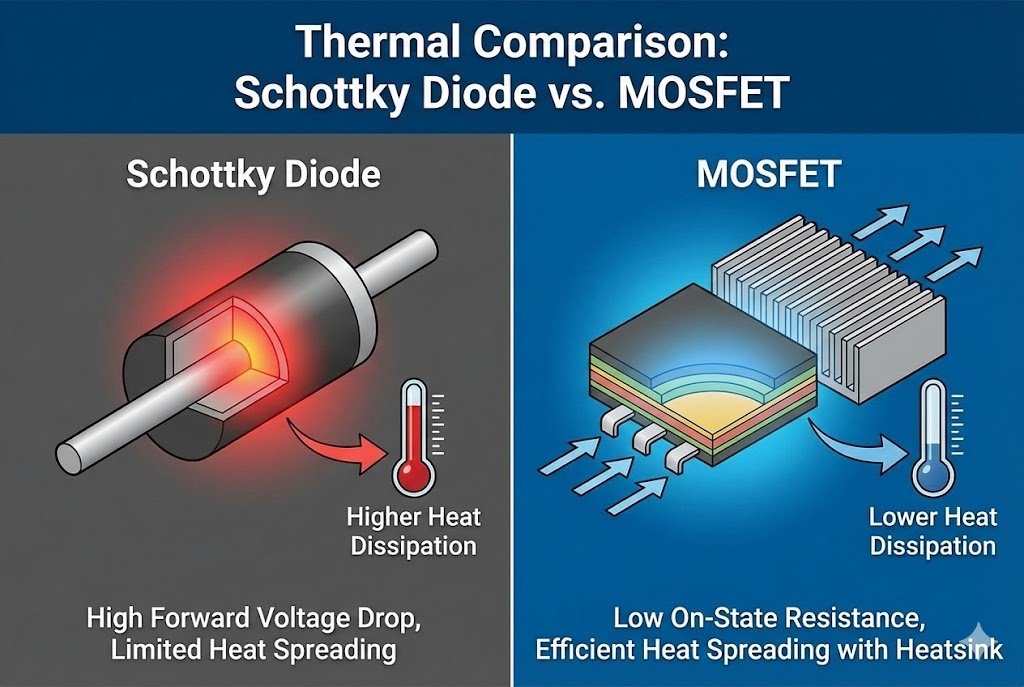
I have seen many power supply designs fail because of this simple math. Let us look at the numbers. If you have a 5V output delivering 5A, a standard Schottky diode might have a voltage drop of 0.5V. You calculate power loss by multiplying voltage by current. So, 0.5V times 5A equals 2.5 Watts. This might sound small, but in a small enclosed adapter, 2.5 Watts is a lot of heat. It is like a small heater inside your plastic case.
To fix this with a diode, you need a big heat sink. This makes the power supply heavy and large. But modern customers want small, light chargers. At Nexcir5, we see this problem often with our clients who build adapters. The heat also lowers the reliability of the device. Electrolytic capacitors near a hot diode dry out faster. This shortens the life of the product.
When you switch to a MOSFET for Synchronous Rectification%%%FOOTNOTE_REF6%%%, the math changes. A MOSFET acts like a resistor when it is on. If the resistance ($R{DS(on)}$) is very low, say 10 milliohms, the loss is much lower. At 5A, the loss is only $I^2 times R$. That is 25 times 0.01, which is only 0.25 Watts. That is ten times less heat than the diode. This is why we must move away from diodes for high currents.
How does the INN3677C integrated SR controller improve performance?
You know that MOSFETs are better, but driving them is hard. If the timing is wrong, the system fails. You need a controller that never makes mistakes.
The INN3677C puts the SR controller inside the same package as the primary switcher. It uses FluxLink technology7 to communicate across the isolation barrier. This ensures the secondary MOSFET turns on and off at the exact right time, maximizing efficiency without complex external circuits.
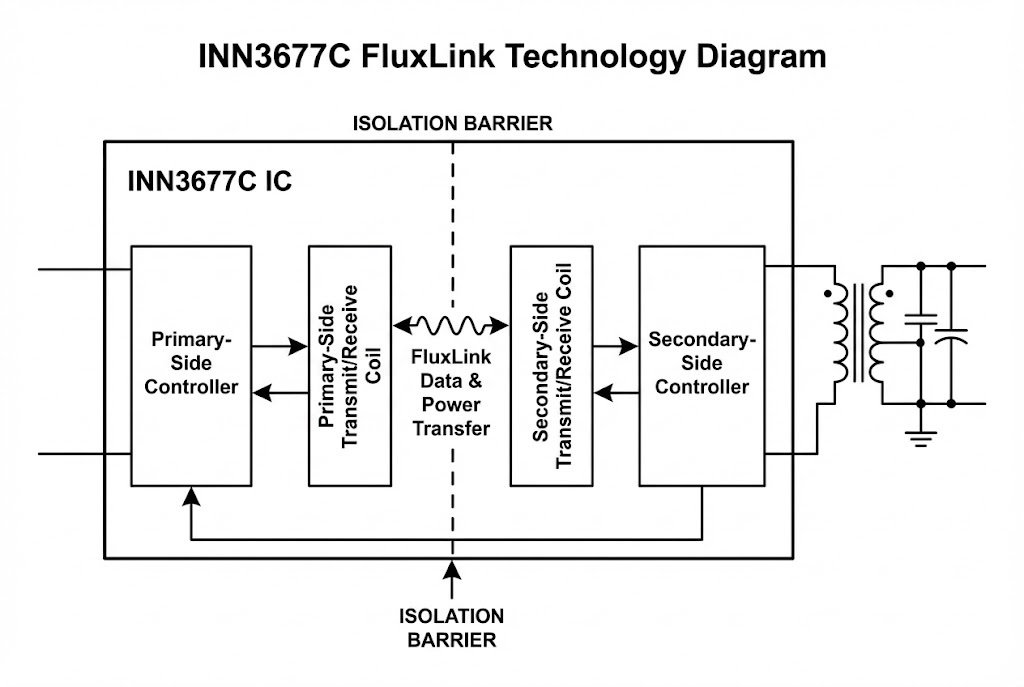
I want to explain why integration is so helpful here. In older designs, you had a primary controller on one side and a secondary controller on the other side. They did not talk to each other directly. They guessed based on voltage levels. This is slow and can be inaccurate. The INN3677C changes this game. It uses a magnetic link called FluxLink inside the chip. The primary side tells the secondary side exactly when to switch.
This is critical for 5V/5A or 12V/3A designs. At these power levels, every microsecond counts. The integrated driver in the INN3677C is strong. It can open the gate of a large MOSFET very quickly. Fast switching means the MOSFET spends less time in the transition zone where it generates heat.
Also, this reduces your Bill of Materials (BOM)8. You do not need a separate SR controller chip. You do not need extra optocouplers for feedback. Fewer parts mean fewer things can break. At Nexcir5, we always recommend solutions that simplify the supply chain. If you can buy one chip instead of three, you save money and reduce procurement risk.
| Feature | Old Discrete Solution | INN3677C Integrated Solution |
|---|---|---|
| Component Count | High (Controller + Optocoupler + Parts) | Low (All in one IC) |
| Timing Control | Predicted/Estimated | Precise Digital Link |
| Board Space | Large area needed | Compact footprint |
| Design Complexity | High | Low |
Why is eliminating cross-conduction risk9 so important for reliability?
You might worry about the primary and secondary switches turning on at the same time. This is a short circuit. It causes immediate destruction of the power supply.
Cross-conduction happens when the primary transistor and the secondary SR MOSFET conduct simultaneously. The INN3677C prevents this by locking the timing logic internally. It ensures the primary side waits until the secondary side is fully off before turning on, guaranteeing safe operation under all load conditions.
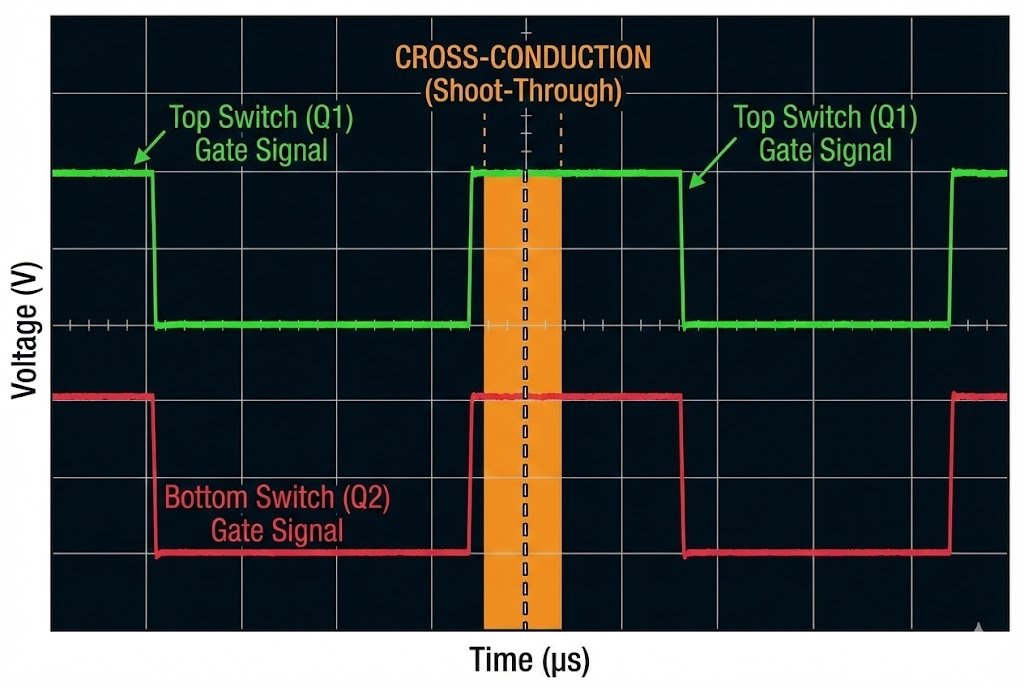
I call cross-conduction the "silent killer" of power supplies. It happens very fast. If the secondary MOSFET is still on when the primary turns on, you create a direct path to ground. Current spikes up instantly. The MOSFETs blow up. Sometimes the traces on the PCB burn. It is a catastrophic failure. This usually happens during "transient loads." This means when the device you are powering suddenly asks for more or less power.
For example, a server in standby mode might suddenly wake up. The load jumps from 0.1A to 5A. An old controller might get confused and misfire the switches. The INN3677C handles this perfectly. Because the primary and secondary sides are logically linked, they cannot be on at the same time. It is like a system of traffic lights that are synchronized. One side is always Red when the other is Green.
This reliability is why we suggest this part for server power supplies10. Servers run 24 hours a day, 7 days a week. They cannot fail. If the standby power supply fails, the server cannot turn on. The cost of downtime is huge. By using a chip that physically prevents cross-conduction, you add a huge safety margin to your design. You do not have to pray that your timing resistors are perfect. The chip handles the safety for you.
How does this technology achieve Titanium-grade efficiency11 levels?
Energy regulations are getting stricter every year. You need to reach 94% efficiency to sell in premium markets. Can your current design hit that number?
By removing diode losses and optimizing switching timing, INN3677C helps power supplies reach 94% efficiency. This meets the strict "80 Plus Titanium" standard for server standby power, reducing energy costs and lowering the cooling requirements for large data centers.
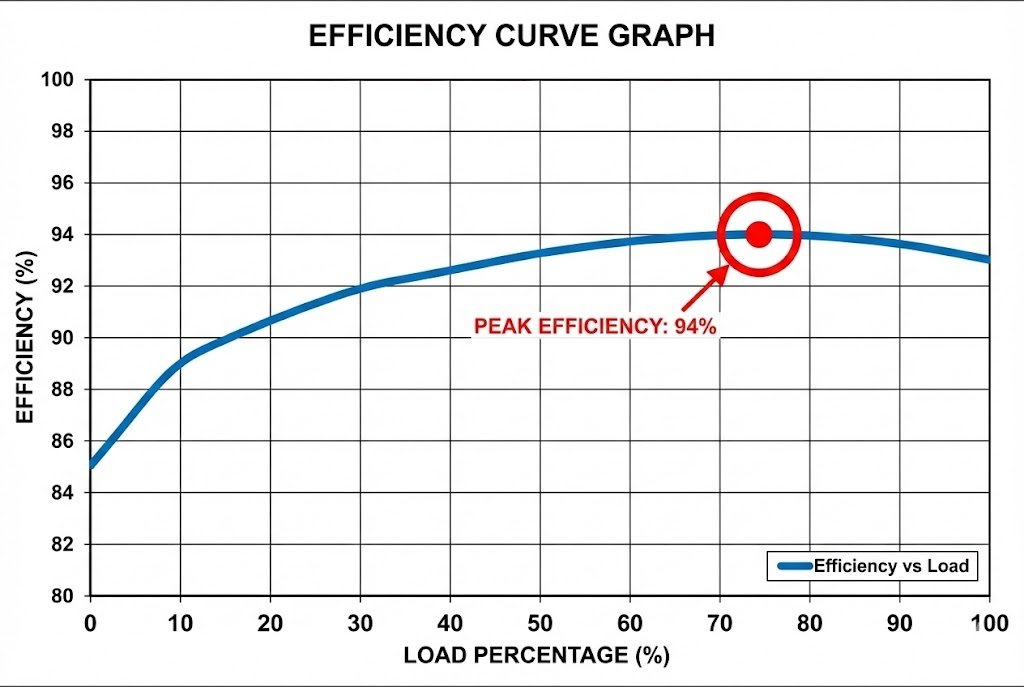
I want to talk about "Titanium Grade." In the power supply world, this is the gold standard. Well, actually it is better than gold. The 80 Plus Titanium standard12 requires very high efficiency at 10%, 20%, 50%, and 100% load. Achieving high efficiency at full load (100%) is hard, but achieving it at light load (10%) is even harder. The INN3677C is great at this.
Because it controls the SR MOSFET so well, it minimizes losses across the whole load range. At 5V/5A, a 94% efficiency means almost all the energy goes to the load. Very little is wasted as heat. For a data center with thousands of servers, this is a lot of money. Less heat means the air conditioning does not have to work as hard. This lowers the electricity bill twice: once for the servers and once for the cooling.
The INN3677C allows you to use smaller transformers and smaller capacitors too. This further reduces losses. We see a big trend in the market towards "Green Energy13." Governments are banning inefficient electronics. Using a chip like the INN3677C future-proofs your product. You will pass the energy star ratings easily.
Here is a breakdown of why this matters for your business:
- Market Access: You can sell to top-tier server manufacturers.
- Cost Savings: You use less copper and aluminum for heat sinks.
- Longevity: Cooler parts last longer, reducing warranty claims.
At Nexcir5, we help our clients select components that meet these high standards. We know that efficiency is not just a number on a datasheet. It is a competitive advantage.
Conclusion
The INN3677C uses Synchronous Rectification to solve heat problems in high-current designs. It stops cross-conduction, boosts efficiency to 94%, and makes thermal management14 easy.
Understanding SR can help you design more efficient power supplies by reducing heat and improving performance. ↩
Learn how integrated controllers streamline power supply design, reducing component count and enhancing reliability. ↩
Discover the limitations of Schottky diodes in high-current applications and explore alternatives for better efficiency. ↩
Explore how forward voltage drop affects power loss and efficiency in electronic components. ↩
Explore how Nexcir's expertise can help you select components that meet high efficiency and reliability standards. ↩
Learn why MOSFETs are preferred for SR, offering lower power loss and improved thermal management. ↩
Understand how FluxLink technology ensures precise timing and communication in power supply systems. ↩
Find out how a simplified BOM can lower costs and improve reliability in electronic designs. ↩
Learn about the dangers of cross-conduction and how to prevent it for safer power supply operation. ↩
Understand the importance of reliable power supplies in maintaining uptime and efficiency in data centers. ↩
Explore the benefits of achieving Titanium-grade efficiency, including energy savings and market access. ↩
Understand the requirements and advantages of meeting the 80 Plus Titanium standard for energy efficiency. ↩
Discover how the shift towards Green Energy affects electronic design and market opportunities. ↩
Explore strategies for effective thermal management to enhance the performance and longevity of power supplies. ↩