Struggling to choose the right power component for your design? Picking incorrectly can lead to system failure, inefficiency, and costly redesigns. Understanding the fundamental difference is your first step.
A transformer1 changes AC voltage levels (AC-to-AC2) using magnetic induction. In contrast, a converter3 uses active electronic circuits to change power characteristics, such as converting AC-to-DC4 or changing a DC voltage5 level. They solve completely different power management problems in your design.
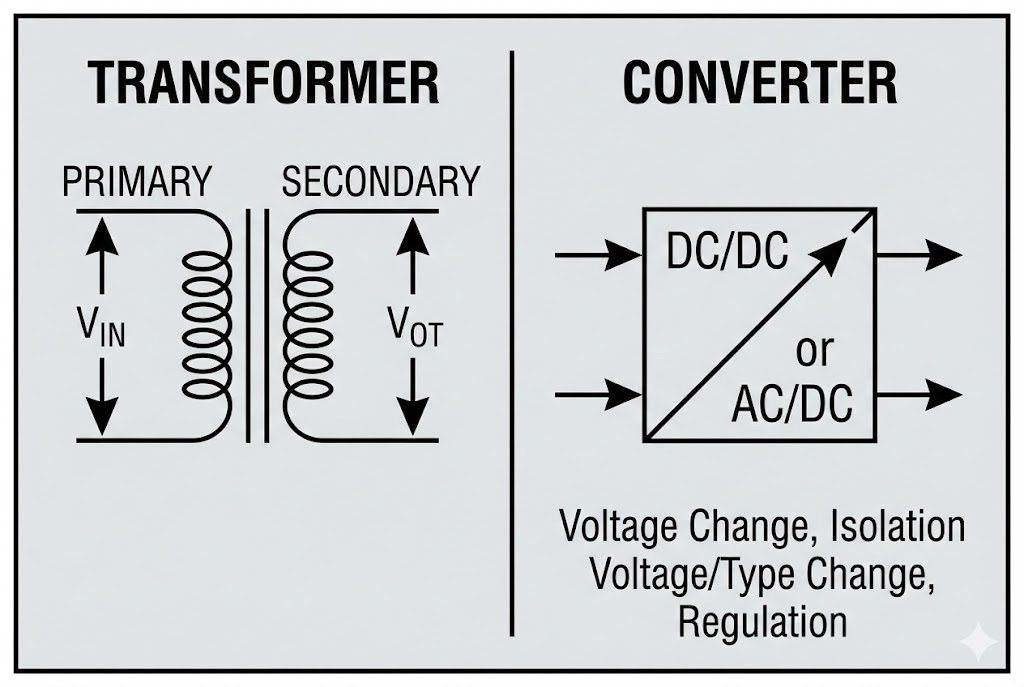
This distinction is more than just academic. As a sourcing partner for OEMs, we see this confusion lead to real-world production issues. Getting it right from the start saves time, money, and headaches down the line. Let's dig deeper into what each component does and, most importantly, when you should use it.
What Exactly is a Transformer and How Does It Work?
Your project needs a different AC voltage than what the wall provides. Using the wrong level isn't an option; it can instantly destroy your entire circuit. A transformer1 is the classic solution.
A transformer1 is a passive electrical device that transfers energy between two or more circuits through electromagnetic induction6. It is primarily used to "step-up" or "step-down" AC voltages without changing the frequency. It cannot be used with DC power.
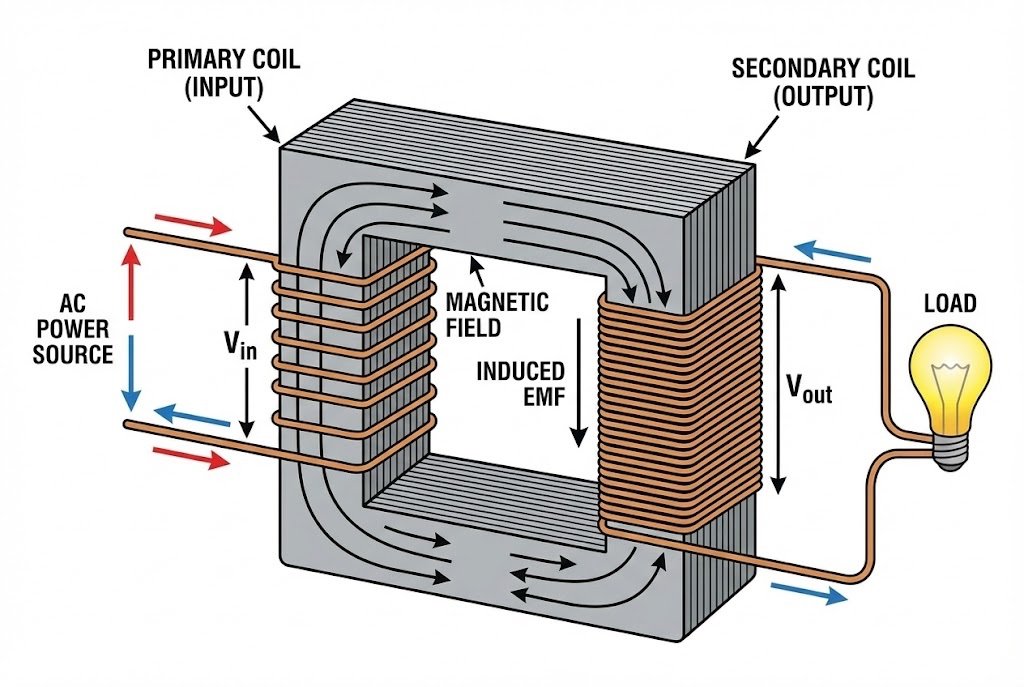
At its heart, a transformer1 is a very simple and robust device. It's made of two coils of wire, the primary coil and the secondary coil, wrapped around a common iron core. When an AC voltage is applied to the primary coil, it creates a changing magnetic field in the core. This changing magnetic field then "induces" a new AC voltage in the secondary coil. The magic is in the number of wire turns on each coil.
Key Transformer Types
The ratio of turns between the two coils determines if the voltage is increased or decreased.
| Transformer Type | Primary vs. Secondary Turns | Voltage Output | Common Use Case |
|---|---|---|---|
| Step-Down | More turns on primary | Lower than input | Converting 120V/240V wall power to a lower AC voltage for consumer electronics. |
| Step-Up | More turns on secondary | Higher than input | Increasing voltage for long-distance power transmission in electrical grids. |
| Isolation | Equal turns on both | Same as input | Safely isolating a device from the power source for medical or test equipment. |
We often help clients source transformer1s for industrial machinery or legacy products where simple, reliable AC voltage adjustment is the only requirement. They are known for their durability and ability to provide galvanic isolation7, which is a critical safety feature.
So, What is a Converter and What Does It Do?
Most of your electronics need stable, low-voltage DC power to function. But your power source, whether a wall outlet or a battery, rarely provides it directly. This is where converter3s come in.
A converter3 is a sophisticated electronic circuit that changes the characteristics of electrical power. It can convert AC to DC (a rectifier), DC to AC (an inverter), or simply change the DC voltage5 level (a DC-DC converter3). They are essential for almost every modern electronic device.
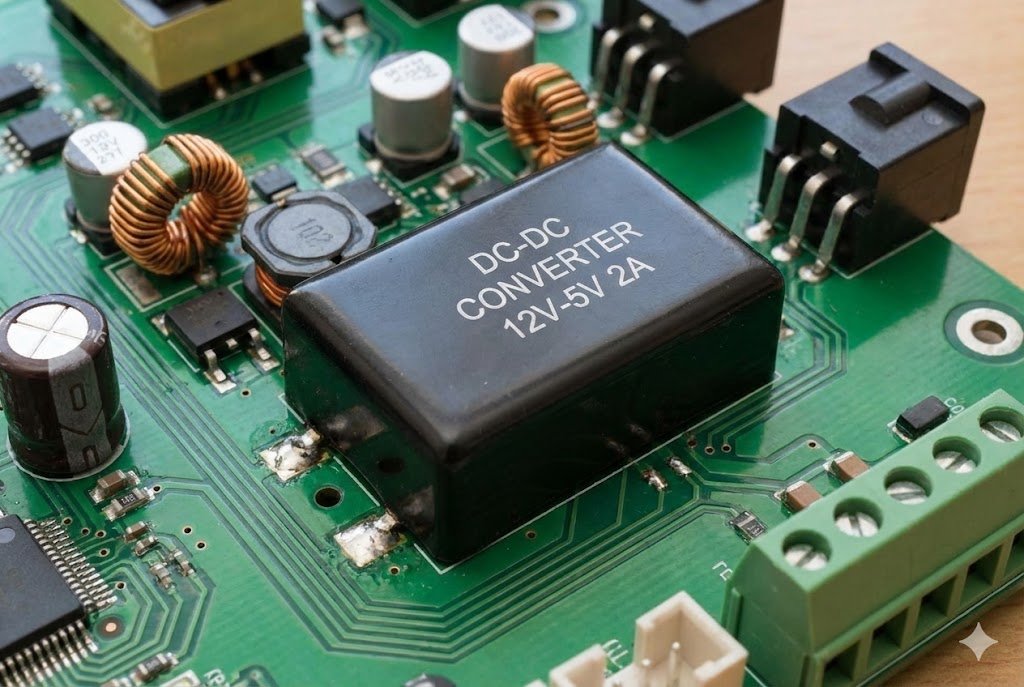
Unlike a passive transformer1, a converter3 is an active device. It uses components like transistors, diodes, capacitors, and inductors to actively switch and regulate power. This is why we often talk about "switching power supplies8." This active management allows for much higher efficiency, smaller size, and precise control over the output voltage and current. At NexCir, sourcing the right power management ICs9 (PMICs) and converter3 modules is a huge part of what we do for our OEM clients, as these components are the heart of a product's power system.
The Main Converter Families
Converters are categorized by the type of conversion they perform.
AC-DC Converters
Also known as power supplies or rectifiers, these are everywhere. Your phone charger, laptop power brick, and the internal power supply in your desktop PC are all AC-DC converter3s. They take the high-voltage AC from the wall and convert it into the low-voltage, stable DC that electronics need.
DC-DC Converters
These are critical for managing power within a device. A single product might have a 12V input, but the internal components need 5V, 3.3V, and 1.8V. DC-DC converters10](3s">https://nexcir.com/understanding-different-types-of-pmics-power-management-ics-a-complete-guide-for-engineers/)3s handle this job efficiently on the circuit board itself.
- Buck Converters: Step-down the DC voltage5 (e.g., 12V to 3.3V for an MCU).
- Boost Converters: Step-up the DC voltage5 (e.g., 3.7V from a Li-ion battery to 5V for a USB port).
DC-AC Converters
Also called inverters11, these do the opposite of an AC-DC converter3. They are used in applications like solar power systems (converting DC from panels to AC for the grid) or uninterruptible power supplies (UPS) that use a DC battery to create AC power during an outage.
When Should I Choose a Transformer Over a Converter?
You have a power design challenge12 and you need to make a choice. Picking the wrong component can lead to a bulky, inefficient product that's difficult to manufacture. A simple checklist can guide you.
Choose a standalone transformer1 for simple, robust AC-to-AC2 voltage changes where efficiency and size are not the top priorities. Choose a converter3 for any application involving DC power, or when you need high efficiency, voltage regulation, and a compact, lightweight solution.
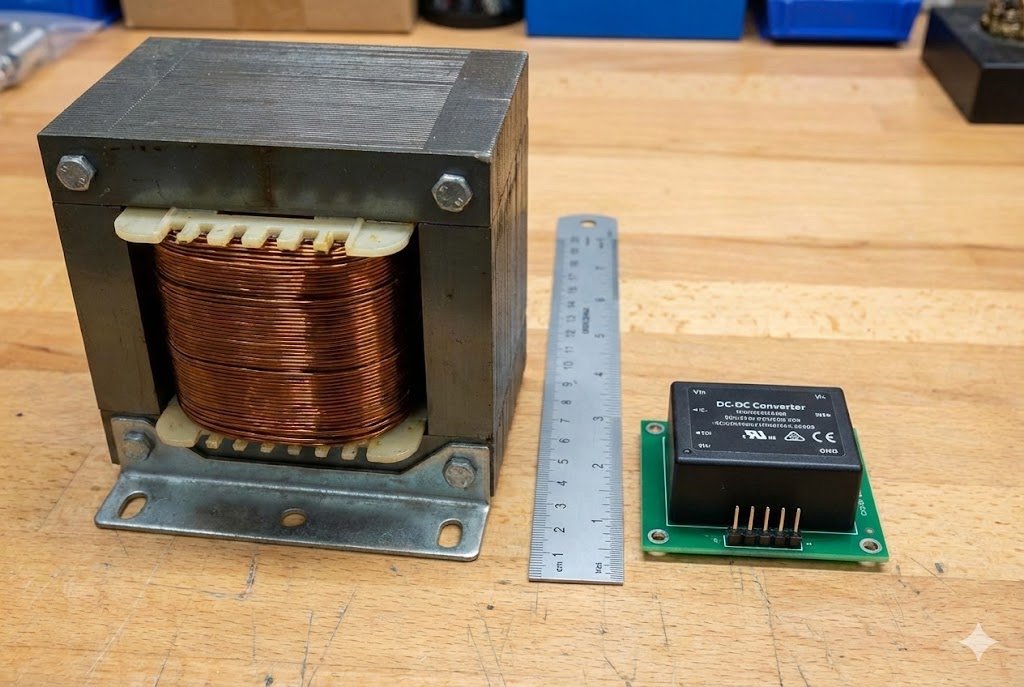
I remember working with a client who was designing an industrial control system. Their initial prototype used a large, heavy linear power supply built around a traditional 50/60Hz transformer1. It worked, but it generated a lot of heat and took up nearly a third of their enclosure space. The system was heavy and inefficient.
We walked them through their actual requirements. They needed to convert 240V AC to a stable 24V DC. For this, a modern AC-DC switching converter3 module was a far better fit. By making the switch, they reduced the power supply's footprint by over 70%, cut the weight significantly, and improved the overall system efficiency from around 50% to over 90%. This meant less heat, a smaller enclosure, and lower operating costs for their end customer. It's a perfect example of how choosing the right technology makes a huge difference.
Here is a clear breakdown to help you decide.
Feature-by-Feature Comparison
| Feature | Transformer | Converter |
|---|---|---|
| Primary Function | Changes AC voltage level (AC-to-AC2) | Converts power type (AC-DC, DC-AC) or DC voltage5 level (DC-DC) |
| Technology | Passive (magnetic induction) | Active (electronic switching) |
| Input Power | AC only | AC or DC |
| Output Power | AC only | DC or AC |
| Efficiency | Generally lower (70-90%) | Generally higher (85-98%) |
| Size & Weight | Large and heavy | Compact and lightweight |
| Regulation | Output voltage varies with load | Output is tightly regulated and stable |
| Complexity | Very simple and reliable | More complex, with more components |
| Typical Use Case | Power grid, simple AC appliances, power supply front-ends | All modern electronics, battery systems, on-board power management |
This table makes the choice clear. If your only goal is to change one AC voltage to another, a transformer1 is a simple, bulletproof solution. For everything else in modern electronics, a converter3 is the component you need.
Conclusion
Transformers change AC voltage. Converters manage and convert power for modern DC electronics. Understanding this fundamental difference is critical for designing an efficient, reliable, and cost-effective product.
Explore this link to understand the fundamental principles of transformers and their applications in electrical systems. ↩
Discover the significance of AC-to-AC conversion and its applications in various electrical devices. ↩
Learn about power converters and their crucial role in modern electronics for efficient power management. ↩
Find out how AC-to-DC conversion is essential for powering electronic devices from wall outlets. ↩
Understand the importance of DC voltage in powering modern electronic devices and systems. ↩
Discover the principles of electromagnetic induction and its applications in transformers. ↩
Explore the concept of galvanic isolation and its critical role in ensuring safety in electrical systems. ↩
Understand the advantages of switching power supplies in modern electronic devices. ↩
Learn about the significance of power management ICs in optimizing power usage in electronics. ↩
Discover the functionality of DC-DC converters in managing voltage levels within electronic devices. ↩
Explore the function of inverters in converting DC to AC power for different applications. ↩
Learn about the typical challenges faced in power design and how to overcome them effectively. ↩