Do you struggle with converting AC to DC power? Bad power ruins good electronics. I will show you how rectifiers1 solve this problem easily and keep your devices safe.
Rectifiers are electronic circuits that convert alternating current (AC) into direct current (DC). The three main types are half-wave, full-wave, and bridge designs. They use diodes2 to allow current to flow in only one direction, which is essential for powering everyday electronic devices and power adapters3 safely.
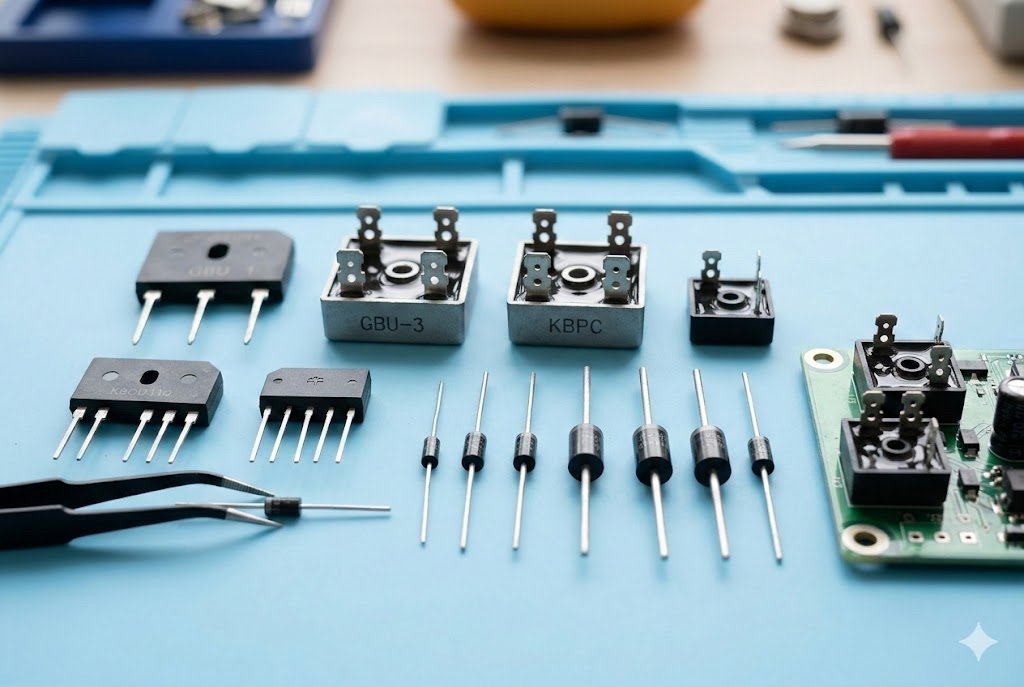
You might wonder why choosing the right rectifier matters so much. If you pick the wrong one, your power adapter will waste energy and might even damage your hardware. Let us look closely at how each design works. This will help you make the best choice for your next project.
How Do Half-Wave Rectifiers Work?
Is your basic circuit losing power? Wasted energy causes heat and low efficiency4. A half-wave rectifier5 is simple, but it might be the reason for your power loss.
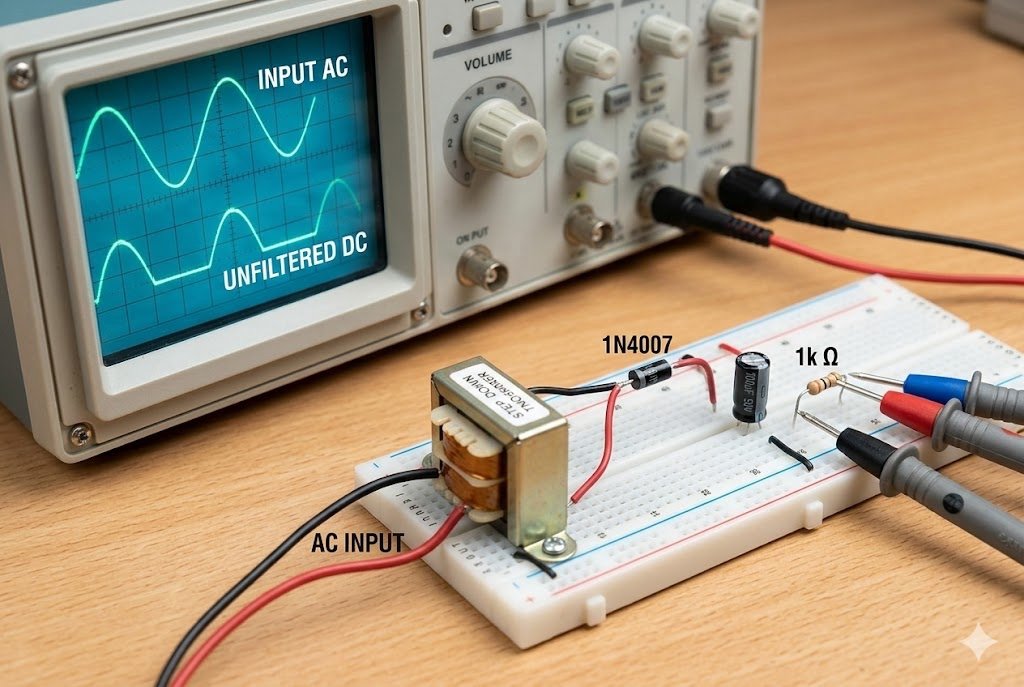
A half-wave rectifier5 uses a single diode to pass only the positive half of an AC wave. It blocks the negative half. This creates a pulsing DC output. It is very cheap and simple, but it has low efficiency4 and a high ripple factor6.
The Mechanics of Half-Wave Designs
When I first started testing simple circuits, I used half-wave rectifier5rs](https://en.wikipedia.org/wiki/Rectifier)%%%FOOTNOTE_REF_1%%%. They only need one diode. This makes them very cheap to build. But they waste half of the input power. The blocked negative cycle means zero output during that time. This creates a very bumpy power supply. We call this bumpiness the ripple factor6. For half-wave designs, the ripple factor6 is about 1.21. This number is very high. High ripple means bad power quality7. Your devices will not get smooth energy.
Why Efficiency Matters for Adapters
Power adapter solution providers rarely use half-wave rectifier5rs](https://en.wikipedia.org/wiki/Rectifier)%%%FOOTNOTE_REF_1%%% for high-power devices. The maximum efficiency4 is only 40.6%. This means most of your power turns into heat. You will need large filters to smooth out the power. At Nexcir8, we often help customers find better diodes2. They come to us when they try to fix these heat issues in their old designs.
| Feature | Half-Wave Rectifier Details |
|---|---|
| Number of Diodes | 1 |
| Maximum Efficiency | 40.6% |
| Ripple Factor | 1.21 (High) |
| Best Use Case | Low-power, cheap devices |
If your project needs stable power, this design is usually not enough. You must look at better options to keep your electronics safe.
Why Choose a Full-Wave Center-Tap Rectifier?
Are half-wave designs failing your power needs? High ripple destroys sensitive parts. Full-wave rectifiers1 fix this by using the whole AC wave to give you smooth power.
A full-wave center-tap rectifier9 uses two diodes2 and a special transformer. It converts both the positive and negative parts of the AC wave into DC. This doubles the efficiency4 to 81.2% and lowers the ripple factor6. It makes the power much smoother for your devices.
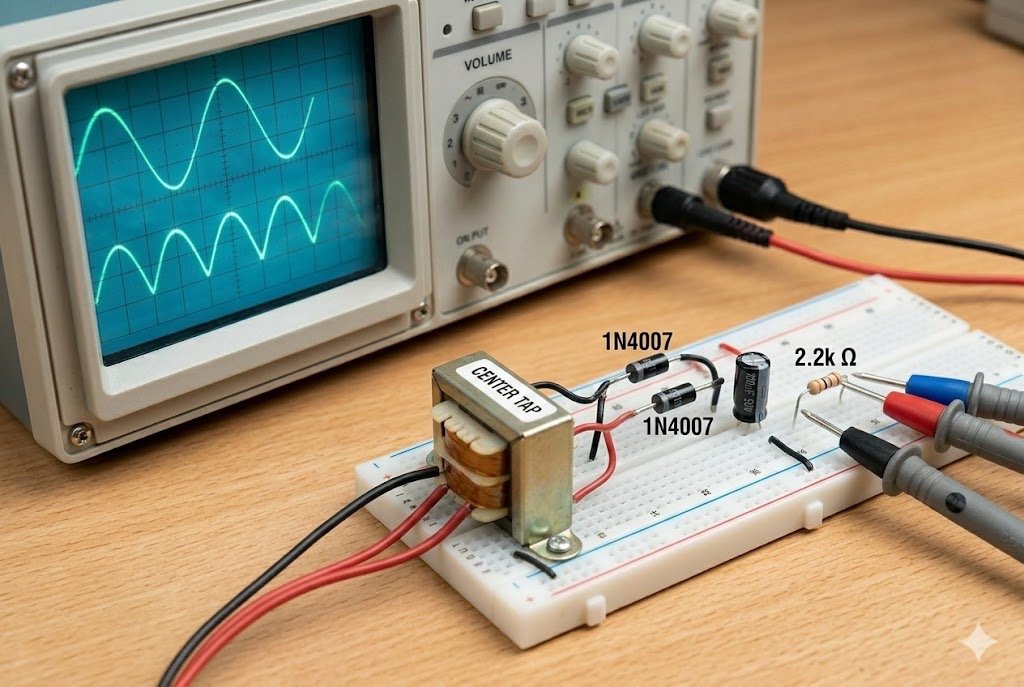
Understanding the Center-Tap Transformer
To fix the wasted energy problem, engineers created the full-wave design. I remember upgrading a power supply project from half-wave to full-wave. The difference was huge. This design uses a center-tapped transformer10. It splits the AC input into two halves. Two diodes2 work together here. One diode handles the positive wave. The other diode handles the negative wave. This means no power is wasted. You get continuous energy output.
Better Efficiency and Lower Ripple
The ripple factor6 drops to 0.48. This is a massive improvement. Your power adapters3 will run cooler and work better. The maximum efficiency4 reaches 81.2%. But there is a big problem. Center-tapped transformers are heavy. They are also expensive. When our OEM customers11 at Nexcir8 ask for ways to cut costs, the heavy transformer is the first thing we look at.
| Feature | Full-Wave Center-Tap Details |
|---|---|
| Number of Diodes | 2 |
| Maximum Efficiency | 81.2% |
| Ripple Factor | 0.48 (Low) |
| Main Drawback | Needs a bulky, expensive transformer |
This design is great for smooth power. But the cost and size of the transformer can be a big problem for modern small electronics.
What Makes Bridge Rectifiers the Best Choice for Power Adapters?
Do you need high efficiency4 but hate large transformers? Big parts ruin compact designs. Bridge rectifiers1 give you full-wave power without the heavy and costly center-tap transformer.
A bridge rectifier12 uses four diodes2 arranged in a bridge shape to convert full AC to DC. It provides 81.2% efficiency4 and a low 0.48 ripple factor6. It does not need a bulky transformer. This makes it ideal for modern power adapters3.
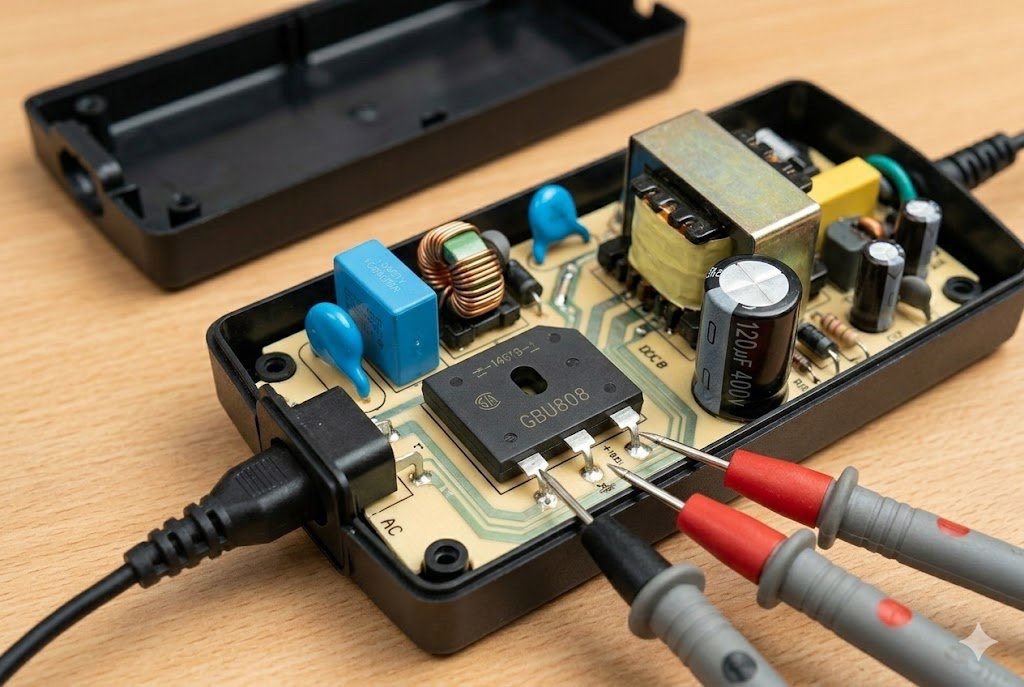
The Magic of the Four-Diode Bridge
Bridge rectifiers1 are the industry standard today. In my years of looking at supply chains, bridge rectifier12rs](https://en.wikipedia.org/wiki/Rectifier)%%%FOOTNOTE_REF_1%%% are always in high demand. They use four diodes2. During the positive AC cycle, two diodes2 let current pass. During the negative cycle, the other two diodes2 take over. You get the exact same smooth power as the center-tap design. You also get the same 81.2% efficiency4. The circuit design is very smart. It uses basic parts to do hard work.
The Ultimate Choice for Solution Providers
The best part is that you do not need a special transformer. This saves space. It also saves money. Power adapter solution providers love this. When you open a modern phone charger, you will almost always find a bridge rectifier12 inside. At Nexcir8, we supply millions of these components to factories. We make sure they are 100% original. Fake diodes2 in a bridge can cause short circuits and fires.
| Feature | Bridge Rectifier Details |
|---|---|
| Number of Diodes | 4 |
| Maximum Efficiency | 81.2% |
| Ripple Factor | 0.48 (Low) |
| Transformer Needed | No (Standard transformer is okay) |
For almost any commercial power project, bridge rectifier12rs](https://en.wikipedia.org/wiki/Rectifier)%%%FOOTNOTE_REF_1%%% offer the best balance. They balance cost, size, and performance perfectly.
How Does Ripple Factor Affect Power Adapters?
Does your device act strange? Bad power makes electronics fail. High ripple factor6 ruins performance. I will explain why smooth power saves your hardware and prevents costly returns.
Ripple factor measures how much AC voltage is left in your DC output. A high ripple factor6 means noisy power. A low ripple factor6 means clean power. Power adapter makers must use rectifiers1 with a low ripple factor6 to protect sensitive parts from damage.
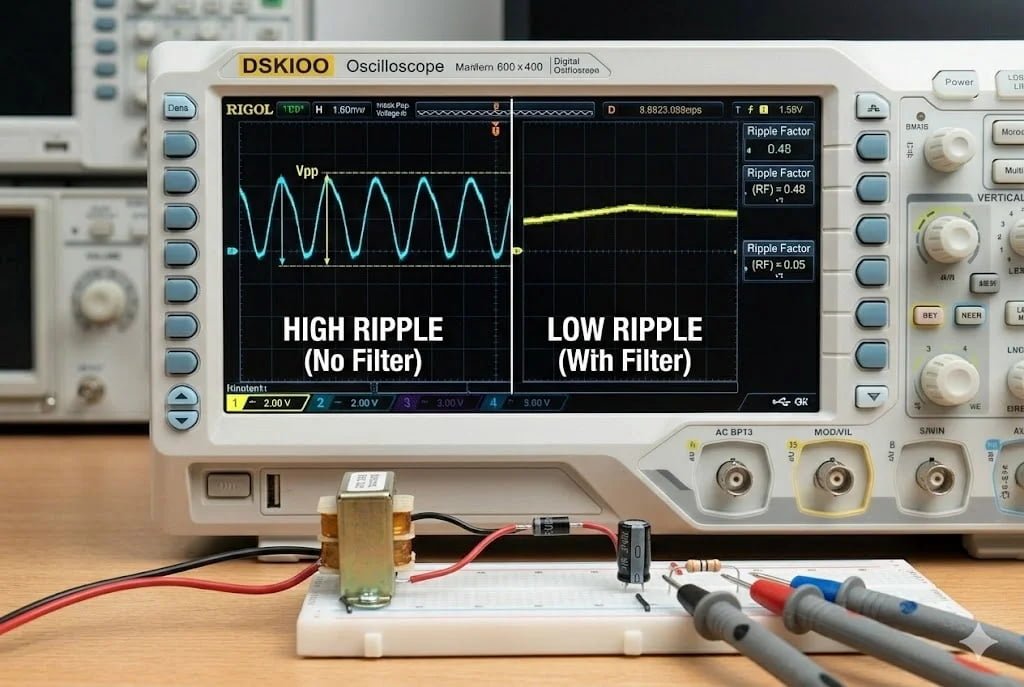
Why Clean Power is Vital
Ripple factor is a critical concept for any hardware engineer. I have seen many companies lose money because they ignored this metric. They picked the wrong part to save a few cents. A high ripple factor6 means your DC power is noisy. Noisy power can reset microcontrollers. It can cause sensors to read wrong data. It can even make audio devices buzz loudly. You must filter out this noise. But filtering high ripple requires huge capacitors. Huge capacitors take up too much space on your circuit board.
Solving the Ripple Problem
This is why comparing efficiency4 differences and ripple factor6s is so important. A bridge rectifier12 gives you a low ripple factor6 of 0.48 right from the start. You only need small, cheap capacitors to clean the rest of the power. This helps power adapter solution providers make smaller chargers.
| Ripple Factor Level | Impact on Electronics | Required Filtering |
|---|---|---|
| High (1.21) | Causes errors, heat, and noise | Very large, costly capacitors |
| Low (0.48) | Safe for most basic circuits | Small, cheap capacitors |
You must always aim for the lowest ripple factor6 possible. This simple choice makes your final product much more reliable.
How Do You Choose the Right Rectifiers for Your Project?
Are you confused about which rectifier to buy? Wrong choices lead to project failures and delays. Comparing their key stats will help you buy the exact parts you need.
To choose the right rectifier, you must compare efficiency4, ripple factor6, and cost. Half-wave is for cheap toys. Center-tap is for specific heavy tools. Bridge rectifiers1 are the standard for almost all modern power adapters3 because they are small, cheap, and highly efficient.
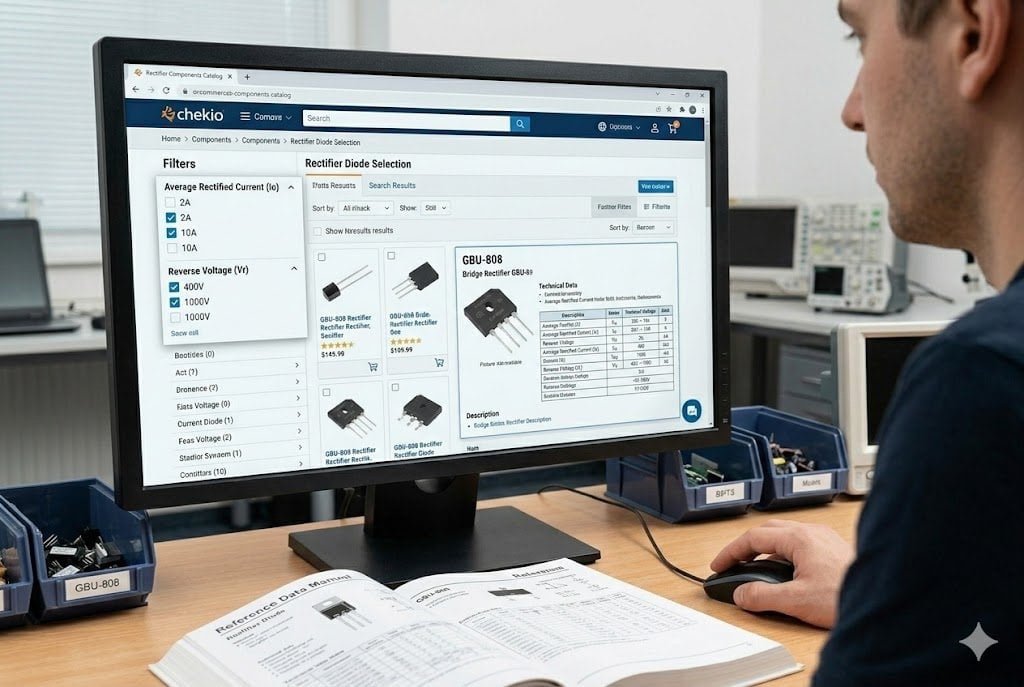
Breaking Down the Final Decision
Choosing the right component is the most important step in hardware design. You must look at your specific needs. If you make very cheap, low-power items, a half-wave design might work. But for 99% of power adapters3, you need a bridge rectifier12. It gives you the best efficiency4. It gives you the lowest ripple. It keeps your product small. I always tell my clients to focus on these three things. You cannot ignore efficiency4 if you want your product to pass safety tests13.
Sourcing Reliable Components
Once you decide on a bridge rectifier12, your next step is buying them. The electronic component market14 is full of fake parts. Fake diodes2 have bad thermal performance15. They overheat and fail quickly. This is why our team at Nexcir8 only sources from authorized distributors16. We protect our OEM customers11 from these risks.
| Rectifier Type | Best Application | Cost to Build | Power Quality |
|---|---|---|---|
| Half-Wave | Battery chargers for cheap toys | Very Low | Poor |
| Full-Wave Center-Tap | Old industrial equipment17 | High | Good |
| Bridge | Modern power adapters3, IoT | Low | Good |
By understanding these differences, you can design better and safer products. Always buy original parts to keep your production lines running smoothly.
Conclusion
Rectifiers are vital for turning AC into DC power. Bridge rectifiers1 offer the best efficiency4 and lowest ripple. Always source original components to ensure your power adapters3 work safely.
Understanding rectifiers is crucial for converting AC to DC power, ensuring your electronics receive the correct type of current. ↩
Diodes are essential components in rectifiers, allowing current to flow in one direction and converting AC to DC. ↩
Rectifiers are key to ensuring power adapters provide stable and efficient DC power to electronic devices. ↩
Efficiency determines how much input power is converted to usable output, affecting heat generation and device performance. ↩
Learn about the simplest form of rectifiers, which is cost-effective but has limitations in efficiency and power quality. ↩
Ripple factor affects the quality of DC power output, impacting the performance and reliability of electronic devices. ↩
The design of rectifiers directly impacts the smoothness and reliability of the DC power supplied to devices. ↩
Nexcir provides solutions for sourcing reliable electronic components, ensuring quality and performance in power adapters. ↩
Explore how this design improves efficiency and power quality by utilizing both halves of the AC wave. ↩
Learn about the center-tapped transformer, which splits AC input for improved efficiency in full-wave rectifiers. ↩
OEM customers rely on high-quality rectifiers to ensure their products meet safety standards and perform reliably. ↩
Discover why bridge rectifiers are the industry standard, offering high efficiency without bulky transformers. ↩
Using efficient and reliable rectifiers ensures products meet safety standards, preventing costly recalls and failures. ↩
Navigating the electronic component market requires knowledge to avoid counterfeit parts and ensure product quality. ↩
Good thermal performance ensures rectifiers operate efficiently without overheating, prolonging device lifespan. ↩
Sourcing from authorized distributors ensures you receive genuine parts, reducing the risk of device failure. ↩
Full-wave center-tap rectifiers provide reliable power for heavy-duty applications, despite their higher cost. ↩