Choosing the wrong wire gauge causes overheating and system failure1. You need reliable power transmission for heavy loads. Here is the technical breakdown of 8 AWG wire2.
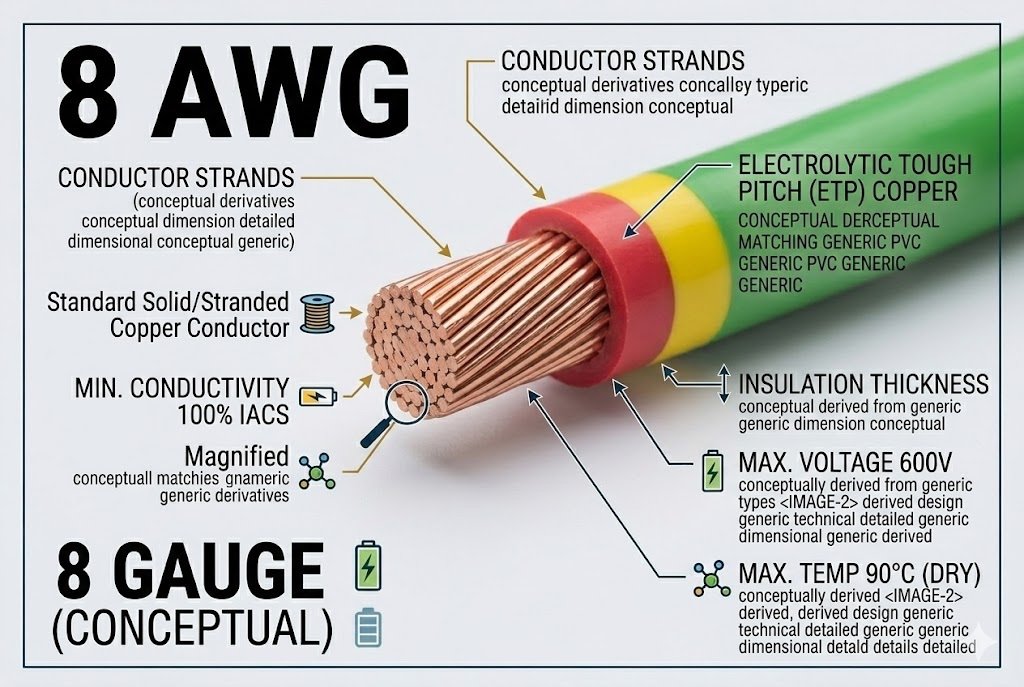
8 AWG wire2 typically carries 40 to 55 amps3 depending on insulation type and temperature rating. It has a diameter of approximately 3.26mm and is essential for medium-load industrial circuits4, serving motors, sub-panels, and heavy machinery requiring durable, high-conductivity connections.
Many engineers overlook specific insulation ratings5. This mistake leads to costly downtime. I will explain the details below so you can choose the right wire for your project.
What is the Ampacity and Physical Build of 8 AWG Wire?
You cannot guess current ratings. Using a wire that is too thin creates fire hazards immediately.
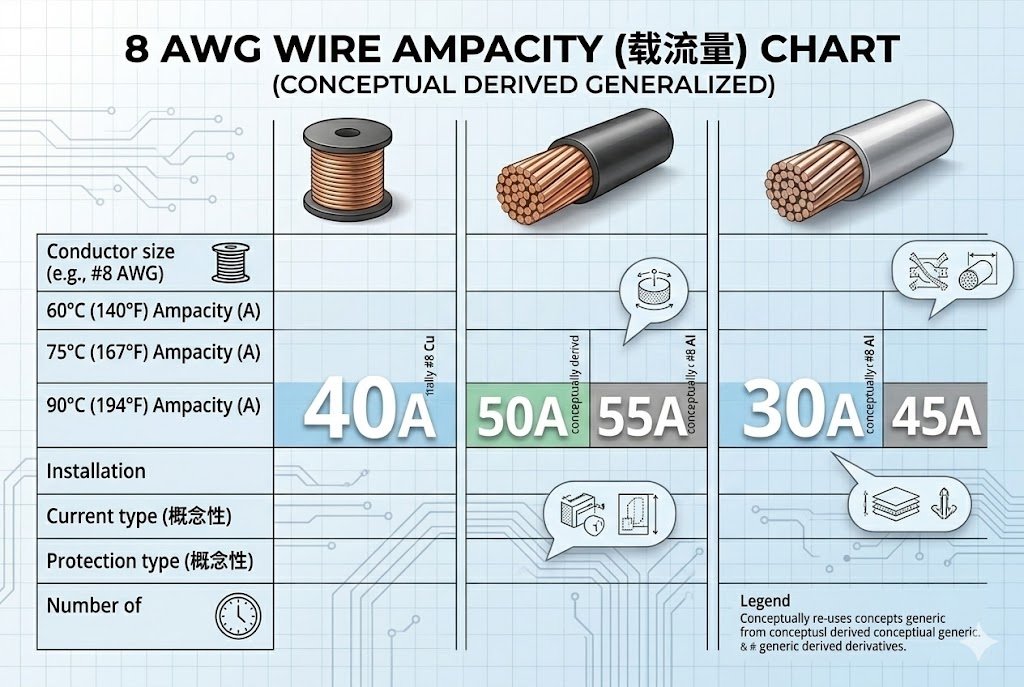
8 AWG copper wire handles 40 amps at 60°C, 50 amps at 75°C, and 55 amps at 90°C. Stranded wire offers flexibility, while solid core provides rigidity.
I have seen many project managers look at a wire and think it looks thick enough. This is dangerous. You must look at the numbers. The American Wire Gauge (AWG) system6 is standard. For 8 AWG, the diameter is roughly 3.26 millimeters. The cross-sectional area is about 8.37 square millimeters. These physical traits decide how much electricity the wire can hold.
Temperature Ratings7 Matter
The amount of power, or ampacity, changes with heat. The insulation type dictates the heat limit.
- 60°C Rating: This is common for standard TW cable. It handles around 40 Amps.
- 75°C Rating: This applies to cables like THW. It handles around 50 Amps.
- 90°C Rating: This is for high-end cables like THHN or XHHW-2. It handles up to 55 Amps.
Solid vs. Stranded Core8
You also have to choose between solid and stranded copper. Solid core is one single piece of copper. It is very strong. It is also very hard to bend. I recommend this for permanent wiring in walls where the wire does not move. Stranded core is made of many small wires twisted together. It is flexible. This is what you need for machines that vibrate or move.
Resistance and Voltage Drop9
Every wire resists electricity. For 8 AWG copper, the resistance is about 0.628 Ohms per 1,000 feet. If you run a wire a long distance, you lose voltage. If the run is over 100 feet, I suggest you calculate the drop. You might need to step up to a bigger wire to keep your machines running well.
How is 8 AWG Wire Used in Heavy Machinery and Distribution Panels?
Machines stop working when power delivery fluctuates. Inconsistent voltage damages sensitive industrial components over time.
This gauge connects large motors, HVAC units, and secondary power distribution panels. It balances flexibility with current capacity, making it perfect for wiring inside tight control cabinets.
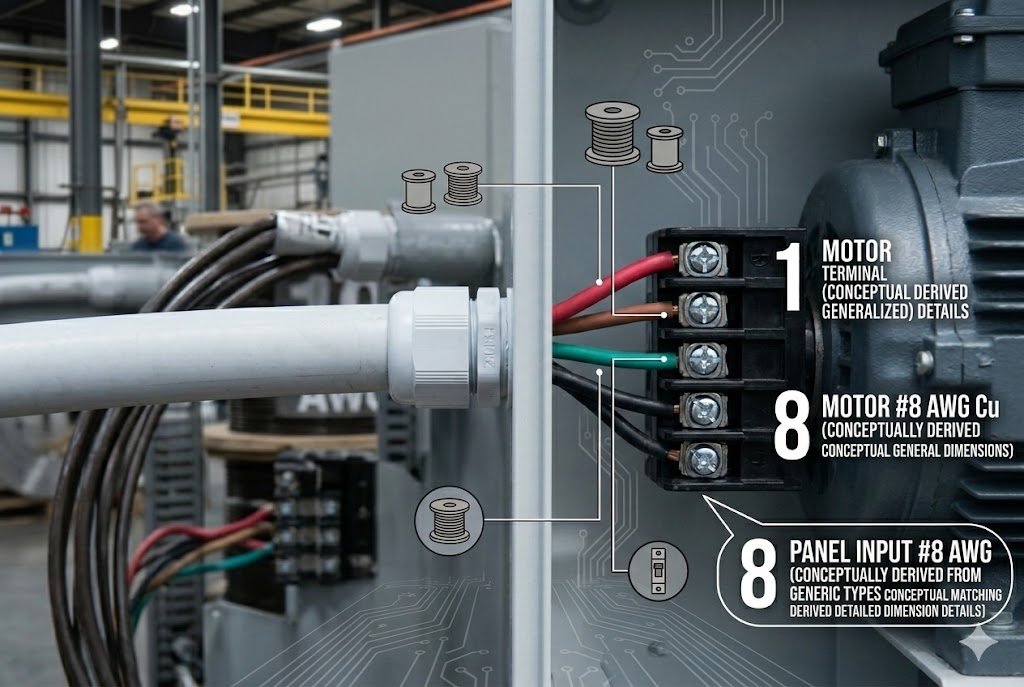
I work with many clients who build industrial systems. They often ask where 8 AWG fits best. It is a "middle ground" wire. It is not for the main power entry of a huge factory. It is also not for small sensors. It is for the workhorse equipment.
Powering Heavy Motors10
In a factory, large conveyor belts and pumps need reliable power. These motors often draw between 30 and 50 amps. 8 AWG is the standard choice here. It handles the startup surge current well. When a motor starts, it pulls a lot of power very fast. If the wire is too small, the voltage drops. The motor might stall or overheat. 8 AWG provides a safe buffer.
Control Panels and Sub-panels11
Inside a distribution panel, space is tight. You have to bend wires around breakers and relays. This is where the physical size of 8 AWG helps. It is thick enough to carry power to a sub-panel but thin enough to bend.
- Feeder Circuits: It connects the main breaker to a smaller box nearby.
- Branch Circuits: It runs from the panel to a specific machine, like a welder or an industrial oven.
Vibration Resistance12
Heavy machinery shakes. A lot. If you use solid wire here, it will break over time. It is like bending a paperclip back and forth. Eventually, it snaps. For these applications, you must use stranded 8 AWG. The strands act like a shock absorber. They allow the wire to move slightly without cracking the copper inside. At Nexcir, we always check if the client's application involves vibration. If it does, we advise against solid core wire immediately.
Which Insulation Type Offers Better Protection: THHN or XHHW?
Harsh environments destroy weak cable insulation. Chemicals and heat expose live wires and cause shorts.
THHN is thinner and easier to route but less resistant to moisture. XHHW provides superior protection against chemicals, abrasion, and water, making it better for harsh industrial zones.
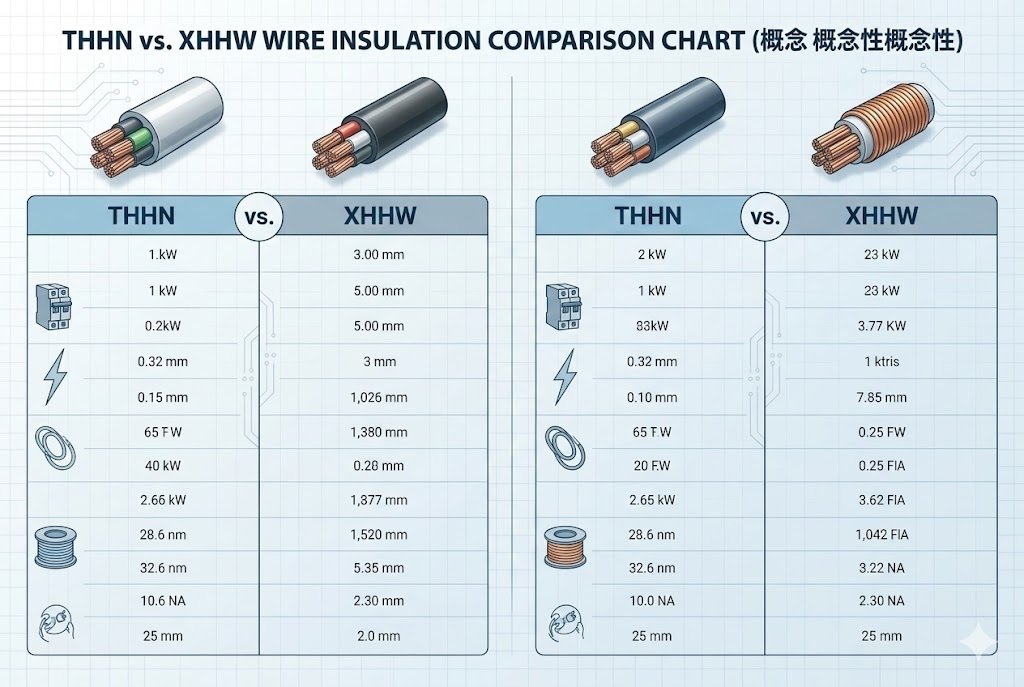
The copper carries the power, but the insulation keeps the facility safe. I often see people buy the cheapest wire. Usually, that is THHN. However, in an industrial setting, saving money on insulation is a bad idea. You need to understand the chemical and physical differences.
Understanding THHN (Thermoplastic High Heat-resistant Nylon-coated)
THHN is the most common building wire. It is made of PVC plastic with a nylon coating.
- Pros: It is thin. You can fit more wires into a conduit pipe. It is stiff and easy to push through pipes.
- Cons: It is not very strong against chemicals. If you have oil or acid leaks, PVC can degrade. It also creates toxic smoke if it burns.
Understanding XHHW (Cross-linked Polyethylene High Heat-resistant Water-resistant)
XHHW is a thermoset material. This means the plastic is "cured" like rubber. It does not melt easily.
- Chemical Resistance13: This is the big winner. XHHW resists oil, gasoline, and acids much better than THHN. In a factory with heavy machinery, leaks happen. XHHW protects the copper.
- Abrasion Resistance: The insulation is tougher. If you pull the wire over a sharp metal edge, XHHW is less likely to cut. This prevents short circuits.
- Moisture: The "W" stands for water. XHHW is better for damp locations.
| Feature | THHN | XHHW |
|---|---|---|
| Material | PVC + Nylon | XLPE (Cross-linked Polyethylene) |
| Thickness | Thinner | Thicker |
| Flexibility | Stiff | Slightly more rubber-like |
| Chemical Resistance13 | Low to Medium | High |
| Abrasion Resistance | Medium | High |
| Best Use | Dry indoor panels | Harsh industrial zones |
I always tell my clients: if the wire goes inside a clean wall, use THHN. If the wire goes near a machine that leaks oil or vibrates against metal, use XHHW. The cost difference is small compared to the cost of a fire.
Why is Sourcing Authentic 8 AWG Wire14 Critical for Safety?
Counterfeit copper clad aluminum looks like pure copper. It overheats and fails under standard loads.
Authentic 8 AWG wire2 uses pure oxygen-free copper for maximum conductivity. Verified sourcing prevents resistance buildup and ensures the cable meets all UL and international safety standards.
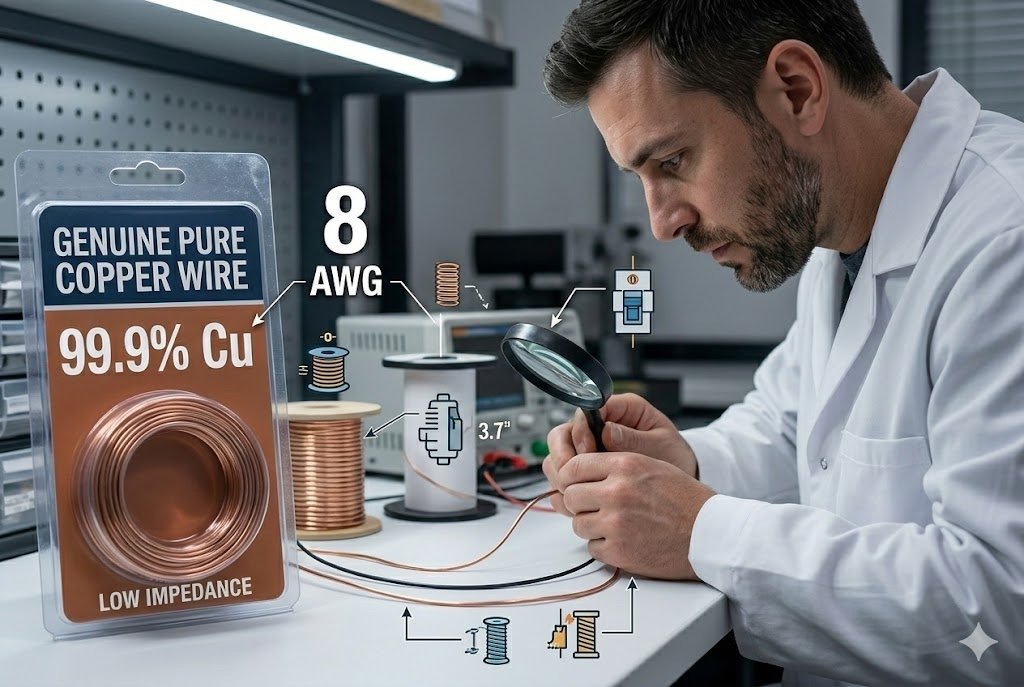
At Nexcir, we see a lot of "cheap" wire in the market. There is a reason it is cheap. The biggest scam in the wire industry is Copper Clad Aluminum (CCA)15.
The Danger of CCA
CCA wire has an aluminum core with a thin layer of copper on the outside. It looks like copper. It conducts electricity like aluminum.
- Conductivity: Aluminum is not as good a conductor as copper. An 8 AWG aluminum wire cannot handle the same current as an 8 AWG copper wire. If you run 50 amps through a CCA wire thinking it is copper, it will get very hot. It might melt the insulation.
- Brittleness: Aluminum breaks easily. If you bend CCA wire too much during installation, it snaps inside the insulation. You will have a broken circuit before you even turn the power on.
How to Verify Authenticity
You cannot always trust the label. You have to trust the source.
- Weight: Pure copper is heavy. If a spool of wire feels light, be suspicious.
- The Cut Test: If you cut the wire and see silver in the middle, it is aluminum. It is fake.
- Resistance Testing16: We use precision meters to check resistance. Pure copper has very low resistance. Impure metals have higher resistance.
Supply Chain Trust17
We source from authorized distributors and original manufacturers. This creates a paper trail. We know exactly where the copper came from. For industrial applications, you rely on the specs. You rely on the table saying "55 Amps." That table is only true if the copper is pure. If you buy from unknown sources to save a few cents, you risk the safety of your entire operation. We help our clients avoid this risk by guaranteeing the material composition of every meter of wire we supply.
Conclusion
8 AWG wire2 is vital for industrial power. Select the right insulation like XHHW for durability. Always source authentic copper to ensure safety and efficiency in your facility.
Understanding the risks of incorrect wire gauge can prevent costly and dangerous electrical failures. ↩
Learn about the capabilities and applications of 8 AWG wire to ensure it's the right choice for your project. ↩
Knowing the ampacity range helps in selecting the right wire for your electrical needs. ↩
Discover why 8 AWG wire is ideal for medium-load applications, ensuring efficient power delivery. ↩
Insulation ratings affect a wire's performance and safety, making them crucial for proper wire selection. ↩
Understanding the AWG system helps in selecting the correct wire size for your electrical projects. ↩
Temperature ratings determine how much current a wire can safely carry, impacting its performance. ↩
Choosing between solid and stranded core wires affects flexibility and durability in different applications. ↩
Learn how resistance and voltage drop can impact electrical efficiency and equipment performance. ↩
8 AWG wire is ideal for heavy motors due to its ability to handle high current and startup surges. ↩
Explore how 8 AWG wire fits into control panels and sub-panels for efficient power distribution. ↩
Vibration resistance ensures wire durability in environments with heavy machinery and movement. ↩
Chemical resistance ensures wire longevity and safety in harsh industrial environments. ↩
Authentic wire ensures safety and performance, preventing failures due to counterfeit materials. ↩
Understanding the risks of CCA wire helps avoid safety hazards and performance issues. ↩
Resistance testing ensures wire quality and authenticity, preventing the use of substandard materials. ↩
Trusting your supply chain ensures you receive high-quality, authentic materials for safe installations. ↩