AI needs more memory today. Old flat chips run out of space fast. I will show you how 3D DRAM solves this big problem for our industry.
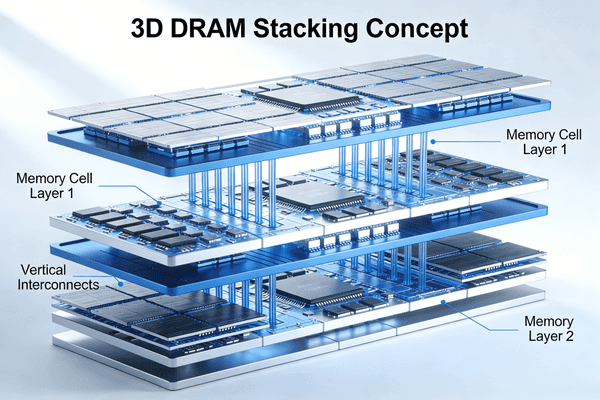
3D DRAM stacking1 is a new chip design method. It places memory cells on top of each other. This is just like floors in a tall building. This vertical design2 saves space. It holds much more data. It uses less power than traditional flat memory chips.
You might wonder how this shift changes your daily electronic component buying. Let me walk you through the core logic. I will show you the business reasons. I will also explain the future market race. These things will affect your supply chain very soon.
How are memory cells stacked vertically like a building?
Flat chips hit a hard wall. You cannot shrink them anymore. 3D stacking fixes this by building up. It saves space and boosts speed for your new projects.
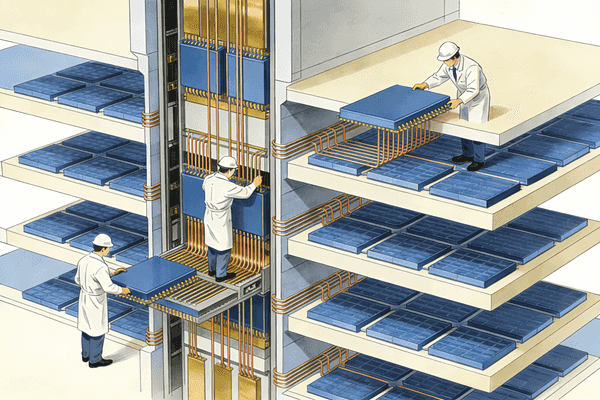
Engineers stack memory cells vertically instead of placing them side by side. They use tiny copper wires3 to connect these layers. This acts like a fast elevator. It moves data quickly between the different floors of the memory chip.
I remember a client asking me a hard question last year. He wanted to fit more memory into a small smart device. We could not find a flat chip small enough. This is why vertical stacking matters so much today. The old way of making chips is dead. Let me explain how we view this at Nexcir. We source electronic components every day. We see the clear trends. Customers want smaller devices. They want longer battery life. Old flat chips cannot do this anymore. 3D DRAM is the only answer. You stack the cells. You get more memory in the exact same spot. This is a huge win for hardware design.
The Shift from Flat to Vertical
In the past, we made chips better by making parts smaller. Now, physics stops us. The parts are too small. They leak power. They get too hot. 3D stacking changes the rules. We do not shrink parts. We put them on top of each other. This is exactly like building a skyscraper in a crowded city. You cannot buy more land. You must build up into the sky.
How the Data Elevator4 Works
The secret is the connection. Engineers call it TSV5. It punches tiny holes straight through the silicon. It fills these holes with copper. This lets data travel straight up and down. It is very fast. It saves a lot of power. Your engineers will love this new speed.
Flat vs Vertical Comparison
Let us look at the clear differences in this simple table.
| Feature | Flat DRAM | 3D DRAM |
|---|---|---|
| Design Style | Flat, side by side | Vertical, stacked layers |
| Space Used | Large board area | Very small board area |
| Data Speed | Standard speed | Very fast speed |
| Power Use | High at large scale | Low due to short wires |
| Buying Risk6 | High for new designs | Low for future designs |
At Nexcir, my team tracks these changes closely. We want to make sure you always get the right parts. We know real parts are vital for your success. We see 3D DRAM as the clear future for hardware engineers. We will help you buy them safely. We use our 20 years of experience to protect your supply chain.
Why is 3D DRAM the only way to meet AI memory demands7?
AI needs huge data fast. Flat memory is too slow and too small. If you do not use 3D DRAM, your AI projects will fail to run.
DRAM flat design has reached its physical limit. 3D DRAM is the only way to support AI. It offers huge memory space and high speed. It feeds data to AI chips quickly. It does not take up more space on the circuit board.
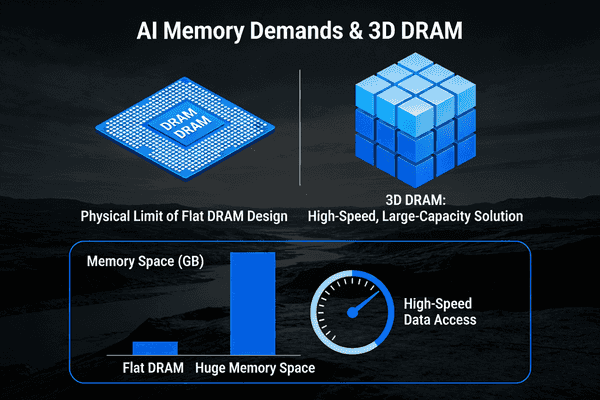
A few months ago, an auto hardware manager called me. He was very worried. His new smart car system needed huge memory. However, the board size was fixed. I told him the flat memory era is ending soon. For 20 years, we followed old rules. We made parts smaller. Today, we are at the limit. If we go smaller, the chip fails. This is a big pain point for the industry. We cannot squeeze more memory into a flat space. The physics just will not allow it. We deal with many AI hardware makers. They all have the same pain point. They need more data speed. They need lower power use. Fake chips8 are a big danger here. If you buy a fake AI memory chip, your whole server fails. Nexcir stops this. We trace every single part. We guarantee real parts. We give you peace of mind.
The Limit of Flat Chips9
We reached a wall. You cannot make the wires any thinner. If you try, the data jumps to the wrong wire. The chip breaks. Buyers cannot depend on flat chips for next-generation AI. You must plan for the future now.
AI Changes All Rules10
AI models are huge. They read billions of numbers every second. They need data instantly. Flat DRAM causes a big traffic jam. The main processor waits for data. This wastes time. This wastes power. 3D DRAM solves this problem completely. It acts like a massive, open highway. Data flows without stopping.
Why Buyers Must Prepare Now
Here is how this impacts your buying process.
| Buying Factor | Flat DRAM Impact | 3D DRAM Impact |
|---|---|---|
| Wait Time | Stable but aging | May change early on |
| Cost | Low but limited value | Higher but massive value |
| Fake Risk | High in spot market | Low for now |
| AI Value | Very poor | Excellent |
My team at Nexcir has over 20 years of experience. We help you find real 3D DRAM. We protect your supply chain from fake chips. We make sure your AI production never stops. We know how to manage these risks for you. We use our global supply network to find the best parts.
Who will win the 2026 commercial race in 3D stacking layers?
Waiting for the right chip is hard. Supply lines get delayed often. Samsung and SK Hynix are racing to build 3D DRAM by 2026 to fix this.
Samsung and SK Hynix are racing to sell high-layer 3D DRAM by 2026. They want to stack more layers to win the AI market. This race will push prices down. It will increase global supply. This makes it easier for buyers to get advanced chips.
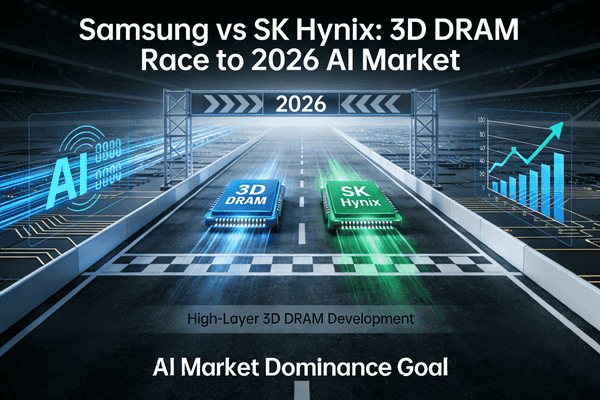
Last week, I read a new industry report. It reminded me of the old memory wars. Two giant companies are fighting again. This time, the battle is vertical. You need to care about this race. This competition is great for buyers. More competition means better technology. It means lower prices eventually. You might worry about early supply problems. Do not worry. Nexcir plans ahead. We talk to original makers. We build long supply programs. We will protect your factory from market shocks. We will keep your production running smoothly. I always watch these big companies. I want to know who will win. I want to know who will give my clients the best price.
The Samsung Plan11
Samsung wants to be first. They are testing new materials to stack layers higher. They want to build chips with many layers very soon. They have a lot of money. They can build massive factories. This means they can offer stable prices later. Stable prices help your budget.
The SK Hynix Plan12
SK Hynix is very strong in AI memory right now. They lead the fast memory market today. They know how to connect layers perfectly. They focus on quality. They focus on speed. They want to be the premium choice for AI builders.
What This Means for You
As a buyer, you need to know how this race helps your daily work.
| Company Aspect | Samsung | SK Hynix | Buyer Benefit |
|---|---|---|---|
| Main Focus | Mass production | High speed links | Better choices |
| Stacking Goal | Most layers | Best heat control | Cooler devices |
| Market Role13 | Price controller | Tech leader | Lower costs |
I always tell my clients to watch both makers. At Nexcir, we have strong global supply networks. We buy only from trusted channels. When 2026 comes, we will have these new chips ready for you. We will ensure you get 100 percent real parts on time. We will give you the best price. We will support your business growth.
Conclusion
3D DRAM stacking1 solves the space problem for AI. The 2026 race will bring better chips. Nexcir will always supply you with real, fast, and reliable memory components.
Explore how 3D DRAM stacking revolutionizes memory design by saving space and enhancing data capacity, crucial for modern electronic devices. ↩
Learn how vertical design in memory chips optimizes space and power usage, offering a solution to the limitations of traditional flat chips. ↩
Discover how tiny copper wires facilitate fast data transfer in 3D DRAM, acting like elevators between stacked memory layers. ↩
Learn about the data elevator concept in 3D DRAM, which speeds up data transfer and reduces power consumption. ↩
Understand TSV technology's impact on 3D DRAM, enabling rapid data movement and power efficiency through vertical connections. ↩
Understand the buying risks and benefits of transitioning from flat to 3D DRAM, ensuring informed purchasing decisions. ↩
Find out why AI's need for fast, large-scale data access makes 3D DRAM essential, overcoming flat memory's limitations. ↩
Learn about the risks of fake chips in AI memory, and how Nexcir ensures authenticity to protect your systems. ↩
Explore the physical constraints of flat chips that hinder their performance in AI applications, necessitating a shift to 3D DRAM. ↩
Discover how AI's demands are reshaping memory chip design, pushing the industry towards innovative solutions like 3D DRAM. ↩
Learn about Samsung's approach to leading the 3D DRAM market, focusing on mass production and stable pricing. ↩
Understand SK Hynix's focus on quality and speed in 3D DRAM, aiming to be the premium choice for AI applications. ↩
Find out how the market strategies of Samsung and SK Hynix influence pricing and technology options for buyers. ↩