Are your data center power costs out of control? High-speed data transfer creates huge power demands. I will show you how Co-Packaged Optics solves this growing problem.
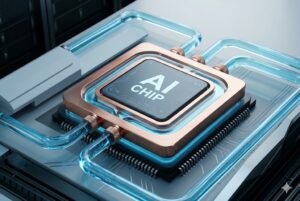
Co-Packaged Optics (CPO)1 is an advanced design that packages optical engines2 directly next to switch ASICs3 or AI chips4. This reduces the distance electrical signals travel on copper. It cuts power consumption and increases bandwidth for high-performance computing and data centers.
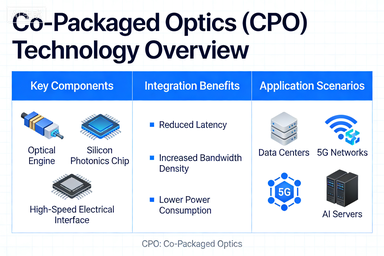
I remember a client who struggled with massive heat issues in their server racks last year. They almost delayed their entire AI project. You need to understand this new technology before your competitors do, or you will face the same costly delays.
How Does CPO Package Optical Engines Next to Chips?
Does your current hardware setup waste space and energy? Traditional pluggable modules sit far from the main chip. This old design causes signal loss and limits speed.
Co-Packaged Optics solves this by placing the optical engine and the main switch or AI chip on the same substrate. This shortens the electrical link to less than an inch. It changes how data centers build their core network hardware.
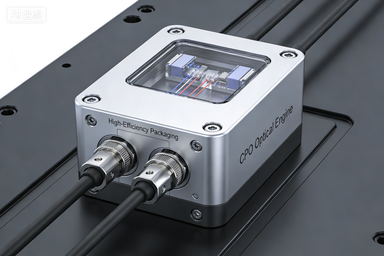
The Shift from Pluggable to Co-Packaged
Traditional network switches use pluggable optical modules. These modules sit on the front panel of the switch. The main switch chip sits in the middle of the board. The electrical signal must travel a long distance across the copper board to reach the pluggable module. This long trip causes the signal to lose strength. Engineers call this signal degradation5.
We must use extra chips like retimers6 to boost the signal. We also use heavy error correction methods. These extra steps add delay to the data transfer. CPO changes this entire layout. The optical engine moves away from the front panel. It sits right next to the main Application-Specific Integrated Circuit (ASIC)7.
Component Breakdown and Sourcing Risks
Let us look at the parts involved in a CPO system. We have the ASIC, the optical engine, and the external laser source8.
| Component | Pluggable Module Design | Co-Packaged Optics Design |
|---|---|---|
| Optical Engine Location | Front panel of the switch | Inside the chip package |
| Electrical Trace Length | Very long (several inches) | Very short (under one inch) |
| Signal Integrity | Poor over long copper lines | Excellent due to short distance |
| Space Efficiency | Takes up front panel space | Frees up front panel space |
I often talk to hardware engineers about these designs. They worry about sourcing these new integrated parts. They need 100% original electronic components. Counterfeit parts in a CPO setup will destroy the entire expensive board. At Nexcir, my team helps them find authorized channels for these exact parts. The high integration makes the board smaller and faster. But it makes the supply chain9 more critical. If one small part fails, the whole system fails. We ensure all products meet industry standards. This reduces procurement risks for our clients.
Why is Optical Transmission the Only Way to Break the Power Wall?
Are your copper cables burning too much power? Electrical signals lose energy over long copper wires. This power waste creates a massive heat problem for servers.
Optical transmission breaks the power wall10 because light does not suffer the same resistance as electricity. CPO uses light for almost the entire data journey. This stops the massive power drain caused by pushing high-speed electrical signals through copper lines.
The Copper Power Wall
High-speed data needs a lot of power. When you push 800G data through copper, the power cost is huge. The longer the copper wire, the higher the power consumption. This issue is the power wall10. Data centers cannot simply add more power to the building. They have strict power limits. They also have strict cooling limits.
In traditional setups, the Digital Signal Processor (DSP)11 inside the pluggable module uses a massive amount of electricity. It works hard to clean up the messy electrical signal that traveled across the board. CPO removes the need for this heavy processing. The signal stays clean because the copper path is so short.
How Light Solves the Heat Problem
Light travels through glass optical fibers12 without creating heat. I visited a client's server room in Europe recently. They build hardware for AI data centers. The cooling fans were so loud I could not hear my own voice. They used old copper connections for their high-speed links. By moving to optical transmission, they can lower their cooling needs.
| Transmission Type | Power Loss | Heat Generation | Cooling Requirement |
|---|---|---|---|
| Copper (Long trace) | High | Very High | Massive |
| Traditional Optical | Medium | High | High |
| Co-Packaged Optics | Low | Low | Moderate |
Our customers in the IoT and automotive space feel this pain too. They ask me for low-power PMICs13 and high-efficiency sensors. But the real fix for data centers is changing the main data path. CPO makes the electrical path tiny. This saves watts per port. In a big data center, saving a few watts per port saves millions of dollars over a year. We help our clients find the right components to optimize their procurement costs and improve their overall efficiency.
Will CPO Replace Pluggable Modules in 800G and 1.6T Switches by 2026?
Are you planning your network upgrades for the next few years? Buying the wrong switch tech now will trap you. You might waste money on outdated pluggable modules.
By 2026, CPO will start replacing traditional pluggable modules in large-scale 800G and 1.6T switch deployments. Pluggable modules will still exist, but CPO will take over the high-density core networks where power efficiency is the top priority.
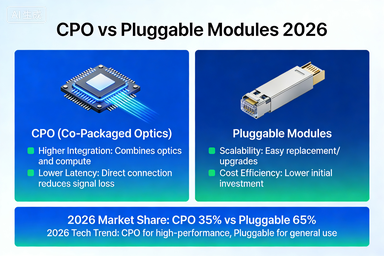
The 800G and 1.6T Era
We are entering the era of 800G and 1.6T network speeds. AI models need massive data fast. Traditional pluggable modules struggle at 1.6T speeds. They get too hot. They use too much power. I see this trend in our daily sourcing requests at Nexcir. OEM procurement managers ask for components for 800G switches right now. They also plan for 1.6T production next year.
There is a physical limit to pluggable modules. You can only fit a certain number of QSFP-DD14 or OSFP modules15 on the front faceplate of a switch. CPO moves the optics inside the box. This frees up the faceplate. It allows for higher density and more bandwidth per switch.
The Transition Timeline and Supply Chain
CPO will not replace everything overnight. The market will split. Edge networks will still use pluggable modules. Core networks and AI clusters will use CPO.
| Network Speed | Preferred Technology (2026) | Primary Reason |
|---|---|---|
| 400G and below | Pluggable Modules | Cost effective, easy to replace |
| 800G | Mixed (Pluggable & CPO) | Transition phase, power concerns begin |
| 1.6T and above | Co-Packaged Optics | Required to manage heat and power |
At Nexcir, we prepare our global supply network for this shift. We track the supply chain9 for both pluggable optics components and new CPO parts. Customers want stable pricing without market fluctuations. The new CPO parts are expensive right now. But prices will drop as production grows. Hardware engineers must design their new boards today for 2026 deployment. We help them find the right original semiconductors. We provide dependable delivery capabilities so they can test their new CPO designs without delays. We aim to grow alongside our clients during this major technology shift.
Conclusion
CPO moves optical engines2 next to main chips to save power and boost speed. It is the future of 800G and 1.6T networks for AI and data centers.
Understanding CPO is crucial for optimizing data center efficiency and staying ahead in technology advancements. ↩
Optical engines are key to reducing power consumption and increasing bandwidth, essential for high-performance computing. ↩
Switch ASICs are vital for efficient data processing and communication within data centers, enhancing overall performance. ↩
AI chips paired with CPO can significantly enhance processing speed and reduce energy consumption, crucial for AI applications. ↩
Signal degradation affects data transfer speed and reliability, understanding it helps in optimizing network design. ↩
Retimers are essential for maintaining signal integrity over long distances, crucial for reliable data transmission. ↩
ASICs are tailored for specific applications, offering optimized performance and efficiency in data centers. ↩
External laser sources are integral to CPO, providing efficient optical transmission and reducing power consumption. ↩
A stable supply chain ensures reliable access to components, crucial for successful CPO implementation. ↩
Overcoming the power wall is crucial for reducing energy costs and improving data center efficiency. ↩
DSPs are crucial for processing signals, understanding their role helps in optimizing network performance. ↩
Glass optical fibers offer low resistance and heat generation, making them ideal for efficient data transmission. ↩
PMICs are essential for power management, ensuring efficient energy use in data centers. ↩
QSFP-DD modules are crucial for high-speed data transmission, understanding them aids in network design. ↩
OSFP modules offer unique advantages for high-speed data transmission, essential for modern network setups. ↩