Chip designs face physical limits today. Slower data speeds ruin system performance and frustrate engineers. Foveros Direct1 solves this by changing how chips connect entirely.
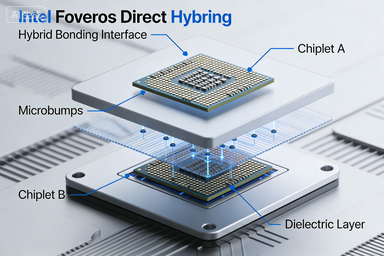
Foveros Direct1 is an advanced packaging technology from Intel. It removes traditional solder bumps2. Instead, it uses direct copper-to-copper connections3 between chips. This method creates a flat surface, linking chiplets together with extreme precision. It allows faster data flow and uses much less power for modern electronics.
You might wonder how this shift impacts your daily supply chain operations. I remember a recent project where an OEM client struggled with heat and space issues in their new design. They needed a fast solution. If you want to understand why traditional packaging is failing and how this new tech changes the game, keep reading.
How Does Foveros Direct1 Eliminate Traditional Solder Bumps?
Solder joints take up too much space. Big gaps between chips cause signal delays4 and waste power. Direct copper connections fix this problem by fusing metals instantly.
Foveros Direct1 works by polishing copper pads until they are perfectly flat. It then presses the chips together at room temperature. The copper atoms bind directly to each other. This process removes the need for bulky solder balls, making the connection much thinner and highly efficient.
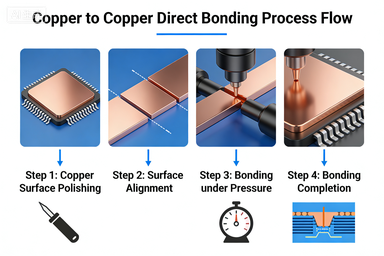
I see many engineers dealing with broken solder joints. In my 20 years in the electronic components industry, traditional flip-chip methods always had limits. You melt a tiny metal ball to connect two parts. But those balls can only get so small. If they get too small, they melt together and cause a short circuit. This wastes money and ruins production schedules.
The Shift to Copper-to-Copper
Foveros Direct1 changes the rules. We do not melt metal anymore. We clean the copper and push it together. The atoms share electrons and become one solid piece. This is called hybrid bonding5.
Why is this important for OEM procurement managers6? Because it changes what parts you need to buy. You no longer worry about solder quality. You care about silicon flatness. Let us break down the differences.
| Feature | Traditional Solder Bumps | Foveros Direct1 (Hybrid Bonding) |
|---|---|---|
| Connection Method | Melted metal balls | Direct atomic level copper fusion |
| Bump Pitch | 50 to 36 microns | Under 10 microns |
| Heat Generation | High | Very Low |
| Risk of Shorting | High at small sizes | Almost zero |
Supply Chain Impact
When you design industrial IoT devices, space is tight. You need small parts. At Nexcir7, we source the newest silicon modules for our clients. I tell my clients to prepare for this shift. If your factory relies on old soldering machines, you might fall behind. You need clean room environments8 for hybrid bonding5. The air must be pure. One speck of dust can ruin the flat copper surface. This means the manufacturing cost shifts from the materials to the clean room control. Hardware engineers must understand this when they plan their next big project. You must secure reliable channels for these advanced parts early.
Why Do Engineers Need a 10x Increase in Interconnect Density?
Data moves too slowly between chips right now. This bottleneck limits AI and automotive processing speeds. Higher contact density solves this by acting like a massive multi-lane highway.
Foveros Direct1 increases interconnect density9 by more than ten times compared to older methods. It allows over 10,000 connections per square millimeter. This massive density drastically reduces electrical latency10. Data travels faster, and signals stay strong, which is critical for high-performance computing and smart car systems.
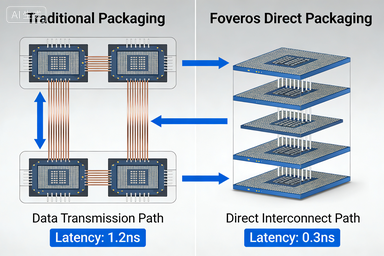
Every day, our OEM customers ask for faster MCUs and PMICs. They want to build smart systems that react in real time. But the physical distance between chips slows things down. We call this electrical latency10.
Solving the Speed Problem
Imagine a city with only one small road. Traffic jams happen all the time. Traditional chip packaging is like that small road. The data gets stuck. Foveros Direct1 builds a massive highway with ten times more lanes. The data moves freely.
I once helped a hardware engineer who was building a radar system for cars. He needed zero delay in signal processing. Older chips could not do it. The distance between the memory and the processor was too great. With hybrid bonding5, the memory sits directly on top of the processor. They act like a single piece of silicon.
Density and Performance Breakdown
Let us look at how density affects your system performance.
| Metric | Standard Packaging | Foveros Direct1 Packaging | Business Value for OEMs |
|---|---|---|---|
| Wire Length | Long | Extremely Short | Faster data transfer |
| Latency | High | Near Zero | Real-time processing for AI |
| Power Use | High | Low | Longer battery life for IoT |
| Signal Loss | Noticeable | Minimal | Better reliability and safety |
Lowering Procurement Risks
At Nexcir7, we know that better technology reduces long-term risks. When you use chips with Foveros Direct1, your final product works better. It uses less power. It does not overheat. This means fewer customer returns and a stronger brand for you. You save money on cooling parts because the chips run cooler. The initial cost of the chip might be higher. But the total system cost goes down. This is how smart procurement managers optimize their supply chains. They look at the whole picture, not just the single part price.
Will Foveros Direct1 Define the Success of Intel 18A in 2026?
Foundries struggle to keep Moore's Law11 alive. Falling behind means losing billion-dollar contracts. Intel uses Foveros Direct1 in its 18A node to win back the market lead.
By 2026, Foveros Direct1 will be a standard feature for the Intel 18A manufacturing node. It is a key technical indicator for the success of Intel's IDM 2.0 strategy12. If Intel perfects this hybrid bonding5, they can offer unmatched performance to global tech companies.
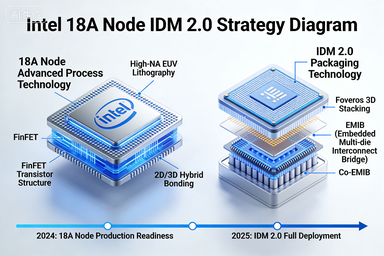
The semiconductor market13 changes fast. Over my 20 years in this business, I have seen giants fall and rise. Right now, Intel is pushing its IDM 2.0 plan. They want to build chips for other companies, not just for themselves. To do this, they need a winning technology.
The Role of the 18A Node
The 18A node is their big bet for 2026. But making the transistors smaller is not enough anymore. The way you put the chips together is what matters most. That is why Foveros Direct1 is the true test. If they can mass-produce hybrid bonding5 with high yields, they win. If they fail, they lose clients to other foundries.
I tell my procurement clients to watch this timeline closely. When a new node drops, it shifts the whole supply chain. Old parts become End-of-Life (EOL). New parts take over.
IDM 2.0 Strategy Analysis
Here is how Foveros Direct1 fits into the bigger picture.
| Strategy Goal | How Foveros Direct1 Helps | Impact on Global Supply Chain |
|---|---|---|
| Attract Fabless Clients | Offers best packaging tech | More choices for OEM buyers |
| Beat Competitors | Lowers power and latency | Drives market prices down |
| Secure US Production | Builds local advanced fabs | Reduces global shipping risks |
Preparing Your Sourcing Strategy
As an independent distributor, Nexcir7 tracks these factory shifts. We know that when Intel 18A ramps up, demand for compatible PMICs and sensors will spike. You must plan your 2026 sourcing now. You cannot wait until the parts are out of stock. You need a trusted partner who knows original manufacturers and authorized channels. We help you avoid fake parts when the market gets tight. By understanding Intel's roadmap, we help you keep your production lines running smoothly and safely. We make sure you get authentic parts14 on time.
Conclusion
Foveros Direct1 changes chip design by replacing solder with copper. It boosts speed, cuts latency, and drives Intel's 2026 future. Smart supply chains must adapt to this new technology now.
Explore how Intel's Foveros Direct technology revolutionizes chip design, enhancing speed and efficiency in modern electronics. ↩
Understand the limitations of traditional solder bumps and why new technologies are making them obsolete. ↩
Learn about the innovative copper-to-copper connections that improve data flow and reduce power usage in chip technology. ↩
Find out how Foveros Direct technology reduces signal delays, improving overall system performance. ↩
Discover the benefits of hybrid bonding, a method that enhances chip connection precision and efficiency. ↩
Understand the implications of Foveros Direct for OEM procurement, including changes in component sourcing and manufacturing. ↩
Discover how Nexcir assists clients in sourcing cutting-edge silicon modules for modern electronic devices. ↩
Learn why maintaining clean room environments is essential for successful hybrid bonding in chip manufacturing. ↩
Find out how higher interconnect density boosts data transfer speeds and reduces latency in chip systems. ↩
Discover how Foveros Direct technology minimizes electrical latency, enhancing real-time processing capabilities. ↩
Explore the connection between Foveros Direct and Moore's Law, and how it helps overcome physical limits in chip design. ↩
Learn about Intel's IDM 2.0 strategy and its influence on global semiconductor production and supply chains. ↩
Explore the changes in the semiconductor market driven by innovations like Foveros Direct and their global implications. ↩
Learn the importance of sourcing authentic parts to ensure quality and reliability in semiconductor production. ↩