Data centers face high costs and strict rules. You might struggle to build custom chips. I will show you how RISC-V solves this problem for modern hardware design.
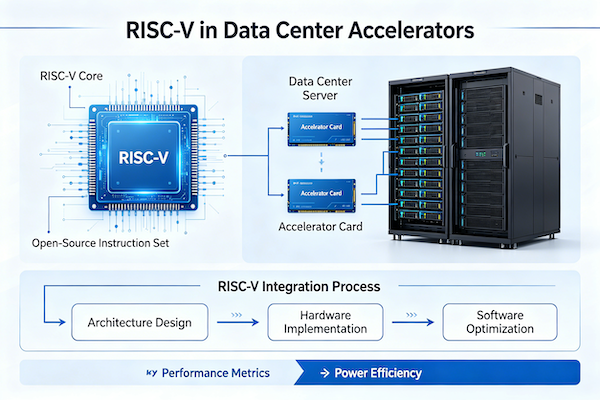
RISC-V plays a key role in data center accelerators1 by acting as a flexible, open-source base for custom coprocessors2. It helps companies manage heavy AI workloads3, reduce expensive licensing fees4, and avoid strict export limits5. This makes chip design faster and much cheaper for big tech companies.
You might wonder why big tech companies care so much about this open-source instruction set6. I remember when my team at Nexcir7 first saw the massive demand for custom AI chips8. A client came to us looking for a way to secure parts for a new data center project. They were tired of paying huge fees for standard processors9. They wanted to build their own hardware to save money and get better performance. We noticed a huge shift in the market right then. Companies no longer want to rely on one single brand. They want freedom. They want to control their own supply chains10. As an independent distributor, we see this every day. Our goal is to help you lower procurement risks. We want to make sure you get authentic electronic components. Let us look closer at why this change is happening right now and how it affects your daily work. We will see how this technology can solve your biggest production headaches.
How Does Open-Source RISC-V Help Build Custom Coprocessors?
Standard chips often fail to meet unique AI demands. Your hardware might run too slow. RISC-V gives you the exact tools to build custom coprocessors2 that fit your exact needs.
RISC-V helps build custom coprocessors2 because it uses an open-source instruction set6. Engineers can add or remove specific instructions to match their exact workloads. This flexibility allows teams to create highly specialized chips that process data much faster than standard, off-the-shelf processors.
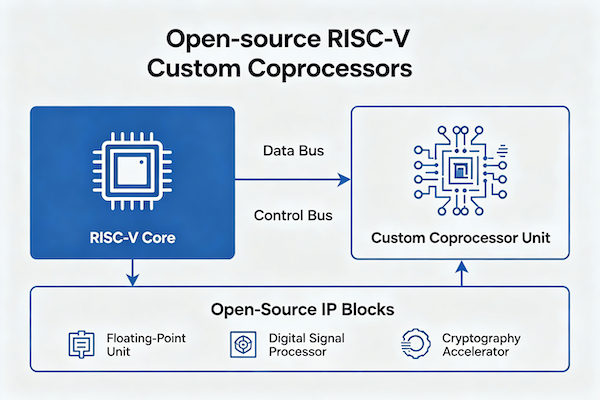
Let us break down why this matters for your hardware projects. When I talk to OEM managers11, they always ask about performance. Standard processors have fixed rules. You cannot change them easily. RISC-V is different. It is like a set of building blocks. You only pick the blocks you need.
Why Customization Matters for Data Centers
Data centers handle massive AI tasks today. These tasks need special hardware to run fast. If you use a standard chip, you waste power on things you do not need. Every watt of power costs money. Every second of delay hurts the user experience. With RISC-V, you only build what you need. This saves energy and speeds up the work. You can add specific instructions to run math problems faster. You can remove parts that handle graphics if you only process text. This level of control is amazing for hardware engineers.
When you use a standard chip, you must write software that fits the chip. This takes a lot of time. With RISC-V, you can change the hardware to fit your software. This reverse approach is very powerful. It saves months of development time. Engineers can focus on making the AI smarter. They do not have to fight the hardware limits.
Comparing Standard Chips to RISC-V Coprocessors
| Feature | Standard Processors | RISC-V Custom Coprocessors |
|---|---|---|
| Instruction Set | Fixed and locked | Open and flexible |
| Power Use | High (wasted energy) | Low (highly optimized) |
| Design Cost | High upfront costs | Lower custom design cost12s |
| Workload Match | General tasks | Specific AI and data tasks |
At Nexcir7, we supply many components for these custom boards. We provide the memory chips and power regulators that support these new processors. We see hardware engineers choosing RISC-V to design better AI accelerators. They want full control over the chip design. This open-source model gives them that power. It removes the old limits of fixed hardware design. They can test new ideas quickly. They can bring products to the market faster. This gives them a huge advantage over competitors who still use old, locked chip designs.
Can RISC-V Help Companies Bypass Expensive Licensing Fees and Export Limits?
High licensing fees4 eat your budget. Strict export bans stop your global sales. RISC-V offers a free, open standard that completely removes these heavy financial and legal burdens.
Yes, RISC-V helps companies avoid expensive Arm licensing fees4 because it is an open standard. It also helps bypass strict export limits5 since no single country owns the core technology. This keeps production costs low and protects global supply chains10 from sudden trade blocks.
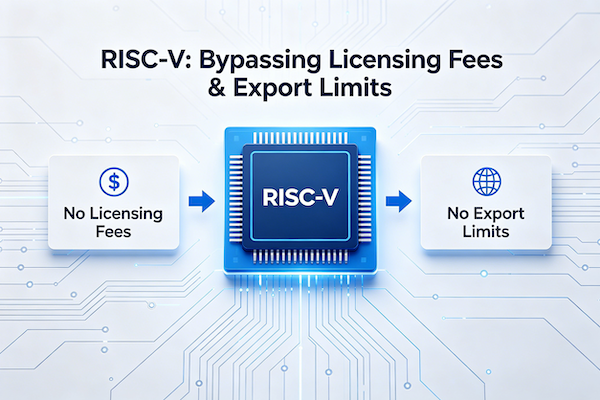
I often hear procurement managers worry about rising chip costs. Traditional chip architectures charge very high fees. You have to pay millions of dollars just to use their design rules. This hurts your profit margins before you even make a single chip. Trade rules also make things worse. Many countries block the export of advanced chip technology. This creates a nightmare for global supply chains10.
The True Cost of Closed Systems
When you rely on closed systems, you take on big risks. The owner can raise prices at any time. Governments can stop you from buying the technology. Your production line might stop without warning. This is a huge pain point for modern electronic manufacturing. You need a way to keep your factory running. You need to keep costs low.
OEMs face huge pressure to cut costs today. Management always asks procurement teams to lower the bill of materials. This is hard when core processor fees keep going up. You also face the danger of counterfeit parts when supply chains10 get messy. Scammers try to sell fake chips when real ones are hard to find. We know this pain. At Nexcir7, we guarantee 100% authentic components. We protect you from fake parts.
How RISC-V Solves Cost and Supply Risks
| Risk Factor | Closed Systems | Open Systems (RISC-V) |
|---|---|---|
| Licensing Fees | Millions of dollars | Zero core licensing fees4 |
| Export Control | High risk of sudden bans | Very low risk, global standard |
| Vendor Lock-in | High | None |
| Supply Chain Trust | Dependent on one owner | Distributed global support |
As an electronic component distributor13, I know how important stable prices are. Nexcir7 helps clients secure stable pricing every day. RISC-V fits perfectly into this goal. It gives companies a way to build their own chips without paying a central owner. It keeps the supply chain safe from political fights. No single country owns RISC-V. It is open to the whole world. You get better control over your own product life cycles. You do not have to worry about sudden bans. You can plan your long-term supply programs with peace of mind.
Will Tech Giants Like Meta and Google Use More RISC-V Cores by 2026?
Big tech needs faster AI chips now. Relying on outside vendors slows them down. By 2026, Meta and Google will heavily integrate RISC-V to control their own hardware future.
Tech giants like Meta and Google will likely use many more RISC-V cores14 by 2026. They are adding these open-source management cores directly into their custom AI chips8, like MTIA and TPU. This helps them manage data faster and depend less on outside chip companies.
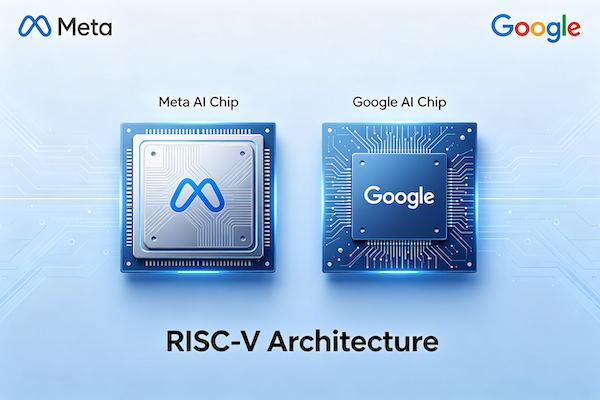
We watch market trends very closely at Nexcir7. My team sees a clear shift in how big companies build data centers. Google has its Tensor Processing Unit (TPU)15. Meta has its Meta Training and Inference Accelerator (MTIA)16. They do not want to buy ready-made chips anymore. They want to make their own. This helps them beat their rivals.
The Shift to Internal Chip Design
These massive companies need to process AI data fast. They want to control their own destiny. They invest billions of dollars into their own silicon labs. This helps them stay ahead in the AI race. Standard management cores slow down their custom accelerators. They take up too much room on the silicon. They also burn too much heat. To fix this, they use RISC-V. It acts as a small, efficient traffic cop inside their giant AI chips. It manages the data flow without taking up too much space or power. It talks to the main AI engines perfectly. It keeps the whole system running cool.
Predicted RISC-V Growth in Tech Giants
| Company | Custom Chip Name | Current RISC-V Use | 2026 Expected RISC-V Use |
|---|---|---|---|
| TPU | Growing slowly | High integration for management | |
| Meta | MTIA | Early testing | Core part of chip architecture |
| Others | Custom AI ASICs | Exploring options | Standard for custom coprocessors2 |
By 2026, I expect to see a huge jump in this trend. These companies will replace old, expensive cores with free RISC-V cores14. This shift will change the whole electronic component supply chain. It will push more hardware engineers to learn and use RISC-V. Factories will need new tools to build these chips. Long-term supply programs will need to adapt to these new ASIC designs. At Nexcir7, we are preparing our global supply network to support this massive wave of new, custom-designed hardware. We make sure we have the right authentic components ready for our clients. We want to help you build the next future smoothly.
Conclusion
RISC-V changes data centers by offering free, flexible chip designs. It cuts costs, avoids export limits5, and powers the next generation of custom AI accelerators for global tech leaders.
Understanding data center accelerators can help you optimize AI workloads and reduce costs in your tech infrastructure. ↩
Custom coprocessors allow for tailored hardware solutions, enhancing performance and efficiency in data processing tasks. ↩
AI workloads are crucial for modern data centers, affecting performance and efficiency. Learn how to manage them effectively. ↩
Licensing fees can significantly increase chip design costs. Discover ways to minimize these expenses. ↩
Export limits can restrict global sales and impact supply chains. Learn how to navigate these challenges. ↩
Exploring open-source instruction sets can provide insights into flexible and cost-effective hardware design. ↩
Nexcir provides essential services for securing authentic electronic components, reducing procurement risks. ↩
Custom AI chips offer enhanced performance and cost savings. Discover how they are designed and utilized. ↩
Standard processors may not meet AI demands. Explore alternatives for better performance and efficiency. ↩
Understanding supply chains is key to ensuring the availability of authentic electronic components. ↩
OEM managers encounter unique challenges in hardware design. Learn how to overcome them with innovative solutions. ↩
Reducing design costs is crucial for competitive chip manufacturing. Discover strategies to achieve this. ↩
Electronic component distributors are vital for ensuring the availability and authenticity of components in the tech industry. ↩
RISC-V cores offer flexibility and cost savings, making them attractive to tech giants for custom AI solutions. ↩
Google's TPU is designed to accelerate AI processing. Learn how it contributes to faster and more efficient AI tasks. ↩
MTIA is a key component in Meta's AI strategy. Understanding its function can provide insights into AI advancements. ↩