Are you struggling to balance high performance with low Bill of Materials1 costs for your new smart devices? You might be overpaying for complex chipsets.
The ESP32-S32 is the top choice for 2025 because it integrates AI acceleration3 and an LCD interface. This dual capability allows manufacturers to build voice-controlled smart screens4 without extra DSPs or display drivers, significantly reducing production costs.
I talk to engineers and procurement managers every day. They often feel stuck. They want advanced features like voice control and touch screens. But budgets are tight. They think they need expensive processors to do these tasks. Let me explain why this specific chip changes the game for your business.
How does ESP32-S32 reduce BOM costs by replacing DSP chips?
You usually need a separate, expensive chip to handle voice commands in smart appliances. This hurts your profit margins significantly.
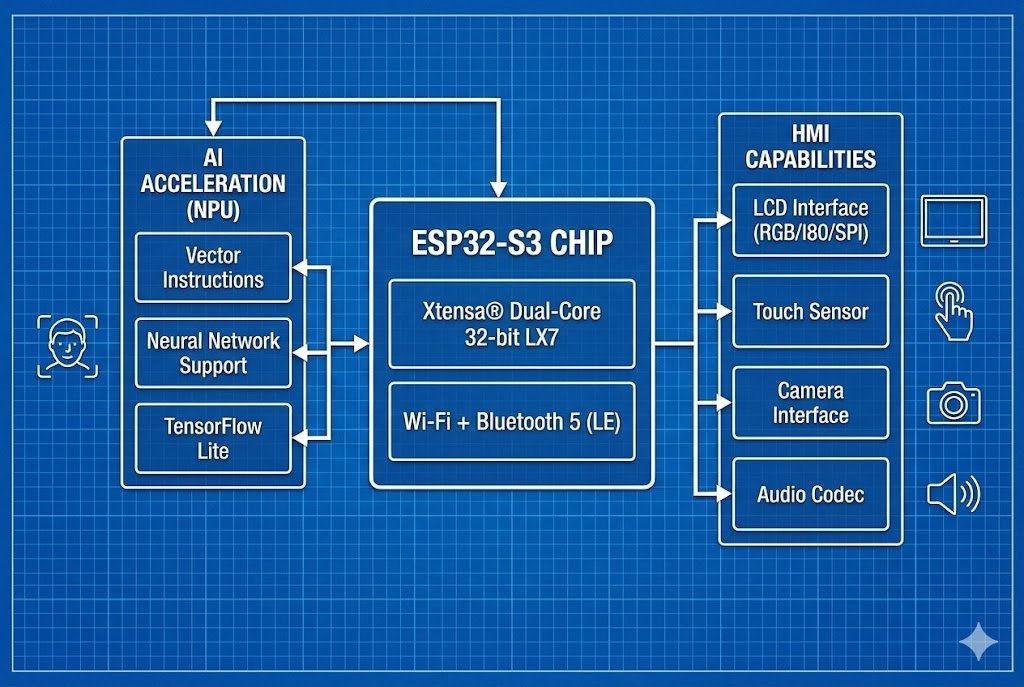
The ESP32-S32 features built-in vector instructions for AI acceleration3. It handles offline voice recognition and wake-word detection natively. You can remove the dedicated DSP chip from your design, saving money and board space.
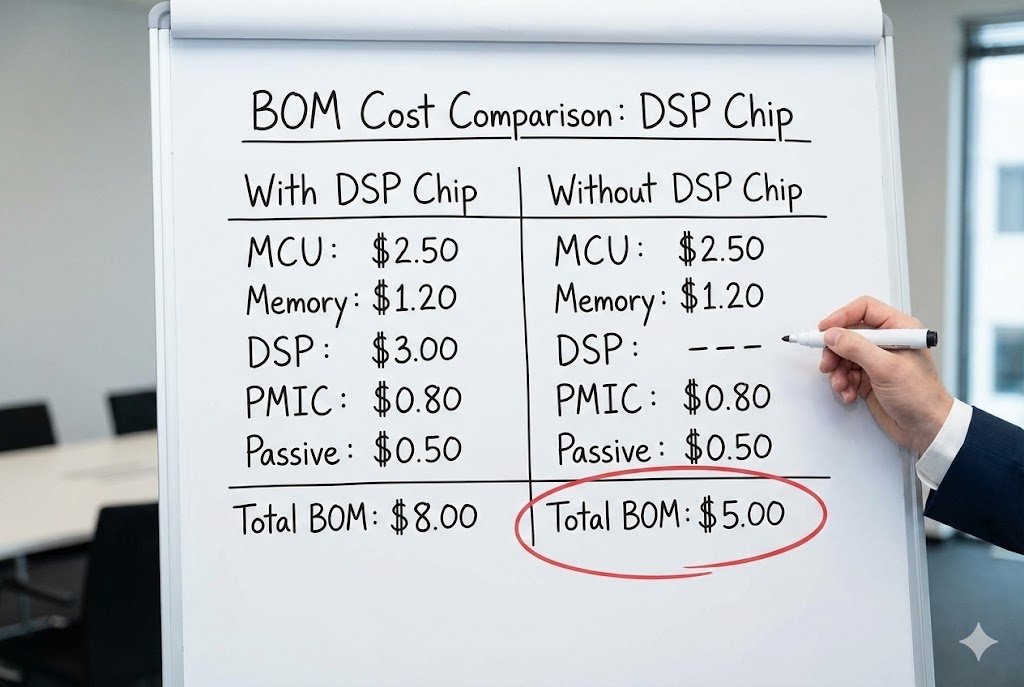
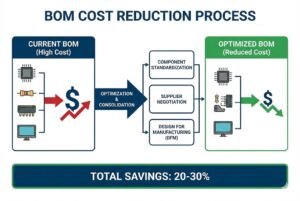
At NexCir, we analyze Bill of Materials1 (BOM) for many clients. A common pain point is the cost of voice control. In the past, you needed a microcontroller plus a Digital Signal Processor5 (DSP). The DSP handles the audio processing. This adds cost. It adds complexity.
The ESP32-S32 changes this structure completely. It uses an Xtensa® dual-core 32-bit LX7 microprocessor6. The key feature is the support for vector instructions. This allows the chip to do math very fast. It effectively processes neural networks7. You can run offline voice commands directly on the main chip.
For example, consider a smart fan or a light switch. It needs to understand "Turn On" or "Turn Off." The S3 does this without an internet connection. You do not need a $2 external DSP chip anymore. This is huge for mass production. If you make 100,000 units, you save a significant amount of money.
We see this as a major strategic advantage. You simplify the supply chain. You source one part, not two. This reduces risk. You also lower the power consumption8. The device wakes up only when needed. This is perfect for battery-powered devices.
Here is a breakdown of the savings:
| Component | Traditional Design | ESP32-S32 Design |
|---|---|---|
| Main MCU | Required | Required (ESP32-S32) |
| Audio DSP | Required ($1.50 - $3.00) | Not Required ($0) |
| PCB Complexity | High | Low |
| Supply Chain Risk | High (2 vendors) | Low (1 vendor) |
We help clients switch to this architecture. It is not just about technology. It is about business efficiency.
Why is the RGB interface crucial for modern smart home appliances?
Customers demand beautiful, colorful touch screens on everything, but driving these screens is usually complicated and slow.
The ESP32-S32 includes a parallel RGB LCD interface9 capable of driving large, high-resolution screens directly. It supports fluent graphics and touch interaction for smart home interfaces, eliminating the need for expensive external display drivers.
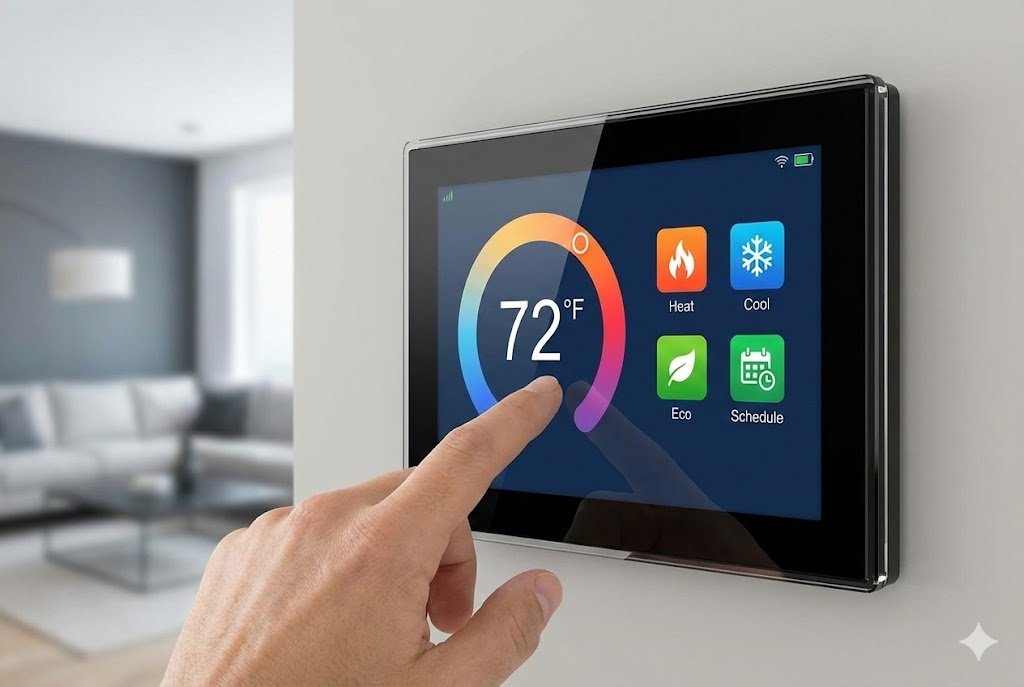
Visual appeal sells products. I see this trend in every sector. Even thermostats and coffee machines now have color screens. The user interface (HMI) is the face of your product.
Many standard microcontrollers struggle here. They only support SPI screens. SPI is slow. It works for small text, but not for images. It cannot handle animations well. The ESP32-S32 supports a parallel RGB interface. This is a big deal. It acts like a much more expensive processor.
It can drive 4.3-inch or even 7-inch screens smoothly. It supports resolutions like 800x480. You get 60 FPS performance. This makes the user interface feel premium. We recommend this for washing machines, smart panels, and kitchen appliances.
You do not need an extra MCU just for the screen. The S3 handles the logic. It handles the Wi-Fi. It handles the screen. This integration is powerful. It allows traditional manufacturers to upgrade products easily. You get a "smartphone-like" feel on a budget.
Also, the software ecosystem is strong. You can use libraries like LVGL. This makes designing the interface easier. Your engineers can drag and drop buttons. They can create nice sliders.
This capability opens new markets. You can upgrade a boring appliance into a premium smart device. You do not need to be a computer expert. The hardware makes it accessible.
Key benefits for HMI applications10:
- Direct Drive: Connects straight to the panel.
- High Speed: Parallel data transfer is faster than serial.
- Cost Efficiency: No external RAM needed for smaller screens.
- Flexibility: Works with capacitive touch panels easily.
Is the ESP32-S32 a safe bet for long-term supply stability11?
Relying on older chips often leads to end-of-life notices and panic buying. You need a component that will last for years.
Espressif has committed to long-term longevity for the ESP32-S32 series. As a newer generation chip, it guarantees supply stability11 for the next decade, making it a safer investment than older, potentially obsolete alternatives.
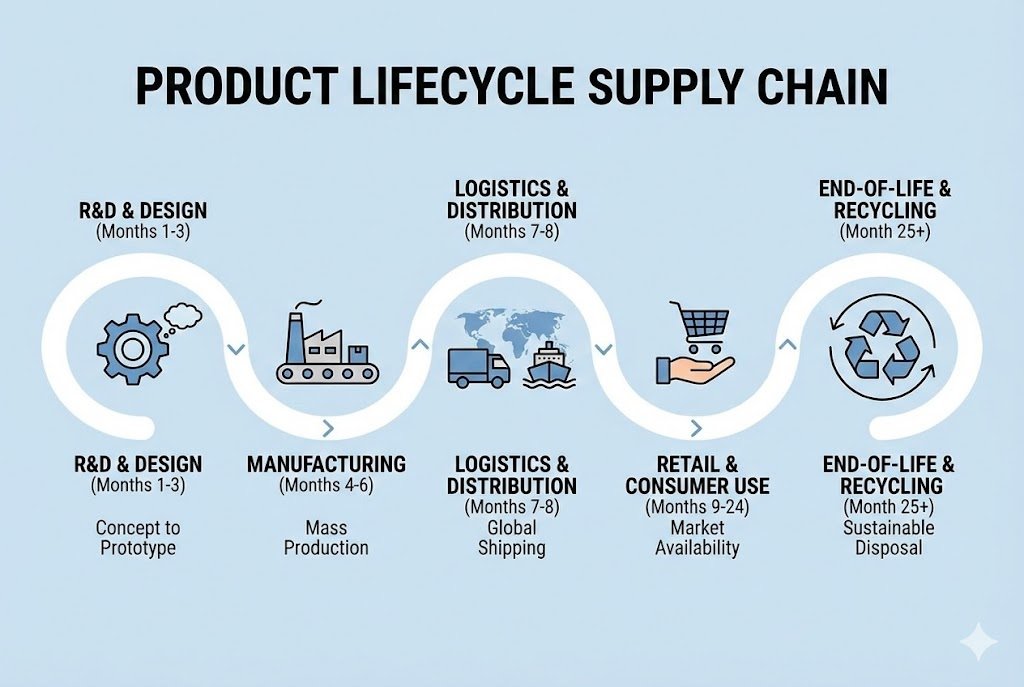
We founded NexCir to solve supply headaches. We do not just sell parts. We look at lifecycles. We want our partners to be safe.
The ESP32-S32 is in the "Growth" phase. It is not going away soon. Older chips like the original ESP8266 are aging. They are still available, but they are not the future. The S3 is the future standard.
For OEM manufacturers, this stability is vital. You invest money in R&D. You design a PCB. You write code. You certify the product. You do not want to redesign your board in two years. You want to sell it for ten years.
We see strong stock levels globally. This prevents production line stops. We help large R&D teams plan this transition. We ensure you get original parts. We provide traceability. We support you from the prototype phase to mass production.
Choosing a chip is a business decision. The S3 minimizes risk. It maximizes longevity. It is also scalable. You can start with a module. Later, you can use the chip directly.
We focus on the "Value-Driven" approach. We do not push excess stock. We recommend what is best for your roadmap. The S3 fits this perfectly. It is high performance. It is cost-effective. It is available.
If you are an ODM, your clients will appreciate this choice. You can promise them a long product life. You can promise them easy updates. The chip supports Over-the-Air (OTA) updates12 reliably. This keeps the product fresh in the field.
Why we recommend S3 for long-term projects:
- Longevity Commitment: Espressif guarantees production for 10+ years.
- Ecosystem Maturity: Documentation and tools are stable.
- Scalability: Available in various memory configurations (Flash/PSRAM).
- Security: Supports secure boot and flash encryption, essential for future regulations.
Conclusion
The ESP32-S32 combines AI power and display capabilities to lower your costs and future-proof your products.
Upgrading your smart home appliance? Source ESP32-S32 modules here.
Learn effective strategies to minimize BOM costs in your projects, enhancing profitability. ↩
Explore the advantages of the ESP32-S3 chip for smart devices, including cost savings and performance enhancements. ↩
Discover how AI acceleration can enhance the functionality and efficiency of smart devices. ↩
Find out how voice-controlled smart screens are revolutionizing user interaction in smart devices. ↩
Understand the function of DSPs in electronics and how alternatives like ESP32-S3 can replace them. ↩
Explore the capabilities of the Xtensa® microprocessor and its applications in modern electronics. ↩
Explore the role of neural networks in enhancing the capabilities of smart devices. ↩
Learn effective methods to minimize power consumption, enhancing device efficiency. ↩
Learn about the significance of RGB LCD interfaces in enhancing visual appeal in smart devices. ↩
Discover how HMI applications improve user experience and functionality in smart devices. ↩
Find strategies to maintain supply stability for components, crucial for long-term projects. ↩
Learn about OTA updates and their importance in keeping smart devices up-to-date. ↩