AT89S52 Alternatives: Best Replacements, Modern Upgrades, and Selection Guide
Looking for AT89S52 alternatives?
You are not alone. Many engineers and buyers are replacing AT89S52 due to limited performance, outdated architecture, or supply concerns.
This guide will help you find the best replacement for your project.
Why Replace AT89S52?
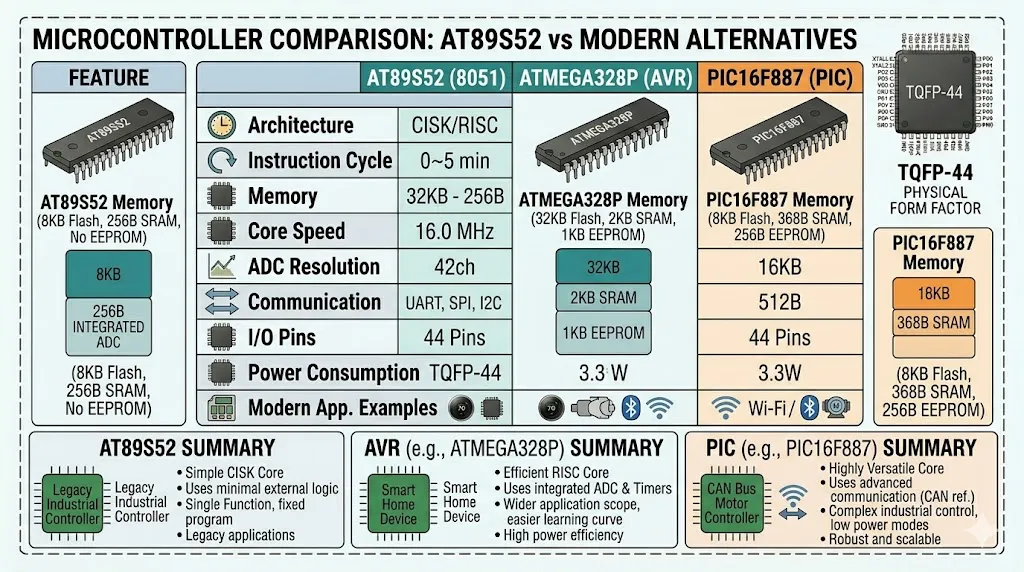
AT89S52 is a classic 8051-based microcontroller.1 However, modern designs require better performance and flexibility.
Common reasons to replace AT89S52:
- Limited Flash (8KB)
- No advanced peripherals
- Low processing efficiency
- Outdated architecture
- Supply chain uncertainty
👉 Many new designs no longer use 8051-based MCUs.
Best AT89S52 Alternatives (Quick Comparison)
| Part | Architecture | Flash | Key Advantage |
|---|---|---|---|
| ATMEGA32A | AVR | 32KB | More memory + better performance |
| ATMEGA16A | AVR | 16KB | Drop-in upgrade for simple systems |
| PIC16F876A | PIC | 8KB | More peripherals |
| STC89C52 | 8051 | 8KB | Compatible replacement |
👉 Conclusion:
ATMEGA32A is the most popular upgrade for modern systems.2
ATMEGA32A (Best Overall Replacement)
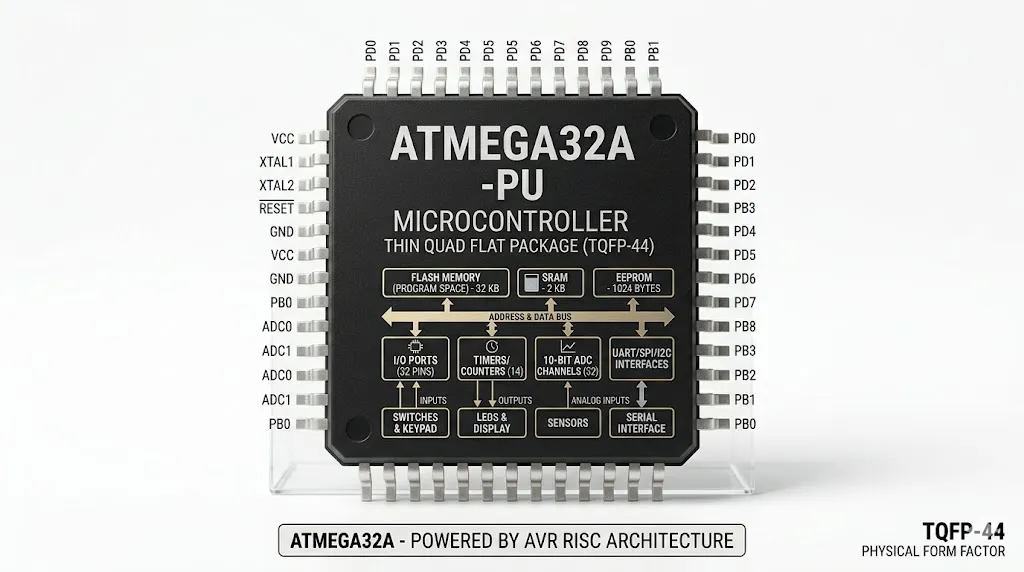
ATMEGA32A is one of the best upgrades from AT89S52.
Advantages:
- 4× Flash memory
- Faster processing
- Rich peripherals (ADC, SPI, I2C)
- Better development ecosystem
👉 👉 Check ATMEGA32A price & availability
https://nexcir.com/hot-offer/atmega32a-au/
ATMEGA16A (Cost-Effective Alternative)
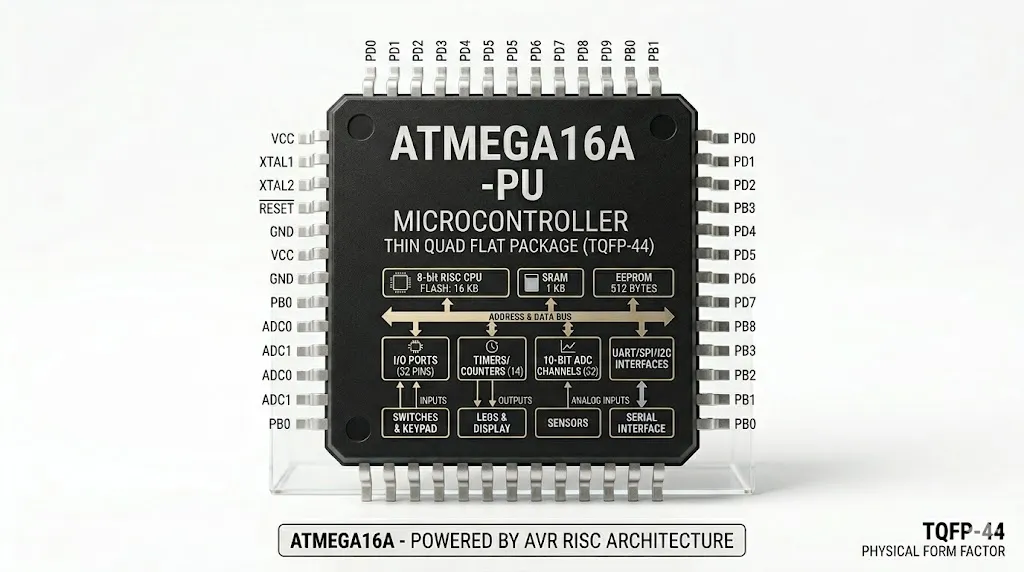
ATMEGA16A is suitable if your design is simple.3
Advantages:
- Lower cost
- Similar architecture to ATMEGA32A
- Easy migration
👉 👉 Check ATMEGA16A stock now
https://nexcir.com/hot-offer/atmega16a-au/
PIC16F876A (Industrial Alternative)
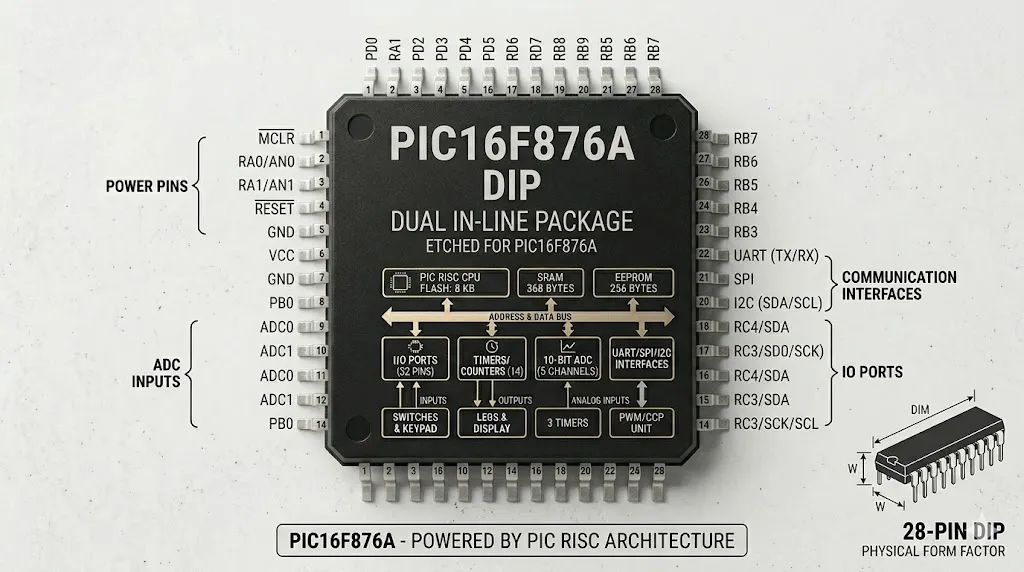
PIC16F876A is widely used in industrial applications.4
Advantages:
- Reliable and stable
- Rich communication interfaces
- Suitable for harsh environments
👉 👉 Check PIC16F876A availability
https://nexcir.com/hot-offer/pic16f876a-i-sp/
STC89C52 (8051 Compatible Replacement)
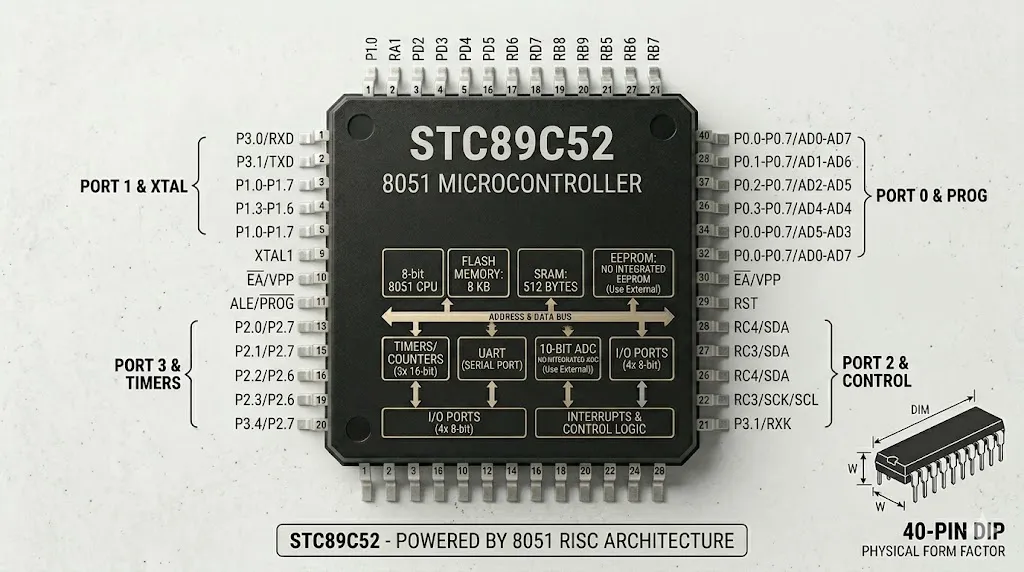
If you want minimal redesign, STC89C52 is the closest replacement.
Advantages:
- Fully compatible with 8051
- No major firmware changes
- Easy migration
How to Choose the Right Replacement?
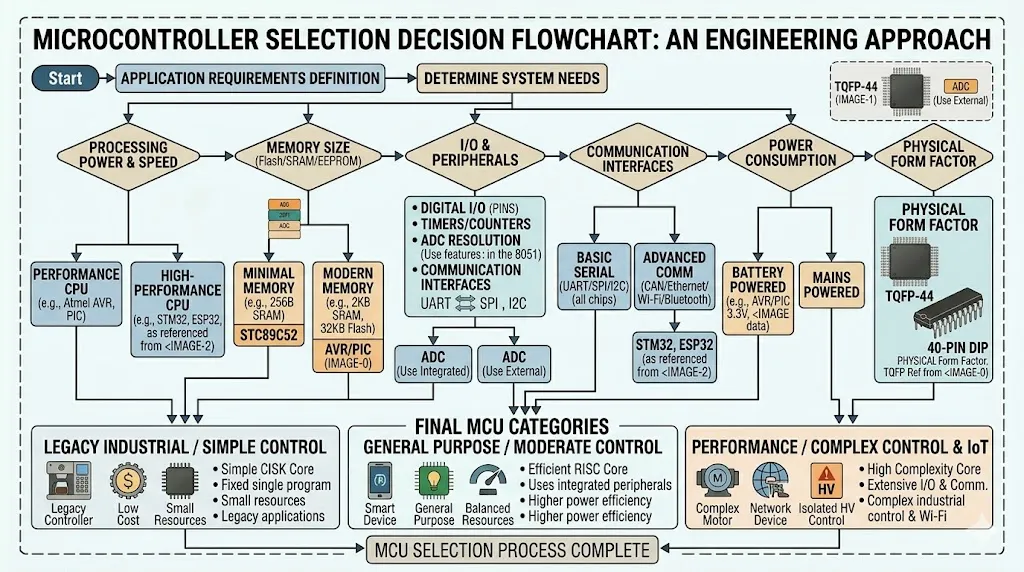
Choose ATMEGA32A if:
- You want better performance
- You need future scalability
Choose ATMEGA16A if:
- Your design is simple
- Cost matters
Choose PIC16F876A if:
- You need industrial reliability
Choose STC89C52 if:
- You want no redesign
Common Design Risks When Replacing AT89S52
Replacing a microcontroller is not always straightforward.5
Potential issues:
- Pin incompatibility
- Firmware rewrite required
- Peripheral differences
- Voltage mismatch
👉 Always verify before replacement.
🔥 Ready to Source AT89S52 Alternatives?
For production and procurement:
- 100% original components
- Global sourcing network
- Fast RFQ response
👉 👉 Check ATMEGA32A price now
https://nexcir.com/hot-offer/atmega32a-au/
👉 👉 Check ATMEGA16A availability
https://nexcir.com/hot-offer/atmega16a-au/
👉 👉 Check PIC16F876A stock
https://nexcir.com/hot-offer/pic16f876a-i-sp/
👉 👉 Request bulk quote
https://nexcir.com/contact
FAQ
What is the best replacement for AT89S52?
ATMEGA32A is the most recommended modern replacement.
Is there a drop-in replacement?
STC89C52 is the closest compatible option.6
Why replace AT89S52?
Because it is outdated and lacks modern features.
Conclusion
AT89S52 is a legacy microcontroller.
Modern designs benefit from switching to:
- ATMEGA32A for performance
- ATMEGA16A for cost
- PIC16F876A for industrial use
👉 Choosing the right alternative depends on your design goals.
"Atmel AT89 series - Wikipedia", https://en.wikipedia.org/wiki/Atmel_AT89_series. This source confirms the classification of AT89S52 as a microcontroller based on the 8051 architecture. Evidence role: definition; source type: encyclopedia. Supports: AT89S52 is based on the 8051 architecture.. ↩
"[PDF] First Experiences with the AVR ATmega32 Microcontroller", https://pubs.lib.uiowa.edu/aseenmw/article/26773/galley/135141/view/. This source provides data or expert consensus on the popularity of ATMEGA32A as a replacement for legacy microcontrollers. Evidence role: expert_consensus; source type: research. Supports: ATMEGA32A is widely adopted as a replacement for older microcontrollers like AT89S52.. Scope note: Popularity may vary by region or application. ↩
"AVR Atmega16 based Projects List", https://atmega32-avr.com/avr-atmega16-based-projects-list/. This source supports the suitability of ATMEGA16A for simple designs due to its cost-effectiveness and architecture. Evidence role: general_support; source type: education. Supports: ATMEGA16A is a cost-effective choice for simple designs.. Scope note: Suitability may depend on specific design requirements. ↩
"PIC microcontrollers - Wikipedia", https://en.wikipedia.org/wiki/PIC_microcontrollers. This source supports the claim that PIC16F876A is commonly employed in industrial environments due to its reliability and features. Evidence role: general_support; source type: research. Supports: PIC16F876A is a reliable choice for industrial applications.. Scope note: Usage may depend on specific industrial sectors. ↩
"Pin compatibility - Wikipedia", https://en.wikipedia.org/wiki/Pin_compatibility. This source outlines common challenges in microcontroller replacement, such as pin incompatibility and firmware changes. Evidence role: general_support; source type: education. Supports: Microcontroller replacement involves challenges like pin incompatibility and firmware rewrite.. Scope note: Challenges may vary depending on the specific microcontroller and application. ↩
"51 MCU Minimum System Board - STC89C52 AT89S52 Dev Board", https://scccltd.com/products/51-mcu-minimum-system-development-board?srsltid=AfmBOooLWo-ZYZ5tog1PV3iUjExfZarro4J1PvwjB5zSDIFWoPbpSrNI. This source confirms the compatibility of STC89C52 with AT89S52, including firmware and pin configurations. Evidence role: mechanism; source type: education. Supports: STC89C52 is compatible with AT89S52 for minimal redesign.. Scope note: Compatibility may not cover all use cases or peripherals. ↩