Car costs are rising fast. You worry about expensive chips eating your profits. I will show you why smart automakers now choose mature chips to save money and win.
Automakers will abandon advanced nodes in 2026 because cost control1 is now their top priority. They realize that mature 28nm and 40nm processes2 offer enough performance for most car functions. This shift helps them lower vehicle prices, maintain profit margins, and reduce supply chain risks3.
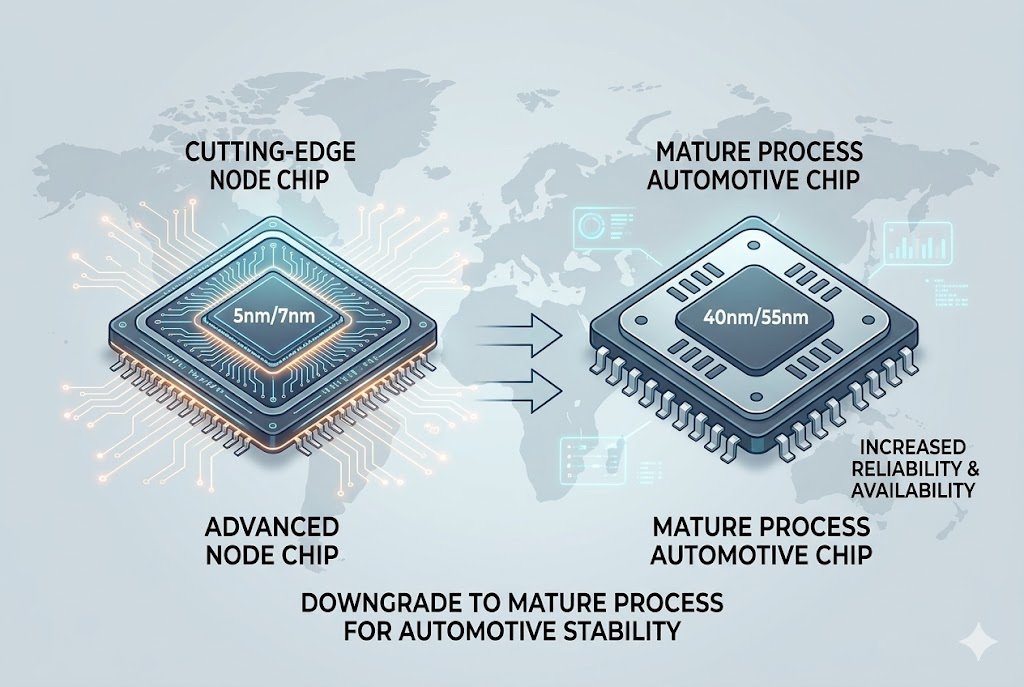
Have you noticed a big change in the car market lately? I see many OEM managers stressing over chip prices. They used to want the newest 5nm or 7nm chips for every car part. Now, the market forces them to wake up. They cannot sell cars if the price is too high. If you do not adapt to this change, your competitors will beat you with lower costs. Let us look at why this shift is happening right now.
Why is cost control1 driving automakers away from advanced nodes?
High chip prices hurt your budget. You struggle to keep car prices competitive. I explain how moving away from advanced nodes stops this cash drain immediately.
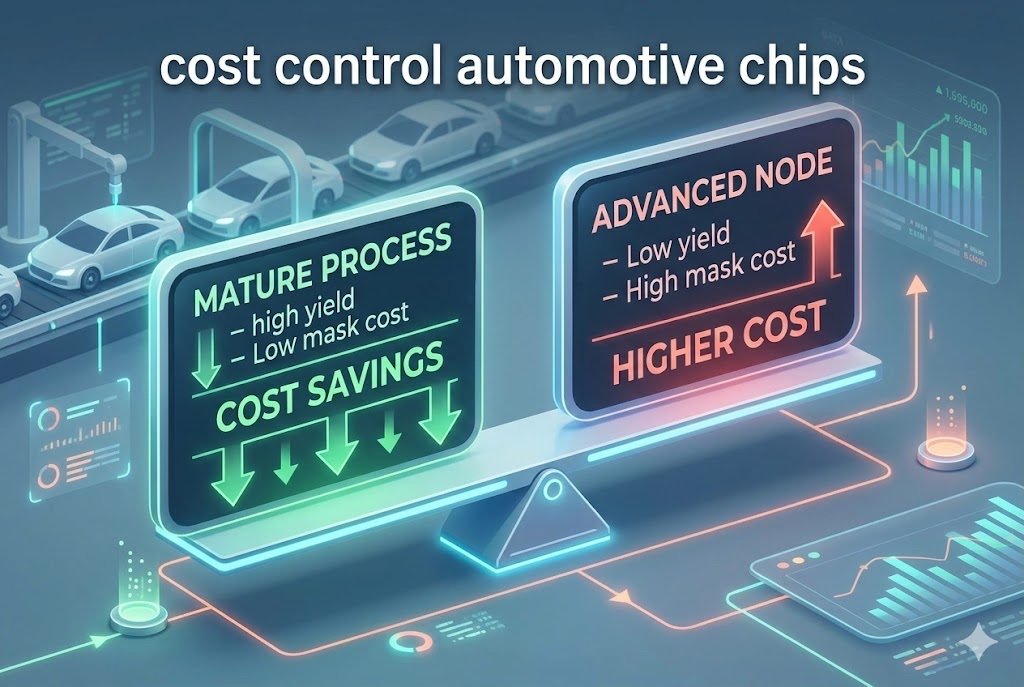
Advanced node chips cost too much to design and make. Automakers face fierce price wars in the market. They must cut costs to survive. Using advanced chips for basic car functions wastes money. They stop buying them to protect their profit margins.
The True Cost of Advanced Chips
I have worked in the electronic components industry for over 20 years. I talk to OEM procurement managers every day. They tell me the same story. The price war in the electric vehicle market is brutal. Automakers can no longer pass high costs to buyers. Let us break down the costs. Developing a 5nm chip costs hundreds of millions of dollars. A 28nm chip costs a fraction of that amount. Do you really need a 5nm chip to control a car window? No, you do not. This is a massive waste of resources. Automakers are returning to rationality. They look at the return on investment4 carefully. They see that advanced nodes only make sense for core autonomous driving brains. For everything else, mature nodes win easily. Every dollar saved on a chip is a dollar added to the profit margin. You must stop overpaying for performance you do not need. As a buyer, your goal is to optimize costs. You must align your procurement strategy with this new reality. If you keep buying expensive chips, your final car price will be too high. Your company will lose market share.
| Feature | Advanced Node (e.g., 5nm/7nm) | Mature Node (e.g., 28nm/40nm) |
|---|---|---|
| Design Cost | Very High | Low |
| Manufacturing Cost | Very High | Low |
| Supply Stability | High Risk | Stable |
| Best Use Case | AI, Central Processing | MCU, Sensors, PMIC |
How do 28nm and 40nm mature processes meet modern automotive needs?
You fear older chips might fail new tech standards. You worry about car performance dropping. I will show how 28nm and 40nm chips easily handle modern car demands.
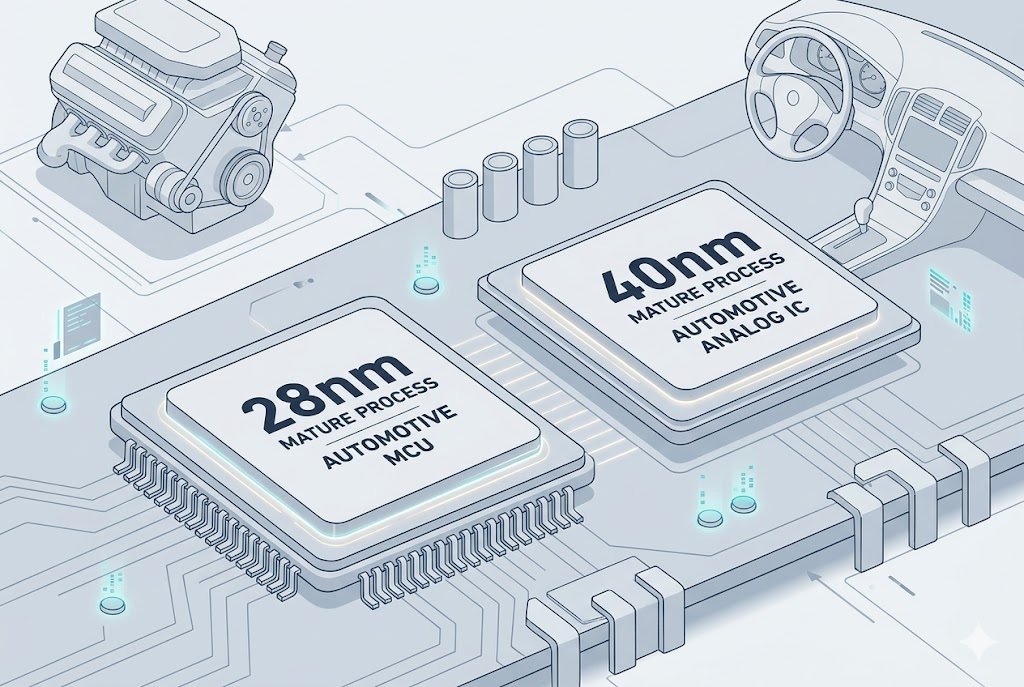
The 28nm and 40nm mature processes perfectly match the needs of most car electronics. They provide excellent reliability, low power use, and high safety standards. These chips easily run microcontrollers, power managers, and sensors. They do this without the high price of newer nodes.
The Power of Mature Processes
Many hardware engineers think older means worse. This is not true in the car industry. A car is not a smartphone. A smartphone needs a new chip every year to play heavy games. A car needs a chip that works perfectly for 15 years. It must survive extreme heat and cold. It must not fail. The 28nm and 40nm processes are highly proven. Factories have made them for many years. They have fixed all the bugs. This brings high yield rates5 and low defect rates. Let us think critically about car functions. A modern car has dozens of Microcontroller Units. We call them MCUs. These MCUs control seats, doors, and lights6. They do not need massive computing power. They need extreme reliability. I see many clients at Nexcir7 switching back to these mature nodes. They find stable supply and great prices. They realize that 28nm is the perfect spot8 for performance and cost. It is the smartest choice for 2026. You can easily meet all industry standards with these chips. You do not sacrifice any safety or quality.
| Car Function | Required Chip Type | Recommended Node |
|---|---|---|
| Window Control | Simple MCU | 40nm or older |
| Power Management | PMIC | 40nm / 65nm |
| Basic Infotainment | Standard Processor | 28nm |
| Autonomous Brain | High-end AI Chip | 7nm or 5nm |
What does the deep water of domestic substitution9 mean for your supply chain?
Foreign chips face export bans10 and long delays. Your production line might stop soon. I explain how domestic substitution9 secures your supply and saves your business.
Domestic substitution means replacing foreign chips with local brands. This trend is entering deep waters for 28nm and 40nm chips. Automakers now trust local chipmakers11 for core car parts. This shift removes geopolitical risks12, shortens lead times, and lowers costs for your production lines.
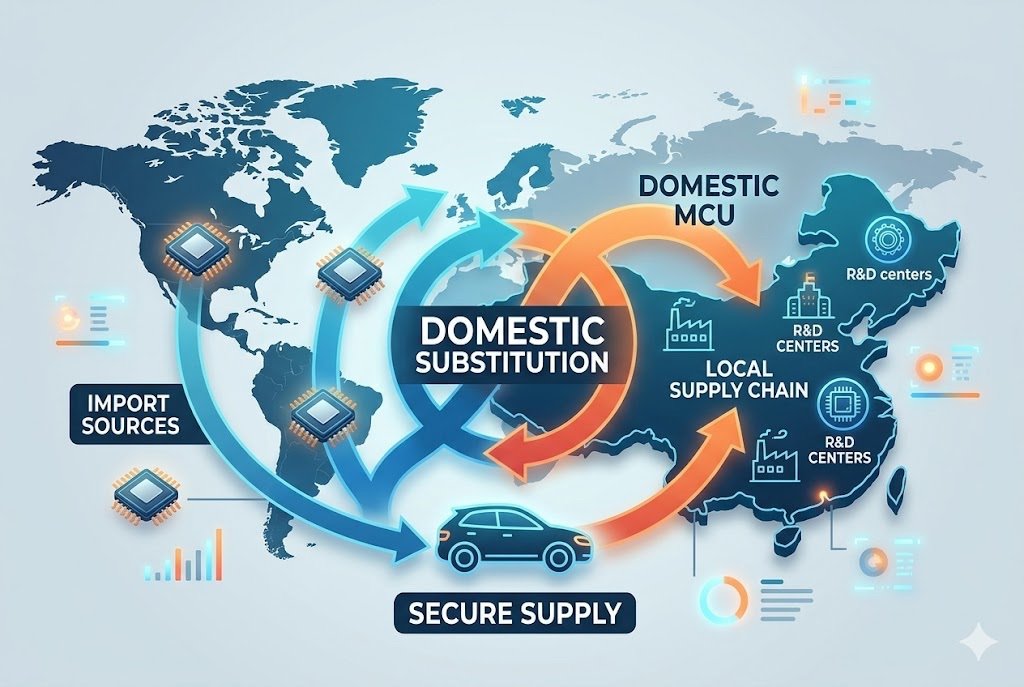
Navigating the Deep Waters of Substitution
We talk about "deep waters" because the easy part is over. In the past, automakers only used local chips for simple things like radios. Now, they use local 28nm and 40nm chips for engine control and safety systems. This is a huge step forward. I remember a client who waited 50 weeks for a European MCU. His factory almost stopped. We helped him find a local alternative. It had the exact same specs and cost 30 percent less. He never went back to the old brand. You must understand that local foundries have mastered these mature processes. They offer massive production capacity. This breaks the monopoly of traditional giants. You must build a strong local supply chain. If you rely only on foreign brands, you take a big risk. Export bans can happen anytime. As a procurement manager, you must test and approve local alternatives right now. The deep waters hide great treasures for those who dive in. You get much better prices. You get faster delivery. You sleep better at night knowing your line will not stop.
| Supply Chain Factor | Traditional Foreign Brands | Local Domestic Brands |
|---|---|---|
| Lead Time | 30 to 50 weeks | 4 to 12 weeks |
| Price Trend | Increasing | Stable or Decreasing |
| Geopolitical Risk | High | Low |
| Quality at 28nm/40nm | Excellent | Excellent (Verified) |
How can you secure reliable mature node chips13 in this changing market?
Fake chips and bad suppliers ruin your products. You lose money and customer trust. I will show you how to find genuine, cheap chips safely every time.
You can secure reliable mature node chips13 by partnering with a trusted distributor14. You must demand 100% original parts with full traceability15. A good partner uses global networks to find authorized stock. They provide steady prices and protect you from market shocks and fake components.
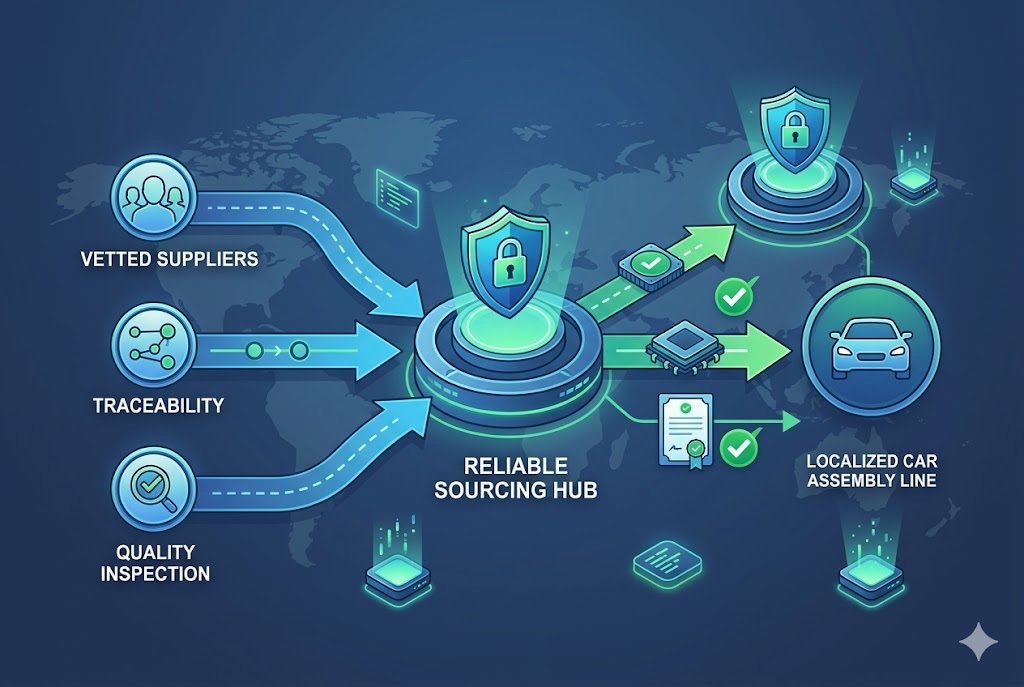
Building a Safe Procurement Strategy
The shift to 28nm and 40nm chips creates a new problem. Many bad brokers try to sell old or fake stock. Counterfeit chips are a nightmare for cars. They can cause fatal accidents. My team at Nexcir7 has over 20 years of experience. We see these tricks every day in the market. You need a safe strategy to protect your company. First, you must only buy from authorized channels. Second, you must check the traceability of every single shipment. Third, you need a partner who understands material alternatives. We help you find exact replacements when your main choice is out of stock. You cannot afford mistakes in automotive procurement. We guarantee authentic components every time. We use our global network in Asia, Europe, and North America. We find the right 28nm and 40nm chips for you quickly. We keep your production running on time. We lower your costs and remove your risks completely. This is how you win in 2026. You build trust with a reliable partner. You stop worrying about bad parts.
| Procurement Action | Bad Practice | Good Practice (Nexcir7 Way) |
|---|---|---|
| Sourcing Channel | Open market brokers | Authorized distributors |
| Quality Check | Visual only | Full traceability & testing |
| Pricing Strategy | Spot buying (volatile) | Long-term programs (stable) |
| Alternative Parts | Guessing | Engineering team support |
Conclusion
Automakers choose 28nm and 40nm chips to cut costs and survive price wars. You must adapt to this change, use trusted local alternatives, and secure your supply chain today.
Learn why cost control is crucial for automakers and how it drives the shift from advanced to mature chip nodes, impacting pricing and profitability. ↩
Explore how mature 28nm and 40nm processes offer cost-effective solutions for automakers, ensuring performance without the high costs of advanced nodes. ↩
Understand the supply chain risks of relying on advanced node chips and how mature nodes can mitigate these challenges for automakers. ↩
Find out how automakers evaluate return on investment when selecting chip nodes, balancing performance needs with cost efficiency. ↩
Learn about high yield rates in chip manufacturing and how they contribute to cost efficiency and reliability in automotive applications. ↩
Understand the function of MCUs in controlling various car components and why mature nodes are suitable for these applications. ↩
Discover how Nexcir supports automotive chip procurement with reliable sourcing, quality assurance, and cost-effective solutions. ↩
Explore why 28nm is seen as the ideal balance between performance and cost for automotive applications, ensuring reliability and affordability. ↩
Learn about the trend of domestic substitution in automotive chips and how it helps automakers reduce geopolitical risks and costs. ↩
Find out how export bans affect the automotive chip industry and the importance of domestic alternatives to mitigate these risks. ↩
Understand the role of local chipmakers in providing reliable and cost-effective alternatives to foreign chips, enhancing supply chain stability. ↩
Explore how geopolitical risks influence the automotive chip supply chain and the benefits of shifting to local suppliers. ↩
Learn strategies for securing reliable mature node chips, ensuring consistent supply and quality for automotive production. ↩
Learn the importance of working with trusted distributors to secure genuine chips, maintain quality, and avoid market shocks. ↩
Understand the role of full traceability in ensuring the authenticity and quality of chips, protecting automakers from counterfeit risks. ↩