Are you struggling to identify the right 100-ohm resistor1? A wrong choice can ruin your circuit. Read on to master color codes and select the perfect component.
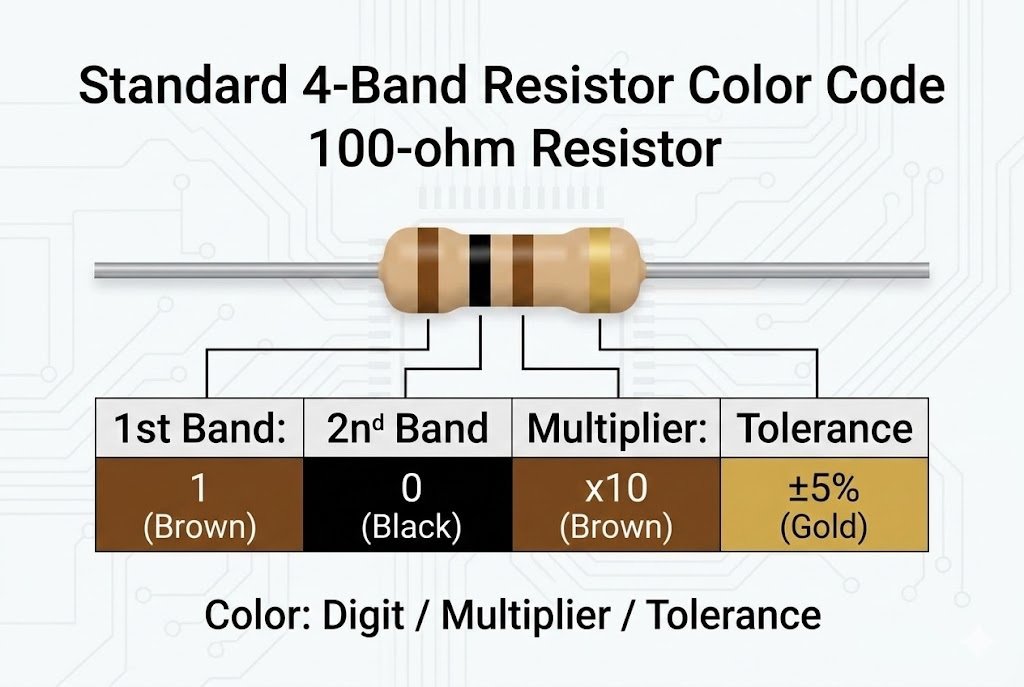
A 100-ohm resistor1 limits current and matches signals in electronic circuits. You can identify a 4-band 100-ohm resistor1 by its Brown, Black, Brown, and Gold color bands. Precision applications use 5-band resistors2 with Brown, Black, Black, Black, and Brown bands for exact signal matching.
You might think a simple resistor is easy to pick. But choosing the wrong specification can cause signal loss3 and project delays. I will show you exactly how to read these codes and pick the best precision parts for your next board design.
How Do You Read the 100-Ohm Resistor Color Code?
Reading tiny color bands is hard. Making a mistake here causes instant circuit failure. Let us break down the color code system so you never guess again.
A standard 4-band 100-ohm resistor1 uses Brown (1), Black (0), Brown (multiplier x104), and Gold (5% tolerance5). A 5-band precision 100-ohm resistor1 uses Brown (1), Black (0), Black (0), Black (multiplier x1), and Brown (1% tolerance6). This system helps you quickly verify the component.
The Mechanics of Resistor Color Bands
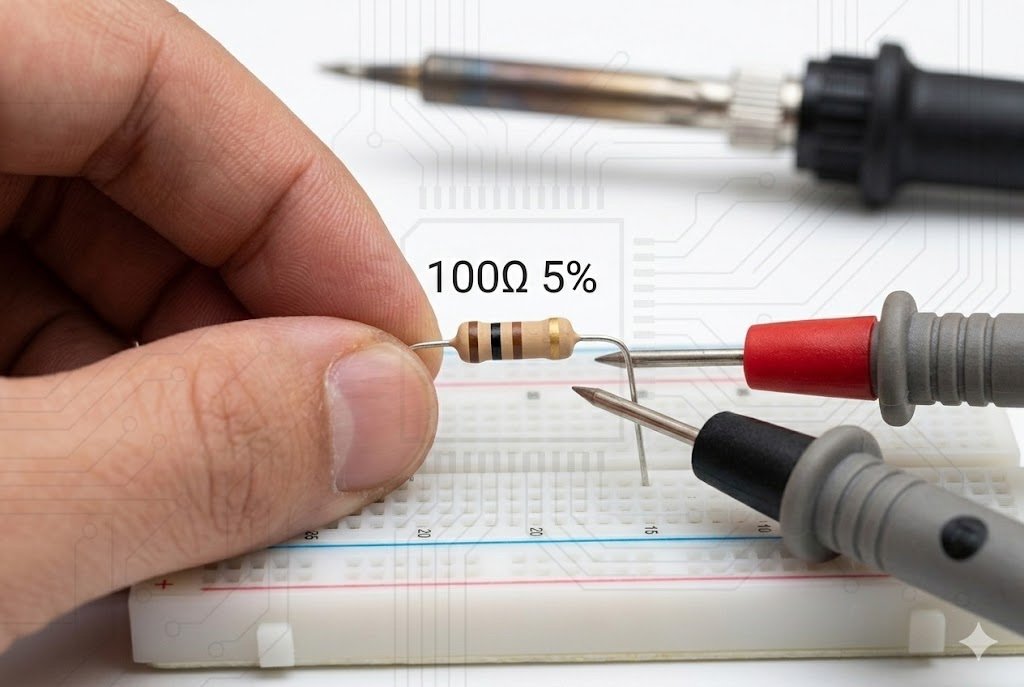
I remember my early days testing components on a busy production floor. We mixed up a batch of 10-ohm and 100-ohm resistor1s. That small error caused hours of debug time. You must understand the difference between 4-band and 5-band resistors2. The standard 4-band resistor is cheap and common. It works fine for basic LED current limiting. But modern electronics need better accuracy. This is where the 5-band precision resistor comes in. The extra band gives you a third significant digit. This allows for a tighter tolerance. When I help hardware engineers optimize their designs at Nexcir7, I always tell them to check the tolerance band. A 5% tolerance5 means the resistor can be anywhere from 95 ohms to 105 ohms. A 1% tolerance6 keeps the value between 99 ohms and 101 ohms. This small change makes a huge difference in sensitive circuits. Let us look at the exact breakdown.
| Band Position | 4-Band (5%) Color | 4-Band Value | 5-Band (1%) Color | 5-Band Value |
|---|---|---|---|---|
| 1st Digit | Brown | 1 | Brown | 1 |
| 2nd Digit | Black | 0 | Black | 0 |
| 3rd Digit | Brown | x10 | Black | 0 |
| Multiplier | Gold | 5% | Black | x1 |
| Tolerance | (None) | (None) | Brown | 1% |
Why Are Precision Metal Film Resistors Crucial for 100-Ohm Applications?
Cheap carbon resistors drift over time. This drift ruins your stable voltage reference. You need metal film resistors8 to keep your circuits working properly for years.
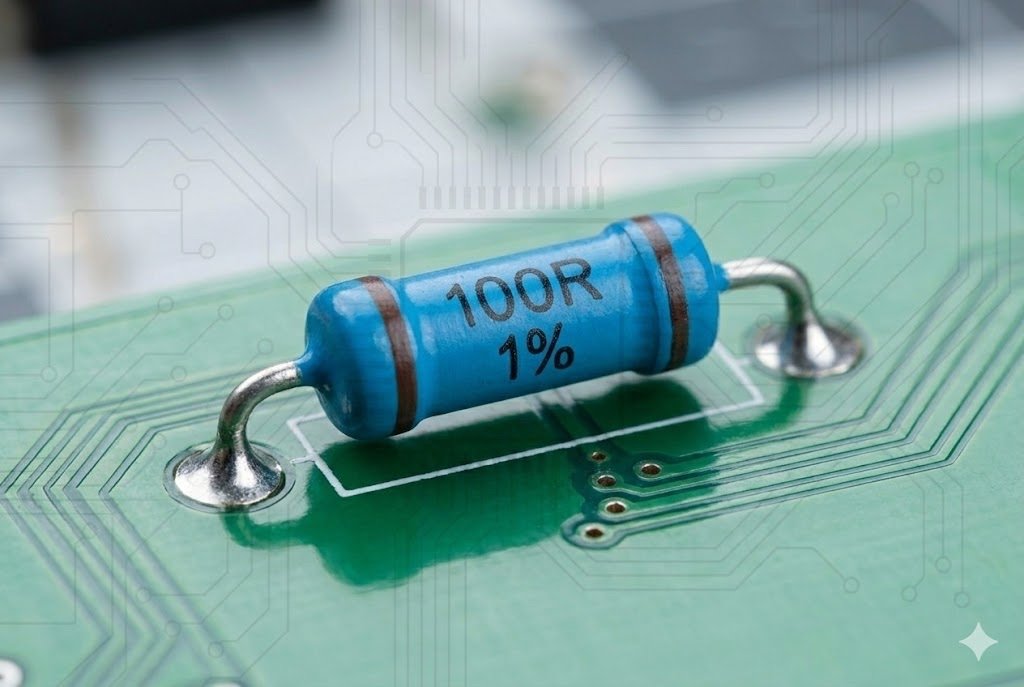
Precision metal film resistors8 offer high stability, low noise, and tight tolerances like 1% or 0.1%. They do not change value much when the temperature changes. This makes them the best choice for 100-ohm applications in medical devices, automotive systems, and high-speed digital circuits.
The Superiority of Metal Film Technology
Many procurement managers try to save money by buying carbon film resistors. I always warn against this practice. Carbon resistors create electrical noise. They also shift in resistance when they get hot. In my 20 years of supply chain9 experience, I have seen cheap resistors fail in the field. Precision metal film resistors8 fix these problems. Manufacturers make them by depositing a thin layer of metal onto a ceramic body. This process creates a very stable component. The Temperature Coefficient of Resistance (TCR)10 is very low. This means the resistor stays at 100 ohms even in a hot engine control unit or a cold outdoor sensor. If you design industrial IoT devices, you must use metal film parts. They protect your signal integrity. Let us compare the two main types of resistors so you can see why metal film is better.
| Feature | Carbon Film Resistor | Metal Film Resistor |
|---|---|---|
| Tolerance | Usually 5% or 10% | 1%, 0.5%, or 0.1% |
| Noise Level | High | Very Low |
| Temperature Drift | High (Poor stability) | Low (Excellent stability) |
| Best Use Case | Basic toys, cheap electronics | Precision equipment, automotive |
How Do 100-Ohm Resistors Help in Signal Matching?
Signal reflections cause data errors. Unmatched lines bounce signals back and forth. You must use exact 100-ohm matching to keep your fast data streams clean and error-free.
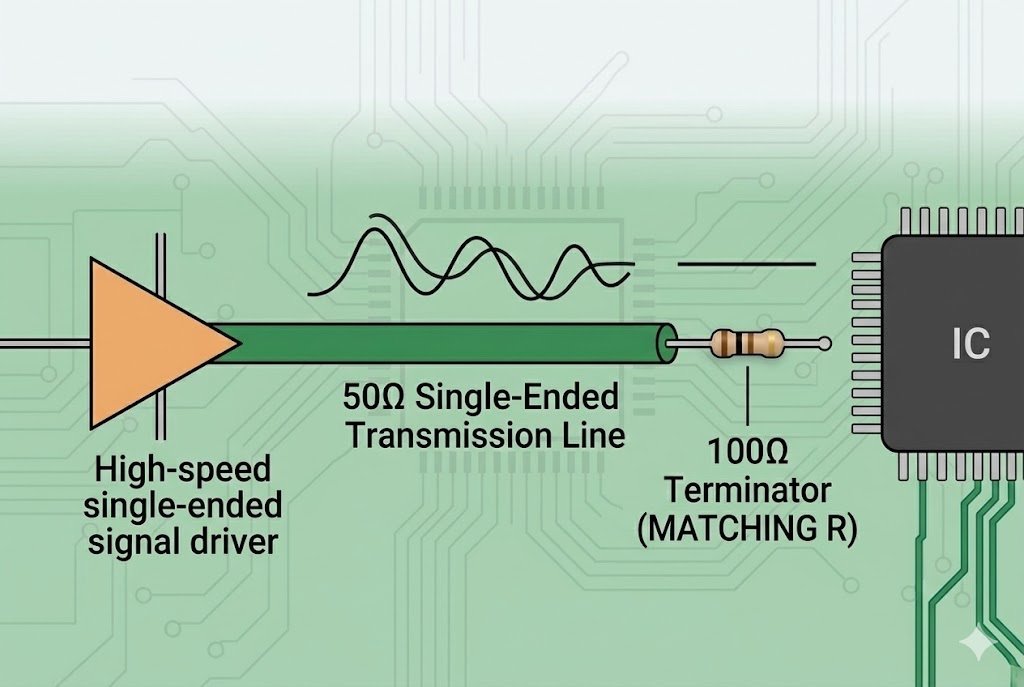
Signal matching prevents electrical waves from reflecting back to the source. You place a 100-ohm precision resistor at the end of a 100-ohm transmission line. This absorbs the signal energy completely. It stops data corruption in high-speed networks and clear audio systems.
The Physics of Impedance Matching
High-speed hardware design is very tricky. When data moves fast, a simple wire acts like a transmission line. If the end of the wire does not match the wire's natural impedance, the signal hits a wall. It bounces back. We call this a reflection. I once worked with a client who had random errors in their network switches. We checked their board and found they used poor quality termination resistors. The resistance was 105 ohms instead of 100 ohms. That 5-ohm difference caused terrible reflections. We replaced them with authentic 1% precision metal film 100-ohm resistor1s. The errors stopped completely. You need a perfect match to transfer maximum power and maintain clear data eyes. A 100-ohm resistor1 is the standard for many data lines. You cannot compromise on quality here. Look at the table below to understand the impact of poor matching.
| Condition | Reflection Result | Data Quality | System Reliability |
|---|---|---|---|
| Perfect 100-ohm match | No reflection | Clean, sharp edges | High |
| 105-ohm match (5% error) | Minor reflection | Slight jitter | Medium |
| No termination | Full reflection | Corrupted data | Fails completely |
What Role Do 100-Ohm Resistors Play in Differential Pair Termination?
Differential signals fail without proper end points. Missing termination causes high-speed communication to crash. A precise 100-ohm resistor1 across the pair solves this problem instantly.
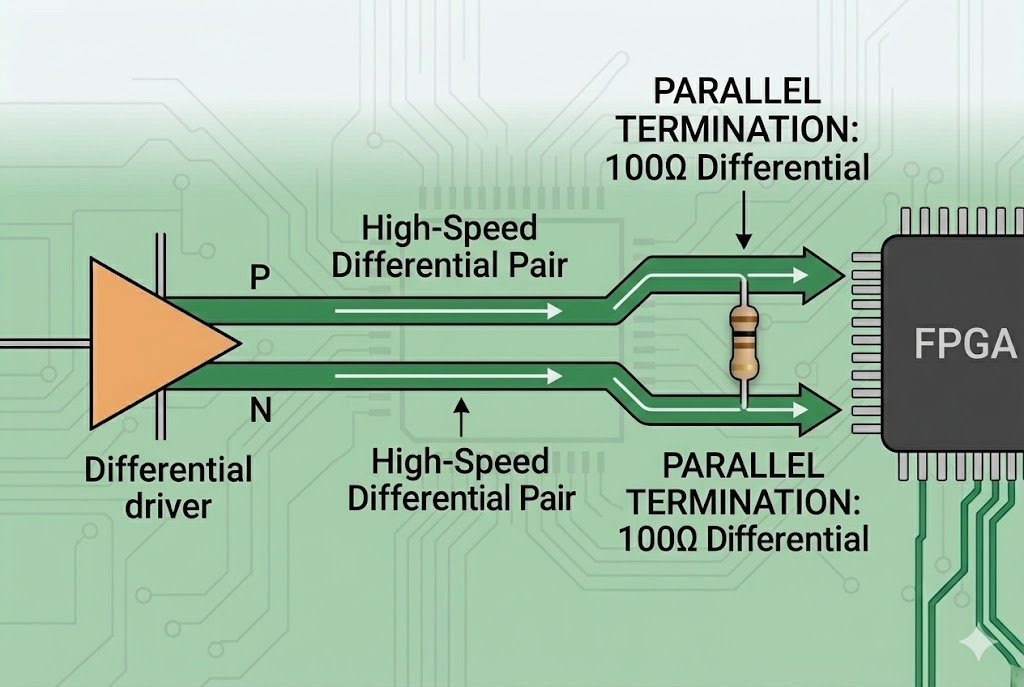
Differential signaling uses two wires to send data, like in Ethernet or PCIe. These pairs have a 100-ohm differential impedance. You must place a 100-ohm precision resistor across the two receiver pins. This terminates the signal, removes common-mode noise11, and ensures stable data transfer.
Terminating High-Speed Data Lines
Modern electronics rely on differential pairs. You see them in USB, HDMI, and Ethernet cables. A differential pair sends the same signal over two wires, but with opposite voltages. This clever trick cancels out external noise. But the system only works if you terminate the pair correctly. The standard differential impedance for many of these buses is exactly 100 ohms. Therefore, you need a 100-ohm resistor1 at the receiver end. I always advise our ODM clients to buy the best 100-ohm components for this job. If the resistor is cheap and drifts to 98 ohms, the noise cancellation fails. The system drops data packets. Your production team will face random test failures. By using a 100-ohm precision metal film resistor, you lock in the exact value. This guarantees your high-speed interfaces pass compliance testing every single time. Here is a breakdown of common differential standards.
| Interface Standard | Typical Differential Impedance | Required Termination |
|---|---|---|
| Gigabit Ethernet12 | 100 ohms | 100-ohm across pair |
| PCIe (PCI Express)13 | 85 to 100 ohms | 100-ohm across pair |
| LVDS14 | 100 ohms | 100-ohm at receiver |
| HDMI | 100 ohms | 100-ohm differential |
How Can You Source Authentic 100-Ohm Precision Resistors?
Fake components cause your products to fail in the field. Finding real precision parts is stressful. You must buy from trusted sources to protect your brand and production line.
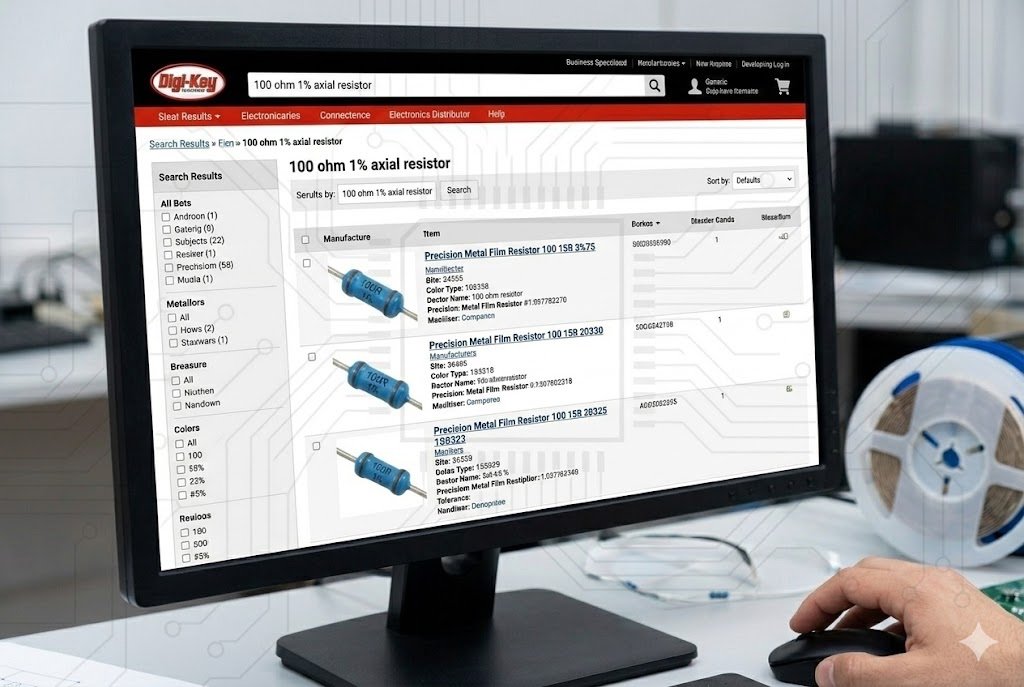
You can source authentic 100-ohm resistor1s by partnering with a reliable global distributor like Nexcir7. We source parts only from authorized channels and original manufacturers. This guarantees component authenticity, stable pricing, and on-time delivery for your critical hardware production needs.
Securing Your Supply Chain
The electronic component market is full of risks. Many buyers face counterfeit parts and wild price changes. A fake 100-ohm precision resistor looks exactly like a real one. But inside, it uses cheap carbon instead of metal film. You will not know until your product fails in your customer's hands. I have helped many procurement managers fix these supply chain9 nightmares. At Nexcir7, our core team has over 20 years of experience. We know how to spot fakes. We only buy from authorized distributors and original factories. This strict rule ensures you get 100% original components. We also help you lock in stable pricing. This protects you from sudden market jumps. If you need a specific 100-ohm metal film resistor that is hard to find, we will find it for you. We provide fast, safe, and reliable global delivery. Let us review the sourcing checklist.
| Sourcing Risk | The Nexcir7 Solution | Customer Benefit |
|---|---|---|
| Counterfeit parts | 100% authorized channels only | Zero quality failures |
| Price changes | Bulk buying and long-term plans | Lower procurement costs |
| Late delivery | Global logistics network | On-time production |
| EOL/NRND parts15 | Expert alternative matching | No line stops |
Conclusion
Understanding the 100-ohm resistor1 color code and using precision metal film parts ensures perfect signal matching. Always source authentic components to keep your electronic designs reliable and successful.
Understanding the role of a 100-ohm resistor is crucial for designing circuits that limit current and match signals effectively. ↩
Exploring the benefits of 5-band resistors can enhance your understanding of signal matching and circuit accuracy. ↩
Avoiding signal loss is essential for maintaining the integrity and performance of electronic circuits. ↩
Understanding the multiplier in resistor color codes is key to calculating the correct resistance value. ↩
Knowing the significance of tolerance helps in selecting resistors that meet your circuit's precision requirements. ↩
Exploring the impact of 1% tolerance can guide you in choosing resistors for sensitive applications. ↩
Partnering with trusted distributors like Nexcir guarantees you receive genuine components for your projects. ↩
Understanding the advantages of metal film resistors ensures you select components that offer stability and low noise. ↩
Understanding supply chain risks helps you make informed decisions to protect your production line. ↩
Learning about TCR helps you choose resistors that maintain their value under varying temperature conditions. ↩
Reducing common-mode noise is essential for ensuring reliable and stable communication in high-speed systems. ↩
Understanding the termination requirements for Gigabit Ethernet ensures optimal performance and data integrity. ↩
Proper termination in PCIe interfaces is crucial for maintaining high-speed data transfer and system reliability. ↩
Exploring LVDS termination helps in understanding its role in maintaining signal integrity in data transmission. ↩
Managing EOL/NRND parts effectively ensures continuous production without interruptions. ↩