Are your cobots crushing fragile items? Poor touch sensing causes production errors and safety risks. Haptic feedback chips solve this by giving machines a real sense of touch.
Haptic feedback chips in collaborative robots1 combine high-sensitivity pressure sensors2 with edge computing3 to detect force and texture. This technology allows cobots to handle delicate objects safely, work alongside humans without causing harm, and perform complex tasks with human-like precision and perception.
You might wonder how a tiny piece of silicon turns a cold metal arm into a sensitive helper. I remember testing a robotic arm years ago that smashed a glass cup because it could not feel the pressure. Today, modern chips change everything. Let us look at how these electronic components make robots smarter, safer, and much more capable in your production line.
How Do Haptic Feedback Chips Work in Cobots?
Do you struggle with robots dropping parts? Without proper feedback, machines just guess their grip strength. Haptic chips act as digital nerves4 to stop these costly mistakes instantly.
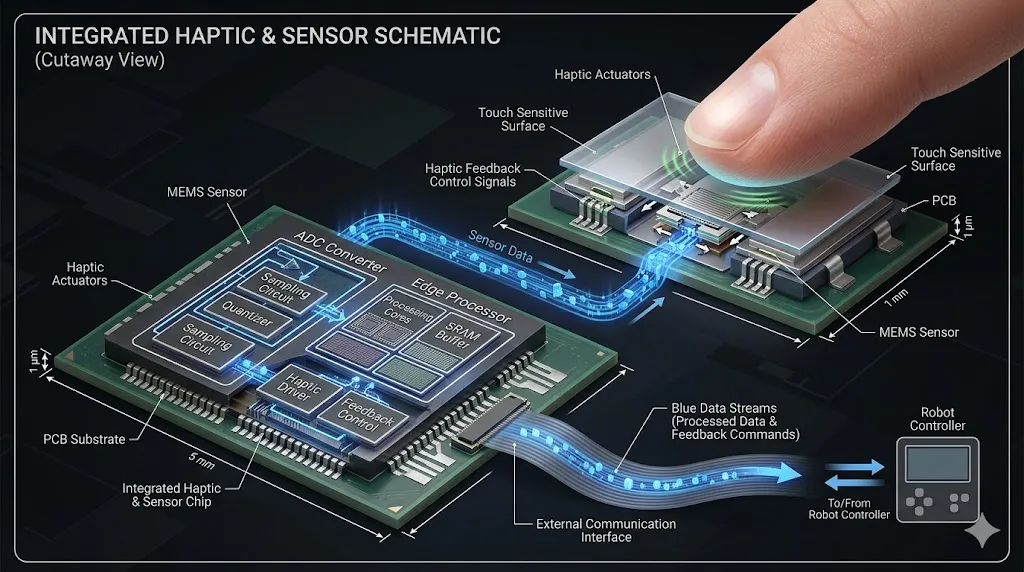
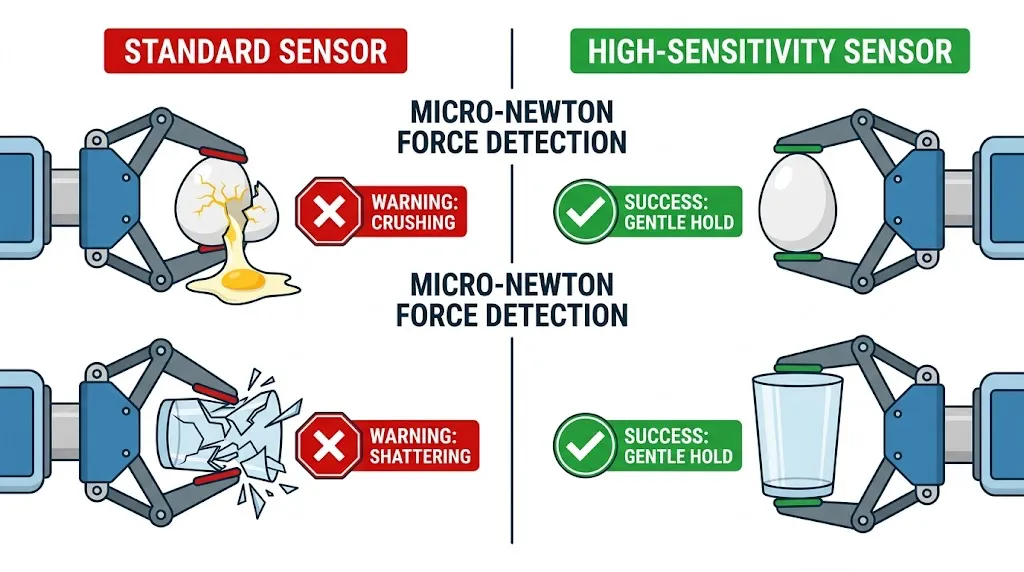
Haptic feedback chips work by processing physical pressure into electrical signals instantly. They use micro-electromechanical systems (MEMS) to measure force, vibration, and temperature. The chip then sends this data to the robot control system, allowing it to adjust its grip in real time.
The Mechanics of Digital Touch
To understand this, we need to break down the touch process. When a robot touches an object, the physical contact creates a tiny change in the sensor. The haptic chip reads this change. I see many hardware engineers struggle to pick the right chip for this job. You must look at how fast the chip processes the signal. If the chip is slow, the robot will crush the item before it knows it touched it.
We can divide the haptic system into three main parts. First, we have the sensor array5. Second, we have the analog-to-digital converter (ADC)6. Third, we have the processing unit. All these parts must work perfectly together. At Nexcir, we always tell our clients to focus on the ADC resolution. A higher resolution means the robot can feel smaller changes in pressure.
| Component | Main Function | Key Requirement |
|---|---|---|
| Sensor Array | Detects physical touch and pressure | High durability and sensitivity |
| ADC | Changes analog signals to digital data | Low noise and fast conversion rate |
| Processor | Analyzes data and sends commands | Low latency and high stability |
When you build a cobot, you need original and reliable ICs for these parts. A fake chip will give wrong data. Your robot will fail. We help you secure the exact original parts you need.
Why Is High-Sensitivity Pressure Sensing Crucial?
Is your production line damaging soft materials? Hard grips ruin delicate products and waste money. High-sensitivity pressure sensing stops this by feeling the smallest forces.
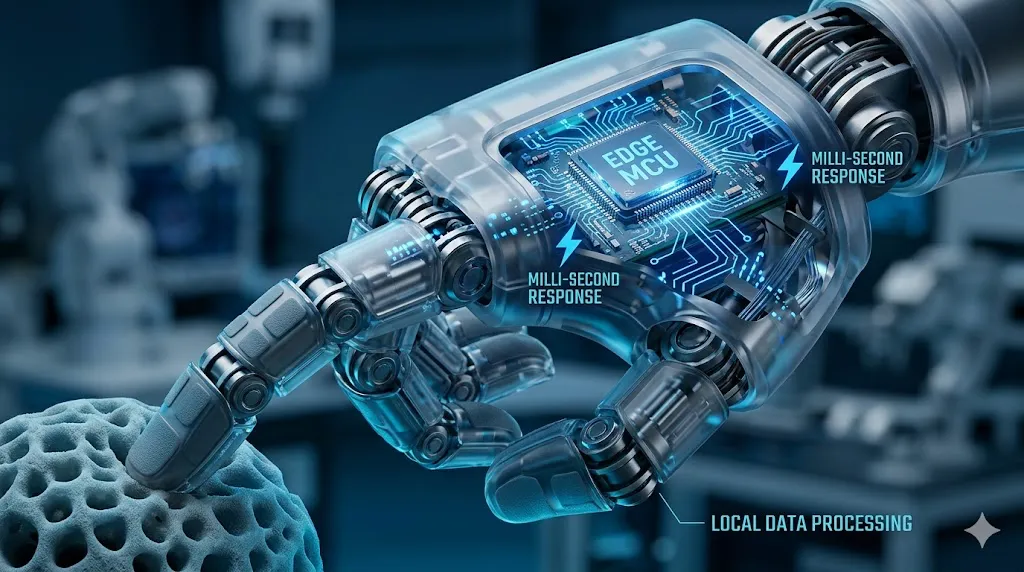
High-sensitivity pressure sensing lets collaborative robots1 handle fragile items like eggs or glass without breaking them. It uses advanced materials to detect micro-newton forces. This precision ensures the robot applies the exact amount of force needed, improving product quality and workplace safety.
Feeling the Smallest Details
High-sensitivity pressure sensing is the core of a good cobot. I once visited a factory where robots packed fresh fruit. The old robots bruised the fruit because they could not feel the skin. They upgraded to high-sensitivity chips. The waste dropped to zero immediately. This shows why good sensors matter.
These chips use tiny structures that change resistance or capacitance when pressed. You need parts that do not drift over time. Market fluctuations often make it hard to find these exact parts. As a buyer, you want stable pricing for these sensors to keep your costs low.
Let us compare standard sensors with high-sensitivity ones used in modern cobots.
| Feature | Standard Sensor | High-Sensitivity Sensor |
|---|---|---|
| Force Detection | Grams to Kilograms | Milligrams to Grams |
| Response Time | Slower | Instant (Milliseconds) |
| Best Use | Heavy lifting, welding | Assembly, food packing, surgery |
You must secure a stable supply of these high-quality components. If you buy from unverified sources, you risk getting sensors that lose their sensitivity quickly. We help you avoid this risk by sourcing only from authorized channels.
How Does Edge Computing Empower Human-Like Perception?
Does your robot react too slowly to changes? Sending data to a central server causes delays. Edge computing solves this by processing touch data right at the robot joint.
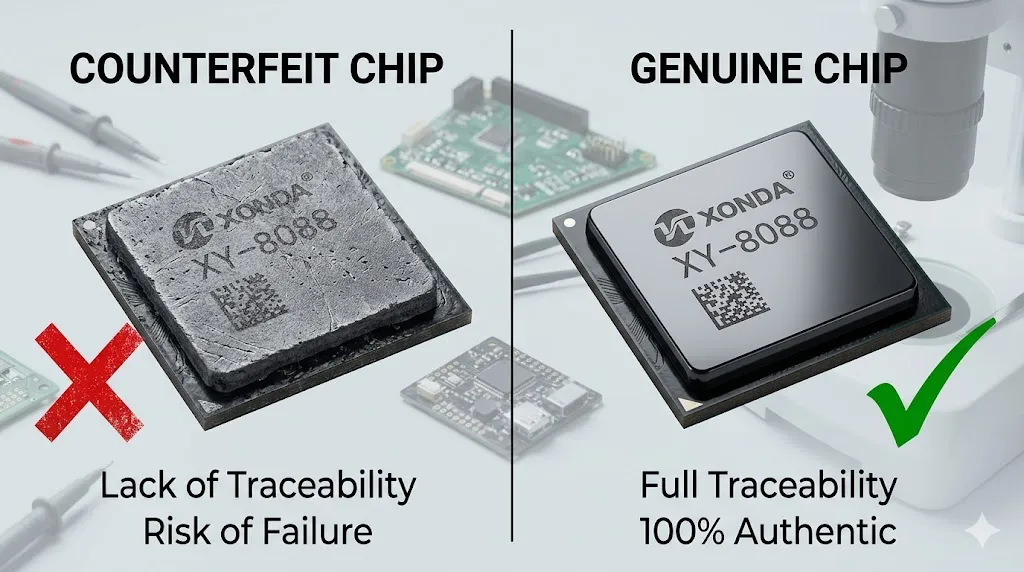
Edge computing empowers human-like perception7 by moving data processing to the haptic chip itself. Instead of sending raw data to the main computer, the edge chip analyzes the pressure locally. This removes delay, allowing the robot to react instantly to unexpected touches, just like human reflexes.
The Brain in the Fingertip
Edge computing changes the game for cobots. In the past, all touch data went to the main brain of the robot. This took time. Imagine touching a hot stove and waiting a second to pull your hand back. You would get burned. Robots face the same issue. With edge computing3, the brain is in the fingertip.
I remember helping a client who built medical robots. They needed zero delay. We supplied them with edge AI microcontrollers (MCUs)8. These MCUs process the data right where the touch happens. This allows the robot to feel human skin and stop moving instantly if it pushes too hard.
Key Benefits of Edge Processing
To make this work, hardware engineers need specific MCUs and PMICs (Power Management ICs).
| Benefit | How It Works | Required Component |
|---|---|---|
| Zero Delay | Local data processing | High-performance Edge MCU |
| Less Power | Only sends important data | Efficient PMIC |
| Better Safety | Instant stop commands | Reliable Logic ICs |
You need long lifecycle availability9 for these MCUs. Finding alternatives for End-of-Life (EOL) edge chips is hard. We use our 20 years of experience to help you find the right long-term parts.
What Are the Key ICs Needed for Cobot Haptic Systems?
Are component shortages delaying your robot manufacturing? Missing one small chip stops the whole line. Knowing the exact ICs you need helps you plan better and avoid delays.
The key ICs for cobot haptic systems include Microcontrollers (MCUs) for edge computing3, Analog-to-Digital Converters (ADCs) for sensor data, and Power Management ICs (PMICs)10 for stable energy. You also need specific sensor interface chips11 and operational amplifiers to condition the tiny signals.
Building the Electronic Nervous System
Every cobot needs a reliable electronic nervous system. You cannot build a good robot with bad parts. I often talk to OEM procurement managers who worry about fake chips. A fake ADC will misread the pressure. A fake PMIC will cause the sensor to fail. This is why 100% original electronic components are necessary.
When you design a haptic feedback system, you must list all critical parts. You also need to watch out for Not Recommended for New Design (NRND)12 parts.
Essential Components List
Here is a breakdown of the critical ICs you must source for a cobot arm.
| Component Type | Role in Haptic System | Sourcing Challenge |
|---|---|---|
| Edge MCU | Processes touch algorithms | High demand, long lead times |
| Precision ADC | Converts pressure to data | Susceptible to counterfeit markets |
| Op-Amp | Boosts the weak sensor signal | Requires exact specifications |
| PMIC | Provides clean power to sensors | Needs stable pricing |
We help you overcome these sourcing challenges. Our global supply network ensures you get these exact parts on time. We protect your production schedule from market shocks.
How Do Counterfeit Chips Ruin Your Robot Production?
Are you worried about buying fake parts? Counterfeit chips fail in the field and destroy your brand reputation. Sourcing from verified channels is the only way to stay safe.
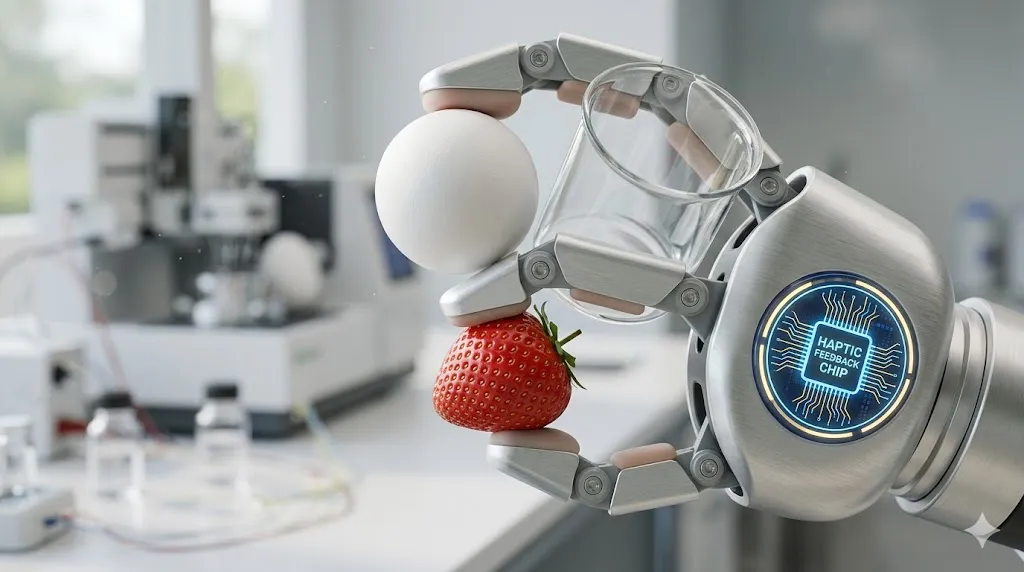
Counterfeit chips ruin robot production by causing system failures, inaccurate sensor readings, and safety hazards. Fake parts cannot handle industrial environments and break down quickly. Using unauthorized suppliers increases procurement risks, leads to costly product recalls, and endangers human workers.
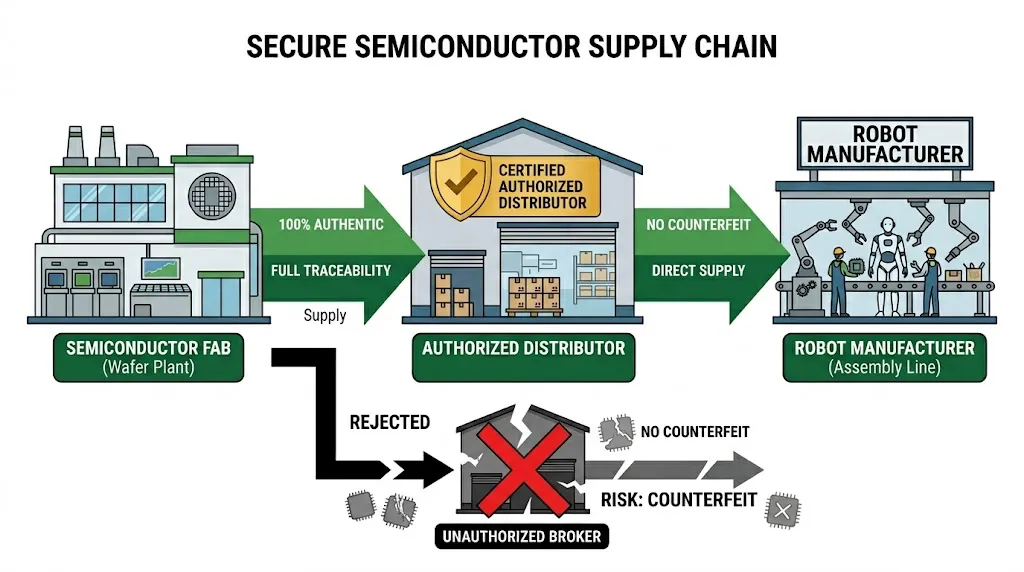
The True Cost of Fake Parts
Trust is the biggest issue in the supply chain today. I once met a factory manager who bought cheap MCUs from a local broker. The robots worked fine for a week. Then, the haptic sensors stopped responding. A robot arm hit a worker. They found out the MCUs were fake and recycled. This mistake cost them thousands of dollars.
You must reduce procurement risks. You need high-quality, 100% original electronic components. At Nexcir, we guarantee authentic components13. We only source from authorized distributors and original manufacturers. We give you full traceability14.
Protecting Your Supply Chain
Here is how you can protect your production from fake chips.
| Action Step | Why It Matters | How We Help |
|---|---|---|
| Verify Sources | Stops fake parts at the door | Only use authorized channels |
| Traceability | Proves the origin of the chip | Provide full documentation |
| Expert Testing | Catches hidden defects | 20 years of industry experience |
We know you expect prices lower than local market offerings. You cannot sacrifice quality to get them. We use our global logistics to give you competitive pricing and real parts.
Conclusion
Haptic feedback chips combine high-sensitivity pressure sensing and edge computing3 to give cobots human-like touch. Sourcing 100% authentic ICs ensures your robots operate safely and without production delays.
Exploring collaborative robots will show you how they safely interact with humans and handle delicate tasks. ↩
Learn how these sensors prevent damage to fragile items and improve robot precision. ↩
Discover how edge computing allows robots to process data locally, reducing delays and enhancing safety. ↩
Digital nerves allow robots to instantly adjust grip strength, preventing costly mistakes. ↩
A sensor array detects touch and pressure, essential for robots to interact with their environment. ↩
ADC resolution affects how accurately a robot can detect pressure changes, crucial for delicate operations. ↩
Explore how advanced computing and sensors enable robots to mimic human touch and reflexes. ↩
Edge AI MCUs process data locally, enhancing robot responsiveness and safety. ↩
Ensuring long lifecycle availability prevents production delays and secures consistent supply. ↩
PMICs ensure stable power supply, vital for consistent sensor performance in robots. ↩
Sensor interface chips condition signals, crucial for accurate data interpretation in robots. ↩
NRND parts can affect long-term planning; learn how to avoid them in your designs. ↩
Authentic components are vital for reliable robot performance and safety; learn how to verify them. ↩
Traceability ensures authenticity and quality, protecting against counterfeit risks. ↩