Installing a 60-amp circuit1 is a big job. If you choose the wrong wire size, you risk electrical fires or equipment failure. You need to know the exact specifications to ensure safety and compliance.
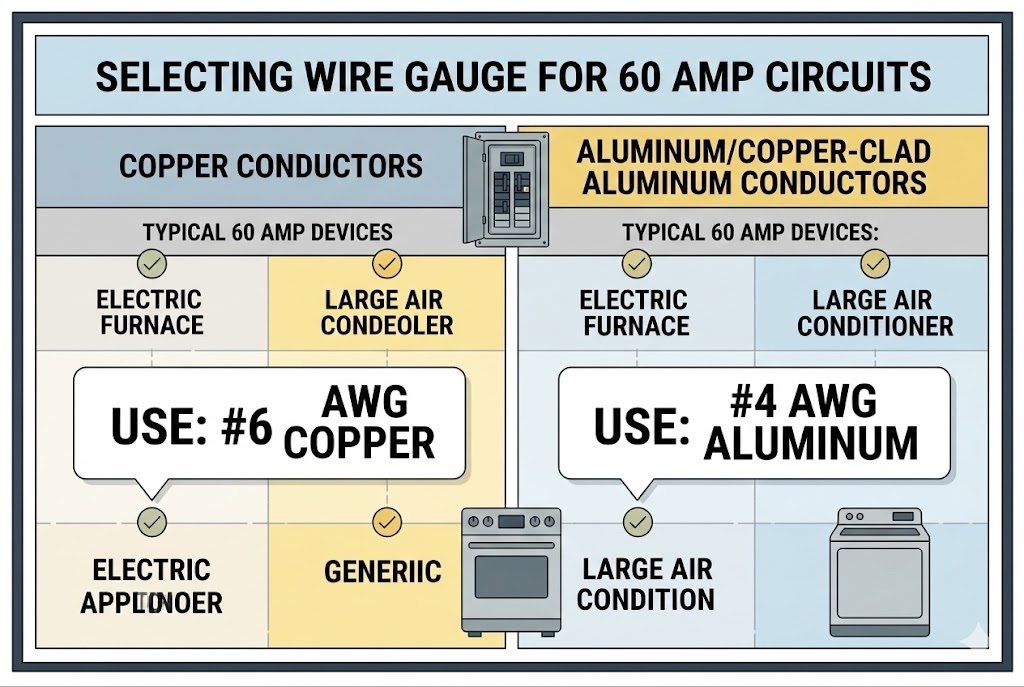
For a standard 60-amp circuit1, you should generally use 6 AWG copper wire2 or 4 AWG aluminum wire3. These sizes meet the National Electrical Code (NEC) standards4 for safety. However, you must also consider the temperature rating of the insulation5 and the length of the wire run to make the final decision.
Many people think they can just grab any thick wire and start working. This is a dangerous mistake. There are specific factors like material type and distance that change the rules. I will explain everything you need to know below so you do not make a costly error.
Should You Choose Copper or Aluminum for Your 60-Amp Circuit?
Copper wire is very expensive right now. You might want to save money, but you worry that aluminum wire is not safe. You need to weigh the cost against the performance.
Copper is the best conductor and allows you to use a smaller wire (6 AWG). Aluminum is much cheaper, but you must use a larger wire (4 AWG) to carry the same current safely. Both are safe if you install them correctly with the right terminations.
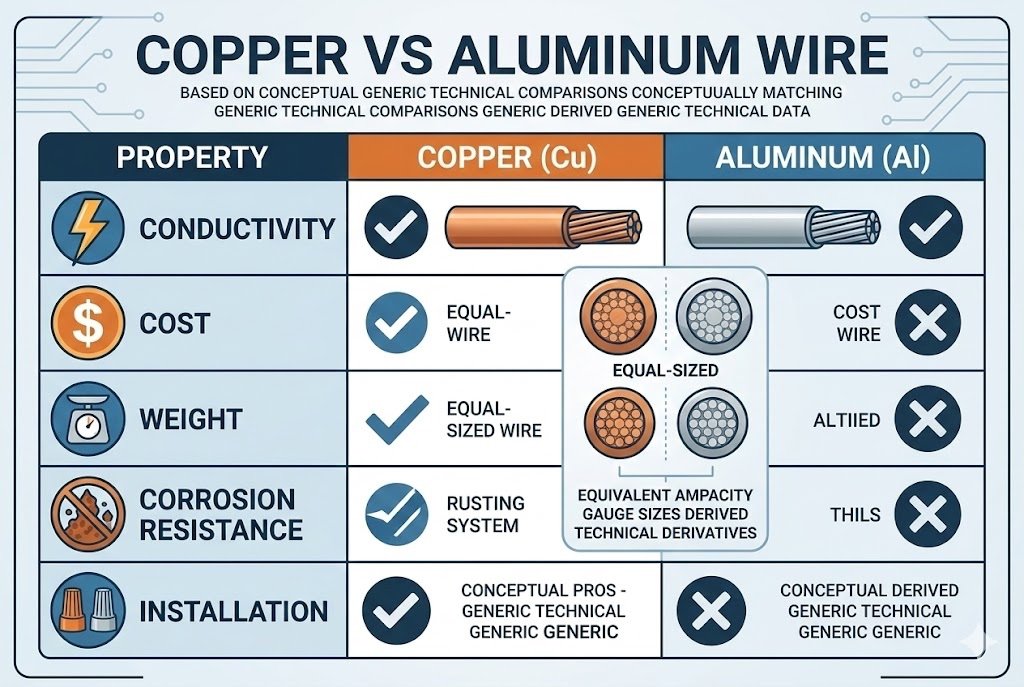
I have worked in this industry for over 20 years. I often see customers struggle with this choice. At Nexcir, we supply high-quality components, and we know that materials matter. Copper is the standard for a reason. It conducts electricity very efficiently. This means the wire does not get as hot as other materials. Because it is efficient, the wire can be thinner. A 6 AWG copper wire2 is easy to handle. It fits into conduit pipes easily. It is also very hard and durable. It does not break easily when you pull it.
However, aluminum has a place in the market too. The price difference is huge. Sometimes, copper costs three times as much as aluminum. If you are wiring a long sub-panel to a garage, the cost adds up fast. Aluminum is lighter, which helps with shipping and handling. But aluminum has downsides. It expands and contracts a lot when it gets hot and cold. This can make the screws at the connection points come loose over time. Loose wires cause arcs and fires.
If you choose aluminum, you must use a larger gauge. You need 4 AWG size to handle 60 amps. You also need to be careful with installation. You must use a special anti-oxidant paste6. This paste stops the air from eating away at the metal. You also need to make sure your breaker is rated for aluminum. Not all terminals accept it.
Comparison of Materials
| Feature | Copper (6 AWG) | Aluminum (4 AWG) |
|---|---|---|
| Conductivity | High | Lower (requires upsizing) |
| Cost | High | Low |
| Durability | High | Moderate (softer metal) |
| Maintenance | Low | Higher (check tightness) |
| Oxidation Risk | Low | High (needs paste) |
I always tell my clients to look at their budget and their skill level. If you want a "install it and forget it" solution, pay extra for copper. If you are on a tight budget and know how to apply anti-oxidant paste6 correctly, aluminum is a valid option.
What Does the National Electrical Code Say About Wire Specs?
Electrical codes are confusing and hard to read. You do not want to fail an inspection because you misunderstood a chart. You need a clear explanation of the rules.
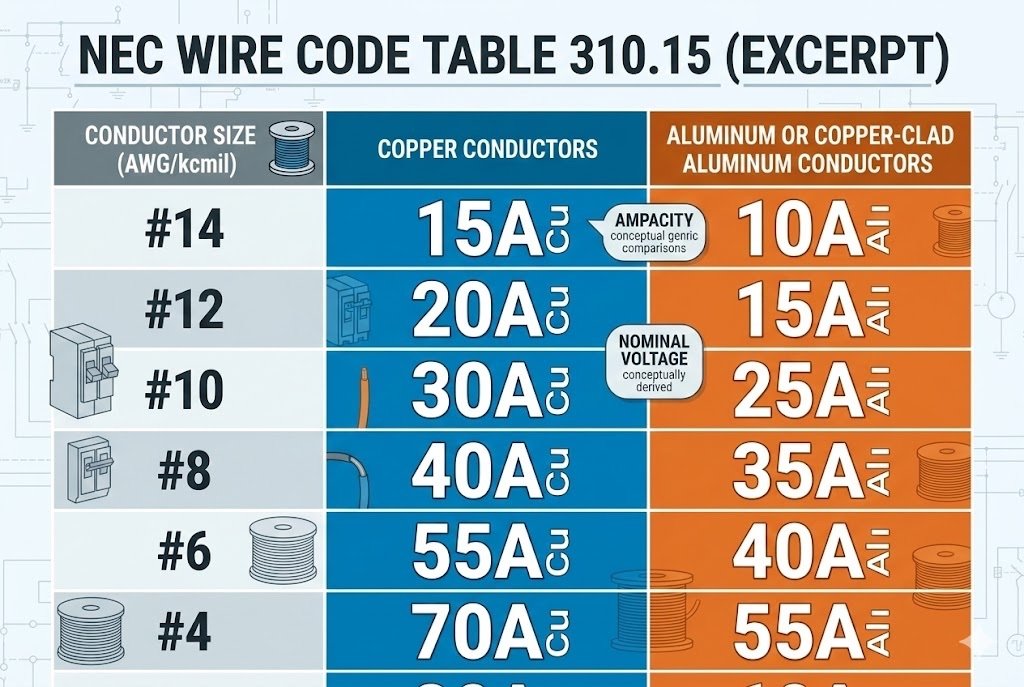
The NEC 310.15(B)(16) table7 is the standard rulebook. It states that 6 AWG THHN copper wire is rated for 60 amps at 75°C. However, if you use NM-B (Romex) cable, you are limited to the 60°C column, which changes the requirements.
Understanding the code is about understanding heat. The code does not just care about the metal. It cares about the insulation around the metal. The insulation melts if it gets too hot. Different types of plastic insulation handle heat differently. This is where the "Temperature Columns" come into play. There are usually three columns: 60°C, 75°C, and 90°C.
The 60°C Limitation
This is the most common trap. If you buy standard non-metallic cable (often called Romex) for wiring a house, you must use the 60°C column. Even if the wire inside is rated for 90°C, the cable assembly is not.
- The Problem: In the 60°C column, 6 AWG copper is only rated for 55 amps.
- The Result: You technically cannot use 6 AWG Romex for a full 60-amp circuit1. You would need to move up to 4 AWG copper if you use this type of cable.
The 75°C Standard
Most individual wires you pull through a pipe (conduit) are labeled THHN or THWN-28. These are rated for 90°C. However, the breaker you connect them to is usually only rated for 75°C. You can only use the lowest rating in your system.
- The Rule: Since the termination points (breakers) are 75°C, you look at the 75°C column.
- The Result: Here, 6 AWG copper is rated for exactly 65 amps. This is perfect for a 60-amp breaker.
Why This Matters for Equipment
At Nexcir, we supply components to OEMs and engineers. We know that precision matters. If you undersize your wire based on the wrong code column, you create a bottleneck. The wire becomes a heater. Over time, this heat damages the insulation. It can also damage the sensitive electronics connected to the circuit. Always check the markings on the wire jacket. Look for "THHN" or "NM-B". Then check your breaker. If the breaker says "AL/CU 75C", you are safe to use the 75°C column.
How Does Distance Affect Your Wire Gauge Choice?
You might have the right wire for a short distance, but what about a long run? If the wire is too long, the power does not reach the end effectively. You need to calculate for voltage drop9.
If your wire run is longer than 100 feet, you will lose voltage due to resistance. To prevent equipment damage, you must increase the wire size to 4 AWG copper. This keeps the voltage drop9 below 3%, which is the recommended limit.
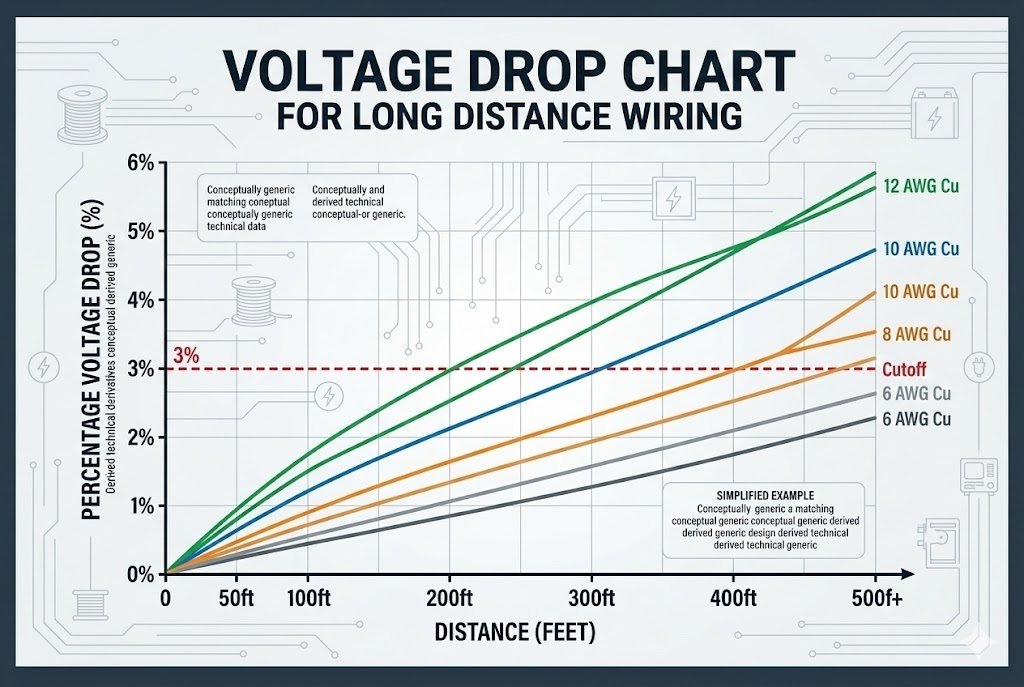
Voltage drop is a silent killer of electronics. Think of electricity like water in a hose. If the hose is very long, the pressure at the end is low. The same thing happens with electricity. The wire itself has resistance. The longer the wire, the more resistance there is. This resistance steals voltage before it reaches your machine.
The 3% Rule
The National Electrical Code recommends that you do not lose more than 3% of your voltage. On a 240-volt circuit, 3% is about 7.2 volts. If you lose more than that, your 240-volt motor is only getting 230 volts or less.
- Short Distance (0-100 ft): 6 AWG copper is fine. The resistance is low enough.
- Medium Distance (100-150 ft): You enter the danger zone. The voltage drop9 might hit 4% or 5%. You should upgrade to 4 AWG copper.
- Long Distance (150+ ft): You definitely need 4 AWG or even 3 AWG.
Impact on Electronics
I have seen this issue many times with our industrial clients. They install a high-end machine 200 feet away from the panel. They use the standard wire size. The machine turns on, but it runs hot. The motors burn out early. The control boards fail. They blame the machine, but the problem is the wire.
When voltage drop9s, amperage goes up. Motors have to work harder to do the same amount of work. This excess heat destroys internal components. At Nexcir, we focus on reliability. We advise our partners to always calculate the distance first.
Calculation Example
Let us look at the math simply.
- Circuit: 60 Amps at 240 Volts.
- Distance: 150 feet.
- Wire: 6 AWG Copper.
- Result: The voltage drop9 would be roughly 3.6%. This is over the recommended limit.
- Solution: Switch to 4 AWG Copper. The drop goes down to roughly 2.3%. This is safe.
You must treat distance as a major factor. Do not ignore it. It is cheaper to buy thicker wire now than to replace a burnt-out motor later.
Conclusion
Choosing the right wire for a 60-amp circuit1 depends on material, insulation, and distance. Use 6 AWG copper for short runs, but upsize for long distances to ensure safety and efficiency.
Understanding the correct wire size for a 60-amp circuit is crucial to prevent electrical fires and ensure equipment safety. ↩
6 AWG copper wire is recommended for its high conductivity and efficiency, making it a safe choice for 60-amp circuits. ↩
4 AWG aluminum wire is a cost-effective alternative for 60-amp circuits, but requires careful installation to ensure safety. ↩
NEC standards provide guidelines for wire sizes to ensure safety and compliance in electrical installations. ↩
The temperature rating of insulation impacts the wire's ability to handle heat, affecting safety and performance. ↩
Anti-oxidant paste prevents oxidation in aluminum wires, ensuring long-term safety and reliability. ↩
The NEC 310.15(B)(16) table provides essential guidelines for selecting the right wire size based on temperature ratings. ↩
THHN or THWN-2 labeling indicates the wire's temperature rating, crucial for compliance with NEC standards. ↩
Understanding voltage drop is essential to prevent equipment damage and ensure efficient power delivery over long distances. ↩