You need to power a heavy load, but you worry about melting wires1 or failing inspections. Using the wrong wire size causes fires and stops production lines immediately.
12-gauge wire typically handles 20 amps for general use under the National Electrical Code (NEC). However, this rating changes based on the insulation temperature rating2 (60°C, 75°C, or 90°C) and the number of current-carrying conductors in the cable.
I remember a time when a client ignored these ratings. They used standard wire in a hot machine room. The insulation melted, and the machine failed. You must understand the details to avoid this mistake.
How Does Temperature Affect 12-Gauge Wire Ampacity?
Heat is the enemy of electrical flow and safety. If you ignore the temperature rating of your wire insulation, you risk immediate system failure.
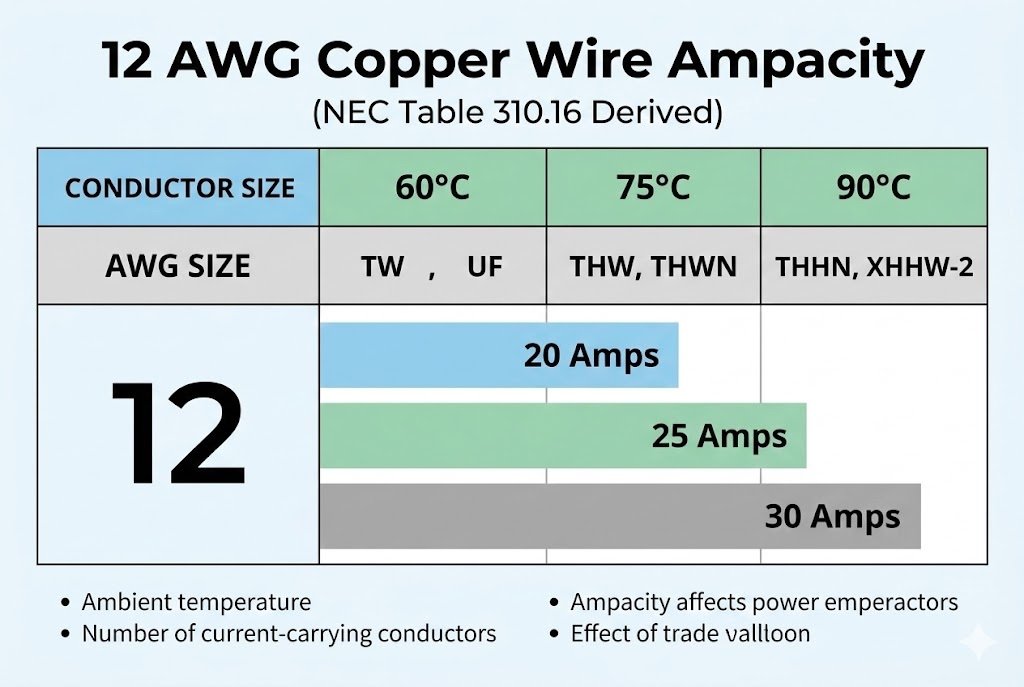
The NEC Table 310.15(B)(16)3 lists ampacity based on temperature columns. For 12 AWG copper wire, the limit is 20 amps at 60°C, 25 amps at 75°C, and 30 amps at 90°C.
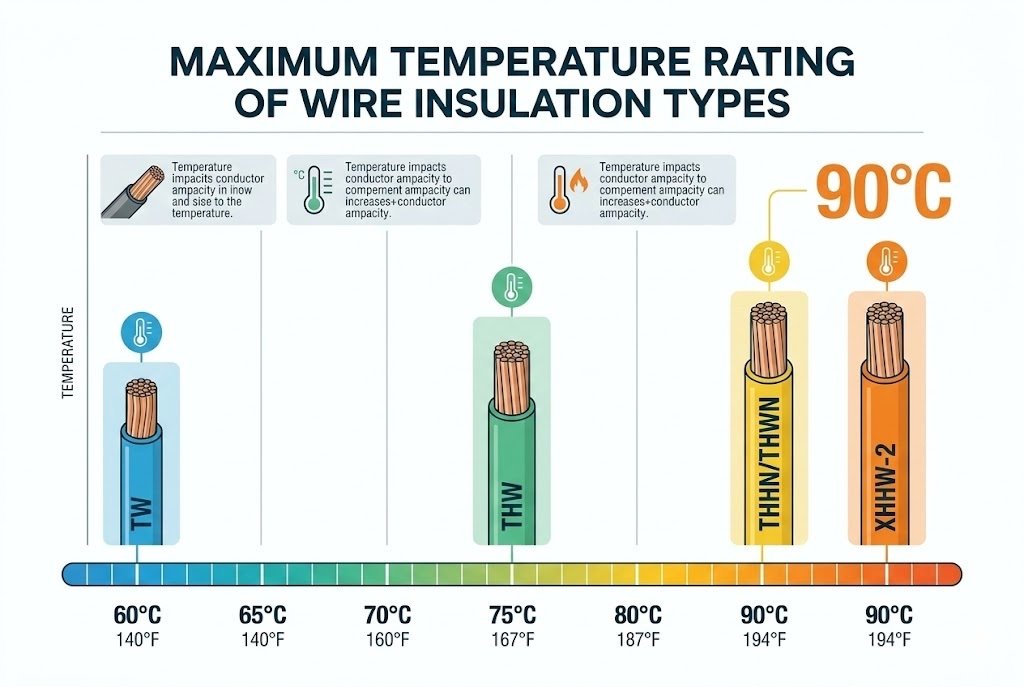
We need to look closely at why temperature matters so much. At Nexcir, we see many engineers get confused by the different numbers in the NEC table. The wire is copper, and copper is the same everywhere. But the plastic coating, or insulation, is different. This insulation determines how hot the wire can get before it melts.
The NEC table divides these ratings into three main columns: 60°C, 75°C, and 90°C.
- 60°C Rating: This is for standard NM-B cable, often called Romex. Even if the wire inside can handle more, the insulation cannot. The limit here is 20 Amps.
- 75°C Rating: This applies to wire types like THW. This is common in commercial settings. The limit goes up to 25 Amps.
- 90°C Rating: This is for high-heat wire like THHN or THWN-2. The table allows for 30 Amps.
However, you must be careful. Just because you use 90°C wire does not mean you can run 30 amps through it. You are usually limited by the "weakest link4" in your system. Most breakers and connection points are only rated for 75°C. So, even with high-end wire, you usually cannot exceed the lower rating of the termination points. At Nexcir, we advise clients to look at the whole circuit, not just the wire.
| Temperature Rating | Wire Type Examples | Ampacity (12 AWG) |
|---|---|---|
| 60°C (140°F) | TW, UF, NM-B | 20 Amps |
| 75°C (167°F) | RHW, THHW, THW | 25 Amps |
| 90°C (194°F) | THHN, THWN-2, XHHW-2 | 30 Amps |
How Do 12-2, 12-3, and 12-4 Configurations Impact Ampacity?
More wires in one cable generate more heat. This heat gets trapped inside the jacket and lowers the safe current level for the whole cable.
When you bundle more than three current-carrying conductors, you must reduce the ampacity. 12-2 and 12-3 usually need no adjustment, but 12-4 requires an 80% derating factor5.
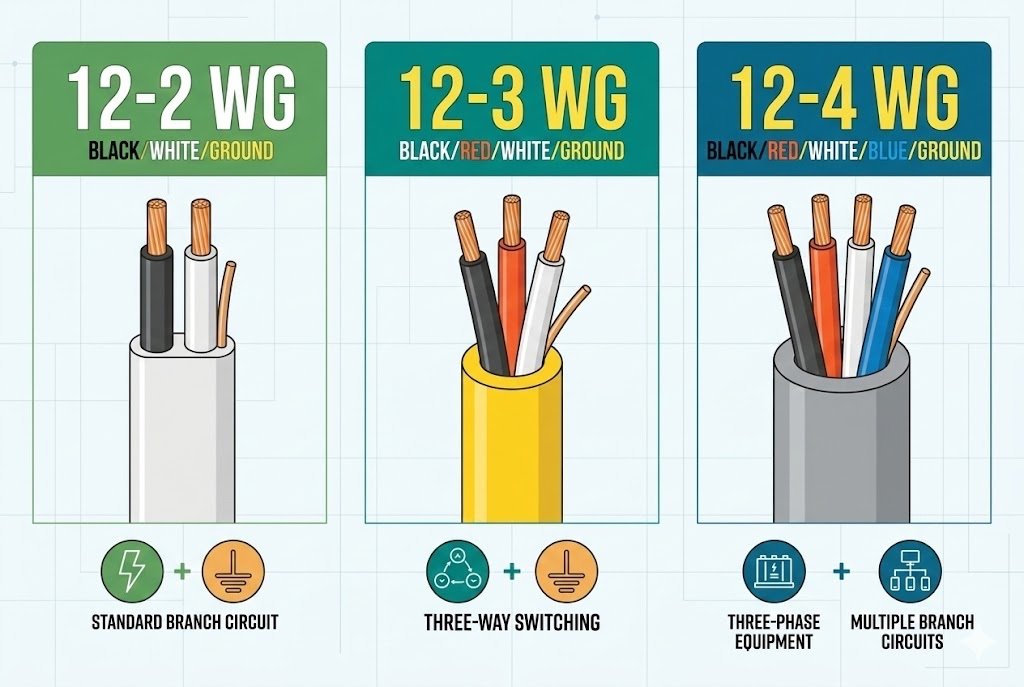
We supply cables to many industrial projects, and this is where mistakes happen. You might think a 12-gauge wire is always good for 20 amps. This is not true when you bundle them together. The NEC calls this "adjustment factors6." When you put many wires in a single conduit or cable, they heat each other up. They cannot cool down easily.
Let us break down the specific configurations:
- 12-2 Configuration7: This has two insulated wires (hot and neutral) and a ground. Only two wires carry current. The count is 2. No derating is needed.
- 12-3 Configuration: This has three insulated wires and a ground. In a standard single-phase circuit, the neutral carries the unbalanced load. Usually, we count this as 3 current-carrying conductors. The NEC says for 3 conductors, you use 100% of the rating.
- 12-4 Configuration: This is less common but used in complex industrial controls. It has four insulated wires. Now you have 4 current-carrying conductors.
The rule is strict. If you have 4 to 6 current-carrying conductors, you must reduce the ampacity to 80%. You take the 90°C rating (30 Amps) and multiply it by 0.80. 30 Amps x 0.80 = 24 Amps.
So, a 12-4 cable effectively has a limit of 24 amps for ampacity calculations, though you are still likely limited to a 20 amp breaker. This math is vital for safety. If you ignore it, the heat builds up inside the cable jacket, and the insulation breaks down over time.
What Are the NEC Rules for Overcurrent Protection?
Rules exist to keep people and machines safe from fire. The NEC is strict about 12-gauge wire protection, even if the math says otherwise.
NEC 240.4(D)8 sets a "small conductor rule." It limits 12 AWG copper wire to a maximum 20-amp breaker protection, regardless of the higher temperature ratings of the insulation.
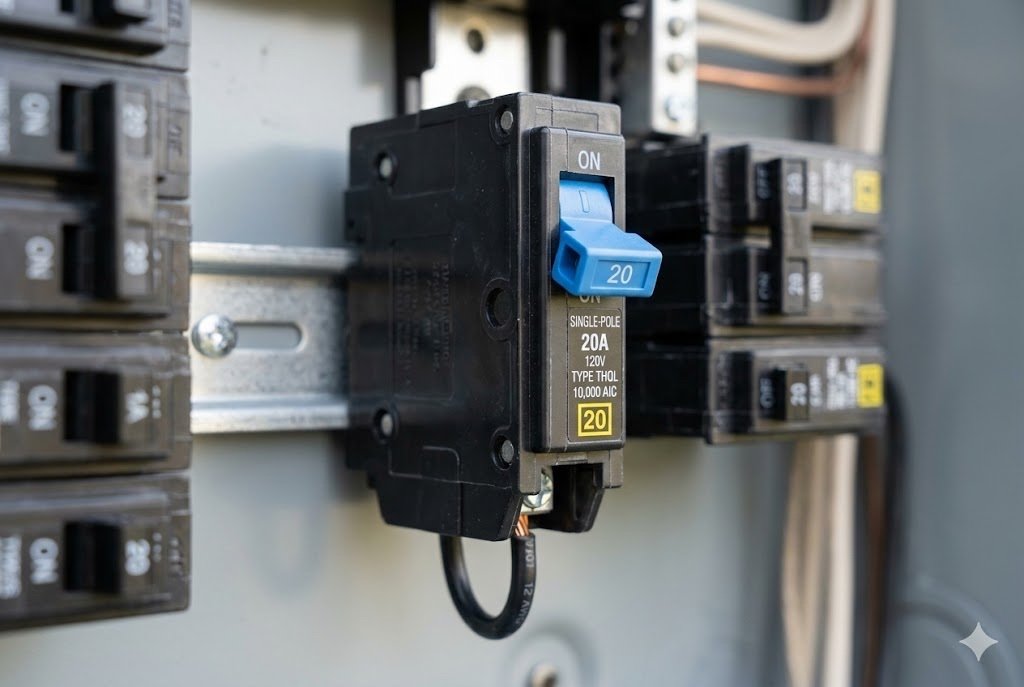
You might look at the charts I shared above and ask a question. "If THHN wire is rated for 30 amps at 90°C, why can I not use a 30-amp breaker?" This is a very common question from our customers. The answer lies in the NEC "Small Conductor Rule9."
The code makes a specific exception for small wires like 14, 12, and 10 AWG. For 12 AWG copper, the code states you cannot protect it with an overcurrent device10 (breaker or fuse) larger than 20 amps. This rule overrides the temperature chart for standard power and lighting circuits.
There are specific exceptions, such as for specific motor loads or HVAC equipment, but for general wiring, 20 amps is the hard limit. Why does the higher rating matter then? It matters for derating. Recall the 12-4 cable example.
- We started with 30 Amps (90°C rating).
- We derated by 80% because of the 4 wires.
- The result was 24 Amps.
Because 24 Amps is still higher than the 20-Amp breaker rule, you are safe to use that wire on a 20-Amp circuit. If you started with the 60°C rating (20 Amps) and derated by 80%, you would only have 16 Amps. You would have to use a smaller breaker. So, the high-temperature rating gives you "headroom11" to adjust for hot environments or bundled cables without dropping below the standard 20-amp breaker size. At Nexcir, we help engineers calculate this headroom11 to ensure their designs are robust and compliant.
Conclusion
To summarize, 12-gauge wire is generally limited to 20 amps by the NEC. However, you must account for temperature ratings and derate the ampacity if you use 12-4 configurations.
Understanding how to prevent wires from melting is crucial for maintaining safety and efficiency in electrical systems. ↩
Exploring insulation temperature ratings helps ensure the safe operation of electrical systems under varying temperature conditions. ↩
This table is essential for determining the correct ampacity based on temperature, ensuring compliance with electrical standards. ↩
Identifying the weakest link in an electrical system helps prevent failures and ensures the system operates safely and efficiently. ↩
Exploring derating factors is crucial for safely managing heat and current in bundled wire configurations. ↩
Understanding adjustment factors is key to safely bundling wires and preventing overheating in electrical systems. ↩
Learning about the 12-2 configuration helps in understanding its application and safety considerations in electrical systems. ↩
This rule is vital for understanding the limitations on overcurrent protection for small conductors, ensuring safety and compliance. ↩
Understanding the Small Conductor Rule helps ensure compliance with NEC standards and prevents overcurrent issues. ↩
Overcurrent devices are crucial for protecting electrical systems from excessive current, preventing damage and ensuring safety. ↩
Headroom allows for flexibility in wiring configurations, ensuring safety and compliance with electrical standards. ↩