Relying on the aging ESP8266 for new manufacturing runs feels increasingly risky. Supply chains are shifting toward newer technology, and sticking to old components might hurt your bottom line soon.
Yes, the ESP32-C31 is the superior choice for modern production lines. It offers dual Wi-Fi and Bluetooth 5 (LE)2, stronger security3, and better long-term availability4 at a price point comparable to the ESP8266. While it requires a board redesign5, the future-proofing benefits outweigh the initial engineering effort.

Many procurement managers6 hesitate to switch components because of the redesign costs involved. It feels safer to keep buying what you know. But looking at the raw data and market trends changes everything. Let me show you why this migration is necessary for your long-term success and how it impacts your supply chain.
How Do the Technical Specifications of ESP32-C31 Compare to ESP8266?
You might think the ESP8266 is "good enough" for your current products, but "good enough" often fails to compete in modern IoT markets7.
The ESP32-C31 is not just an update; it is a massive leap forward. It utilizes a RISC-V 32-bit single-core processor8 and adds Bluetooth LE 5.09, which the ESP8266 lacks entirely. It also runs faster and includes critical security features like Secure Boot10 that modern clients demand.

When we look closely at the architecture, the differences become very clear. The ESP8266 served the industry well for many years. It was the entry point for cheap IoT. But the ESP32-C31 is what Espressif designed to replace it.
Here is a breakdown of the key differences that matter to your engineering team:
| Feature | ESP8266 | ESP32-C31 | Why It Matters? |
|---|---|---|---|
| Architecture | Xtensa® 32-bit L106 | RISC-V 32-bit Single-core | RISC-V is open standard, ensuring lower long-term IP costs. |
| Connectivity | Wi-Fi 4 (802.11 b/g/n) | Wi-Fi 4 + Bluetooth 5 (LE) | Adding Bluetooth allows for easier device pairing and local control. |
| Security | WPA2 | WPA311, Secure Boot10, Flash Encryption | Essential for selling into Western markets with strict data laws. |
| Peripherals | Limited GPIOs12 | More GPIOs12 + Native USB Serial | Simplifies circuit design and debugging. |
| Power | Higher consumption | Low Power Management13 | Better for battery-operated devices. |
Important Warning: These two chips are not Pin-to-Pin compatible. You cannot simply desolder an 8266 and drop in a C3. The footprint is different. This means you must update your PCB layout.
This is where many of our clients at NexCir worry. They ask if the effort is worth it. My answer is always yes. The engineering time you spend now prevents the headache of trying to source obsolete parts three years from now. Plus, the addition of Bluetooth gives your product a "dual-mode" selling point. You are not just updating a part; you are upgrading the entire product capability.
Is the ESP32-C31 Really More Cost-Effective for Mass Production?
Price is usually the main barrier to upgrading any component, but the market gap between these two chips has closed significantly.
Surprisingly, the price difference between the ESP32-C31 and ESP8266 is now negligible in bulk. By paying almost the same price, you get Bluetooth capabilities, which allows you to sell your end product at a higher premium, effectively increasing your profit margin.

Let's look at the numbers from a procurement perspective. In the past, the ESP8266 was the king of low cost. Nothing could beat it. But as manufacturing processes improve, the cost of the newer RISC-V architecture in the ESP32-C31 has dropped.
Currently, for high-volume orders (like the reels we source for OEM clients), the unit price gap is very small. Sometimes, it is only a few cents.
Think about the value proposition:
- Product Value: If you use an ESP8266, your product is a "Wi-Fi Device." If you use an ESP32-C31, your product is a "Smart Home Hub with Wi-Fi and Bluetooth." You can likely charge your end customer significantly more for that added Bluetooth feature. You pay pennies more on the BOM, but gain dollars on the shelf price.
- Maintenance Costs: The ESP32-C31 has better software support in the Espressif IDF framework. Your software team will spend less time fixing bugs and patching old code. Time is money in R&D.
- Future Inflation: Legacy chips like the 8266 often get more expensive as they age because production volume decreases. Fabs prioritize newer nodes. By locking into the C3 now, you are securing a price point that will likely remain stable or decrease, whereas the 8266 price may become volatile.
At NexCir, we help you calculate this Total Cost of Ownership14. We don't just look at the invoice price today; we look at what this chip saves you over the next five years of production.
Which Chip Offers Better Long-Term Supply Chain Security?
Nothing halts a factory line faster than an End-of-Life (EOL) notice15 or a sudden shortage of a key component.
Espressif is actively prioritizing the ESP32-C31 for future capacity and long-term support. While the ESP8266 is not dead yet, it is a legacy product. Choosing the C3 ensures you have stable access to original reels for the next decade, avoiding panic buying.

I talk to factory owners every week who are scared of supply shortages. We all remember the component crisis of the last few years. The best way to protect your business is to choose components that are in the "growth" phase of their lifecycle, not the "decline" phase.
The "Successor" Status: Espressif has publicly positioned the ESP32-C31 as the successor to the ESP8266. This is a clear signal to the market. Semiconductor foundries have limited capacity. When push comes to shove, they will allocate silicon wafers to the newer, more popular chips first.
Why the C3 is safer for your supply chain:
- Production Priority: In a shortage, the C3 gets manufactured before the 8266.
- Longevity Program: Espressif typically supports chips for 12+ years. The C3 is at the start of this cycle. The 8266 is much further along.
- Multi-Source Availability: Because the C3 is the current standard, more distributors and sourcers hold stock of it.
At NexCir, we focus on Lifecycle Awareness16. We don't want to sell you a part today that you can't buy tomorrow. We advise our OEM clients to start their migration now. We can help you secure long-term schedules for ESP32-C31 modules and ICs, ensuring your production line never stops waiting for parts. We are not just spot traders; we help you plan your annual usage so you are never caught off guard.
How Can NexCir Support Your Transition to the C3?
Changing a core component is scary for any engineering or procurement team, but you do not have to do it alone.
We do not just ship boxes; we support your entire product lifecycle. From sourcing samples for prototyping to securing volume allocation for mass production17, NexCir acts as your bridge to ensure the migration from ESP8266 to C3 is smooth and predictable.

We understand that you are not just buying a chip; you are managing a risk. Since the ESP32-C31 and ESP8266 are not pin-compatible, you have work to do on your side. We are here to make the supply side easy.
Here is how we help you upgrade:
- Sample Availability: We can get you small quantities of ESP32-C31 chips or modules quickly so your R&D team can build prototypes and test the new code.
- Cross-Reference Analysis: If you are using a specific ESP8266 module, we can identify the exact ESP32-C31 module equivalent that fits your needs best (e.g., antenna type, flash size).
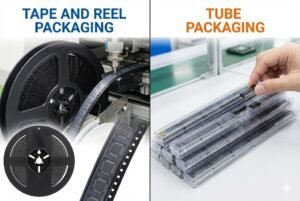
- Volume Allocation: Once you are ready for mass production17, we lock in the stock. We deal in full reels (usually 3000pcs/reel). We work with the upstream supply chain to ensure your quarterly needs are met.
- Cost Optimization: Because we serve many industrial and automotive customers, we have strong negotiation power. We ensure you get a price that makes the upgrade financially sensible.
CTA: Request a Quote for ESP32-C31 Reels Are you ready to future-proof your product line? Don't wait for the ESP8266 to become hard to find. Contact us today. We can provide a quote for ESP32-C31 reels (3000pcs) and help you plan your delivery schedule for the coming year. Let's build a stable, high-performance product together.
Conclusion
The ESP32-C31 is the clear winner for cost, performance, and supply stability. Stop relying on legacy parts and contact NexCir today to secure your future production reels and ensure stability.
Explore the benefits of the ESP32-C3, including enhanced features and future-proofing for your projects. ↩
Learn how dual connectivity can enhance your product's functionality and user experience. ↩
Understand the importance of stronger security features for modern IoT applications. ↩
Discover how long-term availability can impact your production and supply chain stability. ↩
Get insights into the redesign process and how it can affect your project timelines. ↩
Explore the decision-making process of procurement managers in technology upgrades. ↩
Stay updated on IoT market trends to make informed decisions for your products. ↩
Learn about the advantages of RISC-V architecture for modern embedded applications. ↩
Find out how Bluetooth LE 5.0 can improve connectivity and user interaction. ↩
Understand the significance of Secure Boot in protecting your devices from vulnerabilities. ↩
Explore the enhanced security features of WPA3 and their importance for modern networks. ↩
Learn about the role of GPIOs in simplifying circuit design and enhancing functionality. ↩
Discover how Low Power Management can extend battery life and improve efficiency. ↩
Learn how to assess the long-term costs associated with component choices. ↩
Get strategies for managing EOL notices and ensuring supply chain continuity. ↩
Understand the importance of Lifecycle Awareness in making informed sourcing decisions. ↩
Explore the key considerations for successfully scaling up production. ↩