You just bought a new digital caliper or a small toy, and the battery died. You open the compartment and see "LR441," but the store only sells "A762" or "AG133," and you feel confused and frustrated.
The short answer is yes, they are usually interchangeable because they share the same physical dimensions of 11.6mm in diameter and 5.4mm in height. However, while they fit in the same slot, the chemical makeup inside—Alkaline versus Silver Oxide4—determines how long they last and how well your device performs.
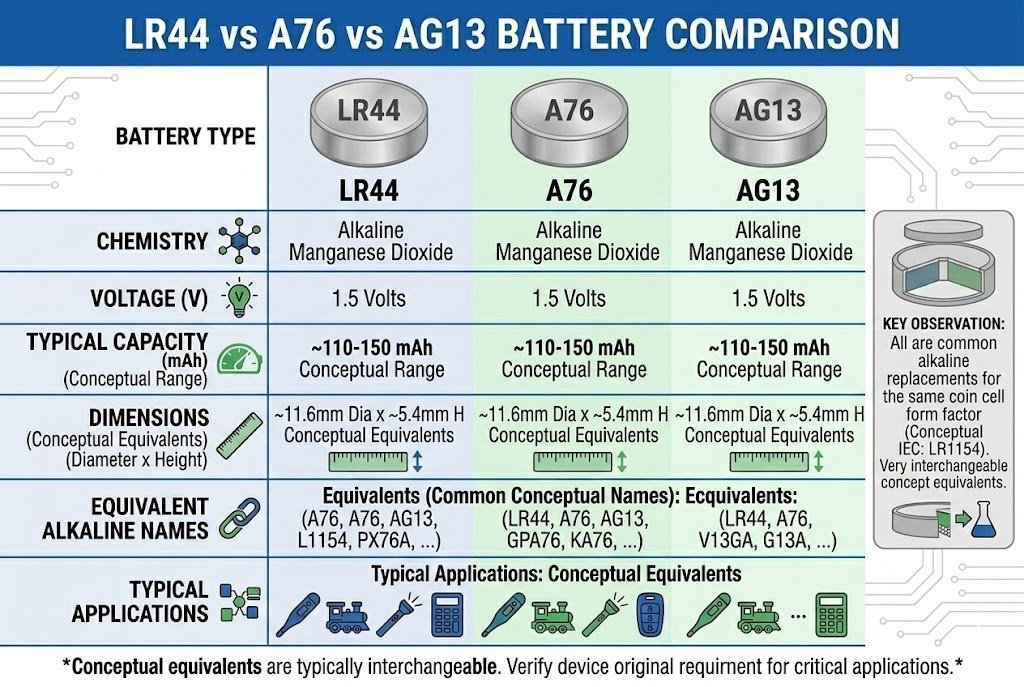
Many people make the mistake of thinking size is the only thing that matters. I have seen expensive equipment fail because a user bought the wrong chemistry type. In this post, I will break down exactly why these names exist and which one is right for your specific device.
Why Are There So Many Confusing Names for the Same Battery?
Manufacturers from different countries and companies use their own coding systems, which makes a simple battery purchase feel like solving a puzzle. You might worry about damaging your device if you pick the wrong code.
The confusion stems from three main naming standards: the International Electrotechnical Commission (IEC)5, the American National Standards Institute (ANSI)6, and specific manufacturer brand names like Energizer or Duracell. They all describe the same physical cylinder, but they use different letters and numbers to track inventory.
I want to look closer at why this happens. In my 20 years of experience in the electronic components industry at Nexcir7, I have seen this cause major headaches for procurement managers. The root cause is historical. Different regions developed their own standards before the world became fully connected.
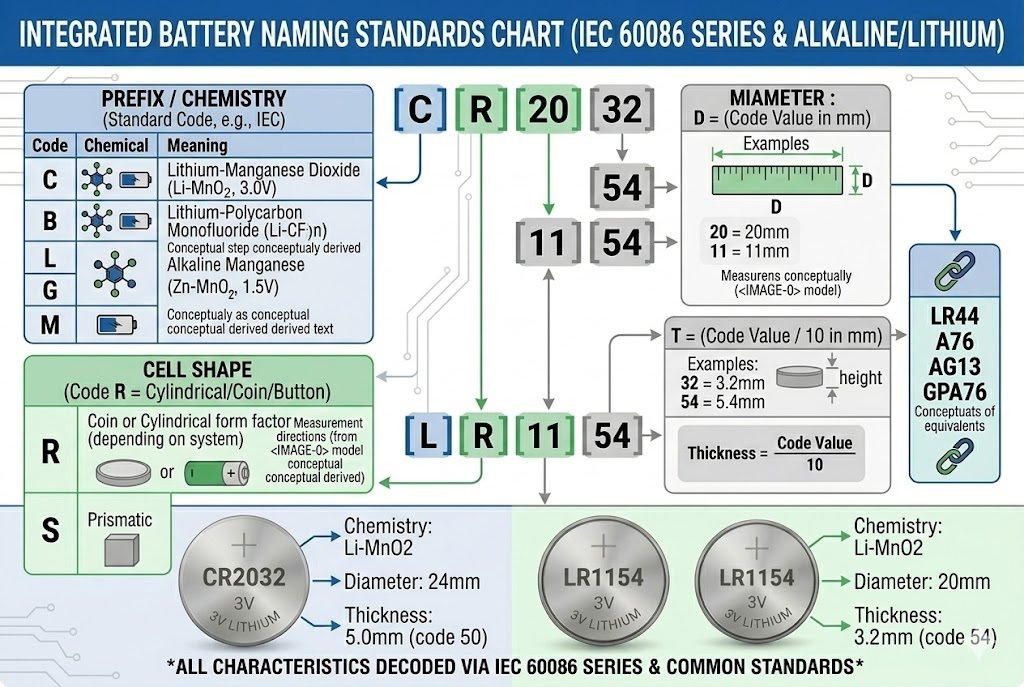
First, let us look at the IEC standard. This is the most logical system.
- L stands for Alkaline chemistry.
- S stands for Silver Oxide chemistry.
- R stands for Round (cylindrical shape).
- 44 refers to the specific size dimensions.
So, LR441 literally means "Alkaline Round Battery Size 44." If you see SR44, it means "Silver Oxide Round Battery Size 44." They are the exact same size.
However, big brands wanted to stand out. Energizer created the code A762. Maxell and other Asian manufacturers often use AG133 or G13. Varta might use V13GA. When you walk into a store, you are seeing marketing codes mixed with technical codes.
Here is a breakdown of the logic:
The Naming Breakdown
| Standard / Brand | Code | Meaning |
|---|---|---|
| IEC (Standard) | LR441 | Alkaline chemistry, standard size. |
| IEC (Standard) | SR44 | Silver Oxide chemistry, standard size. |
| Energizer | A762 | Their brand code for LR441. |
| Generic / Asian | AG133 | Common generic code for Alkaline. |
| Duracell | 76A | Their brand code for LR441. |
| Common Name | 357 / 3038 | Usually refers to the Silver Oxide version (SR44). |
It is crucial to understand that AG133 is just a generic name for LR441. They are identical. But if your device calls for 357 or SR44, putting in an AG133 might result in a shorter battery life.
What Is the Real Difference Between Alkaline and Silver Oxide?
You might think saving a few cents on the cheaper Alkaline version is a smart move. But if your device requires high precision, using the wrong chemistry can lead to inaccurate readings and frustration.
The main difference lies in the voltage curve: Alkaline batteries (LR441) start strong but lose voltage gradually as they drain, while Silver Oxide batteries (SR44) maintain a stable voltage until the very end of their life.
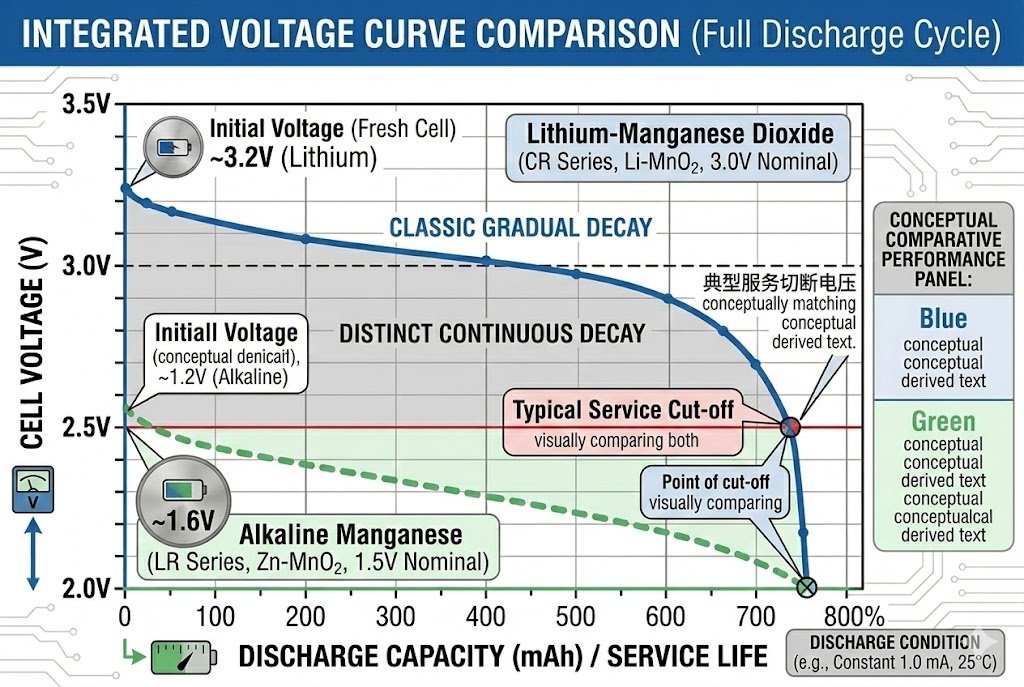
I need to explain this technical aspect because it directly affects your user experience. In the electronics world, we talk about "discharge curves."
Imagine an Alkaline battery (LR441/AG133) like a slide on a playground. It starts at 1.5 Volts. As you use it, the voltage slides down steadily to 1.4V, 1.2V, and then dies.
- Pros: It is cheap and great for simple things.
- Cons: As the voltage drops, the device might get weaker before it actually stops working.
Now, imagine a Silver Oxide battery (SR44/357/303) like a table. It starts at 1.55 Volts. It stays flat at 1.55 Volts for a long time. Then, right at the end, it drops off a cliff.
- Pros: It provides consistent power.
- Cons: It costs more due to the silver content.
Why This Matters for Your Device
If you put an LR441 (Alkaline) into a digital caliper, the caliper measures voltage to calculate the distance. As the battery voltage drops (the slide), the caliper might start giving you wrong measurements even though the screen is still on. This is a disaster for engineers.
If you put an LR441 into a child's toy that makes noise, the sound might just get a little quieter over time. This is acceptable.
Technical Comparison
| Feature | Alkaline (LR441 / AG133) | Silver Oxide (SR44 / 357) |
|---|---|---|
| Nominal Voltage9 | 1.5V | 1.55V |
| Capacity10 | ~110-130 mAh | ~150-200 mAh |
| Discharge Shape | Sloping drop | Flat and stable |
| Shelf Life11 | 3-5 Years | 5-7 Years |
| Leakage Risk12 | Higher risk over time | Lower risk |
At Nexcir7, when we source components for OEM clients, we always ask about the application. If it is a medical device or a precision watch, we strictly advise against Alkaline equivalents.
Which Equivalent Should You Buy for Your Specific Device?
You are standing in the aisle or looking online, and you are worried about wasting money on a battery that dies in a week. You need to know which specific code matches your specific gadget.
For low-drain devices like LED lights, laser pointers, and children's toys, the cheaper LR441, AG133, or A762 is perfectly fine. For high-drain or precision devices like watches, digital calipers, and medical thermometers, you must choose SR44, 357, or 303.
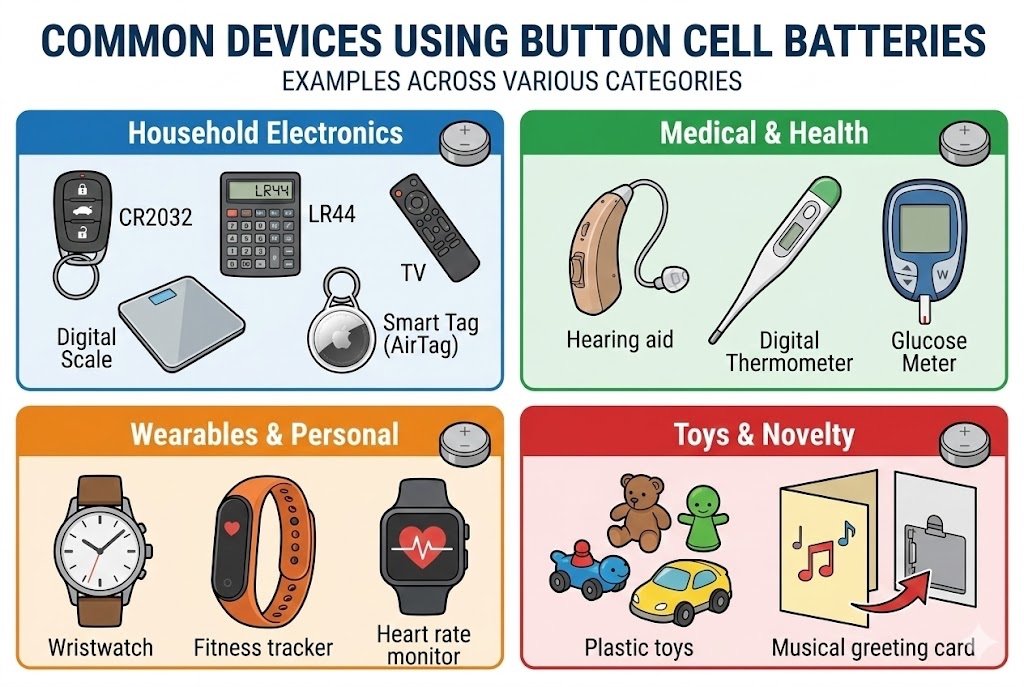
Let's dig deeper into the specific use cases so you can make the right choice every time. I often tell my customers that the "best" battery is not always the most expensive one; it is the one that fits the job.
Scenario A: The Toy Box
If you are powering a small plastic robot, a flashing keychain, or a musical birthday card, the device does not care about voltage stability. It just needs raw power.
- Choice: LR441, AG133, A762.
- Reason: These devices drain power fast. You will replace them often anyway. Spending extra on Silver Oxide is a waste of money here. The sloping voltage drop does not hurt a flashing light; it just gets dimmer.
Scenario B: The Tool Shed and Watch Box
If you have a digital caliper, a glucometer (for blood sugar), or a nice quartz watch, the device relies on a steady 1.55V reference.
- Choice: SR44, 357, 303, SR44W, SR44SW.
- Reason: If you use an Alkaline battery here, a watch might lose time. A caliper will drift. Also, Silver Oxide batteries have a higher energy density. This means they pack more energy into the same space. An SR44 can last up to 50% longer than an LR441 in the same device.
Scenario C: The "High Drain" vs. "Low Drain" Silver Oxide
Even within Silver Oxide, there is a tiny difference. You might see 357 vs 303.
- 357 (High Drain): Designed for devices that need bursts of power, like a watch with a backlight or an alarm.
- 303 (Low Drain): Designed for simple analog watches that just tick.
- Modern Reality: Today, most manufacturers make "Multi-Drain" Silver Oxide batteries that cover both 357 and 303. So, if you buy a branded 357/303, it works for everything.
A Note on Shelf Life11
I also want to mention storage. If you like to buy in bulk to save money, Silver Oxide is better. Alkaline batteries have a higher chance of leaking if left in a drawer for 5 years. Silver Oxide is much more stable chemically. If you are buying for a factory or long-term supply, we always recommend the stable chemistry to avoid damaging the inventory.
Where Can I Find a Complete Cross-Reference Chart?
Searching through five different websites to find if your battery code matches the one in the store is a waste of your valuable time. You want a single, reliable list to check against.
Below is the ultimate cross-reference chart that combines IEC standards, major brand names, and generic codes into one simple view. You can bookmark this section to instantly verify if the battery you found is the correct replacement.
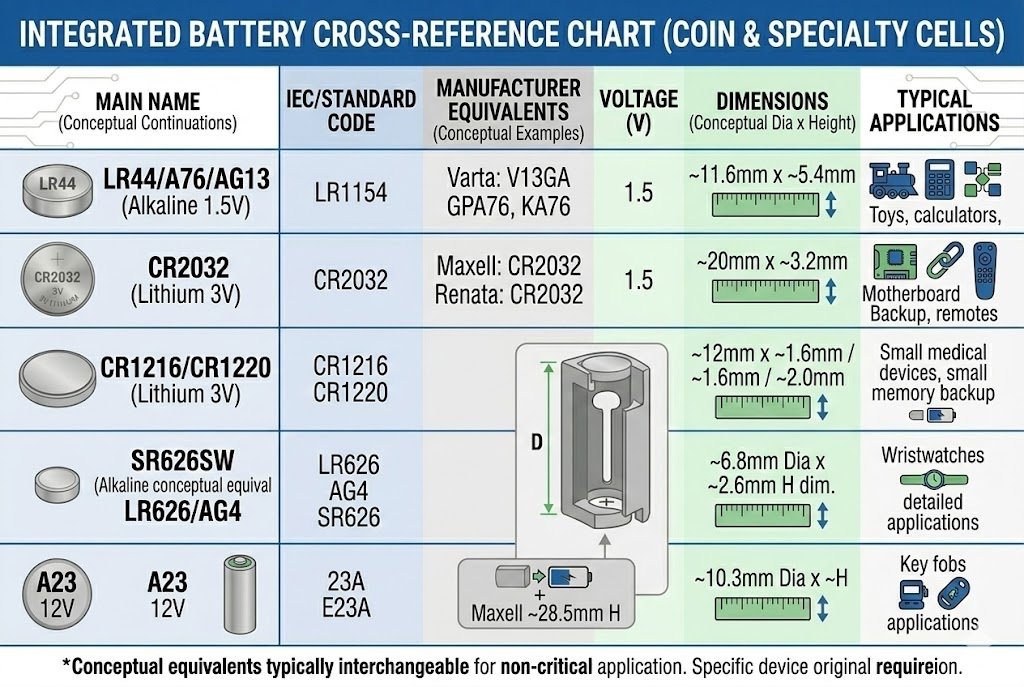
I have compiled this data based on the most common requests we receive at Nexcir7. We deal with global supply chains, so we see codes from Japan, Europe, and the US. This table unifies them all.
The Master Equivalents Table
| Common Name | Chemistry | IEC Code | Energizer | Duracell | Maxell/Sony/Toshiba | Rayovac | Varta | Other Common Codes |
|---|---|---|---|---|---|---|---|---|
| LR441 | Alkaline | LR441 | A762 | 76A | LR441, AG133 | RW82 | V13GA | L1154, GPA762, KA762, 157 |
| SR44 | Silver Oxide | SR44 | 357 / 3038 | D357 / D303 | SR44W, SR44SW | 357 | V357 | SB-B9, SP357, G13 |
How to Use This Chart
- Look at your old battery. Use a magnifying glass if the text is small.
- Find the code in any column above.
- Look to the left to see the "Common Name."
- Decide on Chemistry. If your old battery says "L1154" (Alkaline), you can upgrade to "357" (Silver Oxide) for better performance. If your old battery says "357," do not downgrade to "A762" unless it is an emergency.
A Warning on Counterfeits13
I must share a warning from my industry experience. Because these batteries are so popular, the market is flooded with low-quality fakes. A generic "AG133" bought from an unknown source might only have half the capacity of a real LR441.
At Nexcir7, we ensure every component comes from authorized distributors. When you buy for your business or expensive equipment, the source matters. A leaking battery can destroy a device worth hundreds of dollars.
When looking at the chart, also pay attention to the suffix letters.
- W (e.g., SR44W) usually means High Drain.
- SW (e.g., SR44SW) usually means Low Drain.
- As I mentioned before, many modern brands combine these, but if you have a vintage watch, match the letter exactly if possible.
By using this chart, you can confidently switch between brands. You can grab a Maxell SR44W to replace a Duracell D357 without worry. They are functionally identical.
Conclusion
LR441, A762, and AG133 are the same size, but SR44 offers better stability. Choose Alkaline for toys and Silver Oxide for precision tools to ensure the best performance.
Understanding the specific uses of the LR44 battery can help you choose the right battery for your device, ensuring optimal performance. ↩
Clarifying the interchangeability of A76 and LR44 can prevent purchasing errors and ensure your device functions correctly. ↩
Knowing which devices use AG13 batteries can guide you in selecting the right battery for your needs, avoiding compatibility issues. ↩
Understanding the differences between Alkaline and Silver Oxide batteries can help you choose the right type for your device's performance needs. ↩
Learning about the IEC standard can provide insights into battery naming conventions, helping you make informed purchasing decisions. ↩
Understanding ANSI's role in battery naming can help you navigate the confusing array of battery codes and make better choices. ↩
Understanding Nexcir's role can provide insights into reliable sourcing and the importance of quality in electronic components. ↩
Knowing the difference between 357 and 303 batteries can help you choose the right one for your device's power needs. ↩
Understanding nominal voltage can help you select the right battery for your device, ensuring it operates at optimal levels. ↩
Knowing about battery capacity can help you choose a battery that meets your device's power requirements, ensuring longevity and efficiency. ↩
Understanding shelf life can help you decide which battery to buy, especially if you plan to store them for future use. ↩
Knowing the leakage risk can help you choose a safer battery for your device, preventing potential damage from leaks. ↩
Learning to identify counterfeit batteries can prevent you from purchasing low-quality products that may damage your device. ↩