Are you tired of memory prices wrecking your budget every year? One month, DRAM chips1 are cheap and abundant, but the next month, prices skyrocket and stock disappears. This unpredictability hurts your production planning2 and eats into your profit margins. Let me explain why this happens and how you can predict it.
Memory price volatility is primarily caused by a specific time lag between demand spikes and production capacity. Building new chip factories takes years. When demand rises, supply cannot catch up immediately, causing prices to rise. When new factories finally open, demand often cools, causing prices to crash.
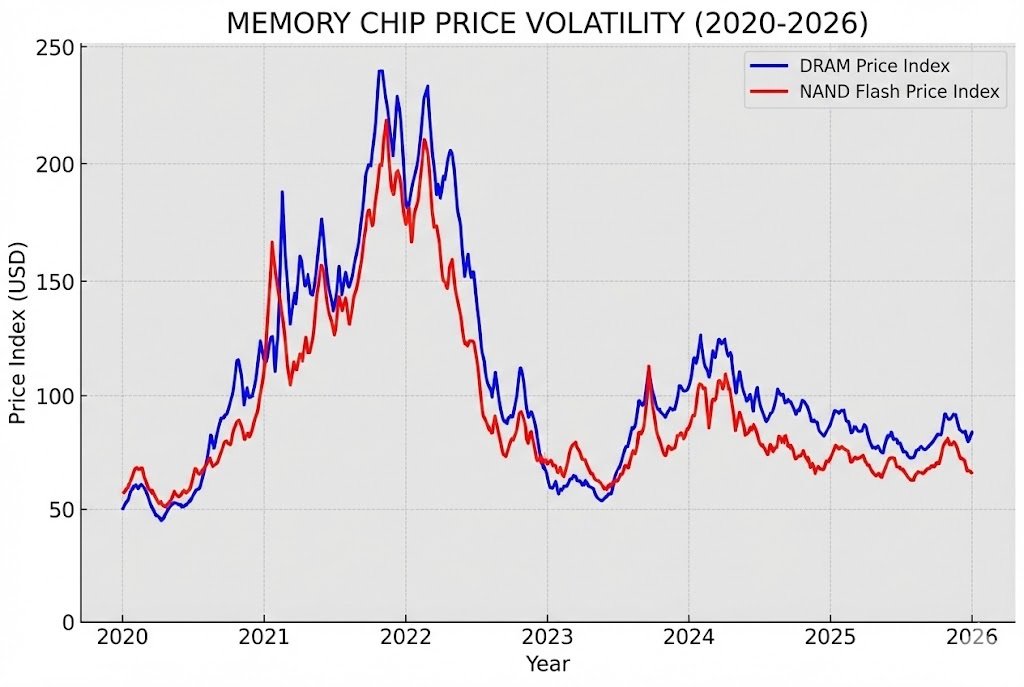
You might think this is just bad luck or market manipulation, but it is actually a highly predictable economic pattern. If you understand the simple logic behind these massive swings, you can stop reacting to the market and start planning ahead. Let's look at the root cause of this cycle.
What causes the massive mismatch between supply and demand?
You need parts right now, but the factory tells you the lead time is 50 weeks. It feels like they do not want your business, which is frustrating. However, the problem actually started two years ago when they made their planning decisions.
The core issue is the long construction cycle for semiconductor fabrication plants3. It takes about two years to build and equip a new production line. When demand explodes, manufacturers cannot add supply instantly. By the time they finish building, the market demand has often changed.
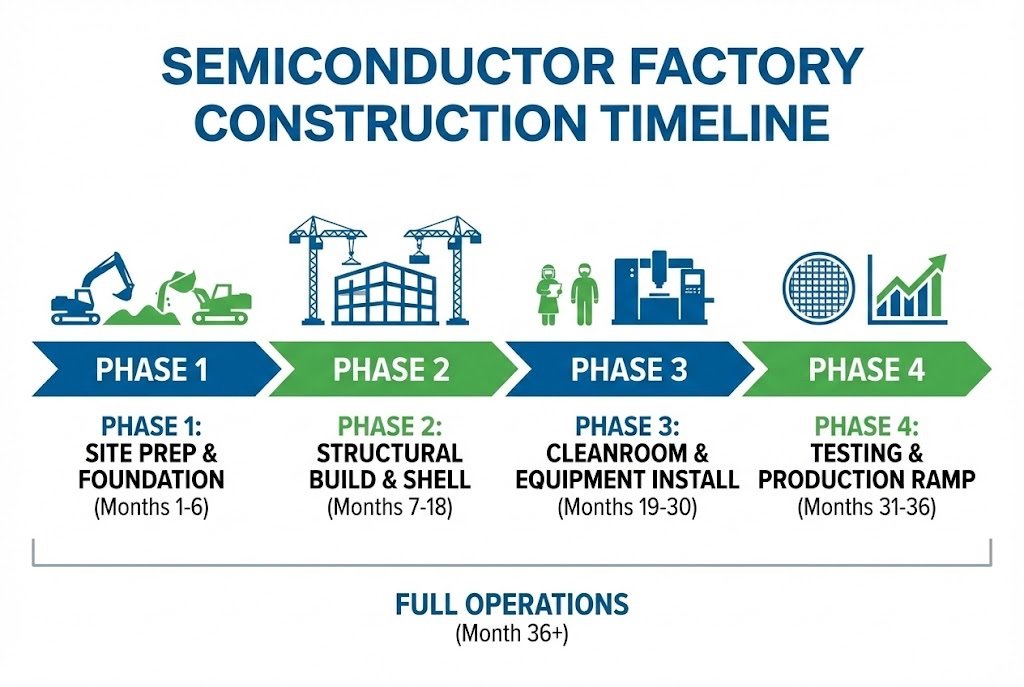
I have worked in this industry for a long time, and I see the same story repeat itself. We call this the "Supply-Demand Mismatch4." It is not just about raw materials; it is about time. Think about it like steering a very large ship. If you turn the wheel today, the ship does not turn for another mile.
Let's break down how this cycle traps manufacturers and buyers.
First, demand starts to pick up. Maybe a new technology comes out, like AI servers5 or a new generation of smartphones. Suddenly, everyone needs DDR56 or high-speed NAND7. The chip manufacturers—companies like Samsung, SK Hynix, and Micron—are happy, but they are also worried. Their factories are already running at 100%. They cannot make more chips today.
So, they decide to build a new factory. This is a huge decision. It costs billions of dollars. But here is the problem: that factory will not produce a single chip for at least 18 to 24 months.
During those two years, there is a shortage. Prices go up because supply is low. Buyers like you panic. You might "double book" or order more than you need just to be safe. This makes the demand look even bigger than it really is.
Then, two years later, the new factory finally opens. But by then, the economy might have slowed down. Or maybe the smartphone market is saturated. Suddenly, the manufacturer has too many chips. They have to lower prices to sell them. This is why we see such steep drops after steep hikes.
| Phase | What Happens to Demand? | What Manufacturers Do | Result for Buyers |
|---|---|---|---|
| Phase 1: Boom | Demand rises fast. | Factories run at max capacity. | Prices start to creep up. |
| Phase 2: Shortage | Demand exceeds supply. | Plans for new factories begin. | Prices spike; stock is hard to get. |
| Phase 3: Lag | Demand stabilizes. | Construction continues (takes 2 years). | Prices remain high and unstable. |
| Phase 4: Oversupply | Demand slows down. | New factories finally open. | Prices crash; market is flooded. |
Understanding this delay is the first step to protecting your business. You cannot fix the cycle, but you can see where you are in it.
How does manufacturer Capital Expenditure predict future shortages?
You probably look at current market prices to guess your future costs. That is a common mistake that leads to bad budgets. Current prices only tell you about today. To know what happens next year, you need to look at CapEx.
Capital Expenditure, or CapEx, is the money chipmakers like Samsung and SK Hynix spend on new equipment. If they cut spending today, there will be less production capacity next year. This guarantees a shortage and price increases in the future.
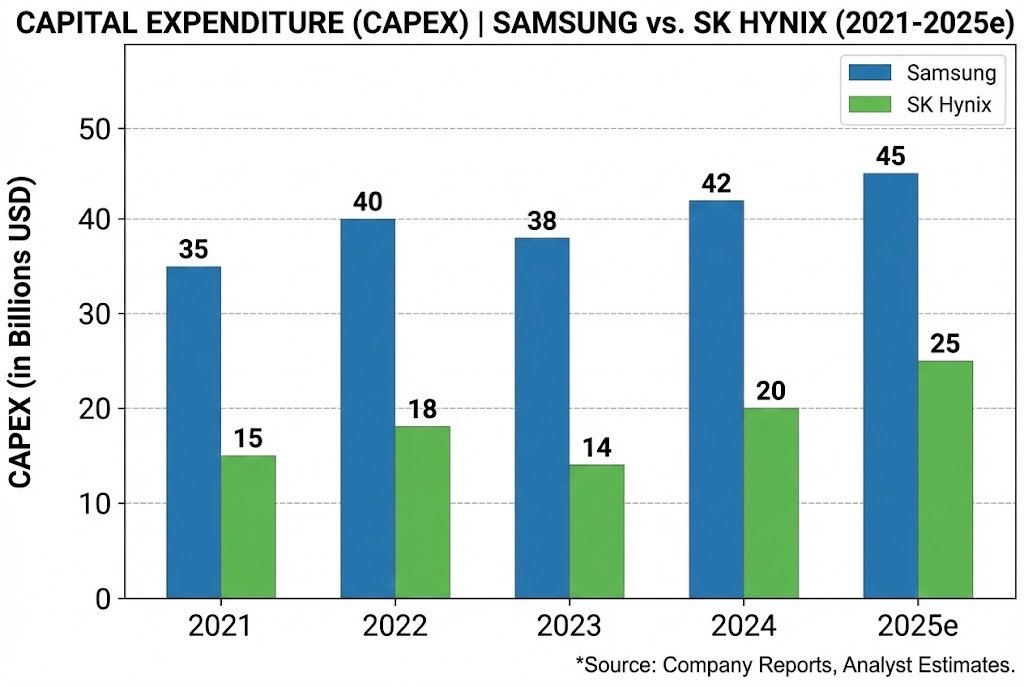
At NexCir, we do not just look at the price tag on a box of chips. We look at the financial reports of the big manufacturers. This is where the real secrets are hidden.
"CapEx" sounds like a complex financial term, but it is actually very simple. It is the money that the original manufacturers spend on machines. These machines are what make the wafers and chips.
Here is the critical insight: There is a direct link between the money spent today and the number of chips available tomorrow.
If the big three manufacturers (Samsung, SK Hynix, Micron) announce that they are cutting their CapEx this year, it is a massive warning signal. Why do they cut spending? Usually, because profits are down and prices are low. They want to stop the price from falling further. So, they stop buying new machines. They stop building new lines.
This creates a "supply hole8" in the future.
When the economy recovers and you need more chips next year, those machines will not be there. The capacity will not exist. This inevitably leads to a shortage.
I often tell my clients that looking at CapEx is like looking at a weather forecast. If you see storm clouds gathering (CapEx cuts9), you know rain is coming (shortages), even if the sun is shining right now (low prices).
Let's look at a simple logic flow to understand this better:
- Market is Bad: Memory prices are low. Manufacturers lose money.
- The Reaction: Manufacturers cut CapEx to save cash. They delay upgrades.
- The Time Lag: 6 to 12 months pass. Old inventory gets used up.
- The Trigger: Demand comes back slightly.
- The Crisis: There is no new production capacity ready because of the cuts in step 2.
- The Result: Prices explode upwards.
If you wait until the news reports a shortage, it is too late. The smart move is to watch the CapEx cuts9. When manufacturers stop spending, that is actually the signal for you to start planning your safety stock.
How can you lock in low prices before the market turns?
Buying at the spot market price is risky. You pay whatever the market demands at that moment. You lose your profit margin when prices spike unexpectedly. You need a smarter strategy that looks forward, not backward.
The best strategy is to monitor the CapEx data and buy during the "low price window10." This window is often short, sometimes just three months. You should lock in inventory for the next two quarters when indicators show a future supply cut.
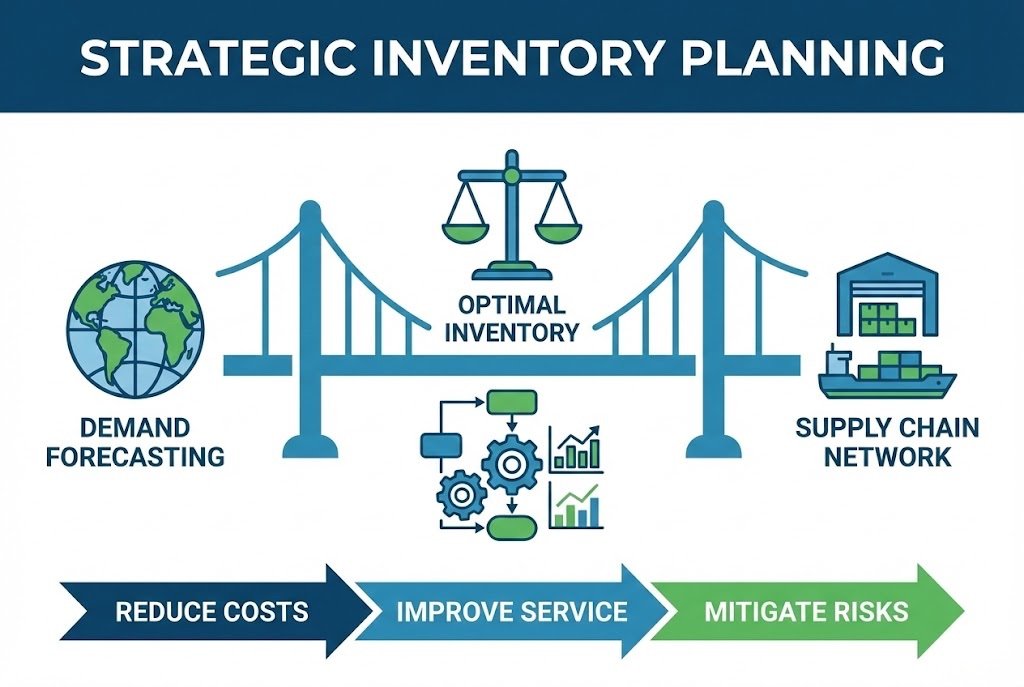
This is where the difference between a simple part seller and a strategic sourcing partner11 becomes clear. At NexCir, we help our clients execute this strategy.
We have established that the market moves in cycles. We have also established that CapEx cuts9 predict shortages. So, what should you do?
You need to act when the market feels "quiet."
Usually, there is a period of about three months where prices are at the bottom. This is the "Low Price Window." During this time, manufacturers are complaining about low profits. They are cutting their CapEx. Most buyers are happy because prices are cheap, so they buy only what they need for this week.
This is a mistake.
When we see the CapEx data drop, we advise our OEM and ODM clients12 to change their behavior. Instead of buying for just this month, we suggest locking in stock for the next six months.
I know this sounds like a risk. You are spending money on inventory you do not need yet. But let's look at the math.
If you buy now, you pay the bottom price. Let's say a specific DDR4 chip is $2.00. If you wait until the shortage hits next year, that same chip might be $4.50 or even $6.00. The cost of holding that inventory in a warehouse is very small compared to a 200% price increase.
Furthermore, it is not just about price. It is about security. When the shortage hits, you might not be able to get parts at all. If you have stock locked in, your production line keeps running while your competitors are stuck.
Here is a checklist we use to help clients decide when to lock stock:
- Check Manufacturer News: Are Samsung or Hynix delaying new factory openings?
- Monitor Lead Times: Are standard lead times13 starting to stretch out, even by a week?
- Analyze CapEx: Has global memory investment14 dropped for two quarters in a row?
- Review Your Projects: Do you have a long-term product15 that uses these specific memory chips?
If the answer is "Yes" to these questions, we move fast. We use our global network to secure the stock for you. We are not gambling; we are using data to protect your supply chain. This is how we deliver long-term value, rather than just selling you a part today.
Conclusion
Memory prices fluctuate due to long production cycles and delayed CapEx effects. By monitoring investment cuts today, you can predict shortages tomorrow and lock in low prices before the market spikes.
Exploring DRAM chip price fluctuations can help you understand the factors affecting your production costs. ↩
Learn how to adjust your production planning to mitigate the impact of memory price volatility. ↩
Knowing the construction timeline for semiconductor plants can help you predict future supply changes. ↩
Understanding the Supply-Demand Mismatch can help you anticipate market shifts and plan accordingly. ↩
Discover how emerging technologies like AI servers drive demand for memory chips and affect prices. ↩
Exploring the demand for DDR5 memory can help you understand its impact on market prices. ↩
Learn about high-speed NAND's role in the memory market and its influence on pricing. ↩
Learn how supply holes occur and their impact on memory chip availability and pricing. ↩
CapEx cuts are a warning sign of future supply shortages, helping you plan your purchasing strategy. ↩
Identifying the low price window can help you secure inventory at favorable prices before shortages hit. ↩
A strategic sourcing partner can guide you in securing inventory and navigating market fluctuations. ↩
OEM and ODM clients can gain a competitive edge by locking in inventory during favorable market conditions. ↩
Monitoring lead times can help you anticipate supply chain disruptions and adjust your purchasing strategy. ↩
Understanding global memory investment trends can help you predict future supply changes and plan accordingly. ↩
Considering long-term products ensures you have the necessary inventory to support ongoing production needs. ↩