Standard chips make robots slow to act. This delay causes costly errors on the factory floor. LAM dedicated chips1 solve this problem by processing actions instantly.
LAM (Large Action Model) dedicated chips are specialized ASICs. Hardware engineers design them to understand human intent and execute physical actions directly. These chips bypass traditional software layers. They provide the instant processing power that modern robots and smart machines need to operate safely.
You might wonder how these new chips change the electronic component market. I see many procurement managers struggling to find the right parts for new AI projects. Let us look closer at why these chips matter for your next design. I will show you how they work.
How Do ASICs Understand Intent and Execute Actions?
Generic processors waste power trying to guess intents. This waste drains batteries and slows down machines. Application-Specific Integrated Circuits (ASICs)2 fix this by hardwiring action models.
LAM ASICs process data differently than standard CPUs. They translate commands directly into motor control signals. This direct translation allows machines to perform complex physical tasks. They do this without relying on distant cloud servers for instructions.
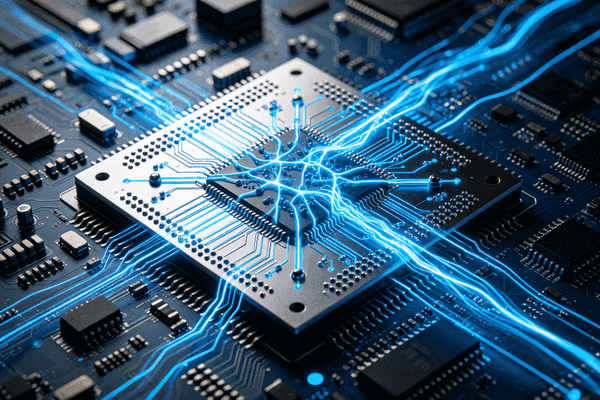
I remember a project from last year. A customer needed parts for a smart robotic arm. They used standard microcontrollers. The arm was too slow to catch moving objects. We had to rethink the core logic. Standard chips read code line by line. This takes time. LAM ASICs use a different path. They use neural networks3s built right into the silicon](https://www.trendforce.com/news/2025/12/30/news-chinese-scientists-achieved-new-breakthrough-in-next-gen-optical-computing-chips/)%%%FOOTNOTE_REF_4%%%. This makes them very fast.
The Shift to Specific Hardware
Hardware engineers now demand chips that match specific software models. We call this hardware-software co-design5. When a machine hears a command, it does not need to search a large database. The LAM ASIC has the action pathways ready. This design reduces the steps between command and movement. It saves time and power.
Comparing Chip Types
Let us compare standard options with LAM ASICs. We must understand these differences to make good buying choices.
| Feature | Standard CPU | General GPU | LAM ASIC |
|---|---|---|---|
| Processing | Sequential | Parallel | Hardwired Paths |
| Power Use | High | Very High | Very Low |
| Action Speed | Slow | Medium | Instant |
| Best Use | Basic Logic | Cloud Training | Edge Execution |
As a distributor with 20 years of experience, I see a huge shift here. OEM procurement managers6 must prepare for these new part numbers. Finding original, authentic LAM ASICs will soon become a major priority. Fake parts will fail in these demanding roles. We always ensure 100% original electronic components for our clients. We help you avoid counterfeit risks in the supply chain.
Why Is Ultra-Low Inference Latency Crucial for Real-World Feedback?
Delayed reactions cause accidents in smart factories. High latency makes robots crash into obstacles. Ultra-low latency chips prevent these disasters by reacting in milliseconds.
Real-world feedback requires extremely low inference latency. When a robot faces a sudden obstacle, it must stop immediately. LAM chips process sensor data7 locally at the edge. This local processing removes cloud network delays. It ensures the physical safety of machines and workers.
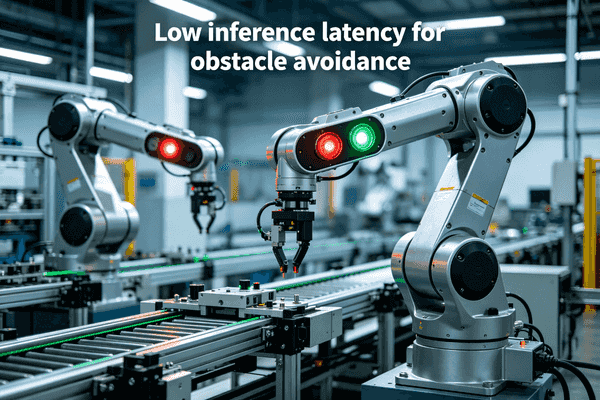
I often talk to production teams in the automotive and industrial sectors. Their biggest fear is a system failure. A failure can cause physical damage. If an automated guided vehicle takes too long to process a camera feed, it hits a wall. The business pain point is very clear. They need speed. They need reliable parts.
The Cost of High Latency
Every millisecond counts in physical operations. Standard components often suffer from data bottlenecks. The sensor sends data to the processor. The processor sends it to memory. This cycle takes too much time. LAM chips keep the processing close to the sensor. We call this edge computing8. Edge computing stops the delay.
Impact on Your Supply Chain
Procurement managers must source these fast chips reliably. Fake parts often have higher latency. They use cheap, older silicon. At Nexcir, we solve this problem. We guarantee authentic components9. We use authorized distributors and original manufacturers worldwide.
| Latency Level | Reaction Time | Real-World Result | Procurement Risk |
|---|---|---|---|
| High (>100ms) | Noticeable delay | Frequent collisions | Easy to find, low cost |
| Medium (50ms) | Slight hesitation | Unsmooth movement | Average availability |
| Ultra-Low (<10ms) | Instant | Safe avoidance | High demand, needs trust |
Sourcing these ultra-low latency components requires a strong global supply network. We help our clients find these specific ICs. We offer stable pricing without market fluctuations. We ensure on-time delivery to maintain your production schedule.
Will Tesla or Boston Dynamics Release Embodied AI Edge Chips by 2026?
Waiting for generic chipmakers limits robot evolution. Relying on standard parts stops innovation. Top robot companies will likely build their own chips to break these limits.
Industry experts expect companies like Tesla and Boston Dynamics to release self-developed embodied AI edge chips10 around 2026. These custom chips will match their specific robot hardware perfectly. This move will push the entire electronic component market toward highly specialized action processors.

I closely watch the moves of major tech players. Tesla already builds custom chips for its cars. It makes complete sense they will do the same for their robots. Boston Dynamics also needs extreme performance for its machines. They need low power and high speed. Standard chips cannot do this.
The Rise of Custom Edge Silicon
By 2026, we will see a big shift in the supply chain. Big companies will stop buying generic parts for edge tasks. They will design custom embodied AI chips. These chips will handle complex physics equations instantly. This trend will create a ripple effect. Smaller OEMs will also want similar performance. They will need new parts.
What This Means for Sourcing
When big players make custom chips, the standard market changes quickly. Old parts become End-of-Life (EOL)11. Hardware engineers will need new alternatives. Procurement managers will face new challenges.
| Company Strategy | Component Type | Supply Chain Impact |
|---|---|---|
| Buy Generic | Standard MCUs | Easy sourcing, high competition |
| Co-Design | Semi-custom ASICs | Needs strong distributor ties |
| Self-Develop | Custom AI Chips | Shifts market, causes EOL |
As a specialized distributor, Nexcir prepares for these shifts early. We track market dynamics and material alternatives. When your current parts become obsolete, our team steps in. We use our 20 years of experience to find the exact replacements you need. We keep your procurement costs low. We improve your supply chain efficiency. We grow alongside our clients to build a smarter future.
Conclusion
LAM dedicated chips1 will completely change how machines act. We provide the authentic, low-latency components you need. We help you build the next generation of safe, smart devices.
LAM dedicated chips offer instant processing power, crucial for modern robots and smart machines to operate safely and efficiently. ↩
ASICs hardwire action models, translating commands directly into motor control signals, enabling complex tasks without cloud reliance. ↩
Neural networks enable LAM ASICs to process commands rapidly, crucial for tasks requiring immediate action. ↩
Neural networks in silicon allow LAM ASICs to process data rapidly, making them ideal for tasks requiring quick responses. ↩
Hardware-software co-design ensures chips match specific software models, reducing steps between command and movement, saving time and power. ↩
OEM procurement managers must adapt to new part numbers and ensure authenticity to avoid counterfeit risks in the supply chain. ↩
Local processing of sensor data removes delays, ensuring robots can react instantly to obstacles, enhancing safety. ↩
Edge computing processes data close to the sensor, eliminating cloud network delays and ensuring quick reactions in physical operations. ↩
Authentic components ensure reliability and performance, preventing failures and maintaining production schedules. ↩
Embodied AI edge chips, expected by 2026, will match specific robot hardware, pushing the market towards specialized action processors. ↩
EOL signifies that old parts are phased out, requiring hardware engineers to find new alternatives for continued innovation. ↩