
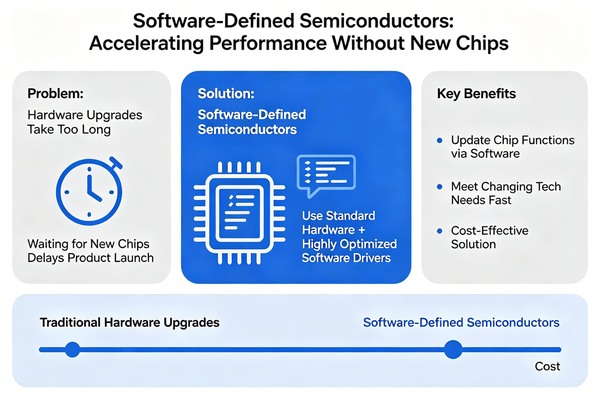
Hardware upgrades take too long. Waiting for new chips delays your product launch. Software-defined semiconductors1 give you a fast way to boost performance without changing the physical chip.
Software-defined semiconductors1 use standard hardware2 and highly optimized software drivers3 to speed up specific tasks. This method allows engineers to update chip functions through software instead of designing new silicon. It provides a flexible way to meet changing technology needs quickly and cheaply.
You might think that hardware is set in stone once it leaves the factory. For a long time, this was true. You bought a chip, and it did one job. However, the line between hardware and software is fading fast. As someone who helps companies source electronic components every day, I see this shift happening right now. It is changing the rules of the game. Let me show you why this shift matters for your next supply chain project. I will explain how it changes the way we look at standard electronic components, and how it can save your company time and money.
How Do Software Driver Layers Accelerate General Hardware?
Custom chips are expensive to design. Using standard chips often means you lose speed. Highly optimized software drivers solve this by pushing general hardware4 to act like custom hardware.
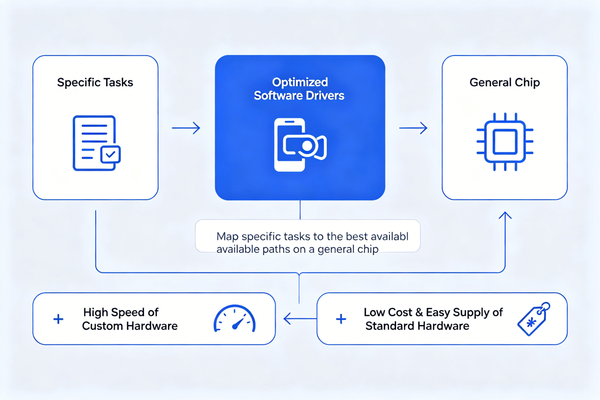
Optimized software drivers act as a bridge. They take specific tasks and map them to the best available paths on a general chip. This gives you the high speed of custom hardware while keeping the low cost and easy supply of standard hardware2.
The Power of General Hardware
In my 20 years in the electronic components industry, I have seen many companies struggle with custom chip designs. Custom silicon takes years to build. If you make a mistake, you have to start over. This is a big risk for your supply chain. Software-defined semiconductors1 change this rule completely. You buy standard chips. These chips are easy to find in the market. Then, you use a highly optimized software layer to control how the chip processes data. I remember a project last year. A client needed a specific function for an industrial machine. Instead of hunting for a rare part, we found a standard MCU. Their team wrote a custom driver. The machine worked perfectly.
Why Software Drivers Matter
The software driver is the brain. It looks at the specific task. It tells the general hardware4 how to run it very fast. You get targeted acceleration. This means the chip works just as well as a custom chip. But you do not have to wait for a new factory run. Here is a simple comparison to help you understand the difference.
| Feature | Traditional Custom Chip | Software-Defined General Chip |
|---|---|---|
| Hardware Design | Hardwired for one task | Standard and flexible |
| Upgrade Method | Needs new physical chip | Needs simple software update |
| Supply Chain Risk | High risk of delays | Low risk, uses standard parts |
| Time to Market5 | Very slow | Very fast |
This shift helps procurement managers lower risks. You can buy authentic, standard parts from trusted distributors like Nexcir. You can let your software team do the rest. This makes your job much easier. You do not have to worry about long lead times for custom silicon. You can focus on building a stable supply chain. You can trust that the parts will be there when your factory needs them.
Can Software Updates Reduce Long Hardware Development Cycles?
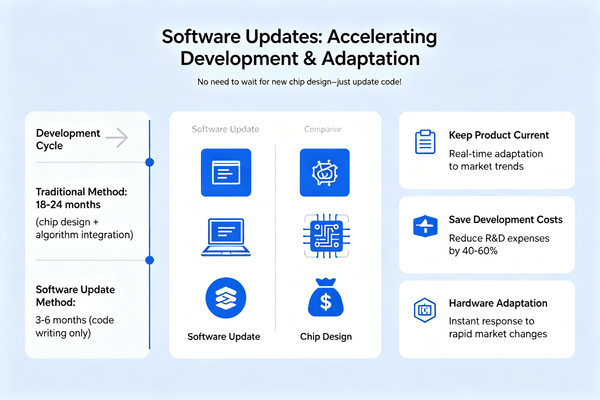
Algorithms change every week. Hardware takes months to build. This makes your product old before it ships. Software-defined chips let you update features instantly to match the newest algorithms.
Software updates6 greatly reduce development cycles. Instead of waiting for a new chip design to handle a new algorithm, engineers just write new code. This keeps your product current, saves development money, and allows your hardware to adapt to rapid market changes instantly.
The Problem with Fast Algorithms
I talk to hardware engineers every day. Their biggest pain point is speed. Today, software algorithms change very fast. This is very true in electric vehicles and smart home devices. If a company designs a custom chip for a specific algorithm, that chip might be useless in six months. The market moves too fast. The old way of building hardware cannot keep up. I saw this happen with a smart camera project. The customer bought chips for an old vision algorithm. The algorithm changed before the cameras shipped. They lost a lot of money because they could not change the hardware in time.
Solving the Supply Chain Pain Point
When you use software-defined semiconductors, you separate the hardware buying from the software building. As a procurement manager, you can secure stable pricing for standard components early. You do not have to worry about market fluctuations. Meanwhile, your software team can keep updating the code until the very last minute.
| Business Challenge | Traditional Hardware Approach | Software-Defined Approach |
|---|---|---|
| Algorithm Changes | Redesign the whole chip | Update the software code |
| Procurement Timing7 | Wait for final chip design | Buy standard chips early |
| Cost Control8 | High cost for small batches | Low cost from bulk standard parts |
This means you get reliable global logistics and delivery support from Nexcir early in the process. You avoid counterfeit products because you buy well-known, standard chips. Your production stays on schedule. Your product always has the latest features. You do not have to throw away unused custom chips9. This saves your company money. It also makes your engineering team very happy because they can fix problems quickly.
Will a Unified Cross-Chip Language Challenge Nvidia CUDA10 by 2026?
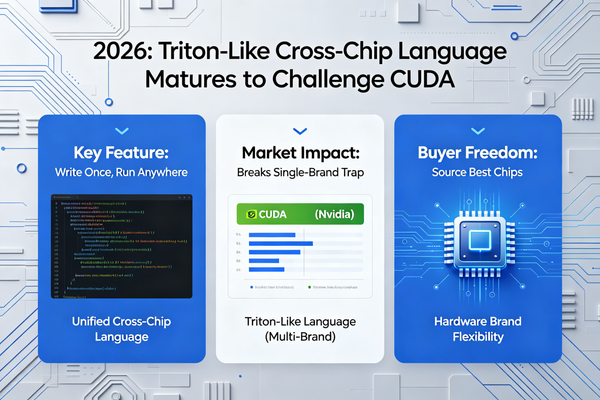
Being trapped by one chip brand limits your choices. Nvidia CUDA10 is great but restricts you to their hardware. A unified language gives you the freedom to choose any chip.
By 2026, a unified cross-chip language11 like Triton will likely mature and challenge CUDA. This new language will allow engineers to write code once and run it on any hardware brand. It breaks the single-brand trap, giving buyers more freedom to source the best chips available.
The Danger of Being Trapped by One Brand
Right now, Nvidia CUDA10 is the king of AI software. But there is a big problem. If you use CUDA, you must buy Nvidia chips. I have seen this cause huge supply chain problems. When there is a chip shortage, you cannot simply buy a different brand. Your whole project stops. This goes against everything we believe at Nexcir about reducing procurement risks. I recall a time when a client waited fifty weeks for a specific AI chip. They could not use a different brand because their software was locked to that exact chip. They lost their market advantage.
The Rise of Open Languages
I am watching the market closely for 2026. We see new tools like OpenAI Triton12 growing fast. Triton is a unified cross-chip low-level language. It aims to work on any brand of standard chip. If this open language matures, it will change the electronic components industry forever.
| Factor | Nvidia CUDA10 | Unified Language (e.g., Triton) |
|---|---|---|
| Hardware Choice | Only Nvidia chips | Any standard brand |
| Supply Chain Risk | Very high during shortages | Very low, many options |
| Pricing Power13 | Vendor controls price | Buyer has more choices |
When engineers can write code that works on any chip, procurement managers get their power back. You can look for prices lower than local market offerings. You can source authentic components from different authorized distributors. You will not be trapped by one single manufacturer. This freedom is exactly what the industry needs right now. It will make supply chains stronger. It will help us build better products for the future.
Conclusion
Software-defined semiconductors1 use standard hardware2 and smart software to speed up development and lower costs. Future open languages will give you even more freedom in your global supply chain14.
Explore how software-defined semiconductors can boost performance without changing physical chips, offering flexibility and cost savings. ↩
Discover why standard hardware is preferred for its availability and cost-effectiveness, especially when paired with software-defined semiconductors. ↩
Learn how these drivers act as a bridge, enabling standard chips to perform like custom hardware, saving time and money. ↩
Find out how software drivers can transform general hardware to perform specific tasks efficiently, mimicking custom hardware. ↩
Learn how these semiconductors enable faster product launches by eliminating the need for new physical chip designs. ↩
Discover how software updates can keep products current and reduce development cycles, adapting to rapid market changes. ↩
Learn how early procurement of standard chips can stabilize pricing and reduce market fluctuation risks. ↩
Explore how using standard parts and software updates can lower costs compared to custom chip designs. ↩
Understand the challenges and risks associated with designing custom chips, and how software solutions can mitigate these issues. ↩
Understand the risks of being locked into Nvidia hardware and how a unified language could offer more flexibility. ↩
Discover how a unified language like Triton could provide freedom to choose any chip brand, enhancing supply chain flexibility. ↩
Learn about Triton's potential to work across different chip brands, offering more choices and reducing supply chain risks. ↩
Explore how a unified language can give buyers more choices and control over pricing, reducing dependency on single vendors. ↩
Understand how these technologies can strengthen supply chains, offering more freedom and reducing risks in procurement. ↩