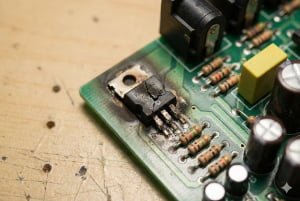
Struggling to pick the right wire for your project? Choosing the wrong one can lead to overheating1 and failure. Understanding AWG is the key to preventing damage and ensuring safety.
AWG, or American Wire Gauge2, is a standard system for the diameter of electrical wires. A lower AWG number3 means a thicker wire, which can carry more electrical current safely. This system helps engineers and technicians select the correct wire to prevent overheating1 and ensure system reliability.
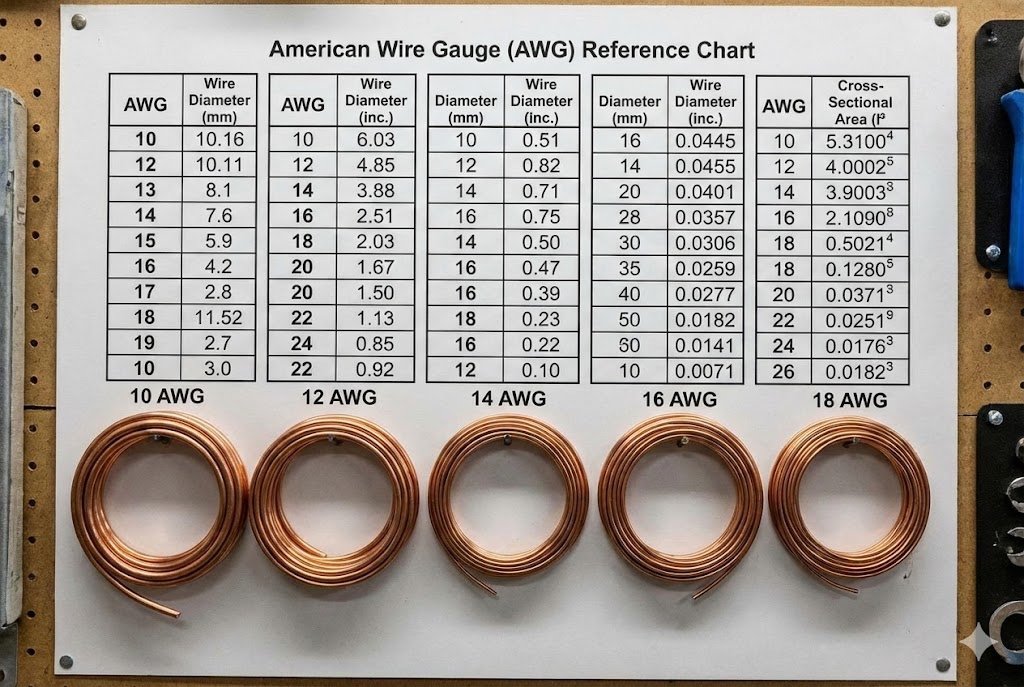
I've seen many projects face delays because of simple wire selection mistakes. It's an easy detail to overlook, but the consequences can be significant, affecting everything from performance to safety certifications. Getting it right from the start saves a lot of headaches down the line. That's why I always tell my clients to pay close attention to this fundamental detail. Let's dive deeper into how you can use AWG to your advantage and avoid common pitfalls.
How Do You Read an AWG Chart Correctly?
Are you looking at an AWG chart and feeling overwhelmed? All those numbers can be confusing. This confusion can lead you to choose a wire that is too thin for your needs.
To read an AWG chart, find your required current (in Amperes) in the "Ampacity4" column. Then, look left to find the corresponding AWG number3. Always consider factors like wire length5 and ambient temperature6, as these affect a wire's true current-carrying capacity.
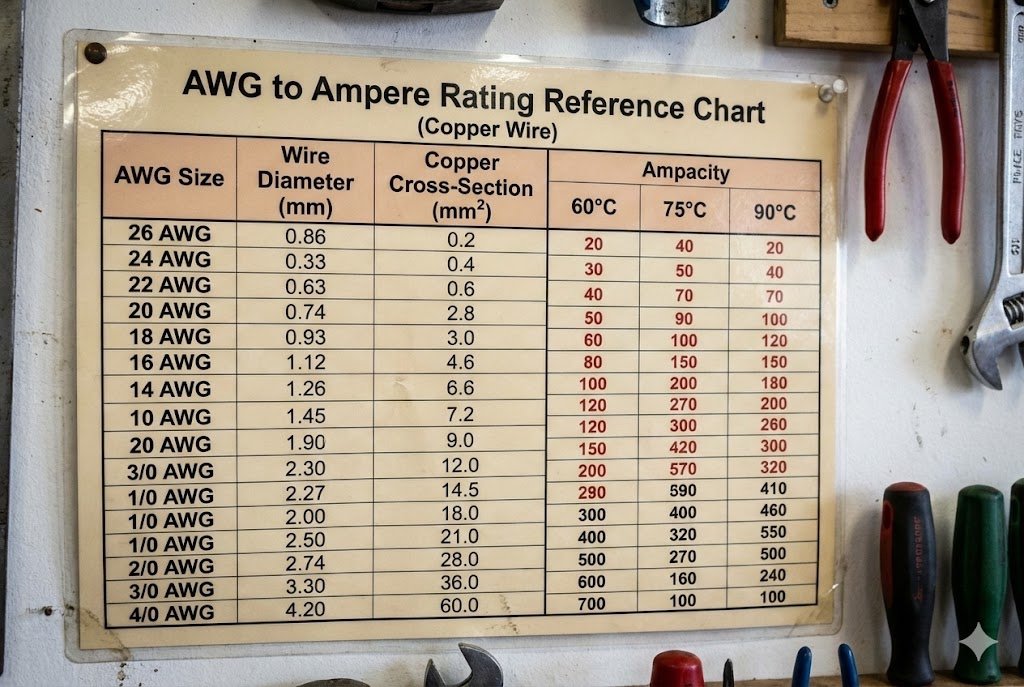
Reading an AWG chart is a critical skill for any hardware engineer or procurement manager. The chart gives you several key pieces of information. The first column is the AWG number3 itself. Remember, the smaller the number, the thicker the wire. The next columns usually show the diameter in millimeters and inches. Then you have the cross-sectional area. The most important columns for most of us are resistance7 (Ohms per unit length) and ampacity (maximum current). I once worked with a client on an industrial control panel. They planned to use a 22 AWG wire for a component drawing 7 amps. A quick look at the chart showed that 22 AWG is typically rated for less than 1 amp for chassis wiring. We switched to an 18 AWG wire, which could handle the load safely. This simple check prevented a potential fire hazard.
Here is a simplified table to help you understand the relationship:
| AWG | Diameter (mm) | Max Amps (Chassis Wiring) |
|---|---|---|
| 10 | 2.588 | 55 A |
| 12 | 2.053 | 41 A |
| 14 | 1.628 | 32 A |
| 16 | 1.291 | 22 A |
| 18 | 1.024 | 16 A |
| 20 | 0.812 | 11 A |
| 22 | 0.644 | 7 A |
| 24 | 0.511 | 3.5 A |
Always check the full specifications from the manufacturer, as insulation material and operating temperature heavily influence these ratings.
What's the Difference Between Solid and Stranded Wire in AWG?
Have you ever wondered why some wires are stiff and others are flexible? This difference is important. Choosing the wrong type can cause connection failures, especially in devices that vibrate or move.
A solid AWG wire8 is a single, solid conductor, making it rigid and better for permanent installations like in-wall wiring. A stranded AWG wire9 consists of many smaller strands twisted together. This makes it more flexible and ideal for applications requiring movement, like robotics or test leads.
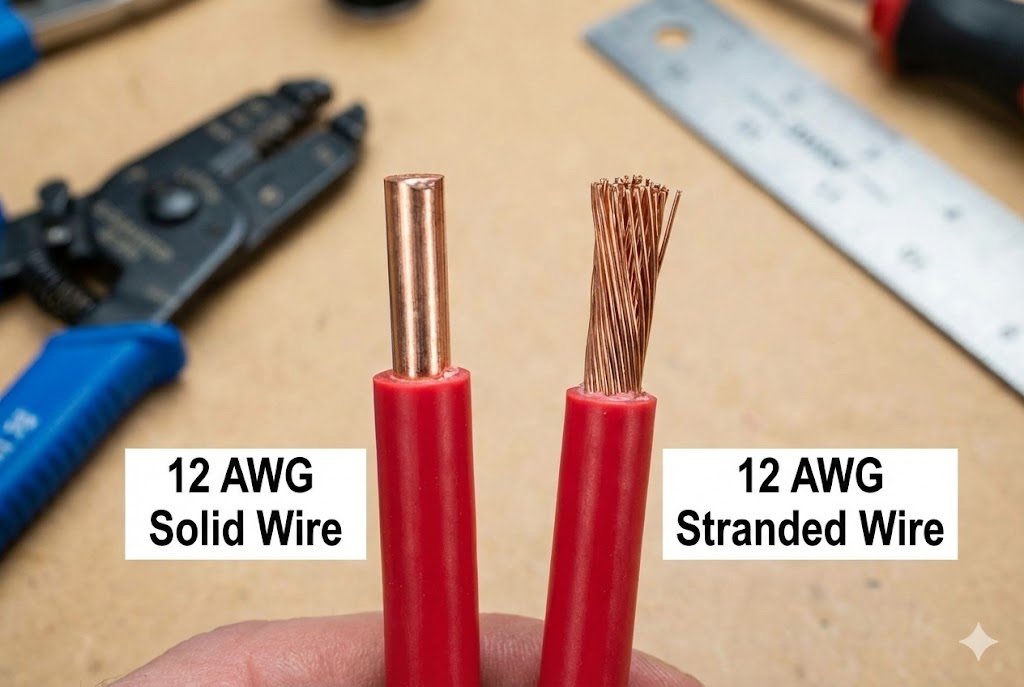
The choice between solid and stranded wire is a common decision point for our OEM clients. While both a solid and a stranded wire of the same AWG have the same total cross-sectional area of copper, their physical properties are very different. Solid wire is cheaper and has slightly less resistance7 over the same length because it's a single, solid core. It is perfect for breadboarding or for wiring infrastructure where the wire will not be moved. However, it can break if bent repeatedly. Stranded wire is the hero for any application involving motion. Think of the internal wiring in a printer head or the cables for a robotic arm. Its flexibility comes from the bundle of thin strands. In my experience, most electronic product assemblies use stranded wire for internal connections to withstand vibrations during shipping and operation. When we help a customer source a cable assembly, this is one of the first questions we ask.
Here's a simple breakdown:
| Feature | Solid Wire | Stranded Wire |
|---|---|---|
| Flexibility | Low (rigid) | High (flexible) |
| Durability | Prone to breaking with repeated bending | Resists breakage from vibration/bending |
| Best Use | Permanent, fixed installations (e.g., walls) | Movable applications (e.g., electronics) |
| Cost | Generally lower | Generally higher |
| Termination | Easier for breadboards and push-in terminals | Better for crimp-on connectors |
Understanding this helps you source the right component, not just a part that technically meets the electrical spec.
How Does AWG Relate to RG Cable for Coaxial Needs?
Are you working with radio frequencies and see terms like "RG-58" and "18 AWG"? It's easy to get confused. Mixing up these standards can lead to poor signal quality10 in your RF applications.
RG (Radio Guide) is a standard for coaxial cables11 used for high-frequency signals, like video or radio. While the RG standard12 defines the cable's overall structure and impedance, the center conductor inside the RG cable is still measured using the AWG standard.
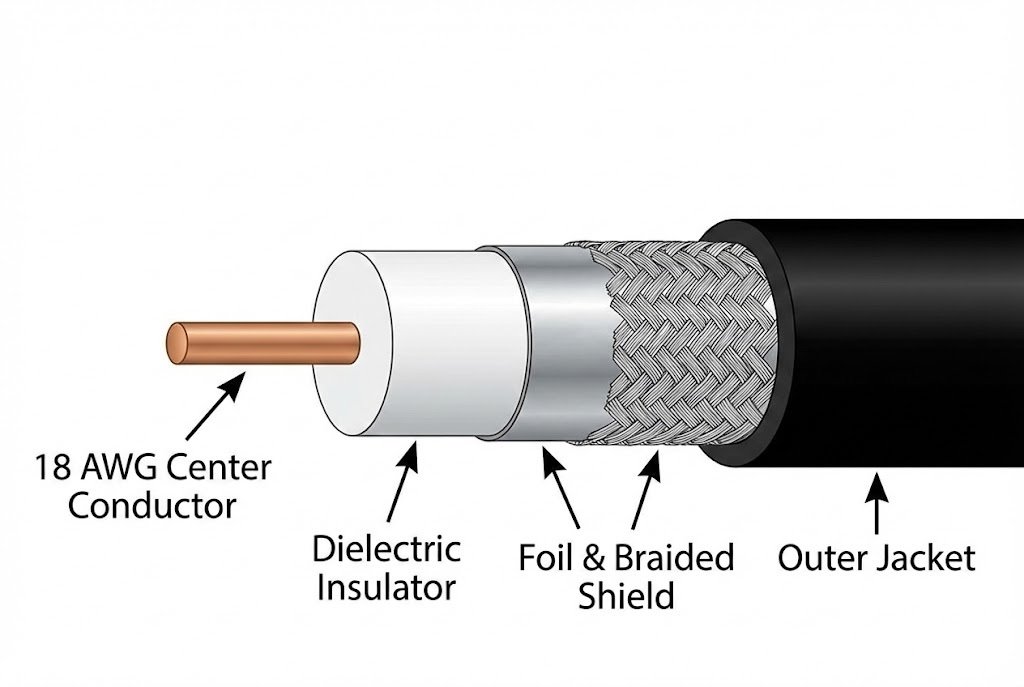
Many of our customers in the communications and IoT sectors work with coaxial cables11. They often ask how AWG fits into the picture. It's a great question. The RG standard12, like RG-6 or RG-59, tells you about the cable's characteristic impedance (e.g., 75 ohms) and its intended application. But inside that complex structure of shielding and insulation is a central conductor wire. The size of that conductor is specified by its American Wire Gauge2 (AWG). For example, a common RG-58 coaxial cable often has a 20 AWG stranded center conductor. A thicker conductor (lower AWG) generally means less signal loss, especially over long distances. So when an engineer specifies an RG cable, they are indirectly also specifying an AWG size for the conductor. As a sourcing partner, we need to be precise. We ensure that the RG cable we provide not only has the right impedance but also the correct AWG conductor to meet the project's performance targets for signal integrity. This also impacts the choice of connectors, as the connector must fit the cable's outer diameter and the center pin must match the conductor's AWG.
What Are the Risks of Choosing the Wrong AWG Wire?
Do you think using a slightly thinner wire is a good way to save costs? This small decision can create big problems. The risks often outweigh the minor savings, leading to system failure and safety hazards.
Choosing a wire with too high an AWG number3 (too thin) for your current load13 is dangerous. The primary risks are overheating1, which can melt insulation and cause a fire, and significant voltage drop14, which can cause your electronic components to malfunction or fail completely.
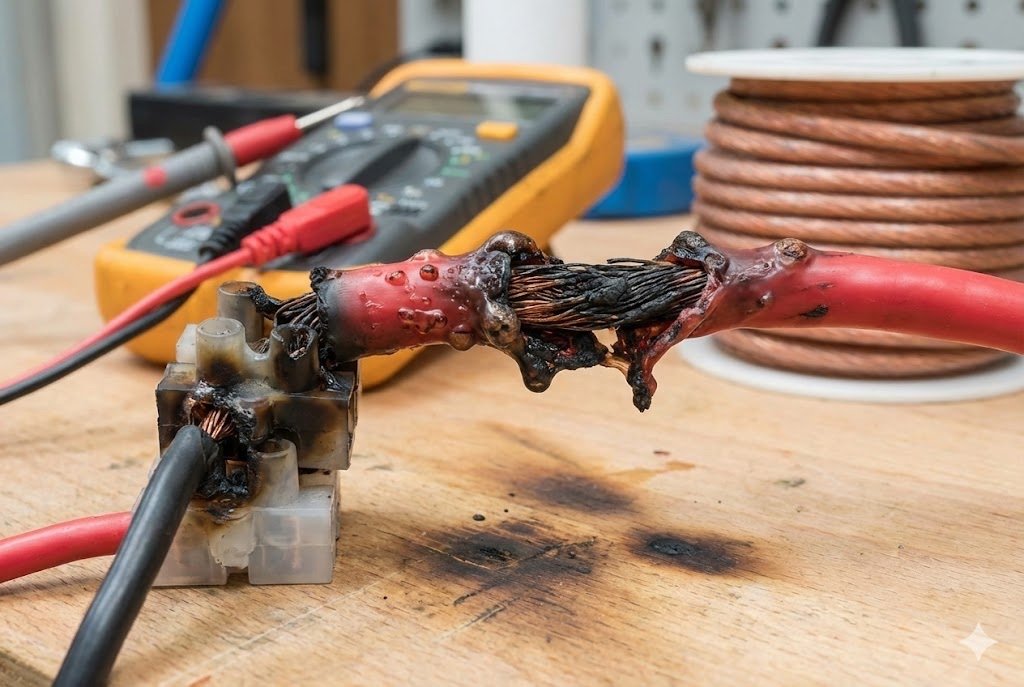
I cannot stress this enough: using the wrong AWG wire is one of the most common and preventable design failures. Let's break down the risks. First, there's heat. Every wire has resistance7. When current flows through it, it generates heat (P = I²R). A wire that is too thin has higher resistance7, so it generates much more heat for the same amount of current. This heat can melt the plastic insulation, creating a short circuit and a serious fire risk15. I have seen photos from clients where an entire wiring harness was destroyed because one underrated wire overheated. Second is voltage drop14. The wire's resistance7 causes a voltage loss from the power source to the load. A thinner wire means more resistance7 and a larger voltage drop14. Your 5V microcontroller might only receive 4.5V, causing erratic behavior or a complete shutdown. For procurement teams, specifying the correct AWG is a matter of product reliability and safety compliance16. It’s a non-negotiable part of the BOM17.
Conclusion
Understanding AWG is vital for selecting the right wire. It ensures your project is safe, efficient, and reliable. Always use a chart to match the wire gauge to your current needs.
Discover the factors leading to wire overheating and how to prevent it for safety. ↩
Explore this resource to understand the AWG system and its importance in electrical wiring. ↩
Learn how the AWG number affects wire thickness and current capacity for safe installations. ↩
Understanding Ampacity is crucial for selecting the right wire for your electrical needs. ↩
Find out how wire length impacts resistance and overall system efficiency. ↩
Explore the effects of temperature on wire capacity and safety in electrical systems. ↩
Learn about the relationship between resistance and wire performance in electrical systems. ↩
Learn about the advantages of solid wire for permanent installations and its applications. ↩
Discover why stranded wire is preferred for flexible applications and its benefits. ↩
Learn how wire gauge impacts signal integrity and performance in radio frequency applications. ↩
Understand the role of coaxial cables in high-frequency applications and their structure. ↩
Explore the RG standard to understand its significance in cable specifications. ↩
Find out how to select the right wire gauge based on your project's current requirements. ↩
Understand the concept of voltage drop and its implications for system reliability. ↩
Discover the dangers of using the wrong wire gauge and how to mitigate fire hazards. ↩
Understand the importance of safety compliance in electrical projects and how to achieve it. ↩
Learn about the Bill of Materials (BOM) and its role in ensuring project reliability. ↩