Chip makers face a huge problem today. Small chips get too hot and lose power fast. Backside Power Delivery Network1 fixes this issue and saves your chip performance.
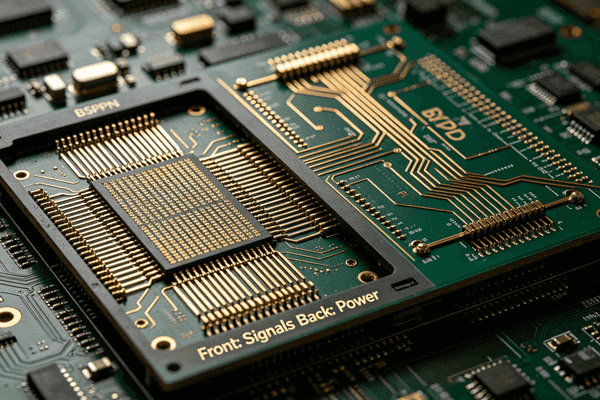
Backside Power Delivery Network1 (BSPDN) is a new chip design method. It moves power lines to the back of the silicon wafer. It keeps signal lines on the front. This setup stops wire crowding2, reduces power loss, and helps the chip run much faster.
I remember a time when our clients struggled with failing chips due to crowded wires. The old way of making chips does not work anymore. You need to know how this new tech changes the whole supply chain. Let us look at how this works.
How Does BSPDN Separate Power and Signal Lines?
Old chips mix power and signal lines. This mix causes traffic jams on the chip. Moving power lines to the back clears the traffic and solves the problem.
BSPDN separates power and data paths completely. Engineers place the power delivery network on the back of the chip. They keep the data signal routing on the front side. This clear split gives both systems more room and stops them from blocking each other.
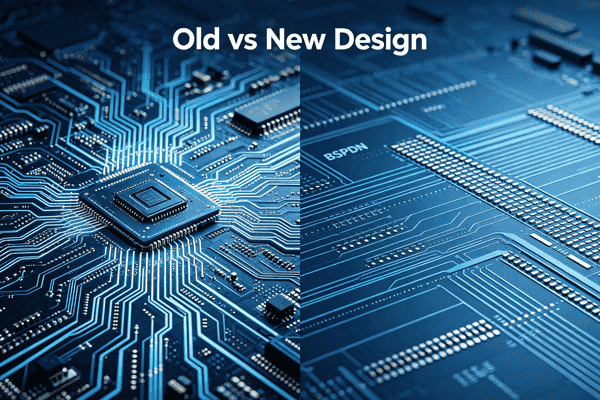
The Old Way vs. The New Way
I have seen many hardware engineers pull their hair out over routing issues. At Nexcir, we supply original ICs to OEMs worldwide. Our clients often tell us about the nightmare of front-side routing. Let us break down the logic behind this separation.
In old chip designs, power lines and signal lines share the same space on the top layers. This is like putting heavy trucks and fast sports cars on a narrow road. It causes big traffic jams. BSPDN builds a separate highway just for the power trucks under the road.
Why Separation Matters
You get many benefits when you separate these lines. I always tell our procurement partners that better design means fewer rejected parts. Here is a simple comparison to help you understand the change.
| Feature | Traditional Front-Side Power | Backside Power (BSPDN) |
|---|---|---|
| Routing Space | Crowded and limited | Very spacious |
| Signal Interference | High | Very low |
| Manufacturing Cost | Standard | Higher but worth it |
| Design Complexity | Very difficult at 2nm | Much easier for engineers |
Chip makers move the power to the back. This action lets them pack more transistors into the same space. This is very important for the industrial and automotive parts we supply at Nexcir. We ensure you get these advanced chips without supply chain delays3.
The separation also means better thermal management4. Heat escapes more easily when wires have more space. For our IoT clients, less heat means longer device life. I want you to see that this is not just a factory trick. It is a total change in how we build and buy electronic components. You need a reliable partner to source these new parts. We use our 20 years of experience to help you find them.
Why Do We Need BSPDN to Solve IR Drop5 and Boost Clock Frequency?
Voltage drops fast as chips get smaller. This drop is called IR Drop5. It slows down your device. BSPDN fixes IR Drop5 and makes your clock frequency6 much higher.
BSPDN solves the IR Drop5 problem by using shorter and wider power wires on the back. Shorter wires have less resistance. Less resistance keeps the power strong. This steady power supply allows the chip to reach a much higher clock frequency6 without crashing.
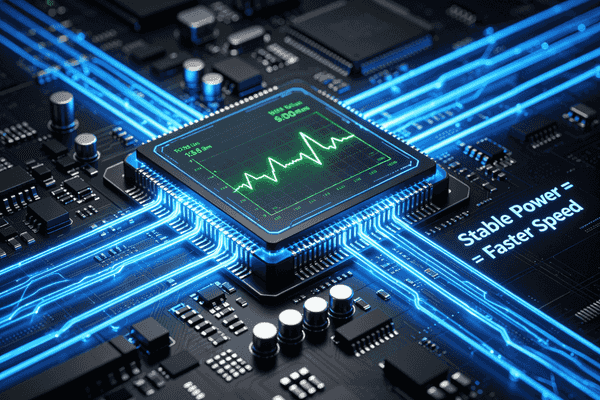
Understanding IR Drop5
I often talk to production teams who face random chip failures. Many times, the hidden killer is IR Drop5. Power travels through a maze of tiny wires. It loses strength along the way. The voltage is too low by the time it reaches the transistor.
IR Drop5 happens because every wire has resistance. A longer wire causes a bigger power loss. The wires are very thin in advanced chips. Thin wires have high resistance. This ruins the power delivery.
How BSPDN Boosts Speed
The power travels a very short distance with BSPDN. It goes from the back directly to the transistor. I always remind our customers that stable power equals stable performance. Let us look at how this impacts your hardware.
| Metric | Without BSPDN | With BSPDN |
|---|---|---|
| Power Path Length | Very long and complex | Short and direct |
| Voltage Loss (IR Drop5) | Severe at 3nm | Almost gone |
| Clock Frequency | Limited by poor power | Much higher |
| System Stability | Prone to random crashes | Very stable |
Hardware engineers can push the clock frequency6 higher when the voltage is stable. This means faster data processing for consumer electronics. At Nexcir, we know that OEMs need reliable parts to hit these high speeds. We source 100% original semiconductors. We make sure you do not get fake parts. Fake parts fail under high frequency. Your production schedule stays safe with us. Your end product runs faster than ever.
Counterfeit chips cannot handle these new power structures. They will burn out. This is why you need a trusted global supply network. We help you find the real parts that use true BSPDN technology. We lower your procurement risks7. You can focus on building faster machines.
Intel PowerVia8 vs. TSMC A169: Who Wins the 2026 Tech Race?
Picking the wrong chip maker can ruin your product launch. You might fall behind your rivals. Comparing Intel PowerVia8 and TSMC A169 helps you make the right choice for 2026.
Intel and TSMC will clash over BSPDN in 2026. Intel uses PowerVia8. PowerVia8 offers early market testing. TSMC uses the A16 process. A16 combines backside power with new transistors. Both companies aim to deliver the best power efficiency for next-generation devices.
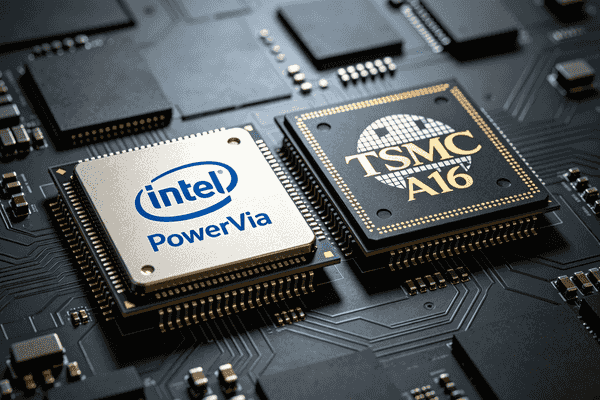
Intel PowerVia8 Strategy
I love watching the tech race between the big foundries. I see how these battles change market prices and supply chains. In 2026, the battle is all about backside power.
Intel is moving fast. They separated their PowerVia8 tech from their transistor tech. They tested the power delivery network early. They promise high yields and solid performance. This could mean more stable pricing early in the cycle for our clients.
TSMC A169 Approach
TSMC is taking a different path. They will launch their A16 node in 2026. They put BSPDN and their new transistor design together at the same time. TSMC has a massive customer base. Their global logistics and production scale are huge.
2026 Market Outlook
Here is a simple breakdown of the two giants.
| Feature | Intel PowerVia8 | TSMC A169 |
|---|---|---|
| Tech Strategy | Independent power testing | All-in-one integration |
| Main Advantage | Early real-world testing | Huge production scale |
| Target Market | High-performance computing | Mobile and AI chips |
| Supply Chain Risk | Moderate | Low |
Which one is better? It depends on your project. You must plan your procurement early if you need steady prices without market swings. At Nexcir, we monitor these trends closely. We help our customers find alternatives. We secure long-term supply programs.
We use our global supply network to deliver chips on time. It does not matter if you choose Intel or TSMC. We protect you from fake products. We keep your costs low. Hardware engineers need to know these differences to design the right boards. Procurement managers need to know the lead times. I always advise our partners to talk to us early about their 2026 roadmaps. We provide the technical support you need to win.
Conclusion
BSPDN changes chip design by moving power lines to the back. It fixes power loss and boosts speed. Nexcir provides the reliable global supply chain you need for these advanced chips.
Understanding BSPDN is crucial for grasping how modern chip designs improve performance by separating power and signal lines. ↩
Exploring wire crowding helps you understand why traditional chip designs struggle with efficiency and how BSPDN addresses this issue. ↩
Nexcir's expertise in sourcing advanced chips ensures timely delivery, crucial for maintaining production schedules. ↩
Improved thermal management is vital for device longevity, and BSPDN's design offers significant benefits in this area. ↩
IR Drop is a critical issue in chip performance, and understanding it helps you appreciate how BSPDN enhances power delivery and clock frequency. ↩
Discovering how BSPDN boosts clock frequency can help you understand its impact on faster data processing and device performance. ↩
Nexcir's global supply network reduces procurement risks, ensuring you receive genuine parts for your projects. ↩
Intel's PowerVia is a key player in the 2026 tech race, and learning about it can guide your choice in chip procurement. ↩
TSMC's A16 process is crucial for next-gen devices, and understanding it helps you make informed decisions in the tech race. ↩