Standard chips take up too much space. You need more power but have no room. Heterogeneous integration1 fixes this by stacking different components into one tiny package.
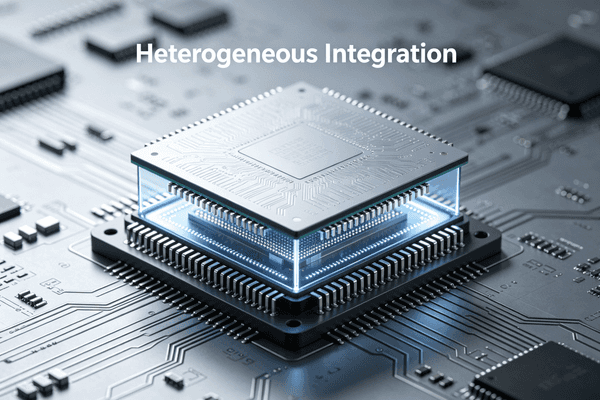
Heterogeneous integration1 is the process of combining different electronic components, like CPUs, memory, and power chips, into a single system-in-package (SiP)2. This method saves space, boosts performance, and reduces power use. It helps engineers build faster, smaller devices without relying on traditional single-chip manufacturing limits.
So, you want to know how this technology works in real life. Let us look at the core logic, the big challenges, and the future trends of this packaging method.
How Do We Pack CPUs, GPUs, and Power Chips Together?
Building separate chips costs too much time and space. Your devices run slow because signals travel too far. Packaging CPUs and GPUs together fixes this delay instantly.
We pack CPUs, GPUs, memory, and GaN power chips together using advanced system-in-package technology3. We place these different chips on a single base. This shrinks the distance between parts. Data moves much faster. The whole system uses less power and takes up less board space.
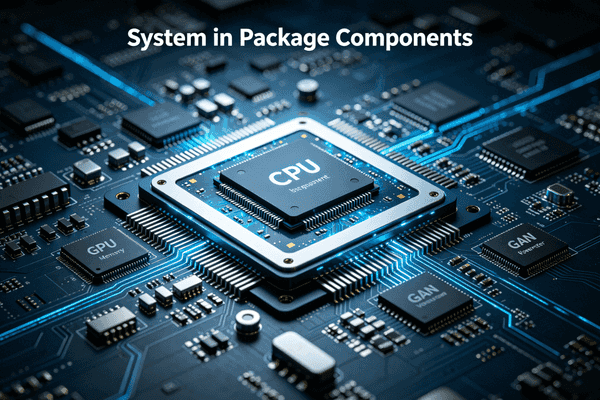
I remember a recent client project very clearly. The customer needed to fit a CPU, high-speed memory, and a strong power unit into a tiny smart sensor. Traditional circuit boards failed completely. The board was too big. The parts were too slow. We told them to use heterogeneous integration. This new approach changed everything for their design.
Breaking Down the Core Logic
When we build a traditional system, we place many separate chips on a large printed circuit board. Heterogeneous integration1 puts them all inside one single package. You can think of it like building a complete smart city inside one single building. We mix standard silicon chips with Gallium Nitride (GaN) power chips4. We put memory chips right next to the main processor. They all share the exact same tiny space. This cuts the physical distance down to almost nothing. The electrical signals do not have to travel far. This makes the whole system run extremely fast.
Why This Matters for OEMs
This method is very useful for OEM procurement managers5. You do not have to buy twenty separate parts anymore. You just buy one integrated block. This lowers your supply chain risk6 by a lot. It also helps you avoid counterfeit parts. You source fewer standalone components. At Nexcir7, we always verify the original manufacturers for these complex packages. We make sure every part is real. We provide the stability you need to keep your production line moving.
Comparing Old and New Methods
| Feature | Traditional Board Design | Heterogeneous Integration |
|---|---|---|
| Physical Size | Very large | Extremely small |
| Signal Speed | Very slow | Very fast |
| Component Count | Many separate parts | One single package |
| Power Use | High power waste | Low power waste |
| Supply Chain Risk | High risk of fake parts | Low risk of fake parts |
This table shows the clear benefits of the new method. You save valuable space. You gain massive speed. You reduce your total part count. You also save money on procurement costs over time.
Why Do Different Materials Fight Inside One Package?
Mixing different materials causes serious heat problems. Your expensive chip package might crack under high temperatures. We must manage thermal stress8 to stop materials from destroying each other.
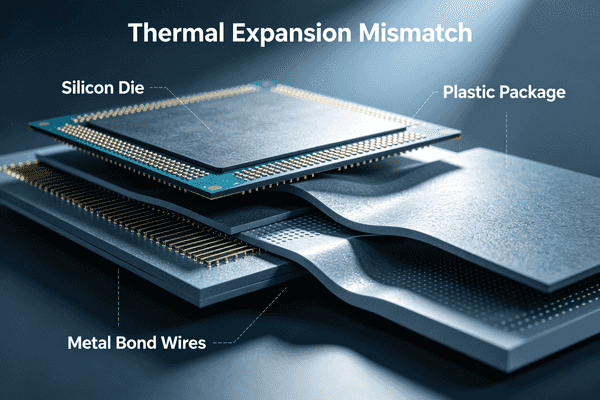
Different materials expand at different rates when they get hot. We call this the coefficient of thermal expansion (CTE) mismatch9. Silicon expands slowly. Substrates expand fast. This difference causes parts to bend, warp, or crack inside the package during normal operation.
I saw this exact problem first-hand last year. A customer tested a brand new integrated module. The module worked perfectly at room temperature. But it failed completely in a hot testing chamber. The materials simply pulled each other apart. The heat destroyed the connections.
The Danger of Thermal Mismatch
Every material reacts to heat in its own special way. When you put a silicon CPU right next to a GaN power chip, you create a very bad heat trap. The GaN chip gets extremely hot during use. The silicon chip heats up too. The plastic or resin base also gets hot. They all start to expand. But they expand by completely different amounts. The base grows fast. The silicon grows slow. This physical pulling breaks the tiny metal connections between the chips. The chips literally fight each other.
Solving the Heat Problem
Hardware engineers must choose materials very carefully. You need special cooling designs to push the heat away. You also need strong adhesives. These adhesives must stretch a little bit without breaking. If you ignore this heat problem, your production line will stop. Your failure rate will go way up. You will lose money and time.
Material Expansion Guide
| Material Type | Heat Reaction | Risk Level in Package | Action Required |
|---|---|---|---|
| Silicon (CPU) | Low expansion | Medium risk (can crack) | Match with low-CTE base |
| Resin Substrate | High expansion | High risk (causes warping) | Use flexible glue |
| GaN (Power) | High heat output | High risk (burns nearby parts) | Add heat sinks10 |
| Solder Joints | Medium expansion | High risk (breaks easily) | Test in hot chambers |
We help our clients find parts that handle heat very well. We check the quality of every single component. We make sure you get authentic parts11 that meet tough industry standards. This keeps your production schedule stable. You do not have to worry about sudden heat failures.
Will SiP Drive Industrial Robot Miniaturization by 2026?
Industrial robots are often too bulky for tight spaces. You lose efficiency when machines cannot fit into small factory corners. System-in-Package fixes this by shrinking robot brains.
Yes, System-in-Package (SiP) will drive robot miniaturization12 by 2026. SiP puts motor control, sensors, and processing into one tiny module. This allows engineers to build much smaller robotic joints and arms13. Factories will get faster, lighter, and more precise robots without losing any power.
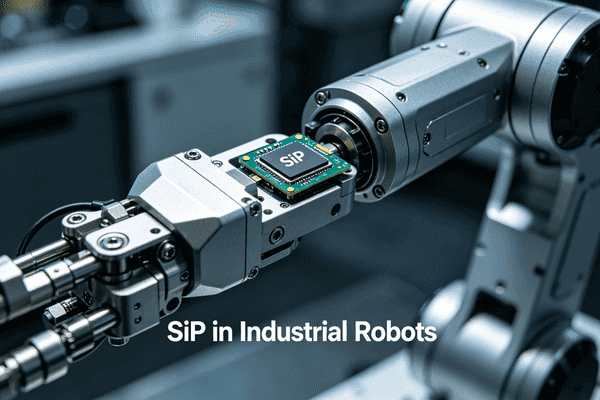
A robotics engineer told me something interesting recently. He said space is his biggest enemy. He wants to put a smart camera and a motor driver inside a single robot finger. Old chips are just too big for this. SiP is the only way to do it.
The Push for Smaller Robots
By the year 2026, factories will need robots that work right next to human workers. These robots must be very small and very light. They cannot carry heavy, hot circuit boards anymore. System-in-Package shrinks the main control board to the size of a small coin. You can fit the brain of the robot right inside its metal joints. This makes the robot lighter. A lighter robot moves faster. It uses less electricity. It is also safer for humans to be around.
How Nexcir7 Supports This Change
At Nexcir7, we supply the original parts needed for these advanced modules. We find reliable sensors, memory chips, and microcontrollers. We help you avoid fake parts that could break your expensive robots. We know lead times14 are very important to you. We deliver on time so your robot production never stops. We use our global supply network to find exactly what you need.
Robot Miniaturization Timeline
| Year | Robot Control Size | Technology Focus | Industry Impact |
|---|---|---|---|
| 2020 | Large metal boxes | Separate PCBs | Slow, bulky robots |
| 2023 | Medium modules | Basic integration | Better arm movement |
| 2026 | Coin-sized nodes | Advanced SiP | Tiny, smart robot joints |
| 2030 | Micro-nodes | 3D chip stacking15 | Human-like robot hands |
This massive shift to SiP is changing the hardware industry very fast. You must prepare your supply chain right now. We are ready to help you source these small parts globally. We offer stable pricing. We protect you from sudden market changes.
Conclusion
Heterogeneous integration1 packs more power into smaller spaces. It solves speed issues but brings heat challenges. SiP will soon make industrial robots smaller, smarter, and faster than ever before.
Explore how heterogeneous integration revolutionizes electronic design by combining multiple components into a single package, enhancing performance and efficiency. ↩
Discover the benefits of system-in-package technology in reducing space and power usage while boosting performance in electronic devices. ↩
Learn about the latest advancements in system-in-package technology that enable faster data movement and reduced power consumption. ↩
Understand the significance of GaN power chips in enhancing the efficiency and performance of electronic systems. ↩
Find out how OEM procurement managers can reduce supply chain risks and costs by adopting heterogeneous integration. ↩
Learn strategies to minimize supply chain risk in electronics, ensuring stable production and quality components. ↩
Find out how Nexcir supports electronic integration with reliable sourcing and supply chain management. ↩
Learn about the impact of thermal stress on electronic components and the importance of managing it effectively. ↩
Explore the challenges posed by CTE mismatch in electronic packaging and how it affects material stability. ↩
Discover the role of heat sinks in dissipating heat and preventing damage to electronic components in integrated packages. ↩
Understand the importance of sourcing authentic parts to maintain quality and reliability in electronic manufacturing. ↩
Explore how system-in-package technology is enabling the creation of smaller, more efficient industrial robots. ↩
Learn about the technological advancements in robotic joints and arms facilitated by system-in-package technology. ↩
Understand the significance of lead times in ensuring timely production and delivery in the electronics industry. ↩
Discover the benefits and applications of 3D chip stacking in creating compact and efficient electronic systems. ↩