Are your component supply chains safe? Chips are getting smaller, and older tech struggles. The Angstrom era solves this, but it brings new risks to your procurement.
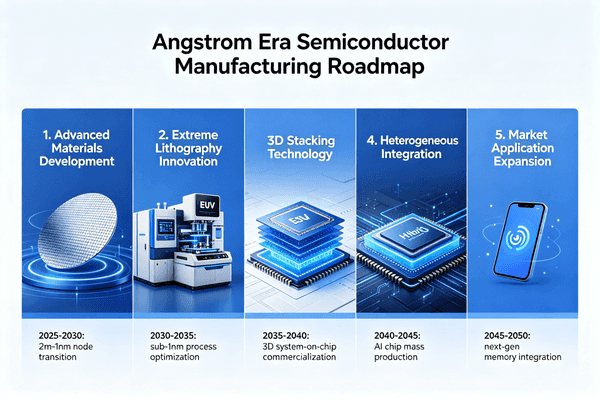
The Angstrom era roadmap1 is the next step in semiconductor manufacturing after nanometers. It focuses on sub-2nm chip designs, specifically the 18A and 14A nodes2. This roadmap uses High-NA EUV lithography3 machines to make smaller, faster, and more power-efficient electronic components for future technologies.
You might think this shift only affects chip makers. But as a procurement manager, you will feel the impact soon. Let us look at what this means for you.
Why do 18A and 14A Nodes Need High-NA EUV Lithography?
Standard EUV machines hit their limits. Making smaller chips causes errors and wastes money. High-NA EUV technology fixes this by printing finer lines on the silicon wafers.
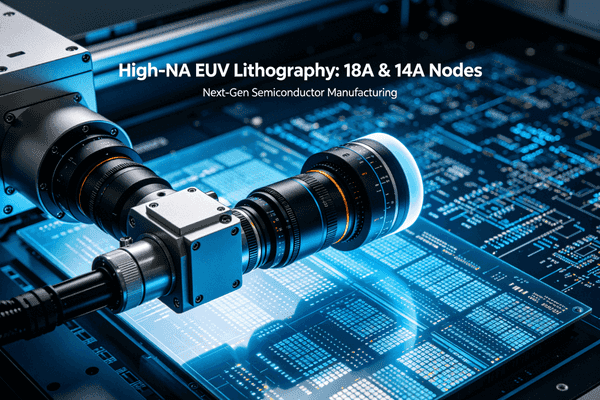
18A and 14A nodes2 need High-NA (High Numerical Aperture) EUV lithography because standard machines cannot print details smaller than 2 nanometers. High-NA machines use larger mirrors to bend light at sharper angles. This allows manufacturers to print much smaller features on chips in a single step.
Breaking Down the Need for High-NA Technology
I have worked in the electronic components industry for over 20 years. I remember when moving to 7nm felt impossible. Now, we talk about Angstroms. One Angstrom is 0.1 nanometers. To make parts at 18A and 14A, standard extreme ultraviolet light is not enough.
If factories use standard machines for 18A chips, they must print the same layer two times. This double-printing method takes too much time. It also increases the chance of making bad chips. This drives up the cost. For OEM procurement teams4, higher factory costs mean higher component prices.
High-NA EUV changes the game. ASML makes these machines. They increase the lens size from 0.33 NA to 0.55 NA. This wider angle lets the light draw much thinner lines.
| Feature | Standard EUV (0.33 NA) | High-NA EUV (0.55 NA) | Impact on Procurement |
|---|---|---|---|
| Node Target | 3nm and 2nm | 18A and 14A | Enables next-gen parts |
| Printing Steps | Double patterning | Single patterning | Faster production |
| Defect Rate | Higher at <2nm | Lower at <2nm | More stable supply |
| Cost per wafer | Very high for 18A | Lower for 18A | Better price control |
When you plan your future component sourcing5, you must track these changes. Factories using High-NA EUV will have better yields. At Nexcir, we always watch these factory upgrades. We want to make sure your supply of advanced chips stays stable and well-priced.
Will Intel Lead the 14A Node with ASML Equipment in 2026?
Waiting for new chips can hurt your production line. If chip makers face delays, your products launch late. Intel plans to use ASML machines6 by 2026 to prevent this.
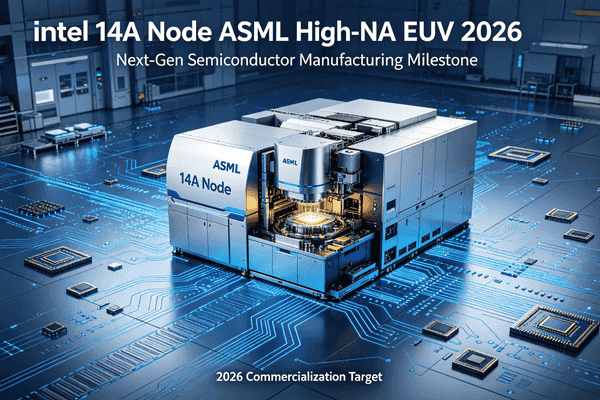
Intel aims to be the first to implement ASML's High-NA EUV equipment at the 14A node by 2026. If Intel succeeds, they will lead the Angstrom era. This success will give them a major advantage over competitors like TSMC and Samsung in producing next-generation semiconductors.
Analyzing Intel's 2026 Market Strategy
The year 2026 will be a big test for the semiconductor world. I often speak with hardware engineers. They worry about future chip supply. They ask me who will win the race to 1.4nm. Right now, all eyes are on Intel.
Intel bought the first High-NA EUV machine from ASML. This was a bold move. They want to use it for their 14A node. But buying the machine is only the first step. Making it work in a real factory is much harder. Intel must solve big problems. They need new chemicals for the silicon. They need better power delivery systems.
Let us look at the risks and rewards for Intel in 2026.
| Factor | Current Challenge | Intel's Goal for 2026 | Result for Customers |
|---|---|---|---|
| Machine Setup7 | High-NA machines are huge | Full factory integration | Faster chip delivery |
| Yield Rate8 | Low test yields | High volume production | Reliable component stock |
| Competition9 | TSMC leads in 3nm/2nm | Intel leads in 14A | More choices for OEMs |
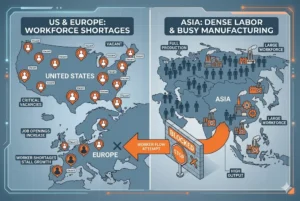
If Intel makes the 14A node work in 2026, it changes the global supply chain. For you, as a procurement manager, this is good news. It means you do not have to rely only on TSMC in Asia. A strong Intel adds a reliable source in North America and Europe. At Nexcir, we source from all authorized global channels. We will help you buy these new chips safely.
How Does the Angstrom Era Affect Your Component Procurement?
New tech brings fake parts to the market. When advanced chips are rare, counterfeiters trick buyers. You must secure your supply chain before the Angstrom era creates shortages.
The Angstrom era will initially cause tight supplies and higher prices for 18A and 14A chips. Procurement managers must plan early, secure long-term supply agreements, and only buy from authorized distributors. This approach reduces the risk of buying counterfeit components during early production shortages.
Preparing Your Procurement Strategy
In my years of managing supply chains, I have seen many technology shifts. Every time a new node arrives, the market gets chaotic. The shift to 18A and 14A will be the same. When these chips first come out, there will not be enough for everyone.
Big companies like Apple and Microsoft will buy the first batches. This leaves smaller OEMs fighting for what is left. This shortage creates a dangerous market. Bad sellers will try to sell fake or old chips to desperate buyers. You must protect your production line.
You need to think critically about your sourcing. Do not wait until 2026 to plan.
| Procurement Risk | Cause in Angstrom Era | Nexcir Solution10 |
|---|---|---|
| Fake Components | High demand, low supply | 100% original parts only |
| Price Spikes11 | Factory setup costs | Stable, long-term pricing |
| Delayed Delivery | Low initial chip yields | Global logistics network12 |
At Nexcir, we solve these problems for you. Our team has over 20 years of experience. We track the market trends for you. We know when the 18A and 14A parts will be ready. We use our global supply network to find genuine parts. We make sure your hardware engineers get what they need. We deliver parts on time, without the risk of fakes.
Should You Ignore Older Chips in the Angstrom Era?
Focusing only on new tech leaves your current products at risk. Older chips still run your machines. If you ignore them, your daily production will stop completely.
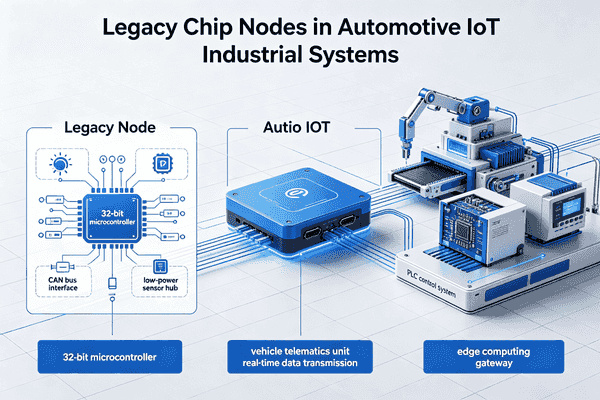
You should not ignore older chips during the Angstrom era. While 18A and 14A nodes2 are for advanced AI and computing, most industrial, automotive, and IoT devices still rely on older, mature nodes. Securing a stable supply of these legacy components remains critical for regular production.
Balancing Advanced and Mature Node Procurement
It is easy to get excited about 1.4nm chips. The media talks about them every day. But let me share a story. Last year, a client asked me about moving to the newest chip node. They build smart home devices. I told them to stop. Their devices did not need that much power.
The truth is, 18A and 14A chips are very expensive. They are for data centers, high-end phones, and artificial intelligence. If you make cars, factory sensors, or simple IoT devices, you do not need an Angstrom-era chip. You need 28nm or even 65nm chips. These are called mature nodes.
You must balance your budget. Do not spend all your money on new tech if you do not need it.
| Device Type | Ideal Chip Node | Primary Procurement Goal |
|---|---|---|
| AI Servers | 18A / 14A | High performance |
| Smartphones | 3nm / 2nm | Power efficiency |
| Automotive | 14nm / 28nm | Reliability and heat resistance |
| Industrial IoT | 28nm / 65nm | Low cost and long life |
We help our clients see this clear picture. At Nexcir, we do not just sell parts. We offer advice on supply chain optimization. If a mature node part becomes End of Life13, we find a good alternative. We make sure you have the right chips for today. We also help you plan for the Angstrom future.
Will the Angstrom Era Make Your Components Too Expensive?
High chip prices ruin your project budgets. When factories buy new machines, they pass the cost to you. The Angstrom era will bring massive costs to early buyers.
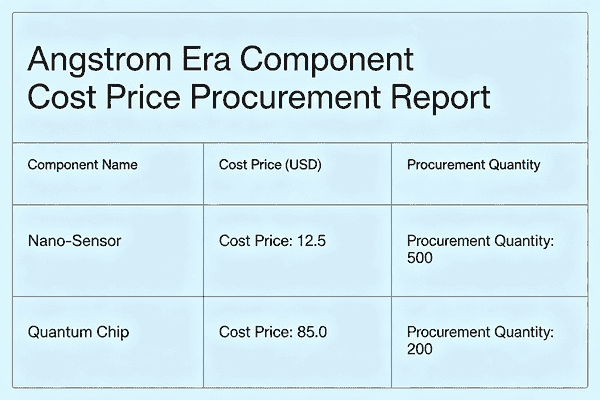
The Angstrom era will increase component costs at first. High-NA EUV machines cost over 300 million dollars each. Foundries will charge higher prices for 18A and 14A chips to recover these costs. Procurement teams must use bulk purchasing14 and long-term contracts15 to control these rising expenses.
Managing Your Budget in the New Era
I talk to purchasing managers every week. Their biggest pain point is always price stability. The move to Angstrom nodes will test every budget. ASML sells High-NA EUV machines for hundreds of millions of dollars. Factories must spend billions to build new plants for these machines.
Who pays for this? You do. The end customer always absorbs the research and equipment costs. If your products need 18A or 14A chips, you must prepare for price shocks. The market will see wild price changes during the first few years.
You must look at the data to protect your margins.
| Cost Factor | Impact on Market | Strategy for OEMs |
|---|---|---|
| Machine Price | High foundry fees | Sign long-term supply deals |
| Low Yields | Artificial shortages | Build buffer stock16 early |
| R&D Recovery17 | High initial unit cost | Delay adoption if possible |
At Nexcir, we fight price inflation for you. We use our bulk procurement advantages. We secure stable prices through long-term partnerships. We help you avoid market fluctuations. We give you transparent pricing so you can plan your budgets safely. You do not have to face these Angstrom era price hikes alone.
Conclusion
The Angstrom era brings 18A and 14A nodes2 using High-NA EUV. Intel plans to lead by 2026. Nexcir guarantees authentic parts and stable supply for your future procurement needs.
Understanding the Angstrom era roadmap is crucial for staying ahead in semiconductor technology advancements. ↩
Learning about 18A and 14A nodes helps in understanding their role in next-gen technology and procurement implications. ↩
Exploring High-NA EUV lithography reveals how it enhances precision in chip production, impacting procurement strategies. ↩
OEM procurement teams must navigate supply chain complexities and price volatility during the Angstrom era. ↩
Component sourcing strategies must adapt to new technologies and market dynamics in the Angstrom era. ↩
ASML machines are pivotal in advancing chip technology, making them essential for procurement managers to understand. ↩
Understanding machine setup challenges helps in anticipating production delays and procurement impacts. ↩
Yield rate directly impacts supply stability, making it a key factor for procurement managers to monitor. ↩
Competition among semiconductor manufacturers influences pricing and availability, crucial for procurement planning. ↩
Nexcir provides strategic solutions to navigate procurement challenges, ensuring stable supply and authentic parts. ↩
Managing price spikes is crucial for maintaining budget stability during the transition to Angstrom nodes. ↩
A robust global logistics network ensures timely delivery and reduces risks of counterfeit components. ↩
Handling End of Life for mature nodes is essential to ensure continuous production without disruptions. ↩
Bulk purchasing can mitigate price fluctuations and ensure stable supply during the Angstrom era. ↩
Long-term contracts provide price stability and secure supply during the volatile Angstrom era. ↩
Buffer stock acts as a safeguard against supply chain disruptions, ensuring continuous production. ↩
R&D recovery costs influence pricing strategies, affecting procurement budgets and planning. ↩