-Are you worried about new EU rules? Unclear compliance can stop your products from entering Europe. The Digital Product Passport1 brings big changes to our electronics supply chain.
The Digital Product Passport1 (DPP) is a digital record that shares product lifecycle data. Starting in 2026, the EU requires this passport for electronics. It tracks material sources2, carbon footprints3, and recycling data4. This tool helps buyers prove product authenticity and meet strict environmental rules.
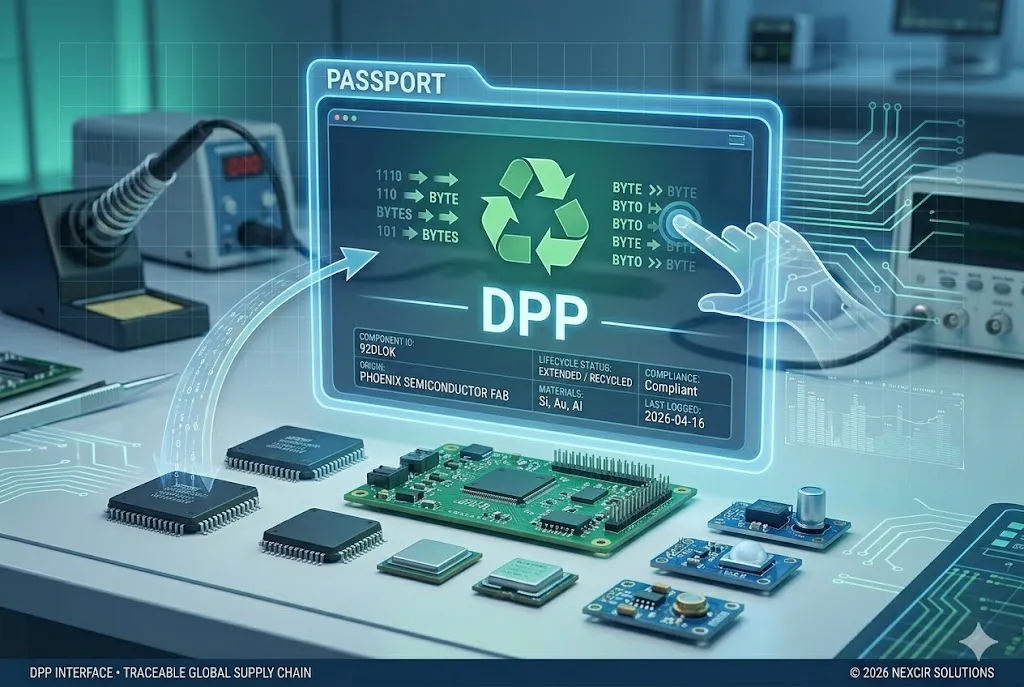
You might think 2026 is far away. But the clock is ticking for OEMs and procurement teams. Let us explore what this means for your daily sourcing work.
Why will the EU mandate Digital Product Passport1s by 2026?
Do you struggle with counterfeit components5? Fake parts ruin production lines and cost money. The EU wants to stop this and reduce waste by tracking every single electronic part.
The EU will mandate the DPP by 2026 to create a circular economy6. The law forces companies to show where parts come from. It aims to reduce electronic waste, stop fake components, and make sure parts can be safely recycled.
Let me tell you a story from my early days in the electronics industry. Ten years ago, a client bought a batch of microcontrollers from a random broker. The parts failed. We spent weeks trying to find the real origin. We could not trace them. This lack of data hurts everyone.
The Push for a Circular Economy
The EU sees this problem on a massive scale. They want to move away from the old model of throwing things away. The core logic is simple. If you cannot measure it, you cannot manage it. The DPP acts like a birth certificate for electronic components. It forces OEMs to know every detail about the parts they use.
How the 2026 Rule Changes Procurement
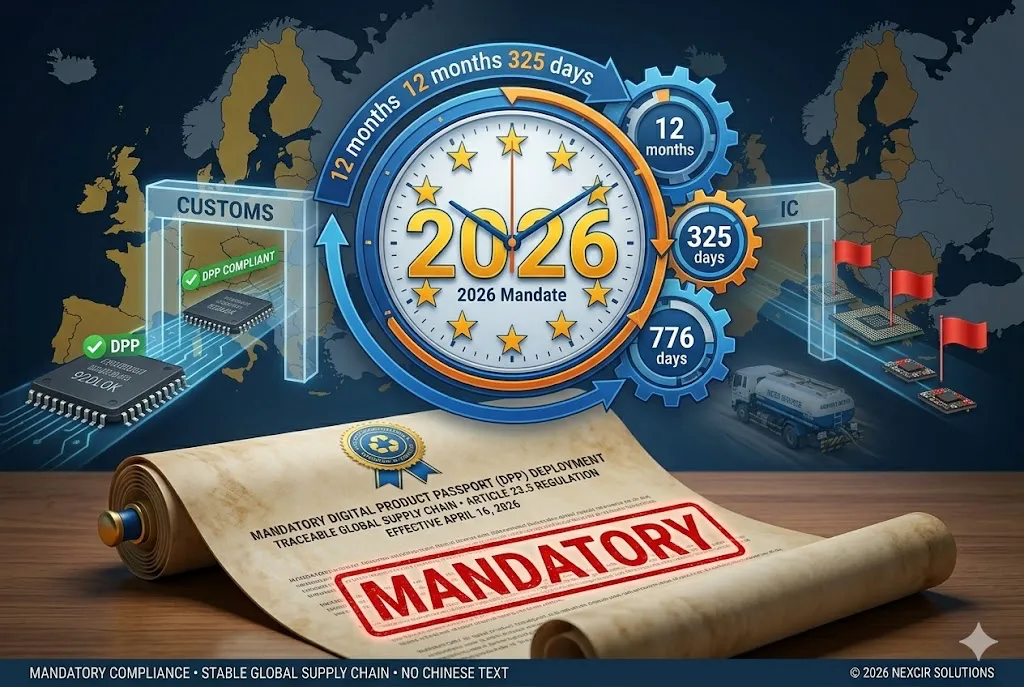
By 2026, any electronic product sold in the EU must have this digital record. This is not just a suggestion. It is a strict law. If your product lacks a DPP, customs will reject it. As a buyer, you must collect data from all your suppliers. You need to verify the original manufacturer. You need to check the materials.
Here is a breakdown of the old way versus the new DPP way:
| Feature | Old Supply Chain Model | New DPP Model (2026) |
|---|---|---|
| Data Tracking | Paper invoices and basic labels | Cloud-based digital records |
| Material Origin | Often unknown or hidden | Fully disclosed and verified |
| Recycling | Parts end up in landfills | Clear guides for safe recycling |
| Trust Level | High risk of counterfeit parts | 100% traceability to factory |
At Nexcir, we always buy from authorized channels. We know exactly where our parts come from. This new rule proves why our strict sourcing method is the best way to protect your business.
How does the DPP force supply chain transparency7?
Are your suppliers hiding their material sources2? Blind spots in the supply chain cause big compliance risks. The DPP removes these blind spots and forces complete data sharing.
The DPP forces transparency by requiring disclosure of material sources2 and recycled content8. Suppliers must share exact data about where metals and plastics come from. This strict rule stops hidden practices, exposes bad suppliers, and helps buyers verify the true quality of their electronic components.
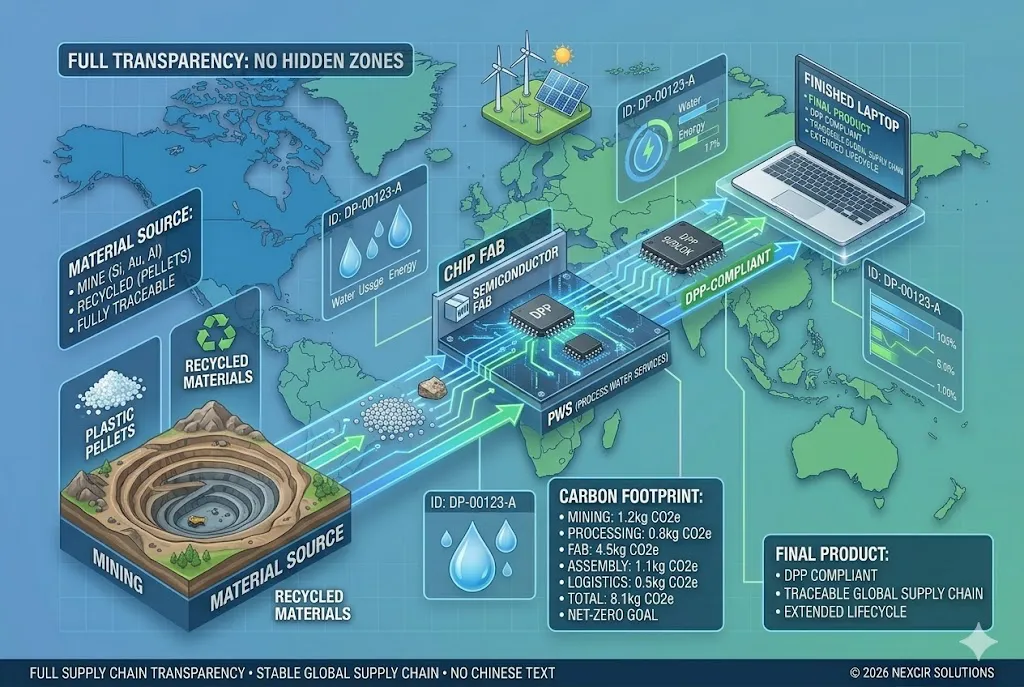
I remember a meeting with a large automotive OEM last year. The procurement manager was very stressed. He needed to prove that his sensors did not use conflict minerals9. His supplier refused to give the data. This is a huge business pain point today. The DPP will solve this exact issue.
Breaking Down the Data Walls
The electronics supply chain is very long. A single chip travels through many hands before it reaches the final board. Some suppliers like to keep their sources secret. They do this to protect their profit margins. The DPP breaks down these data walls. It forces every vendor to upload their data to a shared system.
What Data Must Suppliers Disclose?
Suppliers can no longer hide behind vague promises. They must provide hard facts. If a part claims to use recycled plastic, the DPP must show the proof. This forced transparency is great for honest buyers. It is very bad for unauthorized brokers who sell fake parts.
Let us look at the specific data points the DPP requires:
| Data Category | What Suppliers Must Disclose | Why Buyers Need It |
|---|---|---|
| Material Sources | Exact origins of metals and plastics | To ensure ethical sourcing |
| Carbon Footprint | Total emissions during production | To meet green energy goals |
| Recycled Content | Percentage of reused materials | To comply with EU waste laws |
| Repair Guides | Schematics and part replacement steps | To extend product life |
We welcome this change at Nexcir. Our team has over 20 years of experience. We only use authorized distributors10 and original manufacturers. We already operate with total transparency. The DPP just makes our standard practice the legal rule for everyone.
How can procurement managers prepare for the DPP mandate?
Do you feel unprepared for the 2026 deadline? Waiting too long will cause massive supply chain disruptions. You must act now to secure compliant suppliers and protect your production.
Procurement managers can prepare for the DPP by auditing their current suppliers today. You should only buy from authorized distributors10 who offer full traceability. Start collecting material data early. Build strong partnerships with transparent vendors to ensure your products enter the EU market without delays.
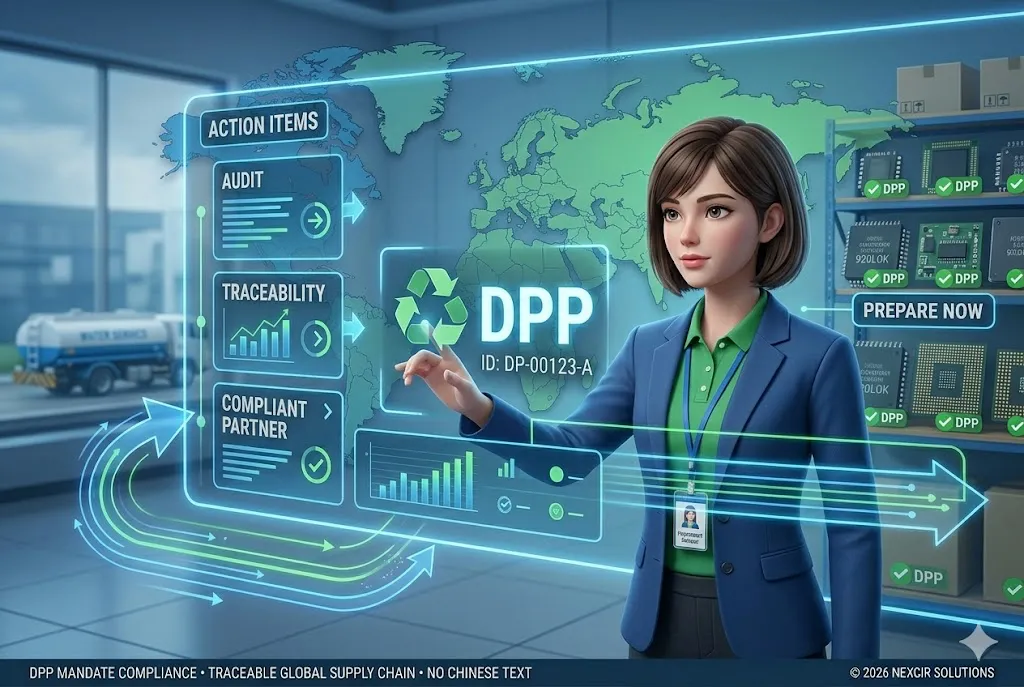
Many buyers ask me how to get ready. I always tell them the same thing. Do not wait until 2025 to ask questions. I recently helped an IoT device maker audit their bill of materials. We found that a large portion of their parts came from unknown sources. We had to replace those vendors immediately.
Audit Your Current Supply Base
The first step requires critical thinking about your current partners. Ask yourself a simple question. Can your current supplier trace a part back to the original factory? If the answer is no, you have a big risk. You need partners who understand supply chain optimization11. You need partners who provide authentic components.
Partnering with Transparent Distributors
The DPP will make buying from the gray market12 very dangerous. If a broker cannot give you the digital passport data, you cannot use their parts. This is where Nexcir adds value. We guarantee 100% original electronic components. We have a stable global supply network. We give you the peace of mind you need.
Here is an action plan to prepare for the DPP:
| Action Step | Timeline | Expected Outcome |
|---|---|---|
| Map Supply Chain | Next 3 Months | Identify all high-risk vendors |
| Request Data | Next 6 Months | Test vendors on data sharing |
| Switch Suppliers | Next 12 Months | Move to authorized channels |
| System Update | By Late 2025 | Integrate DPP data into your system |
Preparing for the DPP is not just about compliance. It is about building a better and stronger supply chain. We are ready to help you navigate this transition smoothly.
Conclusion
The Digital Product Passport1 changes electronic sourcing by 2026. It forces transparency and stops fake parts. Partner with trusted distributors to keep your supply chain compliant and strong.
Understanding the Digital Product Passport is crucial for businesses to comply with upcoming EU regulations and ensure product authenticity. ↩
Knowing material sources ensures ethical sourcing and compliance with environmental regulations, crucial for EU market access. ↩
Tracking carbon footprints helps manufacturers meet green energy goals and comply with environmental standards. ↩
Recycling data is essential for complying with EU waste laws and promoting sustainable product lifecycle management. ↩
Preventing counterfeit components is vital for maintaining production quality and reducing costs, making this a key area to explore. ↩
Exploring the circular economy concept helps businesses align with EU goals to reduce waste and promote sustainable practices. ↩
Supply chain transparency is key to eliminating blind spots and ensuring compliance with EU regulations, protecting businesses from risks. ↩
Disclosing recycled content helps manufacturers comply with EU waste laws and promotes sustainable practices. ↩
Addressing conflict minerals is crucial for ethical sourcing and compliance with international regulations, making it a vital topic. ↩
Partnering with authorized distributors ensures product authenticity and compliance with EU regulations, safeguarding business interests. ↩
Supply chain optimization is crucial for ensuring compliance, reducing risks, and enhancing efficiency in electronics manufacturing. ↩
Understanding gray market risks helps businesses avoid counterfeit parts and ensure compliance with EU regulations. ↩