Traditional chips struggle with slow data transfers1. You waste power moving data back and forth. Processing-in-Memory2 solves this, but its road to the market is full of hidden traps.
Processing-in-Memory2 faces commercialization pains3 because of low mass production yields4. Analog circuit noise and manufacturing process limits make it hard to produce reliably. While the core logic of doing math inside memory is great, building it at scale without errors remains a huge industry challenge.
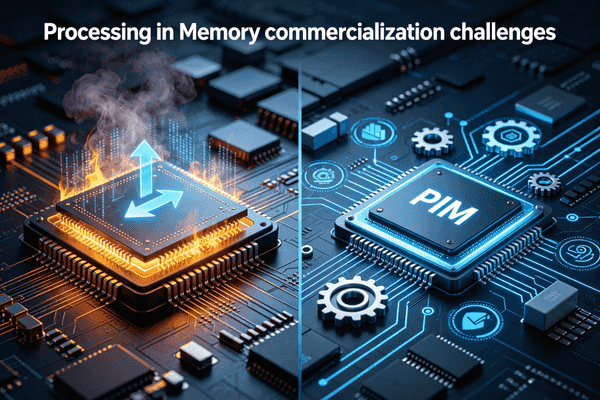
I remember a recent project. An engineer asked me if they should switch to new memory chips for their edge devices. I had to tell them the hard truth about the market reality. Let us look closely at why this amazing idea is so hard to build today. This will help you understand the risks before you buy.
How Does Processing-in-Memory2 Change the Core Logic of Computing?
Moving data between memory and processors takes too much time. Your devices run slow and get hot. Processing-in-Memory2 fixes this by doing the math right where the data lives.
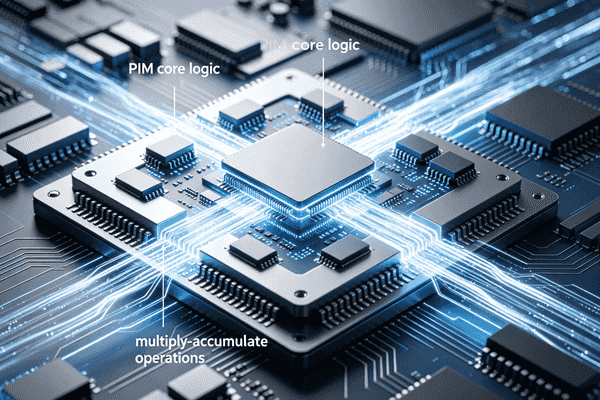
Processing-in-Memory2 changes computing by completing multiply-accumulate operations5 directly inside the memory unit. It stops the constant data movement between the main processor and memory chips. This saves energy and speeds up tasks. It is a perfect fit for heavy workloads like artificial intelligence.
Breaking Down the Computing Advantage
In my 20 years in the electronic components industry, I have seen many chip designs. The standard design is the von Neumann architecture6. It separates the memory and the computing parts. This causes a big problem. We call it the "memory wall7." Data must move back and forth all the time. This wastes time. It also wastes a lot of power. Processing-in-Memory2 changes everything. It puts the math inside the memory chip itself.
Hardware engineers often ask me how much power they can save. The answer is huge. When you do multiply-accumulate operations5 inside the memory, you cut out the data travel time. This is very important for artificial intelligence models8. Artificial intelligence needs to do millions of these operations every second. If the data does not move, the chip stays cool. The battery lasts longer.
Last year, a client from an automotive company called me. He wanted to lower the power use of his car dashboard system. I explained how traditional chips waste energy just pushing data on the bus lines. Processing-in-Memory2 keeps the data in one place.
Comparing the Architectures
| Feature | Traditional Architecture | Processing-in-Memory2 |
|---|---|---|
| Data Movement | Very High | Very Low |
| Power Use | High | Low |
| Speed | Limited by bus lines | Very Fast |
| Best Use Case | General computing | Artificial Intelligence |
However, changing the whole system is not easy. You need new software to talk to these new chips. You also need to make sure the parts are 100% authentic. At Nexcir, we help buyers find the right authorized parts. We support them while they wait for new technology to become stable. We always ensure our clients get parts with verified quality.
Why Do Analog Noise and Process Limits Hurt Mass Production Yields?
You want to buy new chips in bulk for your factory. But suppliers cannot deliver enough working parts. Low yields and high costs are killing the dream right now.
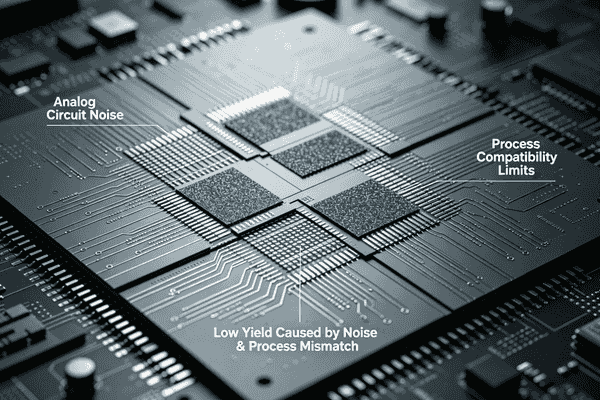
Mass production yields for Processing-in-Memory2 are very low because of analog circuit noise9 and process compatibility issues10. Memory and logic circuits use different manufacturing processes. Combining them creates noise and errors. This makes it hard to produce millions of perfect chips without driving the price too high.
The Hidden Costs of Low Yields
Procurement managers hate risk. They want stable prices. They also want reliable delivery. Right now, Processing-in-Memory2 cannot promise either. The biggest problem is making the chips in the factory. Memory chips are usually made with one special process. Logic chips are made with another process. When you try to mix them on one piece of silicon, you get process compatibility issues10. They do not work well together.
This mix causes analog circuit noise9. The math done inside the memory is often analog. Analog signals are very sensitive. They react badly to temperature changes. They also react badly to voltage changes. If the noise is too high, the chip makes a mistake. For an original equipment manufacturer building thousands of devices, a bad chip ruins the whole board. You cannot afford to put bad parts in your product.
As a distributor, I always warn my clients about new technology risks. The mass production yield is the number of good chips on a wafer. Right now, this number is too low for Processing-in-Memory2. Low yield means high prices.
Manufacturing Pain Points
| Manufacturing Issue | Direct Effect on Chips | Impact on Supply Chain |
|---|---|---|
| Analog Circuit Noise | Calculation errors | Unreliable products |
| Process Mismatch | Low production yield | High component cost |
| Complex Testing | Hard to verify quality | Longer lead times |
Counterfeiters sometimes try to sell rejected chips as good ones. They take advantage of supply shortages. This is why buying from authorized channels is so important. We only source from authorized distributors and original manufacturers. This guarantees product authenticity. Until factories can fix these noise and process problems, the new chips will stay expensive. Buyers will stick to traditional parts that have proven quality and stable lead times.
Will Startups Break Through in Edge Voice Recognition by 2026?
Smart speakers and edge devices drain batteries too fast. Current chips are hitting a wall. We need a hero to fix edge power issues before the year 2026.
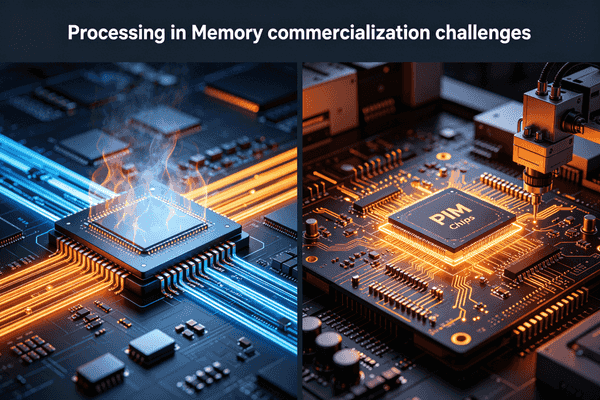
By 2026, we expect startups to break through with Processing-in-Memory2 in large-scale edge voice recognition11 chips. Voice systems need low power and fast responses. This new design is perfect for this. If a startup fixes the yield issues, they will dominate the market for smart home devices.
The Race for Edge Dominance
I talk to hardware engineers every week. They all want the same thing for their internet of things projects12. They want lower power consumption. Voice recognition is a very big trend right now. People want to talk to their cars. They want to talk to their home appliances. But listening for a wake word all day uses too much battery. Traditional microcontrollers are just too hungry for power.
This is where Processing-in-Memory2 can win. If a startup can build a good chip for edge voice recognition11 by 2026, it will change the market completely. Voice models use a lot of multiply-accumulate operations5. The new chips can handle these easily. They do the math without waking up the main processor. This saves massive amounts of battery life13.
But the startup must prove their chips are reliable. They must offer long lifecycle availability. A production team will not redesign their boards for a chip that might disappear in a year. They need stable supply programs.
Key Factors for Startup Success
| Success Factor | Target Goal by 2026 | Value to Customer |
|---|---|---|
| Yield Improvement | Over 90% good chips | Lower procurement costs |
| Supply Stability | Long-term supply programs | No production stops |
| Component Pricing | Cheaper than old setups | Enhanced competitiveness |
At Nexcir, we are watching this space very closely. Startups are trying hard to fix the analog noise. They are working on better process compatibility. When these parts become stable, we will help our clients source them globally. We have stable and proven supply channels. Until then, we will keep supplying the reliable sensors, microcontrollers, and modules they need today. We will always help customers minimize procurement risks.
Conclusion
Processing-in-Memory2 offers amazing speed and power savings. However, low yields and analog noise remain big hurdles. We hope startups solve these issues for edge devices by 2026.
Understanding the limitations of traditional chips can help you appreciate the benefits of Processing-in-Memory technology. ↩
Exploring Processing-in-Memory will reveal how it revolutionizes computing by reducing data movement and saving energy. ↩
Learn about the challenges in bringing Processing-in-Memory to market, including production issues and analog noise. ↩
Learn about the factors affecting mass production yields and their impact on chip availability and cost. ↩
Discover how Processing-in-Memory enhances multiply-accumulate operations, crucial for AI workloads. ↩
Learn about the limitations of the von Neumann architecture and how Processing-in-Memory offers a solution. ↩
Understanding the memory wall helps you see why Processing-in-Memory is a game-changer for data processing. ↩
Learn why AI models benefit from Processing-in-Memory, which handles complex operations efficiently. ↩
Explore the effects of analog circuit noise on chip production and why it poses a challenge for new technologies. ↩
Understanding process compatibility issues will help you grasp why mass production of new chips is difficult. ↩
Discover how Processing-in-Memory can enhance edge voice recognition by reducing power consumption and increasing speed. ↩
Explore the advantages of Processing-in-Memory for IoT projects, including power savings and efficiency. ↩
Discover how Processing-in-Memory technology can significantly enhance battery life by reducing power consumption. ↩